Compare commits
3 Commits
develop
...
ppdiffuser
| Author | SHA1 | Date | |
|---|---|---|---|

|
2c92c543f2 | ||
|
|
6f71c7cf5e | ||
|
|
00ae25bf35 |
@@ -71,7 +71,7 @@ RE_SHEBANG = re.compile(r"^[ \t\v]*#[ \t]?\!")
|
||||
def _check_copyright(path):
|
||||
head=[]
|
||||
try:
|
||||
with open(path, encoding="utf-8") as f:
|
||||
with open(path) as f:
|
||||
head = [next(f) for x in range(4)]
|
||||
except StopIteration:
|
||||
pass
|
||||
|
||||
7
.flake8
7
.flake8
@@ -1,7 +0,0 @@
|
||||
[flake8]
|
||||
ignore = E203, E402, E501, E731, E741, W503, W605, E722
|
||||
max-line-length = 119
|
||||
|
||||
# E402: module level import not at top of file
|
||||
per-file-ignores =
|
||||
__init__.py:F401,F403,E402
|
||||
154
.github/CONTRIBUTING_en.md
vendored
154
.github/CONTRIBUTING_en.md
vendored
@@ -1,154 +0,0 @@
|
||||
[简体中文🀄](../CONTRIBUTING.md) | **English**🌎
|
||||
|
||||
# Contributing to PaddleNLP
|
||||
|
||||
We highly welcome and value your contributions to `PaddleNLP`. The first step to start your contribution is to sign the [PaddlePaddle Contributor License Agreement](https://cla-assistant.io/PaddlePaddle/PaddleNLP).
|
||||
|
||||
This document explains our workflow and work style:
|
||||
|
||||
## Finding out what to work on Workflow
|
||||
|
||||
## Development Workflow
|
||||
|
||||
PaddleNLP uses the [Git branching model](http://nvie.com/posts/a-successful-git-branching-model/). The following steps guide usual contributions.
|
||||
|
||||
#### 1. Fork
|
||||
|
||||
Our development community has been growing fastly; it doesn't make sense for everyone to write into the official repo. So, please file Pull Requests from your fork. To make a fork, just head over to the GitHub page and click the ["Fork" button](https://help.github.com/articles/fork-a-repo/).
|
||||
|
||||
#### 2. Clone
|
||||
|
||||
To make a copy of your fork to your local computers, please run
|
||||
|
||||
```bash
|
||||
git clone https://github.com/<your-github-account>/PaddleNLP
|
||||
cd PaddleNLP
|
||||
```
|
||||
|
||||
#### 3. Create the local feature branch
|
||||
|
||||
For daily works like adding a new feature or fixing a bug, please open your feature branch before coding:
|
||||
|
||||
```bash
|
||||
git checkout -b my-cool-feature
|
||||
```
|
||||
|
||||
#### 4. Set up the development environment
|
||||
|
||||
Before you start coding, you need to setup the development environment. We highly recommend doing all your development in a virtual environment such as
|
||||
[venv](https://docs.python.org/3/library/venv.html) or [conda](https://docs.conda.io/en/latest/). After you setup and activated your virtual environment,
|
||||
run the following command:
|
||||
|
||||
```bash
|
||||
make install
|
||||
```
|
||||
|
||||
This will setup all the dependencies of `PaddleNLP` as well as the [`pre-commit`](http://pre-commit.com/) tool.
|
||||
|
||||
If you are working on the `examples` or `applications` module and require importing from `PaddleNLP`, make sure you install `PaddleNLP` in editable mode.
|
||||
If `PaddleNLP` is already installed in the virtual environment, remove it with `pip uninstall paddlenlp` before reinstalling it in editable mode with
|
||||
`pip install -e .`
|
||||
|
||||
#### 5. Develop
|
||||
|
||||
As you develop your new exciting feature, keep in mind that it should be covered by unit tests. All of our unit tests can be found under the `tests` directory.
|
||||
You can either modify existing unit test to cover the new feature, or create a new test from scratch.
|
||||
As you finish up the your code, you should make sure the test suite passes. You can run the tests impacted by your changes like this:
|
||||
|
||||
```bash
|
||||
pytest tests/<test_to_run>.py
|
||||
```
|
||||
|
||||
#### 6. Commit
|
||||
|
||||
We utilizes [`pre-commit`](http://pre-commit.com/) (with [black](https://black.readthedocs.io/en/stable/), [isort](https://pycqa.github.io/isort/) and
|
||||
[flake8](https://flake8.pycqa.org/en/latest/) under the hood) to check the style of code and documentation in every commit. When you run run `git commit`, you will see
|
||||
something like the following:
|
||||
|
||||
```
|
||||
➜ (my-virtual-env) git commit -m "commiting my cool feature"
|
||||
black....................................................................Passed
|
||||
isort....................................................................Passed
|
||||
flake8...................................................................Passed
|
||||
check for merge conflicts................................................Passed
|
||||
check for broken symlinks............................(no files to check)Skipped
|
||||
detect private key.......................................................Passed
|
||||
fix end of files.....................................(no files to check)Skipped
|
||||
trim trailing whitespace.............................(no files to check)Skipped
|
||||
CRLF end-lines checker...............................(no files to check)Skipped
|
||||
CRLF end-lines remover...............................(no files to check)Skipped
|
||||
No-tabs checker......................................(no files to check)Skipped
|
||||
Tabs remover.........................................(no files to check)Skipped
|
||||
copyright_checker........................................................Passed
|
||||
```
|
||||
|
||||
But most of the time things don't go so smoothly. When your code or documentation doesn't meet the standard, the `pre-commit` check will fail.
|
||||
```
|
||||
➜ (my-virtual-env) git commit -m "commiting my cool feature"
|
||||
black....................................................................Passed
|
||||
isort....................................................................Failed
|
||||
- hook id: isort
|
||||
- files were modified by this hook
|
||||
|
||||
Fixing examples/information_extraction/waybill_ie/run_ernie_crf.py
|
||||
|
||||
flake8...................................................................Passed
|
||||
check for merge conflicts................................................Passed
|
||||
check for broken symlinks............................(no files to check)Skipped
|
||||
detect private key.......................................................Passed
|
||||
fix end of files.....................................(no files to check)Skipped
|
||||
trim trailing whitespace.............................(no files to check)Skipped
|
||||
CRLF end-lines checker...............................(no files to check)Skipped
|
||||
CRLF end-lines remover...............................(no files to check)Skipped
|
||||
No-tabs checker......................................(no files to check)Skipped
|
||||
Tabs remover.........................................(no files to check)Skipped
|
||||
copyright_checker........................................................Passed
|
||||
```
|
||||
|
||||
But **don't panic**!
|
||||
Our tooling will fix most of the style errors automatically. Some errors will need to be addressed manually. Fortunately, the error messages are straight forward and
|
||||
the errors are usually simple to fix. After addressing the errors, you can run `git add <files>` and `git commit` again, which will trigger `pre-commit` again.
|
||||
Once the `pre-commit` checks pass, you are ready to push the code.
|
||||
|
||||
[Google][http://google.com/] or [StackOverflow](https://stackoverflow.com/) are great tools to help you understand the code style errors.
|
||||
Don't worry if you still can't figure it out. You can commit with `git commit -m "style error" --no-verify` and we are happy to help you once you create a Pull Request.
|
||||
|
||||
#### 7. Keep pulling
|
||||
|
||||
An experienced Git user pulls from the official repo often -- daily or even hourly, so they notice conflicts with others work early, and it's easier to resolve smaller conflicts.
|
||||
|
||||
```bash
|
||||
git remote add upstream https://github.com/PaddlePaddle/PaddleNLP
|
||||
git pull upstream develop
|
||||
```
|
||||
|
||||
#### 8. Push and file a pull request
|
||||
|
||||
You can "push" your local work into your forked repo:
|
||||
|
||||
```bash
|
||||
git push origin my-cool-stuff
|
||||
```
|
||||
|
||||
The push allows you to create a pull request, requesting owners of this [official repo](https://github.com/PaddlePaddle/PaddleNLP) to pull your change into the official one.
|
||||
|
||||
To create a pull request, please follow [these steps](https://help.github.com/articles/creating-a-pull-request/).
|
||||
|
||||
#### 9. Delete local and remote branches
|
||||
|
||||
To keep your local workspace and your fork clean, you might want to remove merged branches:
|
||||
|
||||
```bash
|
||||
git push origin my-cool-stuff
|
||||
git checkout develop
|
||||
git pull upstream develop
|
||||
git branch -d my-cool-stuff
|
||||
```
|
||||
|
||||
## Code Review
|
||||
|
||||
- Please feel free to ping your reviewers by @-mentioning the in the Pull Request. Please do this after your pull request passes the CI.
|
||||
|
||||
- Please answer reviewers' every comment. If you are to follow the comment, please write "Done"; Otherwise, please start a discussion under the comment.
|
||||
|
||||
- If you don't want your reviewers to get overwhelmed by email notifications, you might reply their comments by [in a batch](https://help.github.com/articles/reviewing-proposed-changes-in-a-pull-request/).
|
||||
14
.github/PULL_REQUEST_TEMPLATE.md
vendored
14
.github/PULL_REQUEST_TEMPLATE.md
vendored
@@ -1,18 +1,4 @@
|
||||
<!-- Demo: https://github.com/PaddlePaddle/PaddleNLP/pull/26 -->
|
||||
#### Before submitting
|
||||
|
||||
- [ ] Lint code. If there are lint issues, please format the code first.
|
||||
|
||||
```shell
|
||||
# Install and register `pre-commit` in the project folder
|
||||
pip install pre-commit && pre-commit install
|
||||
|
||||
# Process previous code files separately
|
||||
pre-commit run --file XXXX.py
|
||||
```
|
||||
|
||||
- [ ] Add test cases into `tests` folder. If there are codecov issues, please add tests cases first.
|
||||
|
||||
### PR types
|
||||
<!-- One of [ New features | Bug fixes | Function optimization | Performance optimization | Breaking changes | Others ] -->
|
||||
|
||||
|
||||
41
.github/actions/check-bypass/action.yml
vendored
41
.github/actions/check-bypass/action.yml
vendored
@@ -1,41 +0,0 @@
|
||||
name: "Check bypass"
|
||||
description: "A custom action to encapsulate PFCCLab/ci-bypass"
|
||||
inputs:
|
||||
github-token:
|
||||
description: "GitHub token"
|
||||
required: true
|
||||
workflow-name:
|
||||
description: "Workflow name"
|
||||
required: true
|
||||
outputs:
|
||||
can-skip:
|
||||
description: "Whether the workflow can be skipped."
|
||||
value: ${{ steps.check-bypass.outputs.can-skip }}
|
||||
|
||||
runs:
|
||||
using: "composite"
|
||||
steps:
|
||||
- id: check-bypass
|
||||
name: Check Bypass
|
||||
env:
|
||||
CI_TEAM_MEMBERS: '["tianshuo78520a", "swgu98", "risemeup1", "XieYunshen","luotao1","From00"]'
|
||||
uses: PFCCLab/ci-bypass@v1
|
||||
with:
|
||||
github-token: ${{ inputs.github-token }}
|
||||
non-pull-request-event-strategy: 'never-skipped'
|
||||
type: 'composite'
|
||||
composite-rule: |
|
||||
{
|
||||
"any": [
|
||||
{
|
||||
"type": "labeled",
|
||||
"label": ["skip-ci: ${{ inputs.workflow-name }}", "skip-ci: all"],
|
||||
"username": ${{ env.CI_TEAM_MEMBERS }}
|
||||
},
|
||||
{
|
||||
"type": "commented",
|
||||
"comment-pattern": [".*/skip-ci ${{ inputs.workflow-name }}.*", ".*/skip-ci all.*"],
|
||||
"username": ${{ env.CI_TEAM_MEMBERS }}
|
||||
}
|
||||
]
|
||||
}
|
||||
30
.github/actions/rerun-workflow/action.yml
vendored
30
.github/actions/rerun-workflow/action.yml
vendored
@@ -1,30 +0,0 @@
|
||||
name: 'Rerun Workflow'
|
||||
description: 'Re-run GitHub Actions workflow for a given Pull Request'
|
||||
inputs:
|
||||
GITHUB_TOKEN:
|
||||
description: 'GitHub token with repo scope'
|
||||
required: true
|
||||
OWNER:
|
||||
description: 'Repository owner'
|
||||
required: true
|
||||
REPO:
|
||||
description: 'Repository name'
|
||||
required: true
|
||||
PR_ID:
|
||||
description: 'Pull Request ID'
|
||||
required: true
|
||||
JOB_NAME:
|
||||
description: 'Job name to rerun'
|
||||
required: true
|
||||
|
||||
runs:
|
||||
using: 'composite'
|
||||
steps:
|
||||
- run: bash ./.github/actions/rerun-workflow/rerun.sh
|
||||
shell: bash
|
||||
env:
|
||||
GITHUB_TOKEN: ${{ inputs.GITHUB_TOKEN }}
|
||||
OWNER: ${{ inputs.OWNER }}
|
||||
REPO: ${{ inputs.REPO }}
|
||||
PR_ID: ${{ inputs.PR_ID }}
|
||||
JOB_NAME: ${{ inputs.JOB_NAME }}
|
||||
77
.github/actions/rerun-workflow/rerun.sh
vendored
77
.github/actions/rerun-workflow/rerun.sh
vendored
@@ -1,77 +0,0 @@
|
||||
# Copyright (c) 2025 PaddleNLP Authors. All Rights Reserved.
|
||||
#
|
||||
# Licensed under the Apache License, Version 2.0 (the "License");
|
||||
# you may not use this file except in compliance with the License.
|
||||
# You may obtain a copy of the License at
|
||||
#
|
||||
# http://www.apache.org/licenses/LICENSE-2.0
|
||||
#
|
||||
# Unless required by applicable law or agreed to in writing, software
|
||||
# distributed under the License is distributed on an "AS IS" BASIS,
|
||||
# WITHOUT WARRANTIES OR CONDITIONS OF ANY KIND, either express or implied.
|
||||
# See the License for the specific language governing permissions and
|
||||
# limitations under the License.
|
||||
|
||||
set -e
|
||||
|
||||
COMMIT_SHA=$(curl -s -H "Authorization: token $GITHUB_TOKEN" \
|
||||
"https://api.github.com/repos/$OWNER/$REPO/pulls/$PR_ID" | jq -r '.head.sha')
|
||||
|
||||
echo "Commit SHA: $COMMIT_SHA"
|
||||
|
||||
response=$(curl -s -H "Authorization: token $GITHUB_TOKEN" \
|
||||
"https://api.github.com/repos/$OWNER/$REPO/actions/runs?head_sha=$COMMIT_SHA&per_page=100")
|
||||
|
||||
echo "Response: $response"
|
||||
|
||||
run_ids=$(echo "$response" | jq -r '.workflow_runs[].id')
|
||||
|
||||
if [ -n "$run_ids" ]; then
|
||||
echo "Found run_ids for commit $COMMIT_SHA: $run_ids"
|
||||
|
||||
for run_id in $run_ids; do
|
||||
if [ "$JOB_NAME" = "all-failed" ]; then
|
||||
echo "Rerunning all failed jobs for run_id: $run_id"
|
||||
|
||||
rerun_response=$(curl -X POST -s -w "%{http_code}" -o /dev/null \
|
||||
-H "Accept: application/vnd.github.v3+json" \
|
||||
-H "Authorization: Bearer $GITHUB_TOKEN" \
|
||||
"https://api.github.com/repos/$OWNER/$REPO/actions/runs/$run_id/rerun-failed-jobs")
|
||||
if [ "$rerun_response" -eq 201 ]; then
|
||||
echo "Successfully requested rerun for all blocked jobs in run_id: $run_id"
|
||||
else
|
||||
echo "Failed to request rerun for run_id: $run_id with status code $rerun_response"
|
||||
fi
|
||||
|
||||
else
|
||||
jobs_response=$(curl -s -H "Authorization: token $GITHUB_TOKEN" \
|
||||
"https://api.github.com/repos/$OWNER/$REPO/actions/runs/$run_id/jobs")
|
||||
|
||||
echo "Jobs Response for run_id $run_id: $jobs_response"
|
||||
|
||||
# if [[ "$JOB_NAME" == *"bypass"* ]]; then
|
||||
block_jobs=$(echo "$jobs_response" | jq -r --arg job_name "$JOB_NAME" \
|
||||
'.jobs[] | select(.name == $job_name) | .id')
|
||||
# else
|
||||
# block_jobs=$(echo "$jobs_response" | jq -r --arg job_name "$JOB_NAME" \
|
||||
# '.jobs[] | select(.name == $job_name and .conclusion != "success") | .id')
|
||||
# fi
|
||||
|
||||
if [ -n "$block_jobs" ]; then
|
||||
echo "Found block jobs for run_id $run_id: $block_jobs"
|
||||
|
||||
for job_id in $block_jobs; do
|
||||
echo "Rerunning job_id: $job_id"
|
||||
curl -X POST -H "Accept: application/vnd.github.v3+json" \
|
||||
-H "Authorization: token $GITHUB_TOKEN" \
|
||||
"https://api.github.com/repos/$OWNER/$REPO/actions/jobs/$job_id/rerun"
|
||||
done
|
||||
else
|
||||
echo "No block jobs found for run_id $run_id with name $JOB_NAME."
|
||||
fi
|
||||
fi
|
||||
done
|
||||
else
|
||||
echo "No matching workflow runs found for commit $COMMIT_SHA."
|
||||
exit 1
|
||||
fi
|
||||
13
.github/codecov.yml
vendored
13
.github/codecov.yml
vendored
@@ -1,13 +0,0 @@
|
||||
codecov:
|
||||
notify:
|
||||
wait_for_ci: false
|
||||
|
||||
coverage:
|
||||
status:
|
||||
project:
|
||||
default:
|
||||
target: 58% # overall project Coverage
|
||||
threshold: 1% # Allow the coverage to drop by 1%, and posting a success status.
|
||||
patch:
|
||||
default:
|
||||
target: 80% # lines adjusted Coverage < 80% CI will fail
|
||||
47
.github/workflows/PaddleFormers-PR-Check.yml
vendored
47
.github/workflows/PaddleFormers-PR-Check.yml
vendored
@@ -1,47 +0,0 @@
|
||||
name: PaddleFormers PR Check
|
||||
|
||||
on:
|
||||
pull_request:
|
||||
types: [opened, synchronize]
|
||||
|
||||
env:
|
||||
BRANCH: ${{ github.base_ref }}
|
||||
GITHUB_TOKEN: ${{ secrets.GITHUB_TOKEN }}
|
||||
PR_ID: ${{ github.event.pull_request.number }}
|
||||
COMMIT_ID: ${{ github.event.pull_request.head.sha }}
|
||||
token: ${{ vars.ACTION_GITHUB_TOKEN }}
|
||||
|
||||
jobs:
|
||||
check-approvers:
|
||||
name: Check approval
|
||||
runs-on:
|
||||
group: APPROVAL
|
||||
steps:
|
||||
- name: Cleanup
|
||||
run: |
|
||||
rm -rf * .[^.]*
|
||||
- name: Update paddle
|
||||
run: |
|
||||
wget -q --no-proxy https://xly-devops.bj.bcebos.com/PaddleTest/PaddleNLP/PaddleNLP-develop.tar.gz --no-check-certificate
|
||||
tar zxf PaddleNLP-develop.tar.gz --strip-components=1 >/dev/null
|
||||
rm -rf PaddleNLP-develop.tar.gz >/dev/null
|
||||
git fetch origin pull/${PR_ID}/head
|
||||
git checkout -b origin_pr FETCH_HEAD
|
||||
git remote add upstream https://github.com/PaddlePaddle/PaddleNLP.git
|
||||
git fetch upstream
|
||||
git checkout -b test_pr upstream/${BRANCH}
|
||||
git merge --no-edit origin_pr
|
||||
git log --pretty=oneline -10
|
||||
|
||||
- name: Check bypass
|
||||
id: check-bypass
|
||||
uses: ./.github/actions/check-bypass
|
||||
with:
|
||||
github-token: ${{ secrets.GITHUB_TOKEN }}
|
||||
workflow-name: approval
|
||||
|
||||
- name: Display Required Approvers
|
||||
if: steps.check-bypass.outputs.can-skip != 'true'
|
||||
run: |
|
||||
cd scripts/ci_approval
|
||||
bash run_ci_approval_cherry-pick.sh
|
||||
47
.github/workflows/approval.yml
vendored
47
.github/workflows/approval.yml
vendored
@@ -1,47 +0,0 @@
|
||||
name: Approval
|
||||
|
||||
on:
|
||||
pull_request:
|
||||
types: [opened, synchronize]
|
||||
|
||||
env:
|
||||
BRANCH: ${{ github.base_ref }}
|
||||
GITHUB_TOKEN: ${{ secrets.GITHUB_TOKEN }}
|
||||
PR_ID: ${{ github.event.pull_request.number }}
|
||||
COMMIT_ID: ${{ github.event.pull_request.head.sha }}
|
||||
token: ${{ vars.ACTION_GITHUB_TOKEN }}
|
||||
|
||||
jobs:
|
||||
check-approvers:
|
||||
name: Check approval
|
||||
runs-on:
|
||||
group: APPROVAL
|
||||
steps:
|
||||
- name: Cleanup
|
||||
run: |
|
||||
rm -rf * .[^.]*
|
||||
- name: Update paddle
|
||||
run: |
|
||||
wget -q --no-proxy https://xly-devops.bj.bcebos.com/PaddleTest/PaddleNLP/PaddleNLP-develop.tar.gz --no-check-certificate
|
||||
tar zxf PaddleNLP-develop.tar.gz --strip-components=1 >/dev/null
|
||||
rm -rf PaddleNLP-develop.tar.gz >/dev/null
|
||||
git fetch origin pull/${PR_ID}/head
|
||||
git checkout -b origin_pr FETCH_HEAD
|
||||
git remote add upstream https://github.com/PaddlePaddle/PaddleNLP.git
|
||||
git fetch upstream
|
||||
git checkout -b test_pr upstream/${BRANCH}
|
||||
git merge --no-edit origin_pr
|
||||
git log --pretty=oneline -10
|
||||
|
||||
- name: Check bypass
|
||||
id: check-bypass
|
||||
uses: ./.github/actions/check-bypass
|
||||
with:
|
||||
github-token: ${{ secrets.GITHUB_TOKEN }}
|
||||
workflow-name: approval
|
||||
|
||||
- name: Display Required Approvers
|
||||
if: steps.check-bypass.outputs.can-skip != 'true'
|
||||
run: |
|
||||
cd scripts/ci_approval
|
||||
bash -x run_ci_approval.sh
|
||||
52
.github/workflows/check-bypass.yml
vendored
52
.github/workflows/check-bypass.yml
vendored
@@ -1,52 +0,0 @@
|
||||
on:
|
||||
workflow_call:
|
||||
inputs:
|
||||
workflow-name:
|
||||
required: true
|
||||
type: string
|
||||
secrets:
|
||||
github-token:
|
||||
required: true
|
||||
outputs:
|
||||
can-skip:
|
||||
description: "Whether the workflow can be skipped."
|
||||
value: ${{ jobs.check-bypass.outputs.can-skip }}
|
||||
|
||||
jobs:
|
||||
check-bypass:
|
||||
name: Check bypass
|
||||
runs-on:
|
||||
group: APPROVAL
|
||||
permissions:
|
||||
contents: read
|
||||
env:
|
||||
CI_TEAM_MEMBERS: '["tianshuo78520a", "swgu98", "risemeup1" , "XieYunshen","luotao1","From00"]'
|
||||
outputs:
|
||||
can-skip: ${{ steps.check-bypass.outputs.can-skip }}
|
||||
steps:
|
||||
- name: Cleanup
|
||||
run: |
|
||||
rm -rf * .[^.]*
|
||||
|
||||
- id: check-bypass
|
||||
name: Check Bypass
|
||||
uses: PFCCLab/ci-bypass@v1
|
||||
with:
|
||||
github-token: ${{ secrets.GITHUB_TOKEN }}
|
||||
non-pull-request-event-strategy: 'never-skipped'
|
||||
type: 'composite'
|
||||
composite-rule: |
|
||||
{
|
||||
"any": [
|
||||
{
|
||||
"type": "labeled",
|
||||
"label": ["skip-ci: ${{ inputs.workflow-name }}", "skip-ci: all"],
|
||||
"username": ${{ env.CI_TEAM_MEMBERS }}
|
||||
},
|
||||
{
|
||||
"type": "commented",
|
||||
"comment-pattern": [".*/skip-ci ${{ inputs.workflow-name }}.*", ".*/skip-ci all.*"],
|
||||
"username": ${{ env.CI_TEAM_MEMBERS }}
|
||||
}
|
||||
]
|
||||
}
|
||||
113
.github/workflows/lint.yml
vendored
113
.github/workflows/lint.yml
vendored
@@ -1,113 +0,0 @@
|
||||
name: Codestyle Check
|
||||
|
||||
on: [push, pull_request]
|
||||
|
||||
concurrency:
|
||||
group: ${{ github.workflow }}-${{ github.event.pull_request.number }}
|
||||
cancel-in-progress: true
|
||||
|
||||
env:
|
||||
PR_ID: ${{ github.event.pull_request.number }}
|
||||
COMMIT_ID: ${{ github.event.pull_request.head.sha }}
|
||||
BRANCH: ${{ github.event.pull_request.base.ref }}
|
||||
TASK: PaddleNLP-CI-Lint-${{ github.event.pull_request.number }}
|
||||
|
||||
jobs:
|
||||
check-bypass:
|
||||
name: Check bypass
|
||||
uses: ./.github/workflows/check-bypass.yml
|
||||
with:
|
||||
workflow-name: 'lint'
|
||||
secrets:
|
||||
github-token: ${{ secrets.GITHUB_TOKEN }}
|
||||
|
||||
Lint:
|
||||
name: Lint
|
||||
needs: check-bypass
|
||||
if: ${{ needs.check-bypass.outputs.can-skip != 'true' }}
|
||||
runs-on: [self-hosted, ernie-cpu]
|
||||
steps:
|
||||
- name: Run Container
|
||||
env:
|
||||
work_dir: ${{ github.workspace }}
|
||||
python_version: "3.10"
|
||||
run: |
|
||||
container_name=${TASK}-$(date +%Y%m%d-%H%M%S)
|
||||
echo "container_name=${container_name}" >> ${{ github.env }}
|
||||
docker_image="iregistry.baidu-int.com/paddlecloud/base-images:paddlecloud-ubuntu20.04-gcc12.2-cuda12.3-cudnn9.0-nccl2.20.3.1-openmpi4.1.5-latest"
|
||||
docker run -d -t --name ${container_name} --net=host -v /dev/shm:/dev/shm --shm-size=32G \
|
||||
-v $work_dir/../../..:$work_dir/../../.. \
|
||||
-v $work_dir:/workspace \
|
||||
-v /home/.cache/pip:/home/.cache/pip \
|
||||
-e BRANCH \
|
||||
-e PR_ID \
|
||||
-e COMMIT_ID \
|
||||
-e work_dir \
|
||||
-e no_proxy \
|
||||
-e python_version \
|
||||
-w /workspace ${docker_image}
|
||||
|
||||
- name: Download Code
|
||||
env:
|
||||
work_dir: ${{ github.workspace }}
|
||||
run: |
|
||||
docker exec -t ${container_name} /bin/bash -c '
|
||||
rm -rf * .[^.]*
|
||||
echo "Downloading PaddleNLP.tar"
|
||||
wget -q --no-proxy https://paddle-qa.bj.bcebos.com/CodeSync/develop/PaddleNLP.tar --no-check-certificate
|
||||
echo "Extracting PaddleNLP.tar"
|
||||
tar xf PaddleNLP.tar && rm -rf PaddleNLP.tar
|
||||
source $work_dir/../../../proxy
|
||||
cd PaddleNLP
|
||||
git config --global user.name "PaddleCI"
|
||||
git config --global user.email "paddle_ci@example.com"
|
||||
git pull
|
||||
git submodule update --init --recursive --force
|
||||
if [ -n "${PR_ID}" ]; then
|
||||
git fetch origin pull/${PR_ID}/head
|
||||
git checkout -b PR_${PR_ID} FETCH_HEAD
|
||||
git remote add upstream https://github.com/PaddlePaddle/PaddleNLP.git
|
||||
git fetch upstream ${BRANCH}
|
||||
git merge ${BRANCH} --no-edit
|
||||
git diff --numstat ${BRANCH} -- | awk "{print \$NF}"
|
||||
else
|
||||
echo "Not in a pull_request event. Skipping PR-specific operations."
|
||||
fi
|
||||
git log --pretty=oneline -10
|
||||
|
||||
if ! git show-ref --quiet refs/heads/develop; then \
|
||||
echo "local develop branch is missing, creating local develop branch that tracks remote develop branch"
|
||||
git fetch origin develop
|
||||
git branch develop --track origin/develop
|
||||
else
|
||||
echo "local develop branch exist, skipping"
|
||||
fi
|
||||
'
|
||||
|
||||
- name: Setup Environment
|
||||
run: |
|
||||
docker exec -t $container_name /bin/bash -c '
|
||||
unlink /usr/local/bin/python
|
||||
ln -sf $(which python${python_version}) /usr/local/bin/python
|
||||
set -e
|
||||
python -m pip config set global.index-url https://pypi.tuna.tsinghua.edu.cn/simple
|
||||
python -m pip config set global.cache-dir "/home/.cache/pip"
|
||||
source $work_dir/../../../proxy
|
||||
python -m pip install --upgrade pip
|
||||
cd /workspace/PaddleNLP && git config --global --add safe.directory $PWD
|
||||
make install
|
||||
'
|
||||
|
||||
- name: Test
|
||||
run: |
|
||||
docker exec -t $container_name /bin/bash -c '
|
||||
set -e
|
||||
source $work_dir/../../../proxy
|
||||
cd /workspace/PaddleNLP
|
||||
make lint
|
||||
'
|
||||
|
||||
- name: Terminate And Delete the Container
|
||||
if: always()
|
||||
run: |
|
||||
docker rm -f $container_name 2>/dev/null || true
|
||||
207
.github/workflows/llm.yml
vendored
207
.github/workflows/llm.yml
vendored
@@ -1,207 +0,0 @@
|
||||
# Disabled LLM CI workflow - manually enabled when needed
|
||||
name: LLM CI (DISABLED)
|
||||
|
||||
#on:
|
||||
# pull_request:
|
||||
# types: [opened, synchronize, reopened]
|
||||
# branches: [develop]
|
||||
# schedule:
|
||||
# - cron: "2 0 * * *"
|
||||
# workflow_call:
|
||||
# inputs:
|
||||
# run_downstream:
|
||||
# required: true
|
||||
# type: string
|
||||
# image_name:
|
||||
# required: true
|
||||
# type: string
|
||||
|
||||
#concurrency:
|
||||
# group: ${{ github.workflow }}-${{ github.event.pull_request.number }}
|
||||
# cancel-in-progress: true
|
||||
|
||||
#env:
|
||||
# PR_ID: ${{ github.event.pull_request.number }}
|
||||
COMMIT_ID: ${{ github.event.pull_request.head.sha }}
|
||||
TASK: paddlenlp-CI-${{ github.event.pull_request.number }}-llm
|
||||
ci_scripts: /workspace/PaddleNLP/scripts/regression
|
||||
BRANCH: ${{ github.event.pull_request.base.ref }}
|
||||
AGILE_COMPILE_BRANCH: ${{ github.event.pull_request.base.ref }}
|
||||
CI_name: llm-ci
|
||||
no_proxy: "localhost,bj.bcebos.com,su.bcebos.com,bcebos.com,apiin.im.baidu.com,gitee.com,aliyun.com,.baidu.com,.tuna.tsinghua.edu.cn"
|
||||
HF_ENDPOINT: https://hf-mirror.com
|
||||
STUDIO_GIT_HOST: http://git.prod.idc-to-cloud.aistudio.baidu-int.com
|
||||
PPNLP_HOME: /ssd1/paddlenlp
|
||||
HF_DATASETS_CACHE: /ssd1/paddlenlp/huggingface/datasets
|
||||
TRANSFORMERS_CACHE: /ssd1/paddlenlp/huggingface
|
||||
CCACHE_DIR: /home/data/gzcfs/.ccache/gpubox
|
||||
RUN_DOWNSTREAM: ${{ inputs.run_downstream }}
|
||||
|
||||
#defaults:
|
||||
# run:
|
||||
# shell: bash
|
||||
|
||||
#jobs:
|
||||
# llm-ci:
|
||||
# name: llm-ci (DISABLED)
|
||||
runs-on: [self-hosted, ernie-8gpu]
|
||||
steps:
|
||||
- name: Determine Image Name
|
||||
env:
|
||||
IMAGE_NAME: ${{ inputs.image_name }}
|
||||
run: |
|
||||
if [[ -n "${IMAGE_NAME}" ]]; then
|
||||
echo "IMAGE_NAME=${IMAGE_NAME}" >> "$GITHUB_ENV"
|
||||
else
|
||||
echo "IMAGE_NAME=iregistry.baidu-int.com/paddlecloud/base-images:paddlecloud-ubuntu18.04-gcc8.2-cuda11.8-cudnn8.6-nccl2.15.5-paddlenlp-latest" >> "$GITHUB_ENV"
|
||||
fi
|
||||
|
||||
- name: Run Container
|
||||
env:
|
||||
work_dir: ${{ github.workspace }}
|
||||
CACHE_DIR: /home/data/cfs/.cache
|
||||
FLAGS_dynamic_static_unified_comm: "True"
|
||||
python_version: "3.10"
|
||||
paddle_whl: https://paddle-qa.bj.bcebos.com/paddle-pipeline/Develop-GpuSome-LinuxCentos-Gcc82-Cuda118-Cudnn86-Trt85-Py310-CINN-Compile/latest/paddlepaddle_gpu-0.0.0-cp310-cp310-linux_x86_64.whl
|
||||
run: |
|
||||
container_name=${TASK}-$(date +%Y%m%d-%H%M%S)
|
||||
echo "container_name=${container_name}" >> "$GITHUB_ENV"
|
||||
if [[ "$RUN_DOWNSTREAM" == "false" ]]; then
|
||||
echo "Not in a pull_request or test_build event. Skipping..."
|
||||
else
|
||||
docker run -d -t --name ${container_name} --net=host -v /dev/shm:/dev/shm --shm-size=32G \
|
||||
-v $work_dir/../../..:$work_dir/../../.. \
|
||||
-v $work_dir:/workspace \
|
||||
-v /home/.cache/pip:/home/.cache/pip \
|
||||
-v /ssd1/paddlenlp:/ssd1/paddlenlp \
|
||||
-v /home/data/gzcfs/.ccache/gpubox:/home/data/gzcfs/.ccache/gpubox \
|
||||
-e BRANCH \
|
||||
-e AGILE_COMPILE_BRANCH \
|
||||
-e PR_ID \
|
||||
-e COMMIT_ID \
|
||||
-e work_dir \
|
||||
-e ci_scripts \
|
||||
-e no_proxy \
|
||||
-e CI_name \
|
||||
-e paddle_whl \
|
||||
-e HF_ENDPOINT \
|
||||
-e STUDIO_GIT_HOST \
|
||||
-e PPNLP_HOME \
|
||||
-e HF_DATASETS_CACHE \
|
||||
-e TRANSFORMERS_CACHE \
|
||||
-e CACHE_DIR \
|
||||
-e FLAGS_dynamic_static_unified_comm \
|
||||
-e python_version \
|
||||
-w /workspace --runtime=nvidia $IMAGE_NAME
|
||||
fi
|
||||
|
||||
- name: Download Code
|
||||
env:
|
||||
work_dir: ${{ github.workspace }}
|
||||
run: |
|
||||
if [[ "$RUN_DOWNSTREAM" == "false" ]]; then
|
||||
echo "Not in a pull_request or test_build event. Skipping.."
|
||||
else
|
||||
docker exec -t $container_name /bin/bash -c '
|
||||
rm -rf * .[^.]*
|
||||
echo "Downloading PaddleNLP.tar.gz"
|
||||
wget -q --no-proxy https://paddle-qa.bj.bcebos.com/CodeSync/develop/PaddleNLP.tar --no-check-certificate
|
||||
echo "Extracting PaddleNLP.tar.gz"
|
||||
tar xf PaddleNLP.tar && rm -rf PaddleNLP.tar
|
||||
source $work_dir/../../../proxy
|
||||
cd PaddleNLP
|
||||
git config --global user.name "PaddleCI"
|
||||
git config --global user.email "paddle_ci@example.com"
|
||||
git pull
|
||||
git submodule update --init --recursive --force
|
||||
if [ -n "${PR_ID}" ]; then
|
||||
git fetch origin pull/${PR_ID}/head
|
||||
git checkout -b PR_${PR_ID} FETCH_HEAD
|
||||
git remote add upstream https://github.com/PaddlePaddle/PaddleNLP.git
|
||||
git fetch upstream ${BRANCH}
|
||||
git merge ${BRANCH} --no-edit
|
||||
git diff --numstat ${BRANCH} -- | awk "{print \$NF}"
|
||||
else
|
||||
echo "Not in a pull_request event. Skipping PR-specific operations."
|
||||
fi
|
||||
git log --pretty=oneline -10
|
||||
'
|
||||
fi
|
||||
|
||||
- name: Skip For Bug
|
||||
run: |
|
||||
if [[ "$RUN_DOWNSTREAM" == "false" ]]; then
|
||||
echo "Not in a pull_request or test_build event. Skipping..."
|
||||
else
|
||||
docker exec -t $container_name /bin/bash -c '
|
||||
cd /workspace/PaddleNLP
|
||||
git revert f2477c07272d04244cd3287d1f21c70482a4a85f --no-edit # 套件PR#10413引入bug-待修复
|
||||
git revert d74c950e15a35b7a100d1688c89318195cc83bca --no-edit # 框架升级后配合修改,当前因框架bug固定commit适配
|
||||
'
|
||||
fi
|
||||
|
||||
- name: Test
|
||||
run: |
|
||||
if [[ "$RUN_DOWNSTREAM" == "false" ]]; then
|
||||
echo "Not in a pull_request or test_build event. Skipping..."
|
||||
else
|
||||
docker exec -t $container_name /bin/bash -c '
|
||||
ldconfig
|
||||
unlink /usr/bin/python3
|
||||
ln -sf $(which python${python_version}) /usr/bin/python3
|
||||
pip config set global.cache-dir "/home/.cache/pip"
|
||||
set -e
|
||||
source $work_dir/../../../proxy
|
||||
cd /workspace/PaddleNLP && git config --global --add safe.directory $PWD
|
||||
echo "Paddle PR#73283 PR#74484 import bug, set paddle_commit=8ae742 to skip "
|
||||
export paddle_whl=https://paddle-qa.bj.bcebos.com/paddle-pipeline/Develop-GpuSome-LinuxCentos-Gcc82-Cuda118-Cudnn86-Trt85-Py310-CINN-Compile/8ae7423e99b2ea96e410968a0ebb3f1795e37205/paddlepaddle_gpu-0.0.0-cp310-cp310-linux_x86_64.whl
|
||||
timeout 2h bash scripts/regression/run_ci.sh python${python_version} ${paddle_whl}
|
||||
'
|
||||
fi
|
||||
|
||||
- name: Upload Allure-reports & Logs
|
||||
if: always()
|
||||
env:
|
||||
home_path: ${{ github.workspace }}/../../..
|
||||
bos_file: ${{ github.workspace }}/../../../bos/BosClient.py
|
||||
allure_file: ${{ github.workspace }}/../../../allure-2.19.0/bin/allure
|
||||
run: |
|
||||
if [[ "$RUN_DOWNSTREAM" == "false" ]]; then
|
||||
echo "Not in a pull_request or test_build event. Skipping..."
|
||||
else
|
||||
docker exec -t $container_name /bin/bash -c '
|
||||
unset http_proxy && unset https_proxy
|
||||
if [ ! -f "${{ env.bos_file }}" ]; then
|
||||
wget -q --no-proxy -O ${{ env.home_path }}/bos_new.tar.gz https://xly-devops.bj.bcebos.com/home/bos_new.tar.gz --no-check-certificate
|
||||
mkdir ${{ env.home_path }}/bos
|
||||
tar xf ${{ env.home_path }}/bos_new.tar.gz -C ${{ env.home_path }}/bos
|
||||
fi
|
||||
if [ ! -f "${{ env.allure_file }}" ]; then
|
||||
wget -q --no-proxy -O ${{ env.home_path }}/allure-2.19.0.zip https://xly-devops.bj.bcebos.com/tools/allure-2.19.0.zip --no-check-certificate
|
||||
unzip -q ${{ env.home_path }}/allure-2.19.0.zip -d ${{ env.home_path }}/
|
||||
fi
|
||||
if [[ "${{ env.RUN_DOWNSTREAM }}" == "" && -n "${PR_ID}" ]]; then
|
||||
bos_prefix="${PR_ID}/${COMMIT_ID}"
|
||||
elif [[ "${{ env.RUN_DOWNSTREAM }}" == "true" && -n "${PR_ID}" ]]; then
|
||||
bos_prefix="${PR_ID}/${COMMIT_ID}/test_build"
|
||||
else
|
||||
bos_prefix="schedule/$(date +%Y%m%d)"
|
||||
fi
|
||||
cd /workspace/PaddleNLP/model_logs
|
||||
for FILE in /workspace/PaddleNLP/model_logs/*; do
|
||||
file=$(basename "$FILE")
|
||||
python ${{ env.bos_file }} $file paddle-github-action/PR/PaddleNLP/llm/${bos_prefix}/logs
|
||||
echo "$file: https://paddle-github-action.bj.bcebos.com/PR/PaddleNLP/llm/${bos_prefix}/logs/$file"
|
||||
done
|
||||
cd /workspace/PaddleNLP/
|
||||
${{ env.allure_file }} generate result -o report
|
||||
tar -czf products.tar.gz report model_logs
|
||||
python ${{ env.bos_file }} products.tar.gz paddle-github-action/PR/PaddleNLP/llm/${bos_prefix}/logs
|
||||
echo "products: https://paddle-github-action.bj.bcebos.com/PR/PaddleNLP/llm/${bos_prefix}/logs/products.tar.gz"
|
||||
'
|
||||
fi
|
||||
|
||||
- name: Terminate And Delete the Container
|
||||
if: always()
|
||||
run: |
|
||||
docker rm -f ${{ env.container_name }} 2>/dev/null || true
|
||||
30
.github/workflows/pipelines.yml
vendored
30
.github/workflows/pipelines.yml
vendored
@@ -1,30 +0,0 @@
|
||||
name: Pipelines-Test
|
||||
|
||||
on:
|
||||
push:
|
||||
paths:
|
||||
- 'slm/pipelines/*'
|
||||
pull_request:
|
||||
paths:
|
||||
- 'slm/pipelines/*'
|
||||
|
||||
|
||||
jobs:
|
||||
Pipelines-Test:
|
||||
name: Pipelines-Test
|
||||
runs-on: ubuntu-24.04
|
||||
steps:
|
||||
- uses: actions/checkout@v3
|
||||
- uses: actions/setup-python@v4
|
||||
with:
|
||||
python-version: '3.10'
|
||||
cache: 'pip' # caching pip dependencies
|
||||
- name: Install dependencies
|
||||
working-directory: ./slm/pipelines
|
||||
run: |
|
||||
python -m pip install --upgrade pip
|
||||
make install
|
||||
pip install -r tests/requirements.txt
|
||||
- name: run the command
|
||||
working-directory: ./slm/pipelines
|
||||
run: make test
|
||||
60
.github/workflows/pypi.yml
vendored
Normal file
60
.github/workflows/pypi.yml
vendored
Normal file
@@ -0,0 +1,60 @@
|
||||
name: PyPI
|
||||
|
||||
on: [push, pull_request]
|
||||
|
||||
jobs:
|
||||
build:
|
||||
name: Build
|
||||
runs-on: ubuntu-latest
|
||||
steps:
|
||||
- uses: actions/checkout@v2
|
||||
- uses: actions/setup-python@v1
|
||||
with:
|
||||
python-version: 3.8
|
||||
- name: Install dependencies
|
||||
run: |
|
||||
python -m pip install --upgrade pip
|
||||
pip install -r requirements.txt
|
||||
pip install -r docs/requirements.txt
|
||||
pip install -r ppdiffusers/requirements.txt
|
||||
|
||||
ppdiffusers:
|
||||
name: Pack
|
||||
needs: build
|
||||
runs-on: ubuntu-latest
|
||||
steps:
|
||||
- uses: actions/checkout@v2
|
||||
- uses: actions/setup-python@v1
|
||||
with:
|
||||
python-version: 3.8
|
||||
- name: Install dependencies
|
||||
run: |
|
||||
python -m pip install --upgrade pip
|
||||
pip install setuptools wheel twine
|
||||
make install-ppdiffusers
|
||||
|
||||
- name: Should Deploy to Pypi Server
|
||||
id: should-deploy
|
||||
run: python scripts/should_deploy.py --name ppdiffusers >> $GITHUB_OUTPUT
|
||||
- name: Check Branch
|
||||
id: check-branch
|
||||
run: |
|
||||
if [[ ${{ github.ref }} =~ ^refs/heads/(develop)$ ]]; then
|
||||
echo "match=true" >> $GITHUB_OUTPUT
|
||||
fi # See: https://stackoverflow.com/a/58869470/1123955
|
||||
|
||||
- name: Is A Publish Branch
|
||||
if: steps.check-branch.outputs.match == 'true' && steps.should-deploy.outputs.should_deploy == 'true'
|
||||
env:
|
||||
TWINE_USERNAME: paddle-dev
|
||||
TWINE_PASSWORD: ${{ secrets.paddlenlp }}
|
||||
run: |
|
||||
make deploy-ppdiffusers
|
||||
|
||||
- name: Should Not Deploy To Pypi Server
|
||||
if: steps.should-deploy.outputs.should_deploy != 'true'
|
||||
run: echo 'should not deploy pypi server'
|
||||
|
||||
- name: Is Not A Publish Branch
|
||||
if: steps.check-branch.outputs.match != 'true'
|
||||
run: echo 'Not A Publish Branch'
|
||||
58
.github/workflows/release.yml
vendored
58
.github/workflows/release.yml
vendored
@@ -1,58 +0,0 @@
|
||||
name: Release
|
||||
|
||||
on:
|
||||
workflow_dispatch:
|
||||
inputs:
|
||||
package:
|
||||
description: 'Package to be deployed'
|
||||
required: true
|
||||
default: 'paddlenlp'
|
||||
type: choice
|
||||
options:
|
||||
- paddlenlp
|
||||
- paddle-pipelines
|
||||
- ppdiffusers
|
||||
|
||||
jobs:
|
||||
Release:
|
||||
name: Release
|
||||
runs-on: ubuntu-24.04
|
||||
steps:
|
||||
- uses: actions/checkout@v2
|
||||
- uses: actions/setup-python@v1
|
||||
with:
|
||||
python-version: '3.10'
|
||||
- name: Install dependencies
|
||||
run: |
|
||||
python -m pip install --upgrade pip
|
||||
pip install setuptools wheel twine
|
||||
- name: Should Deploy
|
||||
id: should-deploy
|
||||
env:
|
||||
PACKAGE: ${{ inputs.package }}
|
||||
run: python scripts/should_deploy.py --name $PACKAGE >> $GITHUB_OUTPUT
|
||||
|
||||
- name: Check Branch
|
||||
id: check-branch
|
||||
run: |
|
||||
if [[ ${{ github.ref }} =~ ^refs/tags/v[0-9]+\.[0-9]+\.[0-9]+$ ]]; then
|
||||
echo "match=true" >> $GITHUB_OUTPUT
|
||||
fi # See: https://stackoverflow.com/a/58869470/1123955
|
||||
|
||||
- name: Is A Publish Branch
|
||||
if: steps.check-branch.outputs.match == 'true' && steps.should-deploy.outputs.should_deploy == 'true'
|
||||
env:
|
||||
TWINE_USERNAME: __token__
|
||||
TWINE_PASSWORD: ${{ secrets.paddlenlp }}
|
||||
PACKAGE: ${{ inputs.package }}
|
||||
PADDLENLP_STABLE_VERSION: "true"
|
||||
run: |
|
||||
make deploy-$PACKAGE
|
||||
|
||||
- name: Should Not Deploy To Pypi Server
|
||||
if: steps.should-deploy.outputs.should_deploy != 'true'
|
||||
run: echo 'should not deploy pypi server'
|
||||
|
||||
- name: Is Not A Publish Branch
|
||||
if: steps.check-branch.outputs.match != 'true'
|
||||
run: echo 'Not A Publish Branch'
|
||||
73
.github/workflows/rerun.yml
vendored
73
.github/workflows/rerun.yml
vendored
@@ -1,73 +0,0 @@
|
||||
name: Re-run
|
||||
|
||||
on:
|
||||
issue_comment:
|
||||
types: [created]
|
||||
|
||||
jobs:
|
||||
re-run:
|
||||
if: ${{ github.event.issue.pull_request && contains(github.event.comment.body, '/re-run') && github.event.comment.user.login == github.event.issue.user.login }}
|
||||
runs-on: [self-hosted, ernie-cpu]
|
||||
steps:
|
||||
- name: Checkout code
|
||||
uses: actions/checkout@v3
|
||||
|
||||
- name: Rerun all failed jobs
|
||||
if: ${{ contains(github.event.comment.body, 'all-failed') }}
|
||||
uses: ./.github/actions/rerun-workflow
|
||||
with:
|
||||
PR_ID: ${{ github.event.issue.number }}
|
||||
GITHUB_TOKEN: ${{ secrets.GITHUB_TOKEN }}
|
||||
OWNER: ${{ github.repository_owner }}
|
||||
REPO: ${{ github.event.repository.name }}
|
||||
JOB_NAME: 'all-failed'
|
||||
|
||||
- name: Rerun LLM
|
||||
if: ${{ contains(github.event.comment.body, 'LLM') }}
|
||||
uses: ./.github/actions/rerun-workflow
|
||||
with:
|
||||
PR_ID: ${{ github.event.issue.number }}
|
||||
GITHUB_TOKEN: ${{ secrets.GITHUB_TOKEN }}
|
||||
OWNER: ${{ github.repository_owner }}
|
||||
REPO: ${{ github.event.repository.name }}
|
||||
JOB_NAME: 'LLM CI / llm-ci'
|
||||
|
||||
- name: Unittest GPU
|
||||
if: ${{ contains(github.event.comment.body, 'Unittest GPU') }}
|
||||
uses: ./.github/actions/rerun-workflow
|
||||
with:
|
||||
PR_ID: ${{ github.event.issue.number }}
|
||||
GITHUB_TOKEN: ${{ secrets.GITHUB_TOKEN }}
|
||||
OWNER: ${{ github.repository_owner }}
|
||||
REPO: ${{ github.event.repository.name }}
|
||||
JOB_NAME: 'Unittest GPU CI / unittest-gpu-ci'
|
||||
|
||||
- name: Rerun Unittest CPU
|
||||
if: ${{ contains(github.event.comment.body, 'Unittest CPU') }}
|
||||
uses: ./.github/actions/rerun-workflow
|
||||
with:
|
||||
PR_ID: ${{ github.event.issue.number }}
|
||||
GITHUB_TOKEN: ${{ secrets.GITHUB_TOKEN }}
|
||||
OWNER: ${{ github.repository_owner }}
|
||||
REPO: ${{ github.event.repository.name }}
|
||||
JOB_NAME: 'Unittest CPU CI / unit-cpu-ci'
|
||||
|
||||
- name: Rerun Distribute (V100)
|
||||
if: ${{ contains(github.event.comment.body, 'Distribute (V100)') }}
|
||||
uses: ./.github/actions/rerun-workflow
|
||||
with:
|
||||
PR_ID: ${{ github.event.issue.number }}
|
||||
GITHUB_TOKEN: ${{ secrets.GITHUB_TOKEN }}
|
||||
OWNER: ${{ github.repository_owner }}
|
||||
REPO: ${{ github.event.repository.name }}
|
||||
JOB_NAME: 'Distribute CI (V100)/ distribute-v100-ci'
|
||||
|
||||
- name: Rerun Codestyle Check
|
||||
if: ${{ contains(github.event.comment.body, 'Codestyle Check') }}
|
||||
uses: ./.github/actions/rerun-workflow
|
||||
with:
|
||||
PR_ID: ${{ github.event.issue.number }}
|
||||
GITHUB_TOKEN: ${{ secrets.GITHUB_TOKEN }}
|
||||
OWNER: ${{ github.repository_owner }}
|
||||
REPO: ${{ github.event.repository.name }}
|
||||
JOB_NAME: 'Codestyle Check / Lint'
|
||||
35
.github/workflows/stale.yml
vendored
35
.github/workflows/stale.yml
vendored
@@ -1,35 +0,0 @@
|
||||
name: Stale
|
||||
|
||||
on:
|
||||
# Allow manual run via GitHub web or CLI
|
||||
workflow_dispatch:
|
||||
schedule:
|
||||
# Run daily at midnight UTC
|
||||
- cron: 0 0 * * *
|
||||
|
||||
permissions:
|
||||
issues: write
|
||||
pull-requests: write
|
||||
|
||||
jobs:
|
||||
stale:
|
||||
runs-on: ubuntu-24.04
|
||||
|
||||
permissions:
|
||||
issues: write
|
||||
pull-requests: write
|
||||
|
||||
steps:
|
||||
- uses: actions/stale@v6.0.1
|
||||
with:
|
||||
days-before-issue-stale: 60
|
||||
days-before-issue-close: 14
|
||||
stale-issue-label: "stale"
|
||||
stale-issue-message: "This issue is stale because it has been open for 60 days with no activity. 当前issue 60天内无活动,被标记为stale。"
|
||||
close-issue-message: "This issue was closed because it has been inactive for 14 days since being marked as stale. 当前issue 被标记为stale已有14天,即将关闭。"
|
||||
exempt-issue-labels: 'triage,keep'
|
||||
days-before-pr-stale: 60
|
||||
days-before-pr-close: -1
|
||||
stale-pr-label: "stale"
|
||||
stale-pr-message: "This Pull Request is stale because it has been open for 60 days with no activity. 当前Pull Request 60天内无活动,被标记为stale。"
|
||||
operations-per-run: 400
|
||||
120
.github/workflows/unittest-cpu.yml
vendored
120
.github/workflows/unittest-cpu.yml
vendored
@@ -1,120 +0,0 @@
|
||||
# Disabled unittest CPU workflow - manually enabled when needed
|
||||
name: Unittest CPU CI (DISABLED)
|
||||
|
||||
#on: [pull_request]
|
||||
|
||||
concurrency:
|
||||
group: ${{ github.workflow }}-${{ github.event.pull_request.number }}
|
||||
cancel-in-progress: true
|
||||
|
||||
env:
|
||||
PR_ID: ${{ github.event.pull_request.number }}
|
||||
COMMIT_ID: ${{ github.event.pull_request.head.sha }}
|
||||
BRANCH: ${{ github.event.pull_request.base.ref }}
|
||||
TASK: PaddleNLP-CI-${{ github.event.pull_request.number }}-unittest-cpu
|
||||
HF_ENDPOINT: https://hf-mirror.com
|
||||
STUDIO_GIT_HOST: http://git.prod.idc-to-cloud.aistudio.baidu-int.com
|
||||
PPNLP_HOME: /home/disk1/cache
|
||||
HF_DATASETS_CACHE: /home/disk1/cache/huggingface/datasets
|
||||
TRANSFORMERS_CACHE: /home/disk1/cache/huggingface
|
||||
|
||||
#jobs:
|
||||
# unittest-cpu-ci:
|
||||
# name: unittest-cpu-ci (DISABLED)
|
||||
runs-on: [self-hosted, ernie-cpu]
|
||||
permissions:
|
||||
pull-requests: write
|
||||
contents: read
|
||||
id-token: write
|
||||
steps:
|
||||
- name: Run Container
|
||||
env:
|
||||
work_dir: ${{ github.workspace }}
|
||||
python_version: "3.10"
|
||||
run: |
|
||||
container_name=${TASK}-$(date +%Y%m%d-%H%M%S)
|
||||
echo "container_name=${container_name}" >> ${{ github.env }}
|
||||
docker_image="iregistry.baidu-int.com/paddlecloud/base-images:paddlecloud-ubuntu20.04-gcc12.2-cuda12.3-cudnn9.0-nccl2.20.3.1-openmpi4.1.5-latest"
|
||||
docker run -d -t --name ${container_name} --net=host -v /dev/shm:/dev/shm --shm-size=32G \
|
||||
-v $work_dir/../../..:$work_dir/../../.. \
|
||||
-v $work_dir:/workspace \
|
||||
-v /home/.cache/pip:/home/.cache/pip \
|
||||
-v /home/disk1/cache:/home/disk1/cache \
|
||||
-e BRANCH \
|
||||
-e PR_ID \
|
||||
-e COMMIT_ID \
|
||||
-e work_dir \
|
||||
-e no_proxy \
|
||||
-e python_version \
|
||||
-e HF_ENDPOINT \
|
||||
-e STUDIO_GIT_HOST \
|
||||
-e PPNLP_HOME \
|
||||
-e HF_DATASETS_CACHE \
|
||||
-e TRANSFORMERS_CACHE \
|
||||
-w /workspace ${docker_image}
|
||||
|
||||
- name: Download Code
|
||||
env:
|
||||
work_dir: ${{ github.workspace }}
|
||||
run: |
|
||||
docker exec -t ${container_name} /bin/bash -c '
|
||||
rm -rf * .[^.]*
|
||||
echo "Downloading PaddleNLP.tar"
|
||||
wget -q --no-proxy https://paddle-qa.bj.bcebos.com/CodeSync/develop/PaddleNLP.tar --no-check-certificate
|
||||
echo "Extracting PaddleNLP.tar"
|
||||
tar xf PaddleNLP.tar && rm -rf PaddleNLP.tar
|
||||
source $work_dir/../../../proxy
|
||||
cd PaddleNLP
|
||||
git config --global user.name "PaddleCI"
|
||||
git config --global user.email "paddle_ci@example.com"
|
||||
git pull
|
||||
git submodule update --init --recursive --force
|
||||
if [ -n "${PR_ID}" ]; then
|
||||
git fetch origin pull/${PR_ID}/head
|
||||
git checkout -b PR_${PR_ID} FETCH_HEAD
|
||||
git remote add upstream https://github.com/PaddlePaddle/PaddleNLP.git
|
||||
git fetch upstream ${BRANCH}
|
||||
git merge ${BRANCH} --no-edit
|
||||
git diff --numstat ${BRANCH} -- | awk "{print \$NF}"
|
||||
else
|
||||
echo "Not in a pull_request event. Skipping PR-specific operations."
|
||||
fi
|
||||
git log --pretty=oneline -10
|
||||
'
|
||||
|
||||
- name: Setup Environment
|
||||
run: |
|
||||
docker exec -t $container_name /bin/bash -c '
|
||||
unlink /usr/bin/python3
|
||||
ln -sf $(which python${python_version}) /usr/bin/python3
|
||||
set -e
|
||||
python -m pip config set global.index-url https://pypi.tuna.tsinghua.edu.cn/simple
|
||||
python -m pip config set global.cache-dir "/home/.cache/pip"
|
||||
source $work_dir/../../../proxy
|
||||
python -m pip install --upgrade pip
|
||||
cd /workspace/PaddleNLP && git config --global --add safe.directory $PWD
|
||||
pip install -r tests/requirements.txt
|
||||
make install
|
||||
'
|
||||
|
||||
- name: Test
|
||||
run: |
|
||||
docker exec -t $container_name /bin/bash -c '
|
||||
source $work_dir/../../../proxy
|
||||
cd /workspace/PaddleNLP
|
||||
set -e
|
||||
make test
|
||||
'
|
||||
|
||||
# - name: Upload Coverage To Codecov
|
||||
# uses: codecov/codecov-action@v3
|
||||
# env:
|
||||
# CODECOV_TOKEN: ${{ secrets.CODECOV_TOKEN }}
|
||||
# with:
|
||||
# token: ${{ secrets.CODECOV_TOKEN }}
|
||||
# files: ./PaddleNLP/coverage.xml
|
||||
|
||||
- name: Terminate And Delete the Container
|
||||
if: always()
|
||||
run: |
|
||||
docker rm -f $container_name 2>/dev/null || true
|
||||
204
.github/workflows/unittest-gpu.yml
vendored
204
.github/workflows/unittest-gpu.yml
vendored
@@ -1,204 +0,0 @@
|
||||
# Disabled unittest GPU workflow - manually enabled when needed
|
||||
name: Unittest GPU CI (DISABLED)
|
||||
|
||||
#on:
|
||||
# pull_request:
|
||||
# types: [opened, synchronize, reopened]
|
||||
# branches: [develop]
|
||||
# schedule:
|
||||
# - cron: "3 0 * * *"
|
||||
# workflow_call:
|
||||
# inputs:
|
||||
# run_downstream:
|
||||
# required: true
|
||||
# type: string
|
||||
# image_name:
|
||||
# required: true
|
||||
# type: string
|
||||
|
||||
concurrency:
|
||||
group: ${{ github.workflow }}-${{ github.event.pull_request.number }}
|
||||
cancel-in-progress: true
|
||||
|
||||
env:
|
||||
PR_ID: ${{ github.event.pull_request.number }}
|
||||
COMMIT_ID: ${{ github.event.pull_request.head.sha }}
|
||||
TASK: paddlenlp-CI-${{ github.event.pull_request.number }}-unit-gpu
|
||||
ci_scripts: /workspace/PaddleNLP/scripts/unit_test
|
||||
BRANCH: ${{ github.event.pull_request.base.ref }}
|
||||
AGILE_COMPILE_BRANCH: ${{ github.event.pull_request.base.ref }}
|
||||
CI_name: unittest-gpu-ci
|
||||
no_proxy: "localhost,bj.bcebos.com,su.bcebos.com,bcebos.com,apiin.im.baidu.com,gitee.com,aliyun.com,.baidu.com,.tuna.tsinghua.edu.cn"
|
||||
HF_ENDPOINT: https://hf-mirror.com
|
||||
STUDIO_GIT_HOST: http://git.prod.idc-to-cloud.aistudio.baidu-int.com
|
||||
PPNLP_HOME: /ssd1/paddlenlp
|
||||
HF_DATASETS_CACHE: /ssd1/paddlenlp/huggingface/datasets
|
||||
TRANSFORMERS_CACHE: /ssd1/paddlenlp/huggingface
|
||||
CCACHE_DIR: /home/data/gzcfs/.ccache/gpubox
|
||||
RUN_DOWNSTREAM: ${{ inputs.run_downstream }}
|
||||
|
||||
defaults:
|
||||
run:
|
||||
shell: bash
|
||||
|
||||
#jobs:
|
||||
# unittest-gpu-ci:
|
||||
# name: unittest-gpu-ci (DISABLED)
|
||||
runs-on: [self-hosted, ernie-8gpu]
|
||||
steps:
|
||||
- name: Determine Image Name
|
||||
env:
|
||||
IMAGE_NAME: ${{ inputs.image_name }}
|
||||
run: |
|
||||
if [[ -n "${IMAGE_NAME}" ]]; then
|
||||
echo "IMAGE_NAME=${IMAGE_NAME}" >> "$GITHUB_ENV"
|
||||
else
|
||||
echo "IMAGE_NAME=iregistry.baidu-int.com/paddlecloud/base-images:paddlecloud-ubuntu18.04-gcc8.2-cuda11.8-cudnn8.6-nccl2.15.5-paddlenlp-latest" >> "$GITHUB_ENV"
|
||||
fi
|
||||
|
||||
- name: Run Container
|
||||
env:
|
||||
work_dir: ${{ github.workspace }}
|
||||
CACHE_DIR: /home/data/cfs/.cache
|
||||
FLAGS_dynamic_static_unified_comm: "True"
|
||||
python_version: "3.10"
|
||||
paddle_whl: https://paddle-qa.bj.bcebos.com/paddle-pipeline/Develop-GpuSome-LinuxCentos-Gcc82-Cuda118-Cudnn86-Trt85-Py310-CINN-Compile/latest/paddlepaddle_gpu-0.0.0-cp310-cp310-linux_x86_64.whl
|
||||
run: |
|
||||
container_name=${TASK}-$(date +%Y%m%d-%H%M%S)
|
||||
echo "container_name=${container_name}" >> "$GITHUB_ENV"
|
||||
if [[ "$RUN_DOWNSTREAM" == "false" ]]; then
|
||||
echo "Not in a pull_request or test_build event. Skipping..."
|
||||
else
|
||||
docker run -d -t --name ${container_name} --net=host -v /dev/shm:/dev/shm --shm-size=32G \
|
||||
-v $work_dir/../../..:$work_dir/../../.. \
|
||||
-v $work_dir:/workspace \
|
||||
-v /home/.cache/pip:/home/.cache/pip \
|
||||
-v /ssd1/paddlenlp:/ssd1/paddlenlp \
|
||||
-v /home/data/gzcfs/.ccache/gpubox:/home/data/gzcfs/.ccache/gpubox \
|
||||
-e BRANCH \
|
||||
-e AGILE_COMPILE_BRANCH \
|
||||
-e PR_ID \
|
||||
-e COMMIT_ID \
|
||||
-e work_dir \
|
||||
-e ci_scripts \
|
||||
-e no_proxy \
|
||||
-e CI_name \
|
||||
-e paddle_whl \
|
||||
-e HF_ENDPOINT \
|
||||
-e STUDIO_GIT_HOST \
|
||||
-e PPNLP_HOME \
|
||||
-e HF_DATASETS_CACHE \
|
||||
-e TRANSFORMERS_CACHE \
|
||||
-e CACHE_DIR \
|
||||
-e FLAGS_dynamic_static_unified_comm \
|
||||
-e python_version \
|
||||
-w /workspace --runtime=nvidia $IMAGE_NAME
|
||||
fi
|
||||
|
||||
- name: Download Code
|
||||
env:
|
||||
work_dir: ${{ github.workspace }}
|
||||
run: |
|
||||
if [[ "$RUN_DOWNSTREAM" == "false" ]]; then
|
||||
echo "Not in a pull_request or test_build event. Skipping.."
|
||||
else
|
||||
docker exec -t $container_name /bin/bash -c '
|
||||
rm -rf * .[^.]*
|
||||
echo "Downloading PaddleNLP.tar.gz"
|
||||
wget -q --no-proxy https://paddle-qa.bj.bcebos.com/CodeSync/develop/PaddleNLP.tar --no-check-certificate
|
||||
echo "Extracting PaddleNLP.tar.gz"
|
||||
tar xf PaddleNLP.tar && rm -rf PaddleNLP.tar
|
||||
source $work_dir/../../../proxy
|
||||
cd PaddleNLP
|
||||
git config --global user.name "PaddleCI"
|
||||
git config --global user.email "paddle_ci@example.com"
|
||||
git pull
|
||||
git submodule update --init --recursive --force
|
||||
if [ -n "${PR_ID}" ]; then
|
||||
git fetch origin pull/${PR_ID}/head
|
||||
git checkout -b PR_${PR_ID} FETCH_HEAD
|
||||
git remote add upstream https://github.com/PaddlePaddle/PaddleNLP.git
|
||||
git fetch upstream ${BRANCH}
|
||||
git merge ${BRANCH} --no-edit
|
||||
git diff --numstat ${BRANCH} -- | awk "{print \$NF}"
|
||||
else
|
||||
echo "Not in a pull_request event. Skipping PR-specific operations."
|
||||
fi
|
||||
git log --pretty=oneline -10
|
||||
'
|
||||
fi
|
||||
|
||||
- name: Skip For Bug
|
||||
run: |
|
||||
if [[ "$RUN_DOWNSTREAM" == "false" ]]; then
|
||||
echo "Not in a pull_request or test_build event. Skipping..."
|
||||
else
|
||||
docker exec -t $container_name /bin/bash -c '
|
||||
cd /workspace/PaddleNLP
|
||||
echo "no skip for bug"
|
||||
'
|
||||
fi
|
||||
|
||||
- name: Test
|
||||
run: |
|
||||
if [[ "$RUN_DOWNSTREAM" == "false" ]]; then
|
||||
echo "Not in a pull_request or test_build event. Skipping..."
|
||||
else
|
||||
docker exec -t $container_name /bin/bash -c '
|
||||
ldconfig
|
||||
unlink /usr/bin/python3
|
||||
ln -sf $(which python${python_version}) /usr/bin/python3
|
||||
pip config set global.cache-dir "/home/.cache/pip"
|
||||
source $work_dir/../../../proxy
|
||||
set -e
|
||||
cd /workspace/PaddleNLP && git config --global --add safe.directory $PWD
|
||||
timeout 50m bash scripts/unit_test/ci_unit.sh ${paddle_whl}
|
||||
'
|
||||
fi
|
||||
|
||||
- name: Upload Allure-reports & Logs
|
||||
if: always()
|
||||
env:
|
||||
home_path: ${{ github.workspace }}/../../..
|
||||
bos_file: ${{ github.workspace }}/../../../bos/BosClient.py
|
||||
allure_file: ${{ github.workspace }}/../../../allure-2.19.0/bin/allure
|
||||
run: |
|
||||
if [[ "$RUN_DOWNSTREAM" == "false" ]]; then
|
||||
echo "Not in a pull_request or test_build event. Skipping..."
|
||||
else
|
||||
docker exec -t $container_name /bin/bash -c '
|
||||
unset http_proxy && unset https_proxy
|
||||
if [ ! -f "${{ env.bos_file }}" ]; then
|
||||
wget -q --no-proxy -O ${{ env.home_path }}/bos_new.tar.gz https://xly-devops.bj.bcebos.com/home/bos_new.tar.gz --no-check-certificate
|
||||
mkdir ${{ env.home_path }}/bos
|
||||
tar xf ${{ env.home_path }}/bos_new.tar.gz -C ${{ env.home_path }}/bos
|
||||
fi
|
||||
if [ ! -f "${{ env.allure_file }}" ]; then
|
||||
wget -q --no-proxy -O ${{ env.home_path }}/allure-2.19.0.zip https://xly-devops.bj.bcebos.com/tools/allure-2.19.0.zip --no-check-certificate
|
||||
unzip -q ${{ env.home_path }}/allure-2.19.0.zip -d ${{ env.home_path }}/
|
||||
fi
|
||||
if [[ "${{ env.RUN_DOWNSTREAM }}" == "" && -n "${PR_ID}" ]]; then
|
||||
bos_prefix="${PR_ID}/${COMMIT_ID}"
|
||||
elif [[ "${{ env.RUN_DOWNSTREAM }}" == "true" && -n "${PR_ID}" ]]; then
|
||||
bos_prefix="${PR_ID}/${COMMIT_ID}/test_build"
|
||||
else
|
||||
bos_prefix="schedule/$(date +%Y%m%d)"
|
||||
fi
|
||||
cd /workspace/PaddleNLP/unittest_logs
|
||||
for FILE in /workspace/PaddleNLP/unittest_logs/*; do
|
||||
file=$(basename "$FILE")
|
||||
python ${{ env.bos_file }} $file paddle-github-action/PR/PaddleNLP/unittest-gpu/${bos_prefix}/logs
|
||||
echo "$file: https://paddle-github-action.bj.bcebos.com/PR/PaddleNLP/unittest-gpu/${bos_prefix}/logs/$file"
|
||||
done
|
||||
cd /workspace/PaddleNLP/
|
||||
${{ env.allure_file }} generate result -o report
|
||||
tar -czf products.tar.gz report unittest_logs
|
||||
python ${{ env.bos_file }} products.tar.gz paddle-github-action/PR/PaddleNLP/unittest-gpu/${bos_prefix}/logs
|
||||
echo "report: https://paddle-github-action.bj.bcebos.com/PR/PaddleNLP/unittest-gpu/${bos_prefix}/logs/products.tar.gz"
|
||||
'
|
||||
fi
|
||||
|
||||
- name: Terminate And Delete the Container
|
||||
if: always()
|
||||
run: |
|
||||
docker rm -f $container_name 2>/dev/null || true
|
||||
19
.gitignore
vendored
19
.gitignore
vendored
@@ -123,21 +123,4 @@ FETCH_HEAD
|
||||
|
||||
# vscode
|
||||
.vscode
|
||||
./ppdiffusers/ppdiffusers/version.py
|
||||
|
||||
# third party
|
||||
csrc/third_party/
|
||||
dataset/
|
||||
output/
|
||||
|
||||
# gen codes
|
||||
autogen/
|
||||
|
||||
# cutlass kernel
|
||||
!csrc/gpu/cutlass_kernels/gemm/collective/builders
|
||||
|
||||
|
||||
#fp8
|
||||
ops/csrc/fp8/deep_gemm/include/cutlass
|
||||
ops/csrc/fp8/deep_gemm/include/cute
|
||||
.ccls-cache
|
||||
./ppdiffusers/ppdiffusers/version.py
|
||||
6
.gitmodules
vendored
6
.gitmodules
vendored
@@ -1,6 +0,0 @@
|
||||
[submodule "csrc/third_party/cutlass"]
|
||||
path = csrc/third_party/cutlass
|
||||
url = https://github.com/NVIDIA/cutlass.git
|
||||
[submodule "csrc/third_party/nlohmann_json"]
|
||||
path = csrc/third_party/nlohmann_json
|
||||
url = https://github.com/nlohmann/json.git
|
||||
@@ -1,20 +1,9 @@
|
||||
exclude: 'slm/model_zoo/gpt-3;csrc/third_party'
|
||||
repos:
|
||||
# For Python files
|
||||
- repo: https://github.com/psf/black.git
|
||||
rev: 22.8.0
|
||||
- repo: https://github.com/google/yapf
|
||||
rev: v0.32.0
|
||||
hooks:
|
||||
- id: black
|
||||
files: \.(py|pyi)$
|
||||
additional_dependencies: [toml]
|
||||
- repo: https://github.com/PyCQA/isort
|
||||
rev: 5.11.5
|
||||
hooks:
|
||||
- id: isort
|
||||
- repo: https://github.com/PyCQA/flake8
|
||||
rev: 4.0.1
|
||||
hooks:
|
||||
- id: flake8
|
||||
- id: yapf
|
||||
files: \.py$
|
||||
- repo: https://github.com/pre-commit/pre-commit-hooks
|
||||
rev: v4.1.0
|
||||
hooks:
|
||||
@@ -44,30 +33,3 @@ repos:
|
||||
entry: python .copyright.hook
|
||||
language: system
|
||||
files: \.(c|cc|cxx|cpp|cu|h|hpp|hxx|proto|xpu|kps|py|sh)$
|
||||
# For Markdown files
|
||||
- repo: local
|
||||
hooks:
|
||||
- id: add-spaces-between-chinese-and-english
|
||||
name: Add spaces between Chinese and English characters
|
||||
entry: python scripts/codestyle/check_spaces.py
|
||||
language: python
|
||||
files: \.(md|markdown)$
|
||||
pass_filenames: true
|
||||
# For dead links
|
||||
- repo: local
|
||||
hooks:
|
||||
- id: check-dead-links
|
||||
name: Check dead links
|
||||
entry: python scripts/codestyle/check_dead_links.py
|
||||
language: python
|
||||
files: \.(md|markdown|rst)$
|
||||
pass_filenames: true
|
||||
|
||||
- repo: local
|
||||
hooks:
|
||||
- id: clang-format
|
||||
name: clang-format
|
||||
description: Format files with ClangFormat.
|
||||
entry: bash ./tools/codestyle/clang_format.sh -i
|
||||
language: system
|
||||
files: \.(c|cc|cxx|cpp|cu|h|hpp|hxx|xpu|kps)$
|
||||
|
||||
@@ -4,10 +4,6 @@
|
||||
|
||||
# Required
|
||||
version: 2
|
||||
build:
|
||||
os: "ubuntu-20.04"
|
||||
tools:
|
||||
python: "3.10"
|
||||
|
||||
submodules:
|
||||
include: all
|
||||
@@ -15,7 +11,7 @@ submodules:
|
||||
|
||||
# Build documentation in the docs/ directory with Sphinx
|
||||
sphinx:
|
||||
configuration: docs/zh/conf.py
|
||||
configuration: docs/conf.py
|
||||
|
||||
# Optionally build your docs in additional formats such as PDF
|
||||
#formats:
|
||||
@@ -23,5 +19,10 @@ sphinx:
|
||||
|
||||
# Optionally set the version of Python and requirements required to build your docs
|
||||
python:
|
||||
version: 3.8
|
||||
install:
|
||||
- requirements: docs/requirements.txt
|
||||
- requirements: requirements.txt
|
||||
- method: setuptools
|
||||
path: .
|
||||
system_packages: true
|
||||
3
.style.yapf
Normal file
3
.style.yapf
Normal file
@@ -0,0 +1,3 @@
|
||||
[style]
|
||||
based_on_style = pep8
|
||||
column_limit = 80
|
||||
@@ -1,4 +1,3 @@
|
||||
**简体中文**🀄 | [English🌎](./CODE_OF_CONDUCT_en.md)
|
||||
|
||||
# 贡献者公约
|
||||
|
||||
@@ -1,4 +1,3 @@
|
||||
[简体中文🀄](./CODE_OF_CONDUCT.md) | **English**🌎
|
||||
|
||||
# Contributor Covenant Code of Conduct
|
||||
|
||||
158
CONTRIBUTING.md
158
CONTRIBUTING.md
@@ -1,158 +0,0 @@
|
||||
**简体中文**🀄 | [English🌎](.github/CONTRIBUTING_en.md)
|
||||
|
||||
# Contributing to PaddleNLP
|
||||
|
||||
我们非常欢迎并希望您对`PaddleNLP`做出开源贡献。在您开始提交您的贡献之前,请先行签署[PaddlePaddle 贡献者许可协议](https://cla-assistant.io/PaddlePaddle/PaddleNLP)。
|
||||
本文接下来将介绍我们的开发与贡献流程:
|
||||
|
||||
## 贡献方式
|
||||
|
||||
我们欢迎不同的向`PaddleNLP`做出贡献的方式,例如:
|
||||
|
||||
- 修复已知的 Issue
|
||||
- 提交新的 Issue,例如提出功能需求或者 bug 报告
|
||||
- 实现新的模型结构
|
||||
|
||||
如果您不知道从哪里开始,请查看 Issues 板块中的`Good First Issue`标签。它为您提供一个对初学者友好的已知 Issue 列表,可以降低贡献的门槛,帮助您开始为开源做出贡献。您只需在您想处理的 Issue 中告知我们您想负责此 Issue 即可。
|
||||
|
||||
## 开发流程
|
||||
|
||||
PaddleNLP 使用 [Git 分支模型](http://nvie.com/posts/a-successful-git-branching-model/)。对于常见的开源贡献,我们有以下的贡献流程:
|
||||
|
||||
### 1. Fork
|
||||
|
||||
因为 PaddleNLP 的开发社区一直在发展,如果每位贡献者都直接向官方 Repo 提交 commit 将会难以管理。因此,请从您的分支中提交 Pull Requests。建议您通过 GitHub 的[“Fork”按钮](https://help.github.com/articles/fork-a-repo/)来创建您的 Fork 分支。
|
||||
|
||||
### 2. Clone
|
||||
|
||||
请运行一下命令将您的分支 clone 到本地
|
||||
|
||||
```bash
|
||||
git clone https://github.com/<your-github-account>/PaddleNLP
|
||||
cd PaddleNLP
|
||||
```
|
||||
|
||||
### 3. 创建本地开发分支
|
||||
|
||||
对于添加新功能或修复错误等日常工作,请在开发前创建您的本地开发分支:
|
||||
|
||||
```bash
|
||||
git checkout -b my-cool-feature
|
||||
```
|
||||
|
||||
### 4. 配置开发环境
|
||||
|
||||
在开始编码之前,您需要设置开发环境。我们强烈建议您在虚拟环境中进行所有开发,例如[venv](https://docs.python.org/3/library/venv.html)或[conda](https://docs.conda.io/en/latest/)。
|
||||
请您设置并激活虚拟环境后,运行以下命令:
|
||||
|
||||
```bash
|
||||
make install
|
||||
```
|
||||
|
||||
这将设置 `PaddleNLP` 的所有依赖以及 [`pre-commit`](http://pre-commit.com/) 工具。
|
||||
|
||||
如果您需要开发 `examples` 或 `applications` 模块并加载 `PaddleNLP`,请确保以可编辑模式(`-e`)安装 `PaddleNLP`。
|
||||
如果在虚拟环境中已经安装 `PaddleNLP` ,请使用 `pip uninstall paddlenlp` 将其删除,然后以可编辑模式重新安装它
|
||||
`pip install -e .`
|
||||
|
||||
### 5. 开发
|
||||
|
||||
当您开发时,请确保您新增的代码会被单元测试所覆盖。我们所有的单元测试都可以在 `tests` 目录下找到。
|
||||
您可以修改现有单元测试以覆盖新功能,也可以从头开始创建新测试。
|
||||
当您完成代码时,您应该确保相关的单元测试可以通过。您可以像这样运行受更改影响的测试:
|
||||
|
||||
```bash
|
||||
pytest tests/<test_to_run>.py
|
||||
```
|
||||
|
||||
### 6. Commit
|
||||
|
||||
我们使用 [`pre-commit`](http://pre-commit.com/)工具(包括[black](https://black.readthedocs.io/en/stable/)、[isort](https:/ /pycqa.github.io/isort/) 和
|
||||
[flake8](https://flake8.pycqa.org/en/latest/))来检查每次提交中的代码和文档的风格。当你运行 `git commit` 时,你会看到
|
||||
类似于以下内容:
|
||||
|
||||
```text
|
||||
➜ (my-virtual-env) git commit -m "committing my cool feature"
|
||||
black....................................................................Passed
|
||||
isort....................................................................Passed
|
||||
flake8...................................................................Passed
|
||||
check for merge conflicts................................................Passed
|
||||
check for broken symlinks............................(no files to check)Skipped
|
||||
detect private key.......................................................Passed
|
||||
fix end of files.....................................(no files to check)Skipped
|
||||
trim trailing whitespace.............................(no files to check)Skipped
|
||||
CRLF end-lines checker...............................(no files to check)Skipped
|
||||
CRLF end-lines remover...............................(no files to check)Skipped
|
||||
No-tabs checker......................................(no files to check)Skipped
|
||||
Tabs remover.........................................(no files to check)Skipped
|
||||
copyright_checker........................................................Passed
|
||||
```
|
||||
|
||||
但大多数时候事情并没有那么顺利。当您的代码或文档不符合标准时,`pre-commit` 检查将失败。
|
||||
|
||||
```text
|
||||
➜ (my-virtual-env) git commit -m "committing my cool feature"
|
||||
black....................................................................Passed
|
||||
isort....................................................................Failed
|
||||
- hook id: isort
|
||||
- files were modified by this hook
|
||||
|
||||
Fixing examples/information_extraction/waybill_ie/run_ernie_crf.py
|
||||
|
||||
flake8...................................................................Passed
|
||||
check for merge conflicts................................................Passed
|
||||
check for broken symlinks............................(no files to check)Skipped
|
||||
detect private key.......................................................Passed
|
||||
fix end of files.....................................(no files to check)Skipped
|
||||
trim trailing whitespace.............................(no files to check)Skipped
|
||||
CRLF end-lines checker...............................(no files to check)Skipped
|
||||
CRLF end-lines remover...............................(no files to check)Skipped
|
||||
No-tabs checker......................................(no files to check)Skipped
|
||||
Tabs remover.........................................(no files to check)Skipped
|
||||
copyright_checker........................................................Passed
|
||||
```
|
||||
|
||||
我们的工具将自动修复大部分样式错误,但是有些错误需要手动解决。幸运的是,错误信息一般通俗易懂,很容易修复。
|
||||
解决错误后,您可以再次运行 `git add <files>` 和 `git commit`,这将再次触发 pre-commit 。
|
||||
一旦 pre-commit 检查通过,您就可以推送代码了。
|
||||
|
||||
[Google](https://google.com/) 或 [StackOverflow](https://stackoverflow.com/) 是帮助您了解代码风格错误的好工具。
|
||||
如果您仍然无法弄清楚,请不要担心。您可以使用 `git commit -m "style error" --no-verify` 提交,我们很乐意在您创建 Pull Request 后帮助您。
|
||||
|
||||
### 7. git pull 与代码冲突
|
||||
|
||||
有经验的 Git 用户经常从官方 Repo 中 git pull。因为这样子他们会及早注意到与其他人的代码冲突,并且让代码冲突更容易解决
|
||||
|
||||
```bash
|
||||
git remote add upstream https://github.com/PaddlePaddle/PaddleNLP
|
||||
git pull upstream develop
|
||||
```
|
||||
|
||||
### 8. git push 与提交 Pull Request
|
||||
|
||||
您可以将您的本地开发分支中的工作 push 到您的 fork 的分支中:
|
||||
|
||||
```bash
|
||||
git push origin my-cool-stuff
|
||||
```
|
||||
|
||||
git push 之后,您可以提交 Pull Request,请求[官方 repo](https://github.com/PaddlePaddle/PaddleNLP) 采纳您的开发工作。请您依照[这些步骤](https://help.github.com/articles/creating-a-pull-request/)创建 Pull Request。
|
||||
|
||||
### 9. 删除已经合入的本地和远程分支
|
||||
|
||||
为了保持您本地的工作区和 fork 分支的干净整洁,建议您在 Pull Request 合入之后删除本地的残余分支:
|
||||
|
||||
```bash
|
||||
git push origin my-cool-stuff
|
||||
git checkout develop
|
||||
git pull upstream develop
|
||||
git branch -d my-cool-stuff
|
||||
```
|
||||
|
||||
## 代码 Review
|
||||
|
||||
- 在您的 Pull Request 能够顺利通过本地测试以及 CI 的情况下,您可以在 Pull Request 中 @ 相关的 Reviewer,提醒他们尽快对您的 Pull Request 进行 Review。
|
||||
|
||||
- 请处理 Reviewer 的每一条评论。如果您已按照评论修改,请回复“完成”;否则,可以在评论下展开讨论。
|
||||
|
||||
- 如果您不希望您的 Reviewer 被电子邮件通知淹没,您可以[批量回复](https://help.github.com/articles/reviewing-proposed-changes-in-a-pull-request/)。
|
||||
77
Makefile
77
Makefile
@@ -1,79 +1,10 @@
|
||||
# Makefile for PaddleNLP
|
||||
#
|
||||
# GitHb: https://github.com/PaddlePaddle/PaddleNLP
|
||||
# Author: Paddle Team https://github.com/PaddlePaddle
|
||||
#
|
||||
|
||||
.PHONY: all
|
||||
all : lint test
|
||||
check_dirs := applications examples model_zoo paddlenlp pipelines ppdiffusers scripts tests
|
||||
# # # # # # # # # # # # # # # Format Block # # # # # # # # # # # # # # #
|
||||
|
||||
format:
|
||||
pre-commit run isort
|
||||
pre-commit run black
|
||||
|
||||
# # # # # # # # # # # # # # # # # # # # # # # # # # # # # # # # # # # #
|
||||
|
||||
# # # # # # # # # # # # # # # Lint Block # # # # # # # # # # # # # # #
|
||||
|
||||
.PHONY: lint
|
||||
lint:
|
||||
$(eval modified_py_files := $(shell python scripts/get_modified_files.py $(check_dirs)))
|
||||
@if test -n "$(modified_py_files)"; then \
|
||||
echo ${modified_py_files}; \
|
||||
pre-commit run --files ${modified_py_files}; \
|
||||
else \
|
||||
echo "No library .py files were modified"; \
|
||||
fi
|
||||
|
||||
# # # # # # # # # # # # # # # # # # # # # # # # # # # # # # # # # # # #
|
||||
|
||||
# # # # # # # # # # # # # # # Test Block # # # # # # # # # # # # # # #
|
||||
|
||||
.PHONY: test
|
||||
test: unit-test
|
||||
|
||||
unit-test:
|
||||
PYTHONPATH=$(shell pwd) pytest -v \
|
||||
-n auto \
|
||||
--retries 1 --retry-delay 1 \
|
||||
--durations 20 \
|
||||
--cov paddlenlp \
|
||||
--cov-report xml:coverage.xml
|
||||
|
||||
# # # # # # # # # # # # # # # # # # # # # # # # # # # # # # # # # # # #
|
||||
|
||||
.PHONY: install
|
||||
install:
|
||||
pip install --pre paddlepaddle -i https://www.paddlepaddle.org.cn/packages/nightly/cpu/
|
||||
pip install -r requirements-dev.txt
|
||||
pip install -r requirements.txt
|
||||
pip install -r paddlenlp/experimental/autonlp/requirements.txt
|
||||
pre-commit install
|
||||
|
||||
|
||||
.PHONY: deploy-ppdiffusers
|
||||
deploy-ppdiffusers:
|
||||
cd ppdiffusers && make install && make
|
||||
cd ppdiffusers && make
|
||||
|
||||
.PHONY: deploy-paddle-pipelines
|
||||
deploy-paddle-pipelines:
|
||||
cd pipelines && make install && make
|
||||
.PHONY: install-ppdiffusers
|
||||
install-ppdiffusers:
|
||||
cd ppdiffusers && make install
|
||||
|
||||
.PHONY: deploy-paddlenlp
|
||||
deploy-paddlenlp:
|
||||
# install related package
|
||||
make install
|
||||
# build
|
||||
python3 setup.py sdist bdist_wheel
|
||||
# upload
|
||||
twine upload --skip-existing dist/*
|
||||
|
||||
.PHONY: regression-all
|
||||
release:
|
||||
bash ./scripts/regression/run_release.sh 0 0,1 all
|
||||
|
||||
.PHONY: regression-key
|
||||
key:
|
||||
bash ./scripts/regression/run_release.sh 0 0,1 p0
|
||||
|
||||
298
README.md
298
README.md
@@ -1,298 +0,0 @@
|
||||
**简体中文**🀄 | [English🌎](./README_en.md)
|
||||
|
||||
<p align="center">
|
||||
<img src="https://user-images.githubusercontent.com/1371212/175816733-8ec25eb0-9af3-4380-9218-27c154518258.png" align="middle" width="500" />
|
||||
</p>
|
||||
|
||||
------------------------------------------------------------------------------------------
|
||||
|
||||
<p align="center">
|
||||
<a href="https://paddlenlp.readthedocs.io/en/latest/?badge=latest"><img src="https://readthedocs.org/projects/paddlenlp/badge/?version=latest">
|
||||
<a href="https://github.com/PaddlePaddle/PaddleNLP/releases"><img src="https://img.shields.io/github/v/release/PaddlePaddle/PaddleNLP?color=ffa"></a>
|
||||
<a href=""><img src="https://img.shields.io/badge/python-3.7+-aff.svg"></a>
|
||||
<a href=""><img src="https://img.shields.io/badge/os-linux%2C%20win%2C%20mac-pink.svg"></a>
|
||||
<a href="https://github.com/PaddlePaddle/PaddleNLP/graphs/contributors"><img src="https://img.shields.io/github/contributors/PaddlePaddle/PaddleNLP?color=9ea"></a>
|
||||
<a href="https://github.com/PaddlePaddle/PaddleNLP/commits"><img src="https://img.shields.io/github/commit-activity/m/PaddlePaddle/PaddleNLP?color=3af"></a>
|
||||
<a href="https://pypi.org/project/paddlenlp/"><img src="https://img.shields.io/pypi/dm/paddlenlp?color=9cf"></a>
|
||||
<a href="https://github.com/PaddlePaddle/PaddleNLP/issues"><img src="https://img.shields.io/github/issues/PaddlePaddle/PaddleNLP?color=9cc"></a>
|
||||
<a href="https://github.com/PaddlePaddle/PaddleNLP/stargazers"><img src="https://img.shields.io/github/stars/PaddlePaddle/PaddleNLP?color=ccf"></a>
|
||||
<a href="./LICENSE"><img src="https://img.shields.io/badge/license-Apache%202-dfd.svg"></a>
|
||||
</p>
|
||||
|
||||
<h4 align="center">
|
||||
<a href=#特性> 特性 </a> |
|
||||
<a href=#模型支持> 模型支持 </a> |
|
||||
<a href=#安装> 安装 </a> |
|
||||
<a href=#快速开始> 快速开始 </a> |
|
||||
<a href=#社区交流> 社区交流 </a>
|
||||
</h4>
|
||||
|
||||
**PaddleNLP**是一款基于飞桨深度学习框架的大语言模型(LLM)开发套件,支持在多种硬件上进行高效的大模型训练、无损压缩以及高性能推理。PaddleNLP 具备**简单易用**和**性能极致**的特点,致力于助力开发者实现高效的大模型产业级应用。
|
||||
|
||||
<a href="https://trendshift.io/repositories/2246" target="_blank"><img src="https://trendshift.io/api/badge/repositories/2246" alt="PaddlePaddle%2FPaddleNLP | Trendshift" style="width: 250px; height: 55px;" width="250" height="55"/></a>
|
||||
|
||||
## News 📢
|
||||
|
||||
* **2025.04.29 PaddleNLP 现已支持 Qwen3 系列模型**: Qwen3 系列模型支持持两种思考模式,预训练约 36 万亿个 token、119 种语言和方言。包括六个 Dense 模型, Qwen3-32B、Qwen3-14B、Qwen3-8B、Qwen3-4B、Qwen3-1.7B 和 Qwen3-0.6B。两个 MoE 模型的权重:Qwen3-235B-A22B,Qwen3-30B-A3B。
|
||||
|
||||
* **2025.03.12 [PaddleNLP v3.0 Beta4](https://github.com/PaddlePaddle/PaddleNLP/releases/tag/v3.0.0-beta4)**:全面支持 DeepSeek V3/R1/R1-Distill, 及 QwQ-32B 等热门思考模型。**DeepSeek V3/R1完整版支持 FP8、INT8、4-bit 量化推理,MTP 投机解码**。单机 FP8推理输出超**1000 tokens/s**; 4-bit 推理输出超**2100 tokens/s**! 发布新版推理部署镜像,热门模型[一键部署](https://paddlenlp.readthedocs.io/zh/latest/llm/server/docs/general_model_inference.html)。推理部署[使用文档](https://paddlenlp.readthedocs.io/zh/latest/llm/docs/predict/index.html)全面更新,体验全面提升!自研下一代通用信息抽取模型 PP-UIE [全新发布](https://github.com/PaddlePaddle/PaddleNLP/tree/develop/llm/application/information_extraction),支持8K 长度信息抽取。新增大模型 Embedding 训练,支持 INF-CL 超大 batch size 训练。新增[MergeKit](https://paddlenlp.readthedocs.io/zh/latest/llm/docs/mergekit.html)模型融合工具,缓解对齐代价。低资源训练全面优化,16G 小显存可以流畅训练。
|
||||
|
||||
|
||||
* **2025.02.10 PaddleNLP 现已支持 DeepSeek-R1系列模型,[在线使用](https://aistudio.baidu.com/projectdetail/8775758)**:依托全新的 PaddleNLP 3.0套件,DeepSeek-R1系列模型现已全面支持。凭借数据并行、数据分组切分并行、模型并行、流水线并行以及专家并行等一系列先进的分布式训练能力,结合 Paddle 框架独有的列稀疏注意力掩码表示技术——FlashMask 方法,DeepSeek-R1系列模型在训练过程中显著降低了显存消耗,同时取得了卓越的训练性能提升。
|
||||
|
||||
<details><summary> <b>点击展开</b> </summary><div>
|
||||
|
||||
* **2025.03.17 《DeepSeek-R1满血版单机部署实测》** 🔥🔥🔥 飞桨框架3.0大模型推理部署全面升级,支持多款主流大模型,DeepSeek-R1满血版实现单机部署,吞吐提升一倍!欢迎广大用户开箱体验~现已开启有奖活动:完成 DeepSeek-R1-MTP 单机部署任务、提交高质量测评 blog,即可实时赢取奖金!💰💰💰
|
||||
报名[地址](https://www.wjx.top/vm/OlzzmbG.aspx#), 活动详情:https://github.com/PaddlePaddle/PaddleNLP/issues/10166 , 参考文档:https://github.com/PaddlePaddle/PaddleNLP/issues/10157 。
|
||||
|
||||
* **2025.03.06 PaddleNLP 现已支持 Qwen/QwQ-32B 模型**: 其模型参数仅有 32B,但其数学推理、编程能力和通用能力可与具备 671B 参数(其中 37B 被激活)的 DeepSeek-R1 媲美。借助 PaddleNLP 3.0套件,现可实现多种并行策略[微调训练](./llm/README.md)、[高性能推理、低比特量化](./llm/docs/predict/qwen.md)和[服务化部署](./llm/server/README.md)。
|
||||
|
||||
* **2025.02.20 🔥🔥《PP-UIE 信息抽取智能引擎全新升级》** 强化零样本学习能力,支持极少甚至零标注数据实现高效冷启动与迁移学习,显著降低数据标注成本;具备处理长文本能力,支持 8192 个 Token 长度文档信息抽取,实现跨段落识别关键信息,形成完整理解;提供完整可定制化的训练和推理全流程,训练效率相较于 LLama-Factory 实现了1.8倍的提升。
|
||||
2月26日(周三)19:00为您深度解析全新 PP-UIE 技术方案及在部署方面的功能、优势与技巧。报名链接:https://www.wjx.top/vm/mBKC6pb.aspx?udsid=606418
|
||||
|
||||
* **2024.12.16 [PaddleNLP v3.0 Beta3](https://github.com/PaddlePaddle/PaddleNLP/releases/tag/v3.0.0-beta3)**:大模型功能全新升级,新增了 Llama-3.2、DeepSeekV2模型,升级了 TokenizerFast,快速分词,重构了 SFTTrainer,一键开启 SFT 训练。此外,PaddleNLP 还支持了优化器状态的卸载和重载功能,实现了精细化的重新计算,训练性能提升7%。在 Unified Checkpoint 方面,进一步优化了异步保存逻辑,新增 Checkpoint 压缩功能,可节省78.5%存储空间。
|
||||
最后,在大模型推理方面,升级 Append Attention,支持了 FP8量化,支持投机解码。
|
||||
|
||||
* **2024.12.13 📚《飞桨大模型套件 Unified Checkpoint 技术》**,加速模型存储95%,节省空间78%。支持全分布式策略调整自适应转换,提升模型训练的灵活性与可扩展性。训练-压缩-推理统一存储协议,无需手动转换提升全流程体验。Checkpoint 无损压缩结合异步保存,实现秒级存储并降低模型存储成本。适用于智能制造、指挥交通、医疗健康、金融服务等产业实际场景。12月24日(周二)19:00直播为您详细解读该技术如何优化大模型训练流程。报名链接:https://www.wjx.top/vm/huZkHn9.aspx?udsid=787976
|
||||
|
||||
* **2024.11.28 📚《FlashRAG-Paddle | 基于 PaddleNLP 的高效开发与评测 RAG 框架》**,为文本更快更好构建准确嵌入表示、加速推理生成速度。PaddleNLP 支持超大 Batch 嵌入表示学习与多硬件高性能推理,涵盖 INT8/INT4量化技术及多种高效注意力机制优化与 TensorCore 深度优化。内置全环节算子融合技术,使得 FlashRAG 推理性能相比 transformers 动态图提升70%以上,结合检索增强知识输出结果更加准确,带来敏捷高效的使用体验。直播时间:12月3日(周二)19:00。报名链接:https://www.wjx.top/vm/eaBa1vA.aspx?udsid=682361
|
||||
|
||||
* **2024.08.08 📚《飞桨产业级大语言模型开发利器 PaddleNLP 3.0 重磅发布》**,训压推全流程贯通,主流模型全覆盖。大模型自动并行,千亿模型训推全流程开箱即用。提供产业级高性能精调与对齐解决方案,压缩推理领先,多硬件适配。覆盖产业级智能助手、内容创作、知识问答、关键信息抽取等应用场景。直播时间:8月22日(周四)19:00。报名链接:https://www.wjx.top/vm/Y2f7FFY.aspx?udsid=143844
|
||||
|
||||
* **2024.06.27 [PaddleNLP v3.0 Beta](https://github.com/PaddlePaddle/PaddleNLP/releases/tag/v3.0.0-beta0)**:拥抱大模型,体验全升级。统一大模型套件,实现国产计算芯片全流程接入;全面支持飞桨4D 并行配置、高效精调策略、高效对齐算法、高性能推理等大模型产业级应用流程;自研极致收敛的 RsLoRA+算法、自动扩缩容存储机制 Unified Checkpoint 和通用化支持的 FastFFN、FusedQKV 助力大模型训推;主流模型持续支持更新,提供高效解决方案。
|
||||
|
||||
* **2024.04.24 [PaddleNLP v2.8](https://github.com/PaddlePaddle/PaddleNLP/releases/tag/v2.8.0)**:自研极致收敛的 RsLoRA+算法,大幅提升 PEFT 训练收敛速度以及训练效果;引入高性能生成加速到 RLHF PPO 算法,打破 PPO 训练中生成速度瓶颈,PPO 训练性能大幅领先。通用化支持 FastFFN、FusedQKV 等多个大模型训练性能优化方式,大模型训练更快、更稳定。
|
||||
</div></details>
|
||||
|
||||
## 特性
|
||||
|
||||
### <a href=#多硬件训推一体> 🔧 多硬件训推一体 </a>
|
||||
|
||||
支持英伟达 GPU、昆仑 XPU、昇腾 NPU、燧原 GCU 和海光 DCU 等多个硬件的大模型和自然语言理解模型训练和推理,套件接口支持硬件快速切换,大幅降低硬件切换研发成本。
|
||||
当前支持的自然语言理解模型:[多硬件自然语言理解模型列表](./docs/zh/model_zoo/model_list_multy_device.md)
|
||||
|
||||
### <a href=#高效易用的预训练> 🚀 高效易用的预训练 </a>
|
||||
|
||||
支持纯数据并行策略、分组参数切片的数据并行策略、张量模型并行策略和流水线模型并行策略的4D 高性能训练,Trainer 支持分布式策略配置化,降低复杂分布式组合带来的使用成本;
|
||||
[Unified Checkpoint 大模型存储工具](./llm/docs/unified_checkpoint.md)可以使得训练断点支持机器资源动态扩缩容恢复。此外,异步保存,模型存储可加速95%,Checkpoint 压缩,可节省78.5%存储空间。
|
||||
|
||||
### <a href=#高效精调> 🤗 高效精调 </a>
|
||||
|
||||
精调算法深度结合零填充数据流和 [FlashMask](./llm/docs/flashmask.md) 高性能算子,降低训练无效数据填充和计算,大幅提升精调训练吞吐。
|
||||
|
||||
### <a href=#无损压缩和高性能推理> 🎛️ 无损压缩和高性能推理 </a>
|
||||
|
||||
大模型套件高性能推理模块内置动态插入和全环节算子融合策略,极大加快并行推理速度。底层实现细节封装化,实现开箱即用的高性能并行推理能力。
|
||||
|
||||
## 文档
|
||||
更多详细文档, 请访问 [PaddleNLP Documentation](https://paddlenlp.readthedocs.io/).
|
||||
|
||||
------------------------------------------------------------------------------------------
|
||||
|
||||
## 模型支持
|
||||
|
||||
* 模型参数已支持 LLaMA 系列、Baichuan 系列、Bloom 系列、ChatGLM 系列、Gemma 系列、Mistral 系列、OPT 系列和 Qwen 系列,详细列表👉【LLM】模型参数支持列表如下:
|
||||
|
||||
| 模型系列 | 模型名称 |
|
||||
|:-------------------------------------------------------------------------------------------------------:|:----------------------------------------------------------------------------------------------------------------------------------------------------------------------------------------------------------------------------------------------------------------------------------------------------------------------------------------------------------------------------------------------|
|
||||
| [PP-UIE](https://github.com/PaddlePaddle/PaddleNLP/tree/develop/llm/application/information_extraction) | paddlenlp/PP-UIE-0.5B, paddlenlp/PP-UIE-1.5B, paddlenlp/PP-UIE-7B, paddlenlp/PP-UIE-14B |
|
||||
| [LLaMA](https://github.com/PaddlePaddle/PaddleNLP/tree/develop/llm/config/llama) | facebook/llama-7b, facebook/llama-13b, facebook/llama-30b, facebook/llama-65b |
|
||||
| [Llama2](https://github.com/PaddlePaddle/PaddleNLP/tree/develop/llm/config/llama) | meta-llama/Llama-2-7b, meta-llama/Llama-2-7b-chat, meta-llama/Llama-2-13b, meta-llama/Llama-2-13b-chat, meta-llama/Llama-2-70b, meta-llama/Llama-2-70b-chat |
|
||||
| [Llama3](https://github.com/PaddlePaddle/PaddleNLP/tree/develop/llm/config/llama) | meta-llama/Meta-Llama-3-8B, meta-llama/Meta-Llama-3-8B-Instruct, meta-llama/Meta-Llama-3-70B, meta-llama/Meta-Llama-3-70B-Instruct |
|
||||
| [Llama3.1](https://github.com/PaddlePaddle/PaddleNLP/tree/develop/llm/config/llama) | meta-llama/Meta-Llama-3.1-8B, meta-llama/Meta-Llama-3.1-8B-Instruct, meta-llama/Meta-Llama-3.1-70B, meta-llama/Meta-Llama-3.1-70B-Instruct, meta-llama/Meta-Llama-3.1-405B, meta-llama/Meta-Llama-3.1-405B-Instruct, meta-llama/Llama-Guard-3-8B |
|
||||
| [Llama3.2](https://github.com/PaddlePaddle/PaddleNLP/tree/develop/llm/config/llama) | meta-llama/Llama-3.2-1B, meta-llama/Llama-3.2-1B-Instruct, meta-llama/Llama-3.2-3B, meta-llama/Llama-3.2-3B-Instruct, meta-llama/Llama-Guard-3-1B |
|
||||
| [Llama3.3](https://github.com/PaddlePaddle/PaddleNLP/tree/develop/llm/config/llama) | meta-llama/Llama-3.3-70B-Instruct |
|
||||
| [Baichuan](https://github.com/PaddlePaddle/PaddleNLP/tree/develop/llm/config/baichuan) | baichuan-inc/Baichuan-7B, baichuan-inc/Baichuan-13B-Base, baichuan-inc/Baichuan-13B-Chat |
|
||||
| [Baichuan2](https://github.com/PaddlePaddle/PaddleNLP/tree/develop/llm/config/baichuan) | baichuan-inc/Baichuan2-7B-Base, baichuan-inc/Baichuan2-7B-Chat, baichuan-inc/Baichuan2-13B-Base, baichuan-inc/Baichuan2-13B-Chat |
|
||||
| [Bloom](https://github.com/PaddlePaddle/PaddleNLP/tree/develop/llm/config/bloom) | bigscience/bloom-560m, bigscience/bloom-560m-bf16, bigscience/bloom-1b1, bigscience/bloom-3b, bigscience/bloom-7b1, bigscience/bloomz-560m, bigscience/bloomz-1b1, bigscience/bloomz-3b, bigscience/bloomz-7b1-mt, bigscience/bloomz-7b1-p3, bigscience/bloomz-7b1, bellegroup/belle-7b-2m |
|
||||
| [ChatGLM](https://github.com/PaddlePaddle/PaddleNLP/tree/develop/llm/config/chatglm/) | THUDM/chatglm-6b, THUDM/chatglm-6b-v1.1 |
|
||||
| [ChatGLM2](https://github.com/PaddlePaddle/PaddleNLP/tree/develop/llm/config/chatglm2) | THUDM/chatglm2-6b |
|
||||
| [ChatGLM3](https://github.com/PaddlePaddle/PaddleNLP/tree/develop/llm/config/chatglm2) | THUDM/chatglm3-6b |
|
||||
| [DeepSeekV2](https://github.com/PaddlePaddle/PaddleNLP/blob/develop/llm/config/deepseek-v2) | deepseek-ai/DeepSeek-V2, deepseek-ai/DeepSeek-V2-Chat, deepseek-ai/DeepSeek-V2-Lite, deepseek-ai/DeepSeek-V2-Lite-Chat, deepseek-ai/DeepSeek-Coder-V2-Base, deepseek-ai/DeepSeek-Coder-V2-Instruct, deepseek-ai/DeepSeek-Coder-V2-Lite-Base, deepseek-ai/DeepSeek-Coder-V2-Lite-Instruct |
|
||||
| [DeepSeekV3](https://github.com/PaddlePaddle/PaddleNLP/blob/develop/llm/config/deepseek-v2) | deepseek-ai/DeepSeek-V3, deepseek-ai/DeepSeek-V3-Base |
|
||||
| [DeepSeek-R1](https://github.com/PaddlePaddle/PaddleNLP/blob/develop/llm/config/deepseek-v2) | deepseek-ai/DeepSeek-R1, deepseek-ai/DeepSeek-R1-Zero, deepseek-ai/DeepSeek-R1-Distill-Llama-70B, deepseek-ai/DeepSeek-R1-Distill-Llama-8B, deepseek-ai/DeepSeek-R1-Distill-Qwen-14B, deepseek-ai/DeepSeek-R1-Distill-Qwen-1.5B, deepseek-ai/DeepSeek-R1-Distill-Qwen-32B, deepseek-ai/DeepSeek-R1-Distill-Qwen-7B |
|
||||
| [Gemma](https://github.com/PaddlePaddle/PaddleNLP/tree/develop/llm/config/gemma) | google/gemma-7b, google/gemma-7b-it, google/gemma-2b, google/gemma-2b-it |
|
||||
| [Mistral](https://github.com/PaddlePaddle/PaddleNLP/tree/develop/llm/config/mistral) | mistralai/Mistral-7B-Instruct-v0.3, mistralai/Mistral-7B-v0.1 |
|
||||
| [Mixtral](https://github.com/PaddlePaddle/PaddleNLP/tree/develop/llm/config/mixtral) | mistralai/Mixtral-8x7B-Instruct-v0.1 |
|
||||
| [OPT](https://github.com/PaddlePaddle/PaddleNLP/tree/develop/llm/config/opt) | facebook/opt-125m, facebook/opt-350m, facebook/opt-1.3b, facebook/opt-2.7b, facebook/opt-6.7b, facebook/opt-13b, facebook/opt-30b, facebook/opt-66b, facebook/opt-iml-1.3b, opt-iml-max-1.3b |
|
||||
| [Qwen](https://github.com/PaddlePaddle/PaddleNLP/tree/develop/llm/config/qwen/) | qwen/qwen-7b, qwen/qwen-7b-chat, qwen/qwen-14b, qwen/qwen-14b-chat, qwen/qwen-72b, qwen/qwen-72b-chat, |
|
||||
| [Qwen1.5](https://github.com/PaddlePaddle/PaddleNLP/tree/develop/llm/config/qwen/) | Qwen/Qwen1.5-0.5B, Qwen/Qwen1.5-0.5B-Chat, Qwen/Qwen1.5-1.8B, Qwen/Qwen1.5-1.8B-Chat, Qwen/Qwen1.5-4B, Qwen/Qwen1.5-4B-Chat, Qwen/Qwen1.5-7B, Qwen/Qwen1.5-7B-Chat, Qwen/Qwen1.5-14B, Qwen/Qwen1.5-14B-Chat, Qwen/Qwen1.5-32B, Qwen/Qwen1.5-32B-Chat, Qwen/Qwen1.5-72B, Qwen/Qwen1.5-72B-Chat, Qwen/Qwen1.5-110B, Qwen/Qwen1.5-110B-Chat, Qwen/Qwen1.5-MoE-A2.7B, Qwen/Qwen1.5-MoE-A2.7B-Chat |
|
||||
| [Qwen2](https://github.com/PaddlePaddle/PaddleNLP/tree/develop/llm/config/qwen/) | Qwen/Qwen2-0.5B, Qwen/Qwen2-0.5B-Instruct, Qwen/Qwen2-1.5B, Qwen/Qwen2-1.5B-Instruct, Qwen/Qwen2-7B, Qwen/Qwen2-7B-Instruct, Qwen/Qwen2-72B, Qwen/Qwen2-72B-Instruct, Qwen/Qwen2-57B-A14B, Qwen/Qwen2-57B-A14B-Instruct |
|
||||
| [Qwen2-Math](https://github.com/PaddlePaddle/PaddleNLP/tree/develop/llm/config/qwen/) | Qwen/Qwen2-Math-1.5B, Qwen/Qwen2-Math-1.5B-Instruct, Qwen/Qwen2-Math-7B, Qwen/Qwen2-Math-7B-Instruct, Qwen/Qwen2-Math-72B, Qwen/Qwen2-Math-72B-Instruct, Qwen/Qwen2-Math-RM-72B |
|
||||
| [Qwen2.5](https://github.com/PaddlePaddle/PaddleNLP/tree/develop/llm/config/qwen/) | Qwen/Qwen2.5-0.5B, Qwen/Qwen2.5-0.5B-Instruct, Qwen/Qwen2.5-1.5B, Qwen/Qwen2.5-1.5B-Instruct, Qwen/Qwen2.5-3B, Qwen/Qwen2.5-3B-Instruct, Qwen/Qwen2.5-7B, Qwen/Qwen2.5-7B-Instruct, Qwen/Qwen2.5-7B-Instruct-1M, Qwen/Qwen2.5-14B, Qwen/Qwen2.5-14B-Instruct, Qwen/Qwen2.5-14B-Instruct-1M, Qwen/Qwen2.5-32B, Qwen/Qwen2.5-32B-Instruct, Qwen/Qwen2.5-72B, Qwen/Qwen2.5-72B-Instruct |
|
||||
| [Qwen2.5-Math](https://github.com/PaddlePaddle/PaddleNLP/tree/develop/llm/config/qwen/) | Qwen/Qwen2.5-Math-1.5B, Qwen/Qwen2.5-Math-1.5B-Instruct, Qwen/Qwen2.5-Math-7B, Qwen/Qwen2.5-Math-7B-Instruct, Qwen/Qwen2.5-Math-72B, Qwen/Qwen2.5-Math-72B-Instruct, Qwen/Qwen2.5-Math-RM-72B |
|
||||
| [Qwen2.5-Coder](https://github.com/PaddlePaddle/PaddleNLP/tree/develop/llm/config/qwen/) | Qwen/Qwen2.5-Coder-1.5B, Qwen/Qwen2.5-Coder-1.5B-Instruct, Qwen/Qwen2.5-Coder-7B, Qwen/Qwen2.5-Coder-7B-Instruct |
|
||||
| [Qwen3](https://github.com/PaddlePaddle/PaddleNLP/tree/develop/llm/config/qwen/) | Qwen/Qwen3-0.6B, Qwen/Qwen3-1.7B, Qwen/Qwen3-4B, Qwen/Qwen3-8B, Qwen/Qwen3-14B, Qwen/Qwen3-32B, Qwen/Qwen3-30B-A3B, Qwen/Qwen3-235B-A22B, Qwen/Qwen3-0.6B-Base, Qwen/Qwen3-1.7B-Base, Qwen/Qwen3-4B-Base, Qwen/Qwen3-8B-Base, Qwen/Qwen3-14B-Base, Qwen/Qwen3-30B-A3B-Base |
|
||||
| [QwQ](https://github.com/PaddlePaddle/PaddleNLP/tree/develop/llm/config/qwen/) | Qwen/QwQ-32B, Qwen/QwQ-32B-Preview |
|
||||
| [Yuan2](https://github.com/PaddlePaddle/PaddleNLP/tree/develop/llm/config/yuan/) | IEITYuan/Yuan2-2B, IEITYuan/Yuan2-51B, IEITYuan/Yuan2-102B |
|
||||
|
||||
* 4D 并行和算子优化已支持 LLaMA 系列、Baichuan 系列、Bloom 系列、ChatGLM 系列、Gemma 系列、Mistral 系列、OPT 系列和 Qwen 系列,【LLM】模型4D 并行和算子支持列表如下:
|
||||
|
||||
| 模型名称/并行能力支持 | 数据并行 | 张量模型并行 | | 参数分片并行 | | | 流水线并行 |
|
||||
|:---------------------:|:--------:|:------------:|:--------:|:------------:|:------:|:------:|:----------:|
|
||||
| | | 基础能力 | 序列并行 | stage1 | stage2 | stage3 | |
|
||||
| Llama | ✅ | ✅ | ✅ | ✅ | ✅ | ✅ | ✅ |
|
||||
| Qwen | ✅ | ✅ | ✅ | ✅ | ✅ | ✅ | ✅ |
|
||||
| Qwen1.5 | ✅ | ✅ | ✅ | ✅ | ✅ | ✅ | ✅ |
|
||||
| Qwen2 | ✅ | ✅ | ✅ | ✅ | ✅ | ✅ | ✅ |
|
||||
| Mixtral(moe) | ✅ | ✅ | ✅ | ✅ | ✅ | ✅ | 🚧 |
|
||||
| Mistral | ✅ | ✅ | 🚧 | ✅ | ✅ | ✅ | 🚧 |
|
||||
| Baichuan | ✅ | ✅ | ✅ | ✅ | ✅ | ✅ | ✅ |
|
||||
| Baichuan2 | ✅ | ✅ | ✅ | ✅ | ✅ | ✅ | ✅ |
|
||||
| ChatGLM | ✅ | ✅ | 🚧 | ✅ | ✅ | ✅ | 🚧 |
|
||||
| ChatGLM2 | ✅ | 🚧 | 🚧 | ✅ | ✅ | ✅ | 🚧 |
|
||||
| ChatGLM3 | ✅ | 🚧 | 🚧 | ✅ | ✅ | ✅ | 🚧 |
|
||||
| Bloom | ✅ | ✅ | 🚧 | ✅ | ✅ | ✅ | 🚧 |
|
||||
| GPT-2/GPT-3 | ✅ | ✅ | ✅ | ✅ | ✅ | ✅ | ✅ |
|
||||
| OPT | ✅ | ✅ | 🚧 | ✅ | ✅ | ✅ | 🚧 |
|
||||
| Gemma | ✅ | ✅ | ✅ | ✅ | ✅ | ✅ | ✅ |
|
||||
| Yuan2 | ✅ | ✅ | ✅ | ✅ | ✅ | ✅ | 🚧 |
|
||||
|
||||
* 大模型预训练、精调(包含 SFT、PEFT 技术)、对齐、量化已支持 LLaMA 系列、Baichuan 系列、Bloom 系列、ChatGLM 系列、Mistral 系列、OPT 系列和 Qwen 系列,【LLM】模型预训练、精调、对齐、量化支持列表如下:
|
||||
|
||||
|
||||
| Model | Pretrain | SFT | LoRA | FlashMask | Prefix Tuning | DPO/SimPO/ORPO/KTO | RLHF | Mergekit | Quantization |
|
||||
|--------------------------------------------|:--------:|:---:|:----:|:---------:|:-------------:|:------------------:|:----:|:--------:|:------------:|
|
||||
| [Llama](./llm/config/llama) | ✅ | ✅ | ✅ | ✅ | ✅ | ✅ | ✅ | ✅ | ✅ |
|
||||
| [Qwen](./llm/config/qwen) | ✅ | ✅ | ✅ | ✅ | ✅ | ✅ | 🚧 | ✅ | 🚧 |
|
||||
| [Mixtral](./llm/config/mixtral) | ✅ | ✅ | ✅ | 🚧 | 🚧 | ✅ | 🚧 | ✅ | 🚧 |
|
||||
| [Mistral](./llm/config/mistral) | ✅ | ✅ | ✅ | 🚧 | ✅ | ✅ | 🚧 | ✅ | 🚧 |
|
||||
| [Baichuan/Baichuan2](./llm/config/llama) | ✅ | ✅ | ✅ | ✅ | ✅ | ✅ | 🚧 | ✅ | ✅ |
|
||||
| [ChatGLM-6B](./llm/config/chatglm) | ✅ | ✅ | ✅ | 🚧 | ✅ | 🚧 | 🚧 | ✅ | ✅ |
|
||||
| [ChatGLM2/ChatGLM3](./llm/config/chatglm2) | ✅ | ✅ | ✅ | 🚧 | ✅ | ✅ | 🚧 | ✅ | ✅ |
|
||||
| [Bloom](./llm/config/bloom) | ✅ | ✅ | ✅ | 🚧 | ✅ | 🚧 | 🚧 | ✅ | ✅ |
|
||||
| [GPT-3](./llm/config/gpt-3) | ✅ | ✅ | 🚧 | 🚧 | 🚧 | 🚧 | 🚧 | ✅ | 🚧 |
|
||||
| [OPT](./llm/config/opt) | ✅ | ✅ | ✅ | 🚧 | 🚧 | 🚧 | 🚧 | ✅ | 🚧 |
|
||||
| [Gemma](./llm/config/gemma) | ✅ | ✅ | ✅ | 🚧 | 🚧 | ✅ | 🚧 | ✅ | 🚧 |
|
||||
| [Yuan](./llm/config/yuan) | ✅ | ✅ | ✅ | 🚧 | 🚧 | ✅ | 🚧 | ✅ | 🚧 |
|
||||
* [大模型推理](./llm/docs/predict/inference.md)已支持 LLaMA 系列、Qwen 系列、DeepSeek 系列、Mistral 系列、ChatGLM 系列、Bloom 系列和 Baichuan 系列,支持 Weight Only INT8及 INT4推理,支持 WAC(权重、激活、Cache KV)进行 INT8、FP8量化的推理,【LLM】模型推理支持列表如下:
|
||||
|
||||
| 模型名称/量化类型支持 | FP16/BF16 | WINT8 | WINT4 | INT8-A8W8 | FP8-A8W8 | INT8-A8W8C8 |
|
||||
|:------------------------------------------:|:---------:|:-----:|:-----:|:---------:|:--------:|:-----------:|
|
||||
| [LLaMA](./llm/docs/predict/llama.md) | ✅ | ✅ | ✅ | ✅ | ✅ | ✅ |
|
||||
| [Qwen](./llm/docs/predict/qwen.md) | ✅ | ✅ | ✅ | ✅ | ✅ | ✅ |
|
||||
| [DeepSeek](./llm/docs/predict/deepseek.md) | ✅ | ✅ | ✅ | 🚧 | ✅ | 🚧 |
|
||||
| [Qwen-Moe](./llm/docs/predict/qwen.md) | ✅ | ✅ | ✅ | 🚧 | 🚧 | 🚧 |
|
||||
| [Mixtral](./llm/docs/predict/mixtral.md) | ✅ | ✅ | ✅ | 🚧 | 🚧 | 🚧 |
|
||||
| ChatGLM | ✅ | ✅ | ✅ | 🚧 | 🚧 | 🚧 |
|
||||
| Bloom | ✅ | ✅ | ✅ | 🚧 | 🚧 | 🚧 |
|
||||
| BaiChuan | ✅ | ✅ | ✅ | ✅ | ✅ | 🚧 |
|
||||
|
||||
## 安装
|
||||
|
||||
### 环境依赖
|
||||
|
||||
* python >= 3.8
|
||||
* paddlepaddle >= 3.0.0rc1
|
||||
|
||||
如果您尚未安装 PaddlePaddle,请参考 [飞桨官网](https://www.paddlepaddle.org.cn/) 进行安装。
|
||||
|
||||
### pip 安装
|
||||
|
||||
```shell
|
||||
pip install --upgrade paddlenlp==3.0.0b4
|
||||
```
|
||||
|
||||
或者可通过以下命令安装最新 develop 分支代码:
|
||||
|
||||
```shell
|
||||
pip install --pre --upgrade paddlenlp -f https://www.paddlepaddle.org.cn/whl/paddlenlp.html
|
||||
```
|
||||
|
||||
更多关于 PaddlePaddle 和 PaddleNLP 安装的详细教程请查看[Installation](./docs/zh/get_started/installation.rst)。
|
||||
|
||||
------------------------------------------------------------------------------------------
|
||||
|
||||
## 快速开始
|
||||
|
||||
### 大模型文本生成
|
||||
|
||||
PaddleNLP 提供了方便易用的 Auto API,能够快速的加载模型和 Tokenizer。这里以使用 `Qwen/Qwen2-0.5B` 模型做文本生成为例:
|
||||
|
||||
```python
|
||||
from paddlenlp.transformers import AutoTokenizer, AutoModelForCausalLM
|
||||
tokenizer = AutoTokenizer.from_pretrained("Qwen/Qwen2-0.5B")
|
||||
# if using CPU, please change float16 to float32
|
||||
model = AutoModelForCausalLM.from_pretrained("Qwen/Qwen2-0.5B", dtype="float16")
|
||||
input_features = tokenizer("你好!请自我介绍一下。", return_tensors="pd")
|
||||
outputs = model.generate(**input_features, max_new_tokens=128)
|
||||
print(tokenizer.batch_decode(outputs[0], skip_special_tokens=True))
|
||||
# ['我是一个AI语言模型,我可以回答各种问题,包括但不限于:天气、新闻、历史、文化、科学、教育、娱乐等。请问您有什么需要了解的吗?']
|
||||
```
|
||||
|
||||
### 大模型预训练
|
||||
|
||||
```shell
|
||||
git clone https://github.com/PaddlePaddle/PaddleNLP.git && cd PaddleNLP # 如已clone或下载PaddleNLP可跳过
|
||||
mkdir -p llm/data && cd llm/data
|
||||
wget https://bj.bcebos.com/paddlenlp/models/transformers/llama/data/llama_openwebtext_100k.bin
|
||||
wget https://bj.bcebos.com/paddlenlp/models/transformers/llama/data/llama_openwebtext_100k.idx
|
||||
cd .. # change folder to PaddleNLP/llm
|
||||
# 如需使用use_fused_rms_norm=true,需要前往slm/model_zoo/gpt-3/external_ops安装fused_ln
|
||||
python -u run_pretrain.py ./config/qwen/pretrain_argument_0p5b.json
|
||||
```
|
||||
|
||||
### 大模型 SFT 精调
|
||||
|
||||
```shell
|
||||
git clone https://github.com/PaddlePaddle/PaddleNLP.git && cd PaddleNLP # 如已clone或下载PaddleNLP可跳过
|
||||
mkdir -p llm/data && cd llm/data
|
||||
wget https://bj.bcebos.com/paddlenlp/datasets/examples/AdvertiseGen.tar.gz && tar -zxvf AdvertiseGen.tar.gz
|
||||
cd .. # change folder to PaddleNLP/llm
|
||||
python -u run_finetune.py ./config/qwen/sft_argument_0p5b.json
|
||||
```
|
||||
|
||||
更多大模型全流程步骤,请参考[飞桨大模型套件](./llm)介绍。
|
||||
另外我们还提供了快速微调方式, 无需 clone 源代码:
|
||||
|
||||
```python
|
||||
from paddlenlp.trl import SFTConfig, SFTTrainer
|
||||
from datasets import load_dataset
|
||||
|
||||
dataset = load_dataset("ZHUI/alpaca_demo", split="train")
|
||||
|
||||
training_args = SFTConfig(output_dir="Qwen/Qwen2.5-0.5B-SFT", device="gpu")
|
||||
trainer = SFTTrainer(
|
||||
args=training_args,
|
||||
model="Qwen/Qwen2.5-0.5B-Instruct",
|
||||
train_dataset=dataset,
|
||||
)
|
||||
trainer.train()
|
||||
```
|
||||
|
||||
更多 PaddleNLP 内容可参考:
|
||||
|
||||
* [精选模型库](./slm/model_zoo),包含优质预训练模型的端到端全流程使用。
|
||||
* [多场景示例](./slm/examples),了解如何使用 PaddleNLP 解决 NLP 多种技术问题,包含基础技术、系统应用与拓展应用。
|
||||
* [交互式教程](https://aistudio.baidu.com/aistudio/personalcenter/thirdview/574995),在🆓免费算力平台 AI Studio 上快速学习 PaddleNLP。
|
||||
|
||||
------------------------------------------------------------------------------------------
|
||||
|
||||
## 社区交流
|
||||
|
||||
* 微信扫描二维码并填写问卷,即可加入交流群与众多社区开发者以及官方团队深度交流.
|
||||
|
||||
<div align="center">
|
||||
<img src="https://github.com/user-attachments/assets/3a58cc9f-69c7-4ccb-b6f5-73e966b8051a" width="150" height="150" />
|
||||
</div>
|
||||
|
||||
## Citation
|
||||
|
||||
如果 PaddleNLP 对您的研究有帮助,欢迎引用
|
||||
|
||||
```bibtex
|
||||
@misc{=paddlenlp,
|
||||
title={PaddleNLP: An Easy-to-use and High Performance NLP Library},
|
||||
author={PaddleNLP Contributors},
|
||||
howpublished = {\url{https://github.com/PaddlePaddle/PaddleNLP}},
|
||||
year={2021}
|
||||
}
|
||||
```
|
||||
|
||||
## Acknowledge
|
||||
|
||||
我们借鉴了 Hugging Face 的[Transformers](https://github.com/huggingface/transformers)🤗关于预训练模型使用的优秀设计,在此对 Hugging Face 作者及其开源社区表示感谢。
|
||||
|
||||
## License
|
||||
|
||||
PaddleNLP 遵循[Apache-2.0开源协议](./LICENSE)。
|
||||
358
README_cn.md
Normal file
358
README_cn.md
Normal file
@@ -0,0 +1,358 @@
|
||||
**简体中文**🀄 | [English🌎](./README_en.md)
|
||||
|
||||
<p align="center">
|
||||
<img src="https://user-images.githubusercontent.com/1371212/175816733-8ec25eb0-9af3-4380-9218-27c154518258.png" align="middle" width="500" />
|
||||
</p>
|
||||
|
||||
------------------------------------------------------------------------------------------
|
||||
|
||||
<p align="center">
|
||||
<a href="./LICENSE"><img src="https://img.shields.io/badge/license-Apache%202-dfd.svg"></a>
|
||||
<a href="https://github.com/PaddlePaddle/PaddleNLP/releases"><img src="https://img.shields.io/github/v/release/PaddlePaddle/PaddleNLP?color=ffa"></a>
|
||||
<a href=""><img src="https://img.shields.io/badge/python-3.6.2+-aff.svg"></a>
|
||||
<a href=""><img src="https://img.shields.io/badge/os-linux%2C%20win%2C%20mac-pink.svg"></a>
|
||||
<a href="https://github.com/PaddlePaddle/PaddleNLP/graphs/contributors"><img src="https://img.shields.io/github/contributors/PaddlePaddle/PaddleNLP?color=9ea"></a>
|
||||
<a href="https://github.com/PaddlePaddle/PaddleNLP/commits"><img src="https://img.shields.io/github/commit-activity/m/PaddlePaddle/PaddleNLP?color=3af"></a>
|
||||
<a href="https://pypi.org/project/paddlenlp/"><img src="https://img.shields.io/pypi/dm/paddlenlp?color=9cf"></a>
|
||||
<a href="https://github.com/PaddlePaddle/PaddleNLP/issues"><img src="https://img.shields.io/github/issues/PaddlePaddle/PaddleNLP?color=9cc"></a>
|
||||
<a href="https://github.com/PaddlePaddle/PaddleNLP/stargazers"><img src="https://img.shields.io/github/stars/PaddlePaddle/PaddleNLP?color=ccf"></a>
|
||||
</p>
|
||||
|
||||
|
||||
<h4 align="center">
|
||||
<a href=#特性> 特性 </a> |
|
||||
<a href=#安装> 安装 </a> |
|
||||
<a href=#快速开始> 快速开始 </a> |
|
||||
<a href=#api文档> API文档 </a> |
|
||||
<a href=#社区交流> 社区交流 </a>
|
||||
</h4>
|
||||
|
||||
**PaddleNLP**是一款**简单易用**且**功能强大**的自然语言处理开发库。聚合业界**优质预训练模型**并提供**开箱即用**的开发体验,覆盖NLP多场景的模型库搭配**产业实践范例**可满足开发者**灵活定制**的需求。
|
||||
|
||||
## News 📢
|
||||
* 🔥 **2022.10.27 发布 [PaddleNLP v2.4.2](https://github.com/PaddlePaddle/PaddleNLP/releases/tag/v2.4.2)**
|
||||
* NLG能力扩充:新增📄[**基于Pegasus的中文文本摘要方案**](https://github.com/PaddlePaddle/PaddleNLP/tree/develop/applications/text_summarization/pegasus),效果领先;新增❓[**问题生成解决方案**](./examples/question_generation),提供基于业界领先模型UNIMO-Text和大规模多领域问题生成数据集训练的通用问题生成预训练模型。均支持Taskflow一键调用,支持FasterGeneration高性能推理,训练推理部署全流程打通。
|
||||
* 发布 🖼[**PPDiffusers**](https://github.com/PaddlePaddle/PaddleNLP/tree/develop/ppdiffusers):支持跨模态(如图像与语音)训练和推理的扩散模型(Diffusion Model)工具箱,可快速体验、二次开发 **Stable Diffusion**,持续支持更多模型。
|
||||
|
||||
* 🔥 **2022.10.14 发布 [PaddleNLP v2.4.1](https://github.com/PaddlePaddle/PaddleNLP/releases/tag/v2.4.1)**
|
||||
* 🧾 发布多语言跨模态布局增强文档智能大模型 [**ERNIE-Layout**](./model_zoo/ernie-layout/),刷新11项任务SOTA。同步发布基于ERNIE-Layout的**文档抽取问答模型DocPrompt** 🔖,精准理解文档图片布局与语义信息,轻松应对各类业务场景。
|
||||
|
||||
* 🔥 **2022.9.6 发布 [PaddleNLP v2.4](https://github.com/PaddlePaddle/PaddleNLP/releases/tag/v2.4.0)**
|
||||
* 💎 NLP工具:**[NLP 流水线系统 Pipelines](./pipelines)** 发布,支持快速搭建搜索引擎、问答系统,可扩展支持各类NLP系统,让解决 NLP 任务像搭积木一样便捷、灵活、高效!
|
||||
* 💢 产业应用:新增 **[文本分类全流程应用方案](./applications/text_classification)** ,覆盖多分类、多标签、层次分类各类场景,支持 **小样本学习** 和 **TrustAI** 可信计算模型训练与调优;[**通用信息抽取 UIE 能力升级**](./model_zoo/uie),发布 **UIE-M**,支持中英文混合抽取,新增**UIE 数据蒸馏**方案,打破 UIE 推理瓶颈,推理速度提升 100 倍以上;
|
||||
* 🍭 AIGC 内容生成:新增代码生成 SOTA 模型[**CodeGen**](./examples/code_generation/codegen),支持多种编程语言代码生成;集成[**文图生成潮流模型**](https://github.com/PaddlePaddle/PaddleNLP/blob/develop/docs/model_zoo/taskflow.md#%E6%96%87%E5%9B%BE%E7%94%9F%E6%88%90) DALL·E Mini、Disco Diffusion、Stable Diffusion,更多趣玩模型等你来玩;新增[**中文文本摘要应用**](./applications/text_summarization),基于大规模语料的中文摘要模型首次发布,可支持 Taskflow 一键调用和定制训练;
|
||||
* 💪 框架升级:[**模型自动压缩 API**](./docs/compression.md) 发布,自动对模型进行裁减和量化,大幅降低模型压缩技术使用门槛;[**小样本 Prompt**](./applications/text_classification/multi_class/few-shot)能力发布,集成 PET、P-Tuning、RGL 等经典算法。
|
||||
|
||||
|
||||
## 社区交流
|
||||
|
||||
- 微信扫描二维码并填写问卷,回复小助手关键词(NLP)之后,即可加入交流群领取福利
|
||||
|
||||
- 与众多社区开发者以及官方团队深度交流。
|
||||
- 10G重磅NLP学习大礼包!
|
||||
|
||||
<div align="center">
|
||||
<img src="https://user-images.githubusercontent.com/11793384/200770385-a2c02093-0e1d-4189-b324-8b0251cba316.jpg" width="150" height="150" />
|
||||
</div>
|
||||
## 特性
|
||||
|
||||
#### <a href=#开箱即用的nlp工具集> 📦 开箱即用的NLP工具集 </a>
|
||||
|
||||
#### <a href=#丰富完备的中文模型库> 🤗 丰富完备的中文模型库 </a>
|
||||
|
||||
#### <a href=#产业级端到端系统范例> 🎛️ 产业级端到端系统范例 </a>
|
||||
|
||||
#### <a href=#高性能分布式训练与推理> 🚀 高性能分布式训练与推理 </a>
|
||||
|
||||
|
||||
### 开箱即用的NLP工具集
|
||||
|
||||
Taskflow提供丰富的**📦开箱即用**的产业级NLP预置模型,覆盖自然语言理解与生成两大场景,提供**💪产业级的效果**与**⚡️极致的推理性能**。
|
||||
|
||||
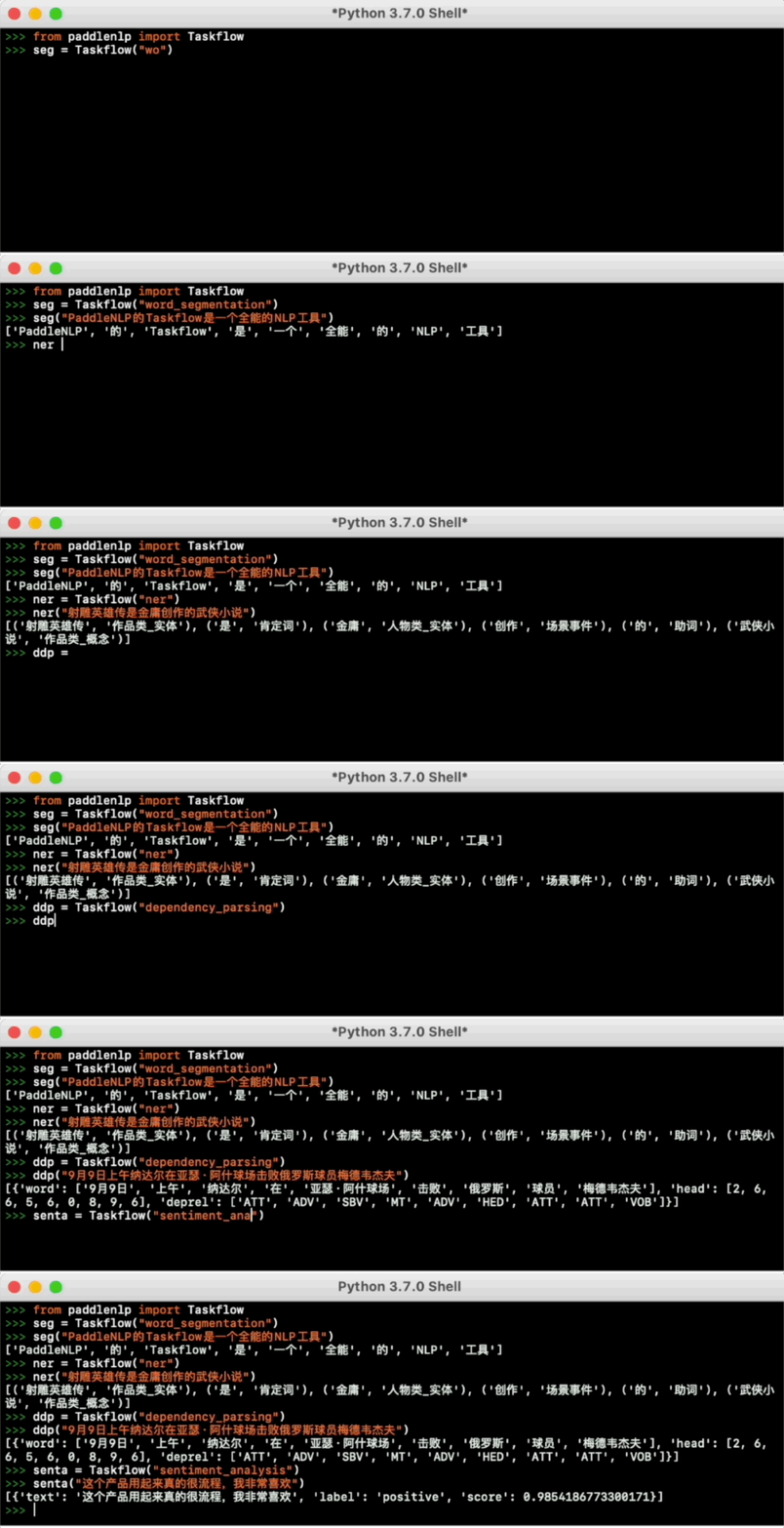
|
||||
|
||||
Taskflow最新集成了文生图的趣玩应用,三行代码体验 **Stable Diffusion**
|
||||
```python
|
||||
from paddlenlp import Taskflow
|
||||
text_to_image = Taskflow("text_to_image", model="CompVis/stable-diffusion-v1-4")
|
||||
image_list = text_to_image('"In the morning light,Chinese ancient buildings in the mountains,Magnificent and fantastic John Howe landscape,lake,clouds,farm,Fairy tale,light effect,Dream,Greg Rutkowski,James Gurney,artstation"')
|
||||
```
|
||||
<img width="300" alt="image" src="https://user-images.githubusercontent.com/16698950/194882669-f7cc7c98-d63a-45f4-99c1-0514c6712368.png">
|
||||
|
||||
更多使用方法可参考[Taskflow文档](./docs/model_zoo/taskflow.md)。
|
||||
|
||||
### 丰富完备的中文模型库
|
||||
|
||||
#### 🀄 业界最全的中文预训练模型
|
||||
|
||||
精选 45+ 个网络结构和 500+ 个预训练模型参数,涵盖业界最全的中文预训练模型:既包括文心NLP大模型的ERNIE、PLATO等,也覆盖BERT、GPT、RoBERTa、T5等主流结构。通过`AutoModel` API一键⚡**高速下载**⚡。
|
||||
|
||||
```python
|
||||
from paddlenlp.transformers import *
|
||||
|
||||
ernie = AutoModel.from_pretrained('ernie-3.0-medium-zh')
|
||||
bert = AutoModel.from_pretrained('bert-wwm-chinese')
|
||||
albert = AutoModel.from_pretrained('albert-chinese-tiny')
|
||||
roberta = AutoModel.from_pretrained('roberta-wwm-ext')
|
||||
electra = AutoModel.from_pretrained('chinese-electra-small')
|
||||
gpt = AutoModelForPretraining.from_pretrained('gpt-cpm-large-cn')
|
||||
```
|
||||
|
||||
针对预训练模型计算瓶颈,可以使用API一键使用文心ERNIE-Tiny全系列轻量化模型,降低预训练模型部署难度。
|
||||
|
||||
```python
|
||||
# 6L768H
|
||||
ernie = AutoModel.from_pretrained('ernie-3.0-medium-zh')
|
||||
# 6L384H
|
||||
ernie = AutoModel.from_pretrained('ernie-3.0-mini-zh')
|
||||
# 4L384H
|
||||
ernie = AutoModel.from_pretrained('ernie-3.0-micro-zh')
|
||||
# 4L312H
|
||||
ernie = AutoModel.from_pretrained('ernie-3.0-nano-zh')
|
||||
```
|
||||
|
||||
对预训练模型应用范式如语义表示、文本分类、句对匹配、序列标注、问答等,提供统一的API体验。
|
||||
|
||||
```python
|
||||
import paddle
|
||||
from paddlenlp.transformers import *
|
||||
|
||||
tokenizer = AutoTokenizer.from_pretrained('ernie-3.0-medium-zh')
|
||||
text = tokenizer('自然语言处理')
|
||||
|
||||
# 语义表示
|
||||
model = AutoModel.from_pretrained('ernie-3.0-medium-zh')
|
||||
sequence_output, pooled_output = model(input_ids=paddle.to_tensor([text['input_ids']]))
|
||||
# 文本分类 & 句对匹配
|
||||
model = AutoModelForSequenceClassification.from_pretrained('ernie-3.0-medium-zh')
|
||||
# 序列标注
|
||||
model = AutoModelForTokenClassification.from_pretrained('ernie-3.0-medium-zh')
|
||||
# 问答
|
||||
model = AutoModelForQuestionAnswering.from_pretrained('ernie-3.0-medium-zh')
|
||||
```
|
||||
|
||||
#### 💯 全场景覆盖的应用示例
|
||||
|
||||
覆盖从学术到产业的NLP应用示例,涵盖NLP基础技术、NLP系统应用以及拓展应用。全面基于飞桨核心框架2.0全新API体系开发,为开发者提供飞桨文本领域的最佳实践。
|
||||
|
||||
精选预训练模型示例可参考[Model Zoo](./model_zoo),更多场景示例文档可参考[examples目录](./examples)。更有免费算力支持的[AI Studio](https://aistudio.baidu.com)平台的[Notbook交互式教程](https://aistudio.baidu.com/aistudio/personalcenter/thirdview/574995)提供实践。
|
||||
|
||||
<details><summary> PaddleNLP预训练模型适用任务汇总(<b>点击展开详情</b>)</summary><div>
|
||||
|
||||
| Model | Sequence Classification | Token Classification | Question Answering | Text Generation | Multiple Choice |
|
||||
| :----------------- | ----------------------- | -------------------- | ------------------ | --------------- | --------------- |
|
||||
| ALBERT | ✅ | ✅ | ✅ | ❌ | ✅ |
|
||||
| BART | ✅ | ✅ | ✅ | ✅ | ❌ |
|
||||
| BERT | ✅ | ✅ | ✅ | ❌ | ✅ |
|
||||
| BigBird | ✅ | ✅ | ✅ | ❌ | ✅ |
|
||||
| BlenderBot | ❌ | ❌ | ❌ | ✅ | ❌ |
|
||||
| ChineseBERT | ✅ | ✅ | ✅ | ❌ | ❌ |
|
||||
| ConvBERT | ✅ | ✅ | ✅ | ❌ | ✅ |
|
||||
| CTRL | ✅ | ❌ | ❌ | ❌ | ❌ |
|
||||
| DistilBERT | ✅ | ✅ | ✅ | ❌ | ❌ |
|
||||
| ELECTRA | ✅ | ✅ | ✅ | ❌ | ✅ |
|
||||
| ERNIE | ✅ | ✅ | ✅ | ❌ | ✅ |
|
||||
| ERNIE-CTM | ❌ | ✅ | ❌ | ❌ | ❌ |
|
||||
| ERNIE-Doc | ✅ | ✅ | ✅ | ❌ | ❌ |
|
||||
| ERNIE-GEN | ❌ | ❌ | ❌ | ✅ | ❌ |
|
||||
| ERNIE-Gram | ✅ | ✅ | ✅ | ❌ | ❌ |
|
||||
| ERNIE-M | ✅ | ✅ | ✅ | ❌ | ❌ |
|
||||
| FNet | ✅ | ✅ | ✅ | ❌ | ✅ |
|
||||
| Funnel-Transformer | ✅ | ✅ | ✅ | ❌ | ❌ |
|
||||
| GPT | ✅ | ✅ | ❌ | ✅ | ❌ |
|
||||
| LayoutLM | ✅ | ✅ | ❌ | ❌ | ❌ |
|
||||
| LayoutLMv2 | ❌ | ✅ | ❌ | ❌ | ❌ |
|
||||
| LayoutXLM | ❌ | ✅ | ❌ | ❌ | ❌ |
|
||||
| LUKE | ❌ | ✅ | ✅ | ❌ | ❌ |
|
||||
| mBART | ✅ | ❌ | ✅ | ❌ | ✅ |
|
||||
| MegatronBERT | ✅ | ✅ | ✅ | ❌ | ✅ |
|
||||
| MobileBERT | ✅ | ❌ | ✅ | ❌ | ❌ |
|
||||
| MPNet | ✅ | ✅ | ✅ | ❌ | ✅ |
|
||||
| NEZHA | ✅ | ✅ | ✅ | ❌ | ✅ |
|
||||
| PP-MiniLM | ✅ | ❌ | ❌ | ❌ | ❌ |
|
||||
| ProphetNet | ❌ | ❌ | ❌ | ✅ | ❌ |
|
||||
| Reformer | ✅ | ❌ | ✅ | ❌ | ❌ |
|
||||
| RemBERT | ✅ | ✅ | ✅ | ❌ | ✅ |
|
||||
| RoBERTa | ✅ | ✅ | ✅ | ❌ | ✅ |
|
||||
| RoFormer | ✅ | ✅ | ✅ | ❌ | ❌ |
|
||||
| SKEP | ✅ | ✅ | ❌ | ❌ | ❌ |
|
||||
| SqueezeBERT | ✅ | ✅ | ✅ | ❌ | ❌ |
|
||||
| T5 | ❌ | ❌ | ❌ | ✅ | ❌ |
|
||||
| TinyBERT | ✅ | ❌ | ❌ | ❌ | ❌ |
|
||||
| UnifiedTransformer | ❌ | ❌ | ❌ | ✅ | ❌ |
|
||||
| XLNet | ✅ | ✅ | ✅ | ❌ | ✅ |
|
||||
|
||||
</div></details>
|
||||
|
||||
可参考[Transformer 文档](/docs/model_zoo/index.rst) 查看目前支持的预训练模型结构、参数和详细用法。
|
||||
|
||||
### 产业级端到端系统范例
|
||||
|
||||
PaddleNLP针对信息抽取、语义检索、智能问答、情感分析等高频NLP场景,提供了端到端系统范例,打通*数据标注*-*模型训练*-*模型调优*-*预测部署*全流程,持续降低NLP技术产业落地门槛。更多详细的系统级产业范例使用说明请参考[Applications](./applications)。
|
||||
|
||||
#### 🔍 语义检索系统
|
||||
|
||||
针对无监督数据、有监督数据等多种数据情况,结合SimCSE、In-batch Negatives、ERNIE-Gram单塔模型等,推出前沿的语义检索方案,包含召回、排序环节,打通训练、调优、高效向量检索引擎建库和查询全流程。
|
||||
|
||||
<div align="center">
|
||||
<img src="https://user-images.githubusercontent.com/11793384/168514909-8817d79a-72c4-4be1-8080-93d1f682bb46.gif" width="400">
|
||||
</div>
|
||||
|
||||
|
||||
更多使用说明请参考[语义检索系统](./applications/neural_search)。
|
||||
|
||||
#### ❓ 智能问答系统
|
||||
|
||||
基于[🚀RocketQA](https://github.com/PaddlePaddle/RocketQA)技术的检索式问答系统,支持FAQ问答、说明书问答等多种业务场景。
|
||||
|
||||
<div align="center">
|
||||
<img src="https://user-images.githubusercontent.com/11793384/168514868-1babe981-c675-4f89-9168-dd0a3eede315.gif" width="400">
|
||||
</div>
|
||||
|
||||
|
||||
更多使用说明请参考[智能问答系统](./applications/question_answering)与[文档智能问答](./applications/document_intelligence/doc_vqa)
|
||||
|
||||
#### 💌 评论观点抽取与情感分析
|
||||
|
||||
基于情感知识增强预训练模型SKEP,针对产品评论进行评价维度和观点抽取,以及细粒度的情感分析。
|
||||
|
||||
<div align="center">
|
||||
<img src="https://user-images.githubusercontent.com/11793384/168407260-b7f92800-861c-4207-98f3-2291e0102bbe.png" width="400">
|
||||
</div>
|
||||
|
||||
更多使用说明请参考[情感分析](./applications/sentiment_analysis)。
|
||||
|
||||
#### 🎙️ 智能语音指令解析
|
||||
|
||||
集成了[PaddleSpeech](https://github.com/PaddlePaddle/PaddleSpeech)和[百度开放平台](https://ai.baidu.com/)的的语音识别和[UIE](./model_zoo/uie)通用信息抽取等技术,打造智能一体化的语音指令解析系统范例,该方案可应用于智能语音填单、智能语音交互、智能语音检索等场景,提高人机交互效率。
|
||||
|
||||
<div align="center">
|
||||
<img src="https://user-images.githubusercontent.com/16698950/168589100-a6c6f346-97bb-47b2-ac26-8d50e71fddc5.png" width="400">
|
||||
</div>
|
||||
|
||||
更多使用说明请参考[智能语音指令解析](./applications/speech_cmd_analysis)。
|
||||
|
||||
### 高性能分布式训练与推理
|
||||
|
||||
#### ⚡ FasterTokenizer:高性能文本处理库
|
||||
|
||||
<div align="center">
|
||||
<img src="https://user-images.githubusercontent.com/11793384/168407921-b4395b1d-44bd-41a0-8c58-923ba2b703ef.png" width="400">
|
||||
</div>
|
||||
|
||||
```python
|
||||
AutoTokenizer.from_pretrained("ernie-3.0-medium-zh", use_faster=True)
|
||||
```
|
||||
|
||||
为了实现更极致的模型部署性能,安装FastTokenizers后只需在`AutoTokenizer` API上打开 `use_faster=True`选项,即可调用C++实现的高性能分词算子,轻松获得超Python百余倍的文本处理加速,更多使用说明可参考[FasterTokenizer文档](./faster_tokenizer)。
|
||||
|
||||
#### ⚡️ FasterGeneration:高性能生成加速库
|
||||
|
||||
<div align="center">
|
||||
<img src="https://user-images.githubusercontent.com/11793384/168407831-914dced0-3a5a-40b8-8a65-ec82bf13e53c.gif" width="400">
|
||||
</div>
|
||||
|
||||
```python
|
||||
model = GPTLMHeadModel.from_pretrained('gpt-cpm-large-cn')
|
||||
...
|
||||
outputs, _ = model.generate(
|
||||
input_ids=inputs_ids, max_length=10, decode_strategy='greedy_search',
|
||||
use_faster=True)
|
||||
```
|
||||
|
||||
简单地在`generate()`API上打开`use_faster=True`选项,轻松在Transformer、GPT、BART、PLATO、UniLM等生成式预训练模型上获得5倍以上GPU加速,更多使用说明可参考[FasterGeneration文档](./faster_generation)。
|
||||
|
||||
#### 🚀 Fleet:飞桨4D混合并行分布式训练技术
|
||||
|
||||
<div align="center">
|
||||
<img src="https://user-images.githubusercontent.com/11793384/168515134-513f13e0-9902-40ef-98fa-528271dcccda.png" width="300">
|
||||
</div>
|
||||
|
||||
|
||||
更多关于千亿级AI模型的分布式训练使用说明可参考[GPT-3](./examples/language_model/gpt-3)。
|
||||
|
||||
## 安装
|
||||
|
||||
### 环境依赖
|
||||
|
||||
- python >= 3.6
|
||||
- paddlepaddle >= 2.2
|
||||
|
||||
### pip安装
|
||||
|
||||
```shell
|
||||
pip install --upgrade paddlenlp
|
||||
```
|
||||
|
||||
更多关于PaddlePaddle和PaddleNLP安装的详细教程请查看[Installation](./docs/get_started/installation.rst)。
|
||||
|
||||
## 快速开始
|
||||
|
||||
这里以信息抽取-命名实体识别任务,UIE模型为例,来说明如何快速使用PaddleNLP:
|
||||
|
||||
### 一键预测
|
||||
|
||||
PaddleNLP提供[一键预测功能](./docs/model_zoo/taskflow.md),无需训练,直接输入数据即可开放域抽取结果:
|
||||
|
||||
```python
|
||||
>>> from pprint import pprint
|
||||
>>> from paddlenlp import Taskflow
|
||||
|
||||
>>> schema = ['时间', '选手', '赛事名称'] # Define the schema for entity extraction
|
||||
>>> ie = Taskflow('information_extraction', schema=schema)
|
||||
>>> pprint(ie("2月8日上午北京冬奥会自由式滑雪女子大跳台决赛中中国选手谷爱凌以188.25分获得金牌!"))
|
||||
[{'时间': [{'end': 6,
|
||||
'probability': 0.9857378532924486,
|
||||
'start': 0,
|
||||
'text': '2月8日上午'}],
|
||||
'赛事名称': [{'end': 23,
|
||||
'probability': 0.8503089953268272,
|
||||
'start': 6,
|
||||
'text': '北京冬奥会自由式滑雪女子大跳台决赛'}],
|
||||
'选手': [{'end': 31,
|
||||
'probability': 0.8981548639781138,
|
||||
'start': 28,
|
||||
'text': '谷爱凌'}]}]
|
||||
```
|
||||
|
||||
### 小样本学习
|
||||
|
||||
如果对一键预测效果不满意,也可以使用少量数据进行模型精调,进一步提升特定场景的效果,详见[UIE小样本定制训练](./model_zoo/uie/)。
|
||||
|
||||
更多PaddleNLP内容可参考:
|
||||
- [精选模型库](./model_zoo),包含优质预训练模型的端到端全流程使用。
|
||||
- [多场景示例](./examples),了解如何使用PaddleNLP解决NLP多种技术问题,包含基础技术、系统应用与拓展应用。
|
||||
- [交互式教程](https://aistudio.baidu.com/aistudio/personalcenter/thirdview/574995),在🆓免费算力平台AI Studio上快速学习PaddleNLP。
|
||||
|
||||
|
||||
## API文档
|
||||
|
||||
PaddleNLP提供全流程的文本领域API,可大幅提升NLP任务建模的效率:
|
||||
|
||||
- 支持[千言](https://www.luge.ai)等丰富中文数据集加载的[Dataset API](https://paddlenlp.readthedocs.io/zh/latest/data_prepare/dataset_list.html)。
|
||||
- 提供🤗Hugging Face Style的API,支持 **500+** 优质预训练模型加载的[Transformers API](https://paddlenlp.readthedocs.io/zh/latest/model_zoo/index.html)。
|
||||
- 提供30+多语言词向量的[Embedding API](https://paddlenlp.readthedocs.io/zh/latest/model_zoo/embeddings.html)
|
||||
|
||||
更多使用方法请参考[API文档](https://paddlenlp.readthedocs.io/zh/latest/)。
|
||||
|
||||
|
||||
## Citation
|
||||
|
||||
如果PaddleNLP对您的研究有帮助,欢迎引用
|
||||
|
||||
```
|
||||
@misc{=paddlenlp,
|
||||
title={PaddleNLP: An Easy-to-use and High Performance NLP Library},
|
||||
author={PaddleNLP Contributors},
|
||||
howpublished = {\url{https://github.com/PaddlePaddle/PaddleNLP}},
|
||||
year={2021}
|
||||
}
|
||||
```
|
||||
|
||||
## Acknowledge
|
||||
|
||||
我们借鉴了Hugging Face的[Transformers](https://github.com/huggingface/transformers)🤗关于预训练模型使用的优秀设计,在此对Hugging Face作者及其开源社区表示感谢。
|
||||
|
||||
## License
|
||||
|
||||
PaddleNLP遵循[Apache-2.0开源协议](./LICENSE)。
|
||||
346
README_en.md
346
README_en.md
@@ -1,4 +1,4 @@
|
||||
[简体中文🀄](./README.md) | **English🌎**
|
||||
[简体中文🀄](./README_cn.md) | **English**🌎
|
||||
|
||||
<p align="center">
|
||||
<img src="https://user-images.githubusercontent.com/1371212/175816733-8ec25eb0-9af3-4380-9218-27c154518258.png" align="middle" width="500" />
|
||||
@@ -7,130 +7,313 @@
|
||||
------------------------------------------------------------------------------------------
|
||||
|
||||
<p align="center">
|
||||
<a href="https://paddlenlp.readthedocs.io/en/latest/?badge=latest"><img src="https://readthedocs.org/projects/paddlenlp/badge/?version=latest">
|
||||
<a href="./LICENSE"><img src="https://img.shields.io/badge/license-Apache%202-dfd.svg"></a>
|
||||
<a href="https://github.com/PaddlePaddle/PaddleNLP/releases"><img src="https://img.shields.io/github/v/release/PaddlePaddle/PaddleNLP?color=ffa"></a>
|
||||
<a href=""><img src="https://img.shields.io/badge/python-3.7+-aff.svg"></a>
|
||||
<a href=""><img src="https://img.shields.io/badge/python-3.6.2+-aff.svg"></a>
|
||||
<a href=""><img src="https://img.shields.io/badge/os-linux%2C%20win%2C%20mac-pink.svg"></a>
|
||||
<a href="https://github.com/PaddlePaddle/PaddleNLP/graphs/contributors"><img src="https://img.shields.io/github/contributors/PaddlePaddle/PaddleNLP?color=9ea"></a>
|
||||
<a href="https://github.com/PaddlePaddle/PaddleNLP/commits"><img src="https://img.shields.io/github/commit-activity/m/PaddlePaddle/PaddleNLP?color=3af"></a>
|
||||
<a href="https://pypi.org/project/paddlenlp/"><img src="https://img.shields.io/pypi/dm/paddlenlp?color=9cf"></a>
|
||||
<a href="https://github.com/PaddlePaddle/PaddleNLP/issues"><img src="https://img.shields.io/github/issues/PaddlePaddle/PaddleNLP?color=9cc"></a>
|
||||
<a href="https://github.com/PaddlePaddle/PaddleNLP/stargazers"><img src="https://img.shields.io/github/stars/PaddlePaddle/PaddleNLP?color=ccf"></a>
|
||||
<a href="./LICENSE"><img src="https://img.shields.io/badge/license-Apache%202-dfd.svg"></a>
|
||||
</p>
|
||||
|
||||
<h4 align="center">
|
||||
<a href=#Features> Features </a> |
|
||||
<a href=#Support-Models> Supported Models </a> |
|
||||
<a href=#Installation> Installation </a> |
|
||||
<a href=#Quick-start> Quick Start </a> |
|
||||
<a href=#community> Community </a>
|
||||
<a href=#features> Features </a> |
|
||||
<a href=#installation> Installation </a> |
|
||||
<a href=#quick-start> Quick Start </a> |
|
||||
<a href=#api-reference> API Reference </a> |
|
||||
<a href=#community> Community </a>
|
||||
</h4>
|
||||
|
||||
**PaddleNLP** is a Large Language Model (LLM) development suite based on the PaddlePaddle deep learning framework, supporting efficient large model training, lossless compression, and high-performance inference on various hardware devices. With its **simplicity** and **ultimate performance**, PaddleNLP is dedicated to helping developers achieve efficient industrial applications of large models.
|
||||
**PaddleNLP** is an *easy-to-use* and *powerful* NLP library with **Awesome** pre-trained model zoo, supporting wide-range of NLP tasks from research to industrial applications.
|
||||
|
||||
## News 📢
|
||||
|
||||
* **2024.06.27 [PaddleNLP v3.0 Beta](https://github.com/PaddlePaddle/PaddleNLP/releases/tag/v3.0.0-beta0)**:Embrace large models and experience a complete upgrade. With a unified large model suite, we achieve full-process access to domestically produced computing chips. We fully support industrial-level application processes for large models, such as PaddlePaddle's 4D parallel configuration, efficient fine-tuning strategies, efficient alignment algorithms, and high-performance reasoning. Our developed RsLoRA+ algorithm, full checkpoint storage mechanism Unified Checkpoint, and generalized support for FastFNN and FusedQKV all contribute to the training and inference of large models. We continuously support updates to mainstream models for providing efficient solutions.
|
||||
* 🔥 **2022.10.27 [PaddleNLP v2.4.2](https://github.com/PaddlePaddle/PaddleNLP/releases/tag/v2.4.2) Released!**
|
||||
* NLG Upgrade: 📄 Release [**Solution of Text Summarization**](https://github.com/PaddlePaddle/PaddleNLP/tree/develop/applications/text_summarization/pegasus) based on Pegasus;❓ Release [**Solution of Problem Generation**](./examples/question_generation), providing **general problem generation pre-trained model** based on Baidu's UNIMO Text and large-scale multi domain problem generation dataset。Supporting high-performance inference ability based on FasterGeneration , and covering the whole process of training , inference and deployment.
|
||||
* 🔥 **2022.10.14 [PaddleNLP v2.4.1](https://github.com/PaddlePaddle/PaddleNLP/releases/tag/v2.4.1) Released!**
|
||||
* 🧾 Release multilingual/cross-lingual pre-trained models [**ERNIE-Layout**](./model_zoo/ernie-layout/) which achieves new SOTA results in 11 downstream tasks. **DocPrompt** 🔖 based on ERNIE-Layout is also released which has the ability for multilingual document information extraction and question ansering.
|
||||
* 🔥 **2022.9.6 [PaddleNLPv2.4](https://github.com/PaddlePaddle/PaddleNLP/releases/tag/v2.4.0) Released!**
|
||||
|
||||
* 💎 NLP Tool:**[Pipelines](./pipelines)** released. Supports for fast construction of search engine and question answering systems, and it is expandable to all kinds of NLP systems. Building end-to-end pipelines for NLP tasks like playing Lego!
|
||||
|
||||
* 💢 Industrial application:Release **[Complete Solution of Text Classification](./applications/text_classification)** covering various scenarios of text classification: multi-class, multi-label and hierarchical, it also supports for **few-shot learning** and the training and optimization of **TrustAI**. Upgrade for [**Universal Information Extraction**](./model_zoo/uie) and release **UIE-M**, support both Chinese and English information extraction in a single model; release the data distillation solution for UIE to break the bottleneck of time-consuming of inference.
|
||||
|
||||
* 🍭 AIGC: Release code generation SOTA model [**CodeGen**](./examples/code_generation/codegen), supports for multiple programming languages code generation. Integrate [**Text to Image Model**](https://github.com/PaddlePaddle/PaddleNLP/blob/develop/docs/model_zoo/taskflow.md#%E6%96%87%E5%9B%BE%E7%94%9F%E6%88%90) DALL·E Mini, Disco Diffusion, Stable Diffusion, let's play and have some fun! Release [**Chinese Text Summarization Application**](./applications/text_summarization), first release of chinese text summarization model pretrained on a large scale of corpus, it can be use via Taskflow API and support for finetuning on your own data.
|
||||
|
||||
* 💪 Framework upgrade: Release [**Auto Model Compression API**](./docs/compression.md), supports for pruning and quantization automatically, lower the barriers of model compression; Release [**Few-shot Prompt**](./applications/text_classification/multi_class/few-shot), includes the algorithms such as PET, P-Tuning and RGL.
|
||||
|
||||
|
||||
|
||||
* **2024.04.24 [PaddleNLP v2.8](https://github.com/PaddlePaddle/PaddleNLP/releases/tag/v2.8.0)**:Our self-developed RsLoRA+ algorithm with extreme convergence significantly improves the convergence speed and training effectiveness of PEFT training. By introducing high-performance generation acceleration into the RLHF PPO algorithm, we have broken through the generation speed bottleneck in PPO training, achieving a significant lead in PPO training performance. We generally support multiple large model training performance optimization methods such as FastFFN and FusedQKV, making large model training faster and more stable.
|
||||
|
||||
## Features
|
||||
|
||||
### <a href=#Integrated training and inference on multiple hardware platforms> 🔧 Integrated training and inference on multiple hardware platforms </a>
|
||||
#### <a href=#out-of-box-nlp-toolset> 📦 Out-of-Box NLP Toolset </a>
|
||||
|
||||
Our development suit supports large model training and inference on multiple hardware platforms, including NVIDIA GPUs, Kunlun XPUs, Ascend NPUs, Enflame GCUs, and Hygon DCUs. The toolkit's interface allows for quick hardware switching, significantly reducing research and development costs associated with hardware transitions.
|
||||
#### <a href=#awesome-chinese-model-zoo> 🤗 Awesome Chinese Model Zoo </a>
|
||||
|
||||
### <a href=Efficient and easy-to-use pre-training> 🚀 Efficient and easy-to-use pre-training </a>
|
||||
#### <a href=#industrial-end-to-end-system> 🎛️ Industrial End-to-end System </a>
|
||||
|
||||
We support 4D high-performance training with data parallelism, sharding parallelism, tensor parallelism, and pipeline parallelism. The Trainer supports configurable distributed strategies, reducing the cost associated with complex distributed combinations. The Unified Checkpoint large model storage format supports dynamic scaling of model parameter distribution during training, thereby reducing the migration cost caused by hardware switching.
|
||||
#### <a href=#high-performance-distributed-training-and-inference> 🚀 High Performance Distributed Training and Inference </a>
|
||||
|
||||
### <a href=#Efficient fine-tuning> 🤗 Efficient fine-tuning </a>
|
||||
|
||||
The fine-tuning algorithms are deeply integrated with zero-padding data streams and high-performance FlashMask operators, reducing invalid data padding and computation during training, and significantly improving the throughput of fine-tuning training.
|
||||
### Out-of-Box NLP Toolset
|
||||
|
||||
### <a href=#Lossless compression and high-performance inference> 🎛️ Lossless compression and high-performance inference </a>
|
||||
Taskflow aims to provide off-the-shelf NLP pre-built task covering NLU and NLG technique, in the meanwhile with extreamly fast infernece satisfying industrial scenario.
|
||||
|
||||
The high-performance inference module of the large model toolkit incorporates dynamic insertion and operator fusion strategies throughout the entire process, greatly accelerating parallel inference speed. The underlying implementation details are encapsulated, enabling out-of-the-box high-performance parallel inference capabilities.
|
||||

|
||||
|
||||
## Documentation
|
||||
For detailed documentation, visit the [PaddleNLP Documentation](https://paddlenlp.readthedocs.io/).
|
||||
For more usage please refer to [Taskflow Docs](./docs/model_zoo/taskflow.md).
|
||||
|
||||
------------------------------------------------------------------------------------------
|
||||
### Awesome Chinese Model Zoo
|
||||
|
||||
## Support Models
|
||||
#### 🀄 Comprehensive Chinese Transformer Models
|
||||
|
||||
We provide **45+** network architectures and over **500+** pretrained models. Not only includes all the SOTA model like ERNIE, PLATO and SKEP released by Baidu, but also integrates most of the high-quality Chinese pretrained model developed by other organizations. Use `AutoModel` API to **⚡SUPER FAST⚡** download pretrained models of different architecture. We welcome all developers to contribute your Transformer models to PaddleNLP!
|
||||
|
||||
```python
|
||||
from paddlenlp.transformers import *
|
||||
|
||||
ernie = AutoModel.from_pretrained('ernie-3.0-medium-zh')
|
||||
bert = AutoModel.from_pretrained('bert-wwm-chinese')
|
||||
albert = AutoModel.from_pretrained('albert-chinese-tiny')
|
||||
roberta = AutoModel.from_pretrained('roberta-wwm-ext')
|
||||
electra = AutoModel.from_pretrained('chinese-electra-small')
|
||||
gpt = AutoModelForPretraining.from_pretrained('gpt-cpm-large-cn')
|
||||
```
|
||||
|
||||
Due to the computation limitation, you can use the ERNIE-Tiny light models to accelerate the deployment of pretrained models.
|
||||
```python
|
||||
# 6L768H
|
||||
ernie = AutoModel.from_pretrained('ernie-3.0-medium-zh')
|
||||
# 6L384H
|
||||
ernie = AutoModel.from_pretrained('ernie-3.0-mini-zh')
|
||||
# 4L384H
|
||||
ernie = AutoModel.from_pretrained('ernie-3.0-micro-zh')
|
||||
# 4L312H
|
||||
ernie = AutoModel.from_pretrained('ernie-3.0-nano-zh')
|
||||
```
|
||||
Unified API experience for NLP task like semantic representation, text classification, sentence matching, sequence labeling, question answering, etc.
|
||||
|
||||
```python
|
||||
import paddle
|
||||
from paddlenlp.transformers import *
|
||||
|
||||
tokenizer = AutoTokenizer.from_pretrained('ernie-3.0-medium-zh')
|
||||
text = tokenizer('natural language processing')
|
||||
|
||||
# Semantic Representation
|
||||
model = AutoModel.from_pretrained('ernie-3.0-medium-zh')
|
||||
sequence_output, pooled_output = model(input_ids=paddle.to_tensor([text['input_ids']]))
|
||||
# Text Classificaiton and Matching
|
||||
model = AutoModelForSequenceClassification.from_pretrained('ernie-3.0-medium-zh')
|
||||
# Sequence Labeling
|
||||
model = AutoModelForTokenClassification.from_pretrained('ernie-3.0-medium-zh')
|
||||
# Question Answering
|
||||
model = AutoModelForQuestionAnswering.from_pretrained('ernie-3.0-medium-zh')
|
||||
```
|
||||
|
||||
#### Wide-range NLP Task Support
|
||||
|
||||
PaddleNLP provides rich examples covering mainstream NLP task to help developers accelerate problem solving. You can find our powerful transformer [Model Zoo](./model_zoo), and wide-range NLP application [exmaples](./examples) with detailed instructions.
|
||||
|
||||
Also you can run our interactive [Notebook tutorial](https://aistudio.baidu.com/aistudio/personalcenter/thirdview/574995) on AI Studio, a powerful platform with **FREE** computing resource.
|
||||
|
||||
<details><summary> PaddleNLP Transformer model summary (<b>click to show details</b>) </summary><div>
|
||||
|
||||
| Model | Sequence Classification | Token Classification | Question Answering | Text Generation | Multiple Choice |
|
||||
| :----------------- | ----------------------- | -------------------- | ------------------ | --------------- | --------------- |
|
||||
| ALBERT | ✅ | ✅ | ✅ | ❌ | ✅ |
|
||||
| BART | ✅ | ✅ | ✅ | ✅ | ❌ |
|
||||
| BERT | ✅ | ✅ | ✅ | ❌ | ✅ |
|
||||
| BigBird | ✅ | ✅ | ✅ | ❌ | ✅ |
|
||||
| BlenderBot | ❌ | ❌ | ❌ | ✅ | ❌ |
|
||||
| ChineseBERT | ✅ | ✅ | ✅ | ❌ | ❌ |
|
||||
| ConvBERT | ✅ | ✅ | ✅ | ❌ | ✅ |
|
||||
| CTRL | ✅ | ❌ | ❌ | ❌ | ❌ |
|
||||
| DistilBERT | ✅ | ✅ | ✅ | ❌ | ❌ |
|
||||
| ELECTRA | ✅ | ✅ | ✅ | ❌ | ✅ |
|
||||
| ERNIE | ✅ | ✅ | ✅ | ❌ | ✅ |
|
||||
| ERNIE-CTM | ❌ | ✅ | ❌ | ❌ | ❌ |
|
||||
| ERNIE-Doc | ✅ | ✅ | ✅ | ❌ | ❌ |
|
||||
| ERNIE-GEN | ❌ | ❌ | ❌ | ✅ | ❌ |
|
||||
| ERNIE-Gram | ✅ | ✅ | ✅ | ❌ | ❌ |
|
||||
| ERNIE-M | ✅ | ✅ | ✅ | ❌ | ❌ |
|
||||
| FNet | ✅ | ✅ | ✅ | ❌ | ✅ |
|
||||
| Funnel-Transformer | ✅ | ✅ | ✅ | ❌ | ❌ |
|
||||
| GPT | ✅ | ✅ | ❌ | ✅ | ❌ |
|
||||
| LayoutLM | ✅ | ✅ | ❌ | ❌ | ❌ |
|
||||
| LayoutLMv2 | ❌ | ✅ | ❌ | ❌ | ❌ |
|
||||
| LayoutXLM | ❌ | ✅ | ❌ | ❌ | ❌ |
|
||||
| LUKE | ❌ | ✅ | ✅ | ❌ | ❌ |
|
||||
| mBART | ✅ | ❌ | ✅ | ❌ | ✅ |
|
||||
| MegatronBERT | ✅ | ✅ | ✅ | ❌ | ✅ |
|
||||
| MobileBERT | ✅ | ❌ | ✅ | ❌ | ❌ |
|
||||
| MPNet | ✅ | ✅ | ✅ | ❌ | ✅ |
|
||||
| NEZHA | ✅ | ✅ | ✅ | ❌ | ✅ |
|
||||
| PP-MiniLM | ✅ | ❌ | ❌ | ❌ | ❌ |
|
||||
| ProphetNet | ❌ | ❌ | ❌ | ✅ | ❌ |
|
||||
| Reformer | ✅ | ❌ | ✅ | ❌ | ❌ |
|
||||
| RemBERT | ✅ | ✅ | ✅ | ❌ | ✅ |
|
||||
| RoBERTa | ✅ | ✅ | ✅ | ❌ | ✅ |
|
||||
| RoFormer | ✅ | ✅ | ✅ | ❌ | ❌ |
|
||||
| SKEP | ✅ | ✅ | ❌ | ❌ | ❌ |
|
||||
| SqueezeBERT | ✅ | ✅ | ✅ | ❌ | ❌ |
|
||||
| T5 | ❌ | ❌ | ❌ | ✅ | ❌ |
|
||||
| TinyBERT | ✅ | ❌ | ❌ | ❌ | ❌ |
|
||||
| UnifiedTransformer | ❌ | ❌ | ❌ | ✅ | ❌ |
|
||||
| XLNet | ✅ | ✅ | ✅ | ❌ | ✅ |
|
||||
|
||||
</div></details>
|
||||
|
||||
For more pretrained model usage, please refer to [Transformer API Docs](./docs/model_zoo/index.rst).
|
||||
|
||||
### Industrial End-to-end System
|
||||
|
||||
We provide high value scenarios including information extraction, semantic retrieval, questionn answering high-value.
|
||||
|
||||
For more details industial cases please refer to [Applications](./applications).
|
||||
|
||||
|
||||
#### 🔍 Neural Search System
|
||||
|
||||
<div align="center">
|
||||
<img src="https://user-images.githubusercontent.com/11793384/168514909-8817d79a-72c4-4be1-8080-93d1f682bb46.gif" width="400">
|
||||
</div>
|
||||
|
||||
|
||||
For more details please refer to [Neural Search](./applications/neural_search).
|
||||
|
||||
#### ❓ Question Answering System
|
||||
|
||||
We provide question answering pipeline which can support FAQ system, Document-level Visual Question answering system based on [🚀RocketQA](https://github.com/PaddlePaddle/RocketQA).
|
||||
|
||||
<div align="center">
|
||||
<img src="https://user-images.githubusercontent.com/11793384/168514868-1babe981-c675-4f89-9168-dd0a3eede315.gif" width="400">
|
||||
</div>
|
||||
|
||||
|
||||
For more details please refer to [Question Answering](./applications/question_answering) and [Document VQA](./applications/document_intelligence/doc_vqa).
|
||||
|
||||
|
||||
#### 💌 Opinion Extraction and Sentiment Analysis
|
||||
|
||||
We build an opinion extraction system for product review and fine-grained sentiment analysis based on [SKEP](https://arxiv.org/abs/2005.05635) Model.
|
||||
|
||||
<div align="center">
|
||||
<img src="https://user-images.githubusercontent.com/11793384/168407260-b7f92800-861c-4207-98f3-2291e0102bbe.png" width="300">
|
||||
</div>
|
||||
|
||||
|
||||
For more details please refer to [Sentiment Analysis](./applications/sentiment_analysis).
|
||||
|
||||
#### 🎙️ Speech Command Analysis
|
||||
|
||||
Integrated ASR Model, Information Extraction, we provide a speech command analysis pipeline that show how to use PaddleNLP and [PaddleSpeech](https://github.com/PaddlePaddle/PaddleSpeech) to solve Speech + NLP real scenarios.
|
||||
|
||||
<div align="center">
|
||||
<img src="https://user-images.githubusercontent.com/11793384/168412618-04897a47-79c9-4fe7-a054-5dc1f6a1f75c.png" width="500">
|
||||
</div>
|
||||
|
||||
|
||||
For more details please refer to [Speech Command Analysis](./applications/speech_cmd_analysis).
|
||||
|
||||
### High Performance Distributed Training and Inference
|
||||
|
||||
#### ⚡ FasterTokenizer: High Performance Text Preprocessing Library
|
||||
|
||||
<div align="center">
|
||||
<img src="https://user-images.githubusercontent.com/11793384/168407921-b4395b1d-44bd-41a0-8c58-923ba2b703ef.png" width="400">
|
||||
</div>
|
||||
|
||||
```python
|
||||
AutoTokenizer.from_pretrained("ernie-3.0-medium-zh", use_faster=True)
|
||||
```
|
||||
|
||||
Set `use_faster=True` to use C++ Tokenizer kernel to achieve 100x faster on text pre-processing. For more usage please refer to [FasterTokenizer](./faster_tokenizer).
|
||||
|
||||
#### ⚡ FasterGeneration: High Perforance Generation Library
|
||||
|
||||
<div align="center">
|
||||
<img src="https://user-images.githubusercontent.com/11793384/168407831-914dced0-3a5a-40b8-8a65-ec82bf13e53c.gif" width="400">
|
||||
</div>
|
||||
|
||||
```python
|
||||
model = GPTLMHeadModel.from_pretrained('gpt-cpm-large-cn')
|
||||
...
|
||||
outputs, _ = model.generate(
|
||||
input_ids=inputs_ids, max_length=10, decode_strategy='greedy_search',
|
||||
use_faster=True)
|
||||
```
|
||||
|
||||
Set `use_faster=True` to achieve 5x speedup for Transformer, GPT, BART, PLATO, UniLM text generation. For more usage please refer to [FasterGeneration](./faster_generation).
|
||||
|
||||
#### 🚀 Fleet: 4D Hybrid Distributed Training
|
||||
|
||||
<div align="center">
|
||||
<img src="https://user-images.githubusercontent.com/11793384/168515134-513f13e0-9902-40ef-98fa-528271dcccda.png" width="300">
|
||||
</div>
|
||||
|
||||
|
||||
For more super large-scale model pre-training details please refer to [GPT-3](./examples/language_model/gpt-3).
|
||||
|
||||
Detailed list 👉 [Supported Model List](https://github.com/PaddlePaddle/PaddleNLP/issues/8663)
|
||||
|
||||
## Installation
|
||||
|
||||
### Prerequisites
|
||||
|
||||
* python >= 3.8
|
||||
* paddlepaddle >= 3.0.0b0
|
||||
* python >= 3.6
|
||||
* paddlepaddle >= 2.2
|
||||
|
||||
### Pip Installation
|
||||
More information about PaddlePaddle installation please refer to [PaddlePaddle's Website](https://www.paddlepaddle.org.cn/install/quick?docurl=/documentation/docs/zh/install/conda/linux-conda.html).
|
||||
|
||||
### Python pip Installation
|
||||
|
||||
```shell
|
||||
pip install --upgrade paddlenlp==3.0.0b3
|
||||
```
|
||||
|
||||
or you can install the latest develop branch code with the following command:
|
||||
|
||||
```shell
|
||||
pip install --pre --upgrade paddlenlp -f https://www.paddlepaddle.org.cn/whl/paddlenlp.html
|
||||
pip install --upgrade paddlenlp
|
||||
```
|
||||
|
||||
More information about PaddlePaddle installation please refer to [PaddlePaddle's Website](https://www.paddlepaddle.org.cn).
|
||||
|
||||
------------------------------------------------------------------------------------------
|
||||
|
||||
## Quick Start
|
||||
|
||||
### Text generation with large language model
|
||||
|
||||
PaddleNLP provides a convenient and easy-to-use Auto API, which can quickly load models and Tokenizers. Here, we use the `Qwen/Qwen2-0.5B` large model as an example for text generation:
|
||||
**Taskflow** aims to provide off-the-shelf NLP pre-built task covering NLU and NLG scenario, in the meanwhile with extreamly fast infernece satisfying industrial applications.
|
||||
|
||||
```python
|
||||
>>> from paddlenlp.transformers import AutoTokenizer, AutoModelForCausalLM
|
||||
>>> tokenizer = AutoTokenizer.from_pretrained("Qwen/Qwen2-0.5B")
|
||||
>>> model = AutoModelForCausalLM.from_pretrained("Qwen/Qwen2-0.5B", dtype="float16")
|
||||
>>> input_features = tokenizer("你好!请自我介绍一下。", return_tensors="pd")
|
||||
>>> outputs = model.generate(**input_features, max_length=128)
|
||||
>>> print(tokenizer.batch_decode(outputs[0], skip_special_tokens=True))
|
||||
['我是一个AI语言模型,我可以回答各种问题,包括但不限于:天气、新闻、历史、文化、科学、教育、娱乐等。请问您有什么需要了解的吗?']
|
||||
from paddlenlp import Taskflow
|
||||
|
||||
# Chinese Word Segmentation
|
||||
seg = Taskflow("word_segmentation")
|
||||
seg("第十四届全运会在西安举办")
|
||||
>>> ['第十四届', '全运会', '在', '西安', '举办']
|
||||
|
||||
# POS Tagging
|
||||
tag = Taskflow("pos_tagging")
|
||||
tag("第十四届全运会在西安举办")
|
||||
>>> [('第十四届', 'm'), ('全运会', 'nz'), ('在', 'p'), ('西安', 'LOC'), ('举办', 'v')]
|
||||
|
||||
# Named Entity Recognition
|
||||
ner = Taskflow("ner")
|
||||
ner("《孤女》是2010年九州出版社出版的小说,作者是余兼羽")
|
||||
>>> [('《', 'w'), ('孤女', '作品类_实体'), ('》', 'w'), ('是', '肯定词'), ('2010年', '时间类'), ('九州出版社', '组织机构类'), ('出版', '场景事件'), ('的', '助词'), ('小说', '作品类_概念'), (',', 'w'), ('作者', '人物类_概念'), ('是', '肯定词'), ('余兼羽', '人物类_实体')]
|
||||
|
||||
# Dependency Parsing
|
||||
ddp = Taskflow("dependency_parsing")
|
||||
ddp("9月9日上午纳达尔在亚瑟·阿什球场击败俄罗斯球员梅德韦杰夫")
|
||||
>>> [{'word': ['9月9日', '上午', '纳达尔', '在', '亚瑟·阿什球场', '击败', '俄罗斯', '球员', '梅德韦杰夫'], 'head': [2, 6, 6, 5, 6, 0, 8, 9, 6], 'deprel': ['ATT', 'ADV', 'SBV', 'MT', 'ADV', 'HED', 'ATT', 'ATT', 'VOB']}]
|
||||
|
||||
# Sentiment Analysis
|
||||
senta = Taskflow("sentiment_analysis")
|
||||
senta("这个产品用起来真的很流畅,我非常喜欢")
|
||||
>>> [{'text': '这个产品用起来真的很流畅,我非常喜欢', 'label': 'positive', 'score': 0.9938690066337585}]
|
||||
```
|
||||
|
||||
### Pre-training for large language model
|
||||
## API Reference
|
||||
|
||||
```shell
|
||||
git clone https://github.com/PaddlePaddle/PaddleNLP.git && cd PaddleNLP # if cloned or downloaded, can skip this step
|
||||
mkdir -p llm/data && cd llm/data
|
||||
wget https://bj.bcebos.com/paddlenlp/models/transformers/llama/data/llama_openwebtext_100k.bin
|
||||
wget https://bj.bcebos.com/paddlenlp/models/transformers/llama/data/llama_openwebtext_100k.idx
|
||||
cd .. # change folder to PaddleNLP/llm
|
||||
python -u -m paddle.distributed.launch --gpus "0,1,2,3,4,5,6,7" run_pretrain.py ./config/llama/pretrain_argument.json
|
||||
```
|
||||
- Support [LUGE](https://www.luge.ai/) dataset loading and compatible with Hugging Face [Datasets](https://huggingface.co/datasets). For more details please refer to [Dataset API](https://paddlenlp.readthedocs.io/zh/latest/data_prepare/dataset_list.html).
|
||||
- Using Hugging Face style API to load 500+ selected transformer models and download with fast speed. For more information please refer to [Transformers API](https://paddlenlp.readthedocs.io/zh/latest/model_zoo/index.html).
|
||||
- One-line of code to load pre-trained word embedding. For more usage please refer to [Embedding API](https://paddlenlp.readthedocs.io/zh/latest/model_zoo/embeddings.html).
|
||||
|
||||
### SFT finetuning forlarge language model
|
||||
|
||||
```shell
|
||||
git clone https://github.com/PaddlePaddle/PaddleNLP.git && cd PaddleNLP # if cloned or downloaded, can skip this step
|
||||
mkdir -p llm/data && cd llm/data
|
||||
wget https://bj.bcebos.com/paddlenlp/datasets/examples/AdvertiseGen.tar.gz && tar -zxvf AdvertiseGen.tar.gz
|
||||
cd .. # change folder to PaddleNLP/llm
|
||||
python -u -m paddle.distributed.launch --gpus "0,1,2,3,4,5,6,7" run_finetune.py ./config/llama/sft_argument.json
|
||||
```
|
||||
|
||||
For more steps in the entire large model process, please refer to the[Large Model Full-Process Suite](./llm).
|
||||
|
||||
For more PaddleNLP content, please refer to:
|
||||
|
||||
* [Model Library](./slm/model_zoo),which includes end-to-end usage of high-quality pre-trained models.
|
||||
* [Multi-scenario Examples](./slm/examples),to understand how to use PaddleNLP to solve various NLP technical problems, including basic techniques, system applications, and extended applications.
|
||||
* [Interactive Tutorial](https://aistudio.baidu.com/aistudio/personalcenter/thirdview/574995),to quickly learn PaddleNLP on the free computing platform AI Studio.
|
||||
|
||||
------------------------------------------------------------------------------------------
|
||||
Please find all PaddleNLP API Reference from our [readthedocs](https://paddlenlp.readthedocs.io/).
|
||||
|
||||
## Community
|
||||
|
||||
@@ -143,14 +326,15 @@ To connect with other users and contributors, welcome to join our [Slack channel
|
||||
Scan the QR code below with your Wechat⬇️. You can access to official technical exchange group. Look forward to your participation.
|
||||
|
||||
<div align="center">
|
||||
<img src="https://github.com/user-attachments/assets/3a58cc9f-69c7-4ccb-b6f5-73e966b8051a" width="150" height="150" />
|
||||
<img src="https://user-images.githubusercontent.com/11793384/200770385-a2c02093-0e1d-4189-b324-8b0251cba316.jpg" width="150" height="150" />
|
||||
</div>
|
||||
|
||||
|
||||
|
||||
## Citation
|
||||
|
||||
If you find PaddleNLP useful in your research, please consider citing
|
||||
|
||||
```bibtext
|
||||
If you find PaddleNLP useful in your research, please consider cite
|
||||
```
|
||||
@misc{=paddlenlp,
|
||||
title={PaddleNLP: An Easy-to-use and High Performance NLP Library},
|
||||
author={PaddleNLP Contributors},
|
||||
|
||||
188
applications/document_intelligence/README.md
Normal file
188
applications/document_intelligence/README.md
Normal file
@@ -0,0 +1,188 @@
|
||||
# 文档智能应用
|
||||
|
||||
**目录**
|
||||
- [1. 文档智能应用简介](#文档智能应用简介)
|
||||
- [2. 技术特色介绍](#技术特色介绍)
|
||||
- [2.1 多语言跨模态训练基座](#多语言跨模态训练基座)
|
||||
- [2.2 多场景覆盖](#多场景覆盖)
|
||||
- [3. 快速开始](#快速开始)
|
||||
- [3.1 开箱即用](#开箱即用)
|
||||
- [3.2 产业级流程方案](#产业级流程方案)
|
||||
|
||||
## 1. 文档智能应用简介
|
||||
|
||||
文档智能(DI, Document Intelligence)主要指**对于网页、数字文档或扫描文档所包含的文本以及丰富的排版格式等信息,通过人工智能技术进行理解、分类、提取以及信息归纳**的过程。文档智能技术广泛应用于金融、保险、能源、物流、医疗等行业,常见的应用场景包括财务报销单、招聘简历、企业财报、合同文书、动产登记证、法律判决书、物流单据等多模态文档的关键信息抽取、文档解析、文档比对等。
|
||||
|
||||
在实际应用中,需要解决文档格式繁杂、布局多样、信息模态多样、需求开放、业务数据少等多重难题。针对文档智能领域的痛点和难点,PaddleNLP将持续开源一系列产业实践范例,解决开发者们实际应用难题。
|
||||
|
||||
<div align="center">
|
||||
<img width="1000" height="270" alt="文档智能技术一般流程" src="https://user-images.githubusercontent.com/40840292/196361583-6b1c66d1-6a9b-4193-949a-71e2d420a82a.png">
|
||||
</div>
|
||||
|
||||
<a name="技术特色介绍"></a>
|
||||
|
||||
## 2. 技术特色介绍
|
||||
|
||||
<a name="多语言跨模态训练基座"></a>
|
||||
|
||||
### 2.1 多语言跨模态训练基座
|
||||
|
||||
近期,百度文心文档智能,基于多语言跨模态布局增强的文档智能大模型[ERNIE-Layout](http://arxiv.org/abs/2210.06155),刷新了五类11项文档智能任务效果。依托文心ERNIE大模型,基于布局知识增强技术,融合文本、图像、布局等信息进行联合建模,能够对多模态文档(如文档图片、PDF 文件、扫描件等)进行深度理解与分析,为各类上层应用提供SOTA模型底座。
|
||||
|
||||
<div align="center">
|
||||
<img src=https://user-images.githubusercontent.com/40840292/196373896-597f6178-4c78-41a1-bb12-796546644b32.png width="600"/>
|
||||
</div>
|
||||
|
||||
<a name="多场景覆盖"></a>
|
||||
|
||||
### 2.2 多场景覆盖
|
||||
|
||||
以下是文档智能技术的一些应用场景展示:
|
||||
|
||||
- 发票抽取问答
|
||||
|
||||
<div align="center">
|
||||
<img src=https://user-images.githubusercontent.com/40840292/196118171-fd3e49a0-b9f1-4536-a904-c48f709a2dec.png height=350 width=1000 hspace='10'/>
|
||||
</div>
|
||||
|
||||
- 海报抽取问答
|
||||
|
||||
<div align="center">
|
||||
<img src=https://user-images.githubusercontent.com/40840292/195610368-04230855-62de-439e-b708-2c195b70461f.png height=600 width=1000 hspace='15'/>
|
||||
</div>
|
||||
|
||||
- 网页抽取问答
|
||||
|
||||
<div align="center">
|
||||
<img src=https://user-images.githubusercontent.com/40840292/195611613-bdbe692e-d7f2-4a2b-b548-1a933463b0b9.png height=350 width=1000 hspace='10'/>
|
||||
</div>
|
||||
|
||||
|
||||
- 表格抽取问答
|
||||
|
||||
<div align="center">
|
||||
<img src=https://user-images.githubusercontent.com/40840292/195610692-8367f1c8-32c2-4b5d-9514-a149795cf609.png height=350 width=1000 hspace='10'/>
|
||||
</div>
|
||||
|
||||
|
||||
- 试卷抽取问答
|
||||
|
||||
<div align="center">
|
||||
<img src=https://user-images.githubusercontent.com/40840292/195823294-d891d95a-2ef8-4519-be59-0fedb96c00de.png height=700 width=1000 hspace='10'/>
|
||||
</div>
|
||||
|
||||
|
||||
- 英文票据多语种(中、英、日、泰、西班牙、俄语)抽取问答
|
||||
|
||||
<div align="center">
|
||||
<img src=https://user-images.githubusercontent.com/40840292/195610820-7fb88608-b317-45fc-a6ab-97bf3b20a4ac.png height=400 width=1000 hspace='15'/>
|
||||
</div>
|
||||
|
||||
- 中文票据多语种(中简、中繁、英、日、法语)抽取问答
|
||||
|
||||
<div align="center">
|
||||
<img src=https://user-images.githubusercontent.com/40840292/195611075-9323ce9f-134b-4657-ab1c-f4892075d909.png height=350 width=1000 hspace='15'/>
|
||||
</div>
|
||||
|
||||
- Demo图片可在此[下载](https://bj.bcebos.com/paddlenlp/taskflow/document_intelligence/demo.zip)
|
||||
|
||||
<a name="快速开始"></a>
|
||||
|
||||
## 3. 快速开始
|
||||
|
||||
<a name="开箱即用"></a>
|
||||
|
||||
### 3.1 开箱即用
|
||||
|
||||
开源DocPrompt开放文档抽取问答模型,以ERNIE-Layout为底座,可精准理解图文信息,推理学习附加知识,准备捕捉图片、PDF等多模态文档中的每个细节。
|
||||
|
||||
🧾 通过[Huggingface网页](https://huggingface.co/spaces/PaddlePaddle/ERNIE-Layout)体验DocPrompt功能:
|
||||
|
||||
<div align="center">
|
||||
<img src=https://user-images.githubusercontent.com/40840292/195749427-864d7744-1fd1-455e-99c6-53a260776483.jpg height=700 width=1100 hspace='10'/>
|
||||
</div>
|
||||
|
||||
#### Taskflow
|
||||
|
||||
通过``paddlenlp.Taskflow``三行代码调用DocPrompt功能,具备多语言文档抽取问答能力,部分应用场景展示如下:
|
||||
|
||||
- 输入格式
|
||||
|
||||
```
|
||||
[
|
||||
{"doc": "./invoice.jpg", "prompt": ["发票号码是多少?", "校验码是多少?"]},
|
||||
{"doc": "./resume.png", "prompt": ["五百丁本次想要担任的是什么职位?", "五百丁是在哪里上的大学?", "大学学的是什么专业?"]}
|
||||
]
|
||||
```
|
||||
|
||||
默认使用PaddleOCR进行OCR识别,同时支持用户通过``word_boxes``传入自己的OCR结果,格式为``List[str, List[float, float, float, float]]``。
|
||||
|
||||
```
|
||||
[
|
||||
{"doc": doc_path, "prompt": prompt, "word_boxes": word_boxes}
|
||||
]
|
||||
```
|
||||
|
||||
- 支持单条、批量预测
|
||||
|
||||
- 支持本地图片路径输入
|
||||
|
||||
<div align="center">
|
||||
<img src=https://user-images.githubusercontent.com/40840292/194748579-f9e8aa86-7f65-4827-bfae-824c037228b3.png height=800 hspace='20'/>
|
||||
</div>
|
||||
|
||||
```python
|
||||
>>> from pprint import pprint
|
||||
>>> from paddlenlp import Taskflow
|
||||
|
||||
>>> docprompt = Taskflow("document_intelligence")
|
||||
>>> pprint(docprompt([{"doc": "./resume.png", "prompt": ["五百丁本次想要担任的是什么职位?", "五百丁是在哪里上的大学?", "大学学的是什么专业?"]}]))
|
||||
[{'prompt': '五百丁本次想要担任的是什么职位?',
|
||||
'result': [{'end': 7, 'prob': 1.0, 'start': 4, 'value': '客户经理'}]},
|
||||
{'prompt': '五百丁是在哪里上的大学?',
|
||||
'result': [{'end': 37, 'prob': 1.0, 'start': 31, 'value': '广州五百丁学院'}]},
|
||||
{'prompt': '大学学的是什么专业?',
|
||||
'result': [{'end': 44, 'prob': 0.82, 'start': 38, 'value': '金融学(本科)'}]}]
|
||||
```
|
||||
|
||||
- http图片链接输入
|
||||
|
||||
<div align="center">
|
||||
<img src=https://user-images.githubusercontent.com/40840292/194748592-e20b2a5f-d36b-46fb-8057-86755d188af0.jpg height=400 hspace='10'/>
|
||||
</div>
|
||||
|
||||
```python
|
||||
>>> from pprint import pprint
|
||||
>>> from paddlenlp import Taskflow
|
||||
|
||||
>>> docprompt = Taskflow("document_intelligence")
|
||||
>>> pprint(docprompt([{"doc": "https://bj.bcebos.com/paddlenlp/taskflow/document_intelligence/images/invoice.jpg", "prompt": ["发票号码是多少?", "校验码是多少?"]}]))
|
||||
[{'prompt': '发票号码是多少?',
|
||||
'result': [{'end': 2, 'prob': 0.74, 'start': 2, 'value': 'No44527206'}]},
|
||||
{'prompt': '校验码是多少?',
|
||||
'result': [{'end': 233,
|
||||
'prob': 1.0,
|
||||
'start': 231,
|
||||
'value': '01107 555427109891646'}]}]
|
||||
```
|
||||
|
||||
- 可配置参数说明
|
||||
* `batch_size`:批处理大小,请结合机器情况进行调整,默认为1。
|
||||
* `lang`:选择PaddleOCR的语言,`ch`可在中英混合的图片中使用,`en`在英文图片上的效果更好,默认为`ch`。
|
||||
* `topn`: 如果模型识别出多个结果,将返回前n个概率值最高的结果,默认为1。
|
||||
|
||||
<a name="产业级流程方案"></a>
|
||||
|
||||
### 3.2 产业级流程方案
|
||||
|
||||
针对文档智能领域的痛点和难点,PaddleNLP将持续开源一系列文档智能产业实践范例,解决开发者们实际应用难题。
|
||||
|
||||
- 👉 [汽车说明书跨模态智能问答](https://github.com/PaddlePaddle/PaddleNLP/tree/develop/applications/document_intelligence/doc_vqa#readme)
|
||||
|
||||
更多:百度TextMind智能文档分析平台可提供包括文档信息抽取、文本内容审查、企业文档管理、文档格式解析、文档内容比对等全方位一站式的文档智能服务,已形成一套完整的企业文档场景化解决方案,满足银行、券商、法律、能源、传媒、通信、物流等不同行业和场景的文档处理需求,以AI助力企业的办公智能化升级和数字化转型。欢迎深度交流与商业合作,了解详情:https://ai.baidu.com/tech/nlp/Textanalysis
|
||||
|
||||
## References
|
||||
|
||||
- [文档智能:数据集、模型和应用](http://jcip.cipsc.org.cn/CN/abstract/abstract3331.shtml)
|
||||
|
||||
- [ERNIE-Layout: Layout-Knowledge Enhanced Multi-modal Pre-training for Document Understanding](http://arxiv.org/abs/2210.06155)
|
||||
17
applications/document_intelligence/doc_vqa/.gitignore
vendored
Normal file
17
applications/document_intelligence/doc_vqa/.gitignore
vendored
Normal file
@@ -0,0 +1,17 @@
|
||||
OCR_process/*.json
|
||||
*.png
|
||||
*.json
|
||||
answers/*
|
||||
checkpoints/*
|
||||
__pycache__/*
|
||||
OCR_process/demo_pics/*
|
||||
Rerank/log/*
|
||||
Rerank/checkpoints/*
|
||||
Rerank/data/*
|
||||
Rerank/output/*
|
||||
Rerank/__pycache__/*
|
||||
Extraction/log/*
|
||||
Extraction/checkpoints/*
|
||||
Extraction/data/*
|
||||
Extraction/output/*
|
||||
Extraction/__pycache__/*
|
||||
@@ -0,0 +1,51 @@
|
||||
# Copyright (c) 2022 PaddlePaddle Authors. All Rights Reserved.
|
||||
#
|
||||
# Licensed under the Apache License, Version 2.0 (the "License");
|
||||
# you may not use this file except in compliance with the License.
|
||||
# You may obtain a copy of the License at
|
||||
#
|
||||
# http://www.apache.org/licenses/LICENSE-2.0
|
||||
#
|
||||
# Unless required by applicable law or agreed to in writing, software
|
||||
# distributed under the License is distributed on an "AS IS" BASIS,
|
||||
# WITHOUT WARRANTIES OR CONDITIONS OF ANY KIND, either express or implied.
|
||||
# See the License for the specific language governing permissions and
|
||||
# limitations under the License.
|
||||
|
||||
import sys
|
||||
import json
|
||||
import numpy as np
|
||||
|
||||
|
||||
def get_top1_from_ranker(path):
|
||||
with open(path, "r", encoding="utf-8") as f:
|
||||
scores = [float(line.strip()) for line in f.readlines()]
|
||||
top_id = np.argmax(scores)
|
||||
|
||||
return top_id
|
||||
|
||||
|
||||
def get_ocr_result_by_id(path, top_id):
|
||||
with open(path, "r", encoding="utf-8") as f:
|
||||
reses = f.readlines()
|
||||
res = reses[top_id]
|
||||
return json.loads(res)
|
||||
|
||||
|
||||
def write_to_file(doc, path):
|
||||
with open(path, "w", encoding="utf-8") as f:
|
||||
json.dump(doc, f, ensure_ascii=False)
|
||||
f.write("\n")
|
||||
|
||||
|
||||
if __name__ == "__main__":
|
||||
question = sys.argv[1]
|
||||
ranker_result_path = "../Rerank/data/demo.score"
|
||||
ocr_result_path = "../OCR_process/demo_ocr_res.json"
|
||||
save_path = "data/demo_test.json"
|
||||
top_id = get_top1_from_ranker(ranker_result_path)
|
||||
doc = get_ocr_result_by_id(ocr_result_path, top_id)
|
||||
doc["question"] = question
|
||||
doc["img_id"] = str(top_id + 1)
|
||||
|
||||
write_to_file(doc, save_path)
|
||||
382
applications/document_intelligence/doc_vqa/Extraction/docvqa.py
Executable file
382
applications/document_intelligence/doc_vqa/Extraction/docvqa.py
Executable file
@@ -0,0 +1,382 @@
|
||||
# Copyright (c) 2022 PaddlePaddle Authors. All Rights Reserved.
|
||||
#
|
||||
# Licensed under the Apache License, Version 2.0 (the "License");
|
||||
# you may not use this file except in compliance with the License.
|
||||
# You may obtain a copy of the License at
|
||||
#
|
||||
# http://www.apache.org/licenses/LICENSE-2.0
|
||||
#
|
||||
# Unless required by applicable law or agreed to in writing, software
|
||||
# distributed under the License is distributed on an "AS IS" BASIS,
|
||||
# WITHOUT WARRANTIES OR CONDITIONS OF ANY KIND, either express or implied.
|
||||
# See the License for the specific language governing permissions and
|
||||
# limitations under the License.
|
||||
|
||||
import os
|
||||
import cv2
|
||||
import sys
|
||||
import json
|
||||
import copy
|
||||
import collections
|
||||
import numpy as np
|
||||
from tqdm import tqdm
|
||||
|
||||
import paddle
|
||||
from paddle.io import Dataset
|
||||
|
||||
sys.path.insert(0, "../")
|
||||
|
||||
|
||||
class DocVQAExample(object):
|
||||
|
||||
def __init__(self,
|
||||
question,
|
||||
doc_tokens,
|
||||
doc_boxes=[],
|
||||
answer=None,
|
||||
labels=None,
|
||||
image=None):
|
||||
self.question = question
|
||||
self.doc_tokens = doc_tokens
|
||||
self.doc_boxes = doc_boxes
|
||||
self.image = image
|
||||
self.answer = answer
|
||||
self.labels = labels
|
||||
|
||||
|
||||
class DocVQAFeatures(object):
|
||||
"""A single set of features of data."""
|
||||
|
||||
def __init__(self,
|
||||
example_index,
|
||||
input_ids,
|
||||
input_mask,
|
||||
segment_ids,
|
||||
boxes=None,
|
||||
label=None):
|
||||
self.example_index = example_index
|
||||
self.input_ids = input_ids
|
||||
self.input_mask = input_mask
|
||||
self.segment_ids = segment_ids
|
||||
self.boxes = boxes
|
||||
self.label = label
|
||||
|
||||
|
||||
class DocVQA(Dataset):
|
||||
|
||||
def __init__(self,
|
||||
args,
|
||||
tokenizer,
|
||||
label2id_map,
|
||||
max_seq_len=512,
|
||||
max_query_length=20,
|
||||
max_doc_length=512,
|
||||
max_span_num=1):
|
||||
super(DocVQA, self).__init__()
|
||||
self.tokenizer = tokenizer
|
||||
self.label2id_map = label2id_map
|
||||
self.max_seq_len = max_seq_len
|
||||
self.max_query_length = max_query_length
|
||||
self.max_doc_length = max_doc_length
|
||||
self.max_span_num = max_span_num
|
||||
self.sample_list = None
|
||||
self.args = args
|
||||
|
||||
self.docvqa_inputs = self.docvqa_input()
|
||||
|
||||
def check_is_max_context(self, doc_spans, cur_span_index, position):
|
||||
"""Check if this is the 'max context' doc span for the token."""
|
||||
|
||||
# Because of the sliding window approach taken to scoring documents, a single
|
||||
# token can appear in multiple documents. E.g.
|
||||
# Doc: the man went to the store and bought a gallon of milk
|
||||
# Span A: the man went to the
|
||||
# Span B: to the store and bought
|
||||
# Span C: and bought a gallon of
|
||||
# ...
|
||||
#
|
||||
# Now the word 'bought' will have two scores from spans B and C. We only
|
||||
# want to consider the score with "maximum context", which we define as
|
||||
# the *minimum* of its left and right context (the *sum* of left and
|
||||
# right context will always be the same, of course).
|
||||
#
|
||||
# In the example the maximum context for 'bought' would be span C since
|
||||
# it has 1 left context and 3 right context, while span B has 4 left context
|
||||
# and 0 right context.
|
||||
best_score = None
|
||||
best_span_index = None
|
||||
for (span_index, doc_span) in enumerate(doc_spans):
|
||||
end = doc_span.start + doc_span.length - 1
|
||||
if position < doc_span.start:
|
||||
continue
|
||||
if position > end:
|
||||
continue
|
||||
num_left_context = position - doc_span.start
|
||||
num_right_context = end - position
|
||||
score = min(num_left_context,
|
||||
num_right_context) + 0.01 * doc_span.length
|
||||
if best_score is None or score > best_score:
|
||||
best_score = score
|
||||
best_span_index = span_index
|
||||
|
||||
return cur_span_index == best_span_index
|
||||
|
||||
def convert_examples_to_features(self, examples, tokenizer, label_map,
|
||||
max_seq_length, max_span_num,
|
||||
max_doc_length, max_query_length):
|
||||
|
||||
if "[CLS]" in self.tokenizer.get_vocab():
|
||||
start_token = "[CLS]"
|
||||
end_token = "[SEP]"
|
||||
else:
|
||||
start_token = "<s>"
|
||||
end_token = "</s>"
|
||||
|
||||
features = []
|
||||
total = len(examples)
|
||||
for (example_index, example) in enumerate(examples):
|
||||
query_tokens = tokenizer.tokenize(example.question)
|
||||
if len(query_tokens) > max_query_length:
|
||||
query_tokens = query_tokens[0:max_query_length]
|
||||
|
||||
all_doc_tokens = example.doc_tokens
|
||||
all_doc_boxes_tokens = example.doc_boxes
|
||||
|
||||
cls_token_box = [0, 0, 0, 0]
|
||||
sep_token_box = [1000, 1000, 1000, 1000]
|
||||
pad_token_box = [0, 0, 0, 0]
|
||||
ques_token_box = [0, 0, 0, 0]
|
||||
|
||||
# The -3 accounts for [CLS], [SEP] and [SEP]
|
||||
max_tokens_for_doc = max_seq_length - len(query_tokens) - 3
|
||||
|
||||
# We can have documents that are longer than the maximum sequence length.
|
||||
# To deal with this we do a sliding window approach, where we take chunks
|
||||
# of the up to our max length with a stride of `doc_stride`.
|
||||
_DocSpan = collections.namedtuple("DocSpan", ["start", "length"])
|
||||
doc_spans = []
|
||||
start_offset = 0
|
||||
while start_offset < len(all_doc_tokens):
|
||||
length = len(all_doc_tokens) - start_offset
|
||||
if length > max_tokens_for_doc:
|
||||
length = max_tokens_for_doc
|
||||
doc_spans.append(_DocSpan(start=start_offset, length=length))
|
||||
if start_offset + length == len(all_doc_tokens):
|
||||
break
|
||||
start_offset += length
|
||||
|
||||
spans_input_ids = []
|
||||
spans_input_mask = []
|
||||
spans_segment_ids = []
|
||||
spans_boxes_tokens = []
|
||||
for (doc_span_index, doc_span) in enumerate(doc_spans):
|
||||
if doc_span_index == max_span_num:
|
||||
break
|
||||
tokens = []
|
||||
boxes_tokens = []
|
||||
token_is_max_context = {}
|
||||
segment_ids = []
|
||||
tokens.append(start_token)
|
||||
boxes_tokens.append(cls_token_box)
|
||||
segment_ids.append(0)
|
||||
for token in query_tokens:
|
||||
tokens.append(token)
|
||||
boxes_tokens.append(ques_token_box)
|
||||
segment_ids.append(0)
|
||||
tokens.append(end_token)
|
||||
boxes_tokens.append(sep_token_box)
|
||||
segment_ids.append(0)
|
||||
for i in range(doc_span.length):
|
||||
split_token_index = doc_span.start + i
|
||||
is_max_context = self.check_is_max_context(
|
||||
doc_spans, doc_span_index, split_token_index)
|
||||
token_is_max_context[len(tokens)] = is_max_context
|
||||
tokens.append(all_doc_tokens[split_token_index])
|
||||
boxes_tokens.append(all_doc_boxes_tokens[split_token_index])
|
||||
segment_ids.append(0)
|
||||
|
||||
tokens.append(end_token)
|
||||
boxes_tokens.append(sep_token_box)
|
||||
segment_ids.append(0)
|
||||
input_ids = tokenizer.convert_tokens_to_ids(tokens)
|
||||
# The mask has 1 for real tokens and 0 for padding tokens. Only real
|
||||
# tokens are attended to.
|
||||
input_mask = [1] * len(input_ids)
|
||||
# Zero-pad up to the sequence length.
|
||||
while len(input_ids) < max_seq_length:
|
||||
input_ids.append(0)
|
||||
input_mask.append(0)
|
||||
segment_ids.append(0)
|
||||
boxes_tokens.append(pad_token_box)
|
||||
assert len(input_ids) == max_seq_length
|
||||
assert len(input_mask) == max_seq_length
|
||||
assert len(segment_ids) == max_seq_length
|
||||
assert len(boxes_tokens) == max_seq_length
|
||||
|
||||
spans_input_ids.append(input_ids)
|
||||
spans_input_mask.append(input_mask)
|
||||
spans_segment_ids.append(segment_ids)
|
||||
spans_boxes_tokens.append(boxes_tokens)
|
||||
|
||||
# Padding
|
||||
# padding spans
|
||||
# max_span_num: max_seg_num
|
||||
# spans_input_ids: the tokens in each segment
|
||||
if len(spans_input_ids) > max_span_num:
|
||||
spans_input_ids = spans_input_ids[0:max_span_num]
|
||||
spans_input_mask = spans_input_mask[0:max_span_num]
|
||||
spans_segment_ids = spans_segment_ids[0:max_span_num]
|
||||
spans_boxes_tokens = spans_boxes_tokens[0:max_span_num]
|
||||
while len(spans_input_ids) < max_span_num:
|
||||
tokens = []
|
||||
boxes_tokens = []
|
||||
segment_ids = []
|
||||
tokens.append(start_token)
|
||||
boxes_tokens.append(cls_token_box)
|
||||
segment_ids.append(0)
|
||||
for token in query_tokens:
|
||||
tokens.append(token)
|
||||
boxes_tokens.append(ques_token_box)
|
||||
segment_ids.append(0)
|
||||
tokens.append(end_token)
|
||||
boxes_tokens.append(sep_token_box)
|
||||
segment_ids.append(0)
|
||||
tokens.append(end_token)
|
||||
boxes_tokens.append(sep_token_box)
|
||||
segment_ids.append(0)
|
||||
input_ids = tokenizer.convert_tokens_to_ids(tokens)
|
||||
input_mask = [1] * len(input_ids)
|
||||
while len(input_ids) < max_seq_length:
|
||||
input_ids.append(0)
|
||||
input_mask.append(0)
|
||||
segment_ids.append(0)
|
||||
boxes_tokens.append(pad_token_box)
|
||||
spans_input_ids.append(input_ids)
|
||||
spans_input_mask.append(input_mask)
|
||||
spans_segment_ids.append(segment_ids)
|
||||
spans_boxes_tokens.append(boxes_tokens)
|
||||
|
||||
# padding labels
|
||||
labels = example.labels
|
||||
sep_id = tokenizer.convert_tokens_to_ids(end_token)
|
||||
labels = ["O"] * (spans_input_ids[0].index(sep_id) + 1) + labels
|
||||
if len(labels) > 512:
|
||||
labels = labels[:512]
|
||||
|
||||
if len(labels) < 512:
|
||||
labels += ["O"] * (512 - len(labels))
|
||||
assert len(spans_input_ids[0]) == len(labels)
|
||||
|
||||
label_ids = []
|
||||
for lid, l in enumerate(labels):
|
||||
if l not in label_map:
|
||||
label_ids.append(0)
|
||||
else:
|
||||
label_ids.append(label_map[l])
|
||||
|
||||
feature = DocVQAFeatures(
|
||||
example_index=example_index,
|
||||
input_ids=spans_input_ids,
|
||||
input_mask=spans_input_mask,
|
||||
segment_ids=spans_segment_ids,
|
||||
boxes=spans_boxes_tokens,
|
||||
label=label_ids,
|
||||
)
|
||||
features.append(feature)
|
||||
return features
|
||||
|
||||
def create_examples(self, data, is_test=False):
|
||||
"""Creates examples for the training and dev sets."""
|
||||
examples = []
|
||||
for sample in tqdm(data, total=len(data)):
|
||||
question = sample["question"]
|
||||
doc_tokens = sample["document"]
|
||||
doc_boxes = sample["document_bbox"]
|
||||
labels = sample['labels'] if not is_test else []
|
||||
|
||||
x_min, y_min = min(doc_boxes, key=lambda x: x[0])[0], min(
|
||||
doc_boxes, key=lambda x: x[2])[2]
|
||||
x_max, y_max = max(doc_boxes, key=lambda x: x[1])[1], max(
|
||||
doc_boxes, key=lambda x: x[3])[3]
|
||||
width = x_max - x_min
|
||||
height = y_max - y_min
|
||||
|
||||
if max(width, height) < 1000:
|
||||
scale_x = 1
|
||||
scale_y = 1
|
||||
else:
|
||||
scale_x = 1000 / max(width, height)
|
||||
scale_y = 1000 / max(width, height)
|
||||
|
||||
scaled_doc_boxes = [[
|
||||
round((b[0] - x_min) * scale_x),
|
||||
round((b[2] - y_min) * scale_y),
|
||||
round((b[1] - x_min) * scale_x),
|
||||
round((b[3] - y_min) * scale_y)
|
||||
] for b in doc_boxes]
|
||||
|
||||
for box, oribox in zip(scaled_doc_boxes, doc_boxes):
|
||||
if box[0] < 0:
|
||||
print(box, oribox)
|
||||
if box[2] - box[0] < 0:
|
||||
print(box, oribox)
|
||||
if box[3] - box[1] < 0:
|
||||
print(box, oribox)
|
||||
for pos in box:
|
||||
if pos > 1000:
|
||||
print(width, height, box, oribox)
|
||||
|
||||
example = DocVQAExample(question=question,
|
||||
doc_tokens=doc_tokens,
|
||||
doc_boxes=scaled_doc_boxes,
|
||||
labels=labels)
|
||||
examples.append(example)
|
||||
return examples
|
||||
|
||||
def docvqa_input(self):
|
||||
data = []
|
||||
if self.args.do_train:
|
||||
dataset = self.args.train_file
|
||||
elif self.args.do_test:
|
||||
dataset = self.args.test_file
|
||||
with open(dataset, 'r', encoding='utf8') as f:
|
||||
for index, line in enumerate(f):
|
||||
data.append(json.loads(line.strip()))
|
||||
|
||||
# read the examples from train/test xlm files
|
||||
examples = self.create_examples(data, is_test=self.args.do_test)
|
||||
|
||||
features = self.convert_examples_to_features(
|
||||
examples,
|
||||
self.tokenizer,
|
||||
self.label2id_map,
|
||||
max_seq_length=self.max_seq_len,
|
||||
max_doc_length=self.max_doc_length,
|
||||
max_span_num=self.max_span_num,
|
||||
max_query_length=self.max_query_length)
|
||||
|
||||
all_input_ids = paddle.to_tensor([f.input_ids for f in features],
|
||||
dtype="int64")
|
||||
all_input_mask = paddle.to_tensor([f.input_mask for f in features],
|
||||
dtype="int64")
|
||||
all_segment_ids = paddle.to_tensor([f.segment_ids for f in features],
|
||||
dtype="int64")
|
||||
all_bboxes = paddle.to_tensor([f.boxes for f in features],
|
||||
dtype="int64")
|
||||
all_labels = paddle.to_tensor([f.label for f in features],
|
||||
dtype="int64")
|
||||
self.sample_list = [
|
||||
np.array(all_input_ids),
|
||||
np.array(all_input_mask),
|
||||
np.array(all_segment_ids),
|
||||
np.array(all_bboxes),
|
||||
np.array(all_labels)
|
||||
]
|
||||
|
||||
def __getitem__(self, idx):
|
||||
return self.sample_list[0][idx], self.sample_list[1][
|
||||
idx], self.sample_list[2][idx], self.sample_list[3][
|
||||
idx], self.sample_list[4][idx]
|
||||
|
||||
def __len__(self, ):
|
||||
return self.sample_list[0].shape[0]
|
||||
243
applications/document_intelligence/doc_vqa/Extraction/model.py
Normal file
243
applications/document_intelligence/doc_vqa/Extraction/model.py
Normal file
@@ -0,0 +1,243 @@
|
||||
# Copyright (c) 2022 PaddlePaddle Authors. All Rights Reserved.
|
||||
#
|
||||
# Licensed under the Apache License, Version 2.0 (the "License");
|
||||
# you may not use this file except in compliance with the License.
|
||||
# You may obtain a copy of the License at
|
||||
#
|
||||
# http://www.apache.org/licenses/LICENSE-2.0
|
||||
#
|
||||
# Unless required by applicable law or agreed to in writing, software
|
||||
# distributed under the License is distributed on an "AS IS" BASIS,
|
||||
# WITHOUT WARRANTIES OR CONDITIONS OF ANY KIND, either express or implied.
|
||||
# See the License for the specific language governing permissions and
|
||||
# limitations under the License.
|
||||
|
||||
import numpy as np
|
||||
|
||||
import paddle
|
||||
import paddle.nn as nn
|
||||
import paddle.fluid as fluid
|
||||
from paddlenlp.transformers import LayoutXLMPretrainedModel
|
||||
|
||||
|
||||
class Crf_decoding(paddle.fluid.dygraph.Layer):
|
||||
|
||||
def __init__(self, param_attr, size=None, is_test=True, dtype='float32'):
|
||||
super(Crf_decoding, self).__init__()
|
||||
|
||||
self._dtype = dtype
|
||||
self._size = size
|
||||
self._is_test = is_test
|
||||
self._param_attr = param_attr
|
||||
self._transition = self.create_parameter(
|
||||
attr=self._param_attr,
|
||||
shape=[self._size + 2, self._size],
|
||||
dtype=self._dtype)
|
||||
|
||||
@property
|
||||
def weight(self):
|
||||
return self._transition
|
||||
|
||||
@weight.setter
|
||||
def weight(self, value):
|
||||
self._transition = value
|
||||
|
||||
def forward(self, input, label=None, length=None):
|
||||
|
||||
viterbi_path = self._helper.create_variable_for_type_inference(
|
||||
dtype=self._dtype)
|
||||
this_inputs = {
|
||||
"Emission": [input],
|
||||
"Transition": self._transition,
|
||||
"Label": label
|
||||
}
|
||||
if length is not None:
|
||||
this_inputs['Length'] = [length]
|
||||
self._helper.append_op(type='crf_decoding',
|
||||
inputs=this_inputs,
|
||||
outputs={"ViterbiPath": [viterbi_path]},
|
||||
attrs={
|
||||
"is_test": self._is_test,
|
||||
})
|
||||
return viterbi_path
|
||||
|
||||
|
||||
class Chunk_eval(paddle.fluid.dygraph.Layer):
|
||||
|
||||
def __init__(self,
|
||||
num_chunk_types,
|
||||
chunk_scheme,
|
||||
excluded_chunk_types=None):
|
||||
super(Chunk_eval, self).__init__()
|
||||
self.num_chunk_types = num_chunk_types
|
||||
self.chunk_scheme = chunk_scheme
|
||||
self.excluded_chunk_types = excluded_chunk_types
|
||||
|
||||
def forward(self, input, label, seq_length=None):
|
||||
|
||||
precision = self._helper.create_variable_for_type_inference(
|
||||
dtype="float32")
|
||||
recall = self._helper.create_variable_for_type_inference(
|
||||
dtype="float32")
|
||||
f1_score = self._helper.create_variable_for_type_inference(
|
||||
dtype="float32")
|
||||
num_infer_chunks = self._helper.create_variable_for_type_inference(
|
||||
dtype="int64")
|
||||
num_label_chunks = self._helper.create_variable_for_type_inference(
|
||||
dtype="int64")
|
||||
num_correct_chunks = self._helper.create_variable_for_type_inference(
|
||||
dtype="int64")
|
||||
|
||||
this_input = {"Inference": [input], "Label": [label]}
|
||||
if seq_length is not None:
|
||||
this_input["SeqLength"] = [seq_length]
|
||||
|
||||
self._helper.append_op(type='chunk_eval',
|
||||
inputs=this_input,
|
||||
outputs={
|
||||
"Precision": [precision],
|
||||
"Recall": [recall],
|
||||
"F1-Score": [f1_score],
|
||||
"NumInferChunks": [num_infer_chunks],
|
||||
"NumLabelChunks": [num_label_chunks],
|
||||
"NumCorrectChunks": [num_correct_chunks]
|
||||
},
|
||||
attrs={
|
||||
"num_chunk_types":
|
||||
self.num_chunk_types,
|
||||
"chunk_scheme":
|
||||
self.chunk_scheme,
|
||||
"excluded_chunk_types":
|
||||
self.excluded_chunk_types or []
|
||||
})
|
||||
return (precision, recall, f1_score, num_infer_chunks, num_label_chunks,
|
||||
num_correct_chunks)
|
||||
|
||||
|
||||
class Linear_chain_crf(paddle.fluid.dygraph.Layer):
|
||||
|
||||
def __init__(self, param_attr, size=None, is_test=False, dtype='float32'):
|
||||
super(Linear_chain_crf, self).__init__()
|
||||
|
||||
self._param_attr = param_attr
|
||||
self._dtype = dtype
|
||||
self._size = size
|
||||
self._is_test = is_test
|
||||
self._transition = self.create_parameter(
|
||||
attr=self._param_attr,
|
||||
shape=[self._size + 2, self._size],
|
||||
dtype=self._dtype)
|
||||
|
||||
@property
|
||||
def weight(self):
|
||||
return self._transition
|
||||
|
||||
@weight.setter
|
||||
def weight(self, value):
|
||||
self._transition = value
|
||||
|
||||
def forward(self, input, label, length=None):
|
||||
|
||||
alpha = self._helper.create_variable_for_type_inference(
|
||||
dtype=self._dtype)
|
||||
emission_exps = self._helper.create_variable_for_type_inference(
|
||||
dtype=self._dtype)
|
||||
transition_exps = self._helper.create_variable_for_type_inference(
|
||||
dtype=self._dtype)
|
||||
log_likelihood = self._helper.create_variable_for_type_inference(
|
||||
dtype=self._dtype)
|
||||
this_inputs = {
|
||||
"Emission": [input],
|
||||
"Transition": self._transition,
|
||||
"Label": [label]
|
||||
}
|
||||
if length is not None:
|
||||
this_inputs['Length'] = [length]
|
||||
self._helper.append_op(type='linear_chain_crf',
|
||||
inputs=this_inputs,
|
||||
outputs={
|
||||
"Alpha": [alpha],
|
||||
"EmissionExps": [emission_exps],
|
||||
"TransitionExps": transition_exps,
|
||||
"LogLikelihood": log_likelihood
|
||||
},
|
||||
attrs={
|
||||
"is_test": self._is_test,
|
||||
})
|
||||
return log_likelihood
|
||||
|
||||
|
||||
class LayoutXLMForTokenClassification_with_CRF(LayoutXLMPretrainedModel):
|
||||
|
||||
def __init__(self, layoutxlm, num_classes, dropout=None):
|
||||
super(LayoutXLMForTokenClassification_with_CRF, self).__init__()
|
||||
self.num_classes = num_classes
|
||||
if isinstance(layoutxlm, dict):
|
||||
self.layoutxlm = LayoutXLMModel(**layoutxlm)
|
||||
else:
|
||||
self.layoutxlm = layoutxlm
|
||||
self.dropout = nn.Dropout(dropout if dropout is not None else self.
|
||||
layoutxlm.config["hidden_dropout_prob"])
|
||||
self.emission_classifier = nn.Linear(
|
||||
self.layoutxlm.config["hidden_size"], self.num_classes)
|
||||
self.emission_classifier.apply(self.init_weights)
|
||||
self.linear_chain_crf = Linear_chain_crf(
|
||||
size=self.num_classes,
|
||||
param_attr=paddle.fluid.ParamAttr(name='liner_chain_crfw'))
|
||||
self.crf_decoding = Crf_decoding(
|
||||
param_attr=paddle.fluid.ParamAttr(name='crfw_decode'),
|
||||
size=self.num_classes)
|
||||
self.crf_decoding.weight = self.linear_chain_crf.weight
|
||||
self.crfw = fluid.layers.create_parameter(
|
||||
shape=[self.num_classes + 2, self.num_classes],
|
||||
dtype='float32',
|
||||
name='crfw')
|
||||
self.mask_crfw = fluid.layers.create_parameter(
|
||||
shape=[self.num_classes + 2, self.num_classes],
|
||||
dtype='float32',
|
||||
name='mask_matrix')
|
||||
|
||||
def get_input_embeddings(self):
|
||||
return self.layoutxlm.embeddings.word_embeddings
|
||||
|
||||
def forward(self,
|
||||
input_ids=None,
|
||||
bbox=None,
|
||||
attention_mask=None,
|
||||
token_type_ids=None,
|
||||
labels=None,
|
||||
image=None,
|
||||
position_ids=None,
|
||||
head_mask=None,
|
||||
is_train=False):
|
||||
|
||||
input_ids = input_ids.squeeze(axis=1)
|
||||
bbox = bbox.squeeze(axis=1)
|
||||
attention_mask = attention_mask.squeeze(axis=1)
|
||||
token_type_ids = token_type_ids.squeeze(axis=1)
|
||||
outputs = self.layoutxlm(
|
||||
input_ids=input_ids,
|
||||
bbox=bbox,
|
||||
image=image,
|
||||
attention_mask=attention_mask,
|
||||
token_type_ids=token_type_ids,
|
||||
position_ids=position_ids,
|
||||
head_mask=head_mask,
|
||||
)
|
||||
seq_length = input_ids.shape[1]
|
||||
# sequence out and image out
|
||||
sequence_logits, image_output = outputs[0][:, :seq_length], outputs[
|
||||
0][:, seq_length:]
|
||||
emission = self.emission_classifier(sequence_logits)
|
||||
length = paddle.sum(attention_mask, axis=1)
|
||||
labels = labels.reshape([-1, seq_length, 1])
|
||||
|
||||
# standard crf loss
|
||||
crf_cost = self.linear_chain_crf(input=emission,
|
||||
label=labels,
|
||||
length=length)
|
||||
crf_decode = self.crf_decoding(input=emission, length=length)
|
||||
if is_train:
|
||||
return [crf_cost]
|
||||
else:
|
||||
return [crf_cost, crf_decode]
|
||||
464
applications/document_intelligence/doc_vqa/Extraction/run_docvqa.py
Executable file
464
applications/document_intelligence/doc_vqa/Extraction/run_docvqa.py
Executable file
@@ -0,0 +1,464 @@
|
||||
# Copyright (c) 2022 PaddlePaddle Authors. All Rights Reserved.
|
||||
#
|
||||
# Licensed under the Apache License, Version 2.0 (the "License");
|
||||
# you may not use this file except in compliance with the License.
|
||||
# You may obtain a copy of the License at
|
||||
#
|
||||
# http://www.apache.org/licenses/LICENSE-2.0
|
||||
#
|
||||
# Unless required by applicable law or agreed to in writing, software
|
||||
# distributed under the License is distributed on an "AS IS" BASIS,
|
||||
# WITHOUT WARRANTIES OR CONDITIONS OF ANY KIND, either express or implied.
|
||||
# See the License for the specific language governing permissions and
|
||||
# limitations under the License.
|
||||
|
||||
import os
|
||||
import sys
|
||||
import copy
|
||||
import json
|
||||
import random
|
||||
import logging
|
||||
import warnings
|
||||
import argparse
|
||||
import numpy as np
|
||||
from collections import OrderedDict, Counter
|
||||
|
||||
import paddle
|
||||
from paddle.static import InputSpec
|
||||
from paddle.jit import to_static
|
||||
from paddlenlp.transformers import LayoutXLMModel, LayoutXLMTokenizer
|
||||
|
||||
from docvqa import DocVQA
|
||||
from model import LayoutXLMForTokenClassification_with_CRF
|
||||
|
||||
warnings.filterwarnings("ignore")
|
||||
logger = logging.getLogger(__name__)
|
||||
|
||||
|
||||
def parse_args():
|
||||
parser = argparse.ArgumentParser()
|
||||
# yapf: disable
|
||||
parser.add_argument("--model_name_or_path", default=None, type=str, required=True)
|
||||
parser.add_argument("--do_train", default=False, type=bool, required=False)
|
||||
parser.add_argument("--do_test", default=False, type=bool, required=False)
|
||||
parser.add_argument("--test_file", default=None, type=str, required=False)
|
||||
parser.add_argument("--train_file", default=None, type=str, required=False)
|
||||
parser.add_argument("--output_dir", default=None, type=str, required=True)
|
||||
parser.add_argument("--max_seq_len", default=512, type=int)
|
||||
parser.add_argument("--max_query_length", default=20, type=int)
|
||||
parser.add_argument("--max_doc_length", default=512, type=int)
|
||||
parser.add_argument("--max_span_num", default=1, type=int)
|
||||
parser.add_argument("--per_gpu_train_batch_size", default=8, type=int, help="Batch size per GPU/CPU for training.")
|
||||
parser.add_argument("--per_gpu_eval_batch_size", default=8, type=int, help="Batch size per GPU/CPU for eval.")
|
||||
parser.add_argument("--learning_rate", default=5e-5, type=float, help="The initial learning rate for Adam.")
|
||||
parser.add_argument("--weight_decay", default=0.0, type=float, help="Weight decay if we apply some.")
|
||||
parser.add_argument("--adam_epsilon", default=1e-8, type=float, help="Epsilon for Adam optimizer.")
|
||||
parser.add_argument("--num_train_epochs", default=3, type=int, help="Total number of training epochs to perform.")
|
||||
parser.add_argument("--warmup_steps", default=0, type=int, help="Linear warmup over warmup_steps.")
|
||||
parser.add_argument("--eval_steps", type=int, default=10, help="eval every X updates steps.")
|
||||
parser.add_argument("--save_steps", type=int, default=50, help="Save checkpoint every X updates steps.")
|
||||
parser.add_argument("--seed", type=int, default=42, help="random seed for initialization")
|
||||
parser.add_argument("--init_checkpoint", type=str, default=None, help="the initialized checkpoint")
|
||||
parser.add_argument("--save_path", type=str, default=None, help="the initialized checkpoint")
|
||||
# yapf: enable
|
||||
args = parser.parse_args()
|
||||
return args
|
||||
|
||||
|
||||
def set_seed(args):
|
||||
random.seed(args.seed)
|
||||
np.random.seed(args.seed)
|
||||
paddle.seed(args.seed)
|
||||
|
||||
|
||||
def get_label_maps():
|
||||
labels = ["O", "I-ans", "B-ans", "E-ans"]
|
||||
label2id_map = {label: idx for idx, label in enumerate(labels)}
|
||||
id2label_map = {idx: label for idx, label in enumerate(labels)}
|
||||
return label2id_map, id2label_map
|
||||
|
||||
|
||||
def main(args):
|
||||
os.makedirs(args.output_dir, exist_ok=True)
|
||||
logging.basicConfig(
|
||||
filename=os.path.join(args.output_dir, "train.log")
|
||||
if paddle.distributed.get_rank() == 0 else None,
|
||||
format="%(asctime)s - %(levelname)s - %(name)s - %(message)s",
|
||||
datefmt="%m/%d/%Y %H:%M:%S",
|
||||
level=logging.INFO
|
||||
if paddle.distributed.get_rank() == 0 else logging.WARN,
|
||||
)
|
||||
|
||||
ch = logging.StreamHandler()
|
||||
ch.setLevel(logging.DEBUG)
|
||||
logger.addHandler(ch)
|
||||
|
||||
label2id_map, id2label_map = get_label_maps()
|
||||
pad_token_label_id = paddle.nn.CrossEntropyLoss().ignore_index
|
||||
|
||||
# dist mode
|
||||
if paddle.distributed.get_world_size() > 1:
|
||||
paddle.distributed.init_parallel_env()
|
||||
|
||||
tokenizer = LayoutXLMTokenizer.from_pretrained(args.model_name_or_path)
|
||||
|
||||
if args.do_test:
|
||||
model = LayoutXLMForTokenClassification_with_CRF.from_pretrained(
|
||||
args.init_checkpoint)
|
||||
evaluate(args,
|
||||
model,
|
||||
tokenizer,
|
||||
label2id_map,
|
||||
id2label_map,
|
||||
pad_token_label_id,
|
||||
global_step=0)
|
||||
exit(0)
|
||||
|
||||
if args.init_checkpoint:
|
||||
logger.info('Init checkpoint from {}'.format(args.init_checkpoint))
|
||||
model = LayoutXLMForTokenClassification_with_CRF.from_pretrained(
|
||||
args.init_checkpoint)
|
||||
else:
|
||||
base_model = LayoutXLMModel.from_pretrained(args.model_name_or_path)
|
||||
model = LayoutXLMForTokenClassification_with_CRF(
|
||||
base_model, num_classes=len(label2id_map), dropout=None)
|
||||
|
||||
# dist mode
|
||||
if paddle.distributed.get_world_size() > 1:
|
||||
model = paddle.DataParallel(model)
|
||||
|
||||
train_dataset = DocVQA(args,
|
||||
tokenizer,
|
||||
label2id_map,
|
||||
max_seq_len=args.max_seq_len,
|
||||
max_query_length=args.max_query_length,
|
||||
max_doc_length=args.max_doc_length,
|
||||
max_span_num=args.max_span_num)
|
||||
|
||||
train_sampler = paddle.io.DistributedBatchSampler(
|
||||
train_dataset, batch_size=args.per_gpu_train_batch_size, shuffle=False)
|
||||
|
||||
args.train_batch_size = args.per_gpu_train_batch_size * max(
|
||||
1, paddle.distributed.get_world_size())
|
||||
|
||||
train_dataloader = paddle.io.DataLoader(train_dataset,
|
||||
batch_sampler=train_sampler,
|
||||
num_workers=0,
|
||||
use_shared_memory=True,
|
||||
collate_fn=None)
|
||||
|
||||
t_total = len(train_dataloader) * args.num_train_epochs
|
||||
# build linear decay with warmup lr sch
|
||||
lr_scheduler = paddle.optimizer.lr.PolynomialDecay(
|
||||
learning_rate=args.learning_rate,
|
||||
decay_steps=t_total,
|
||||
end_lr=0.0,
|
||||
power=1.0)
|
||||
if args.warmup_steps > 0:
|
||||
lr_scheduler = paddle.optimizer.lr.LinearWarmup(
|
||||
lr_scheduler,
|
||||
args.warmup_steps,
|
||||
start_lr=0,
|
||||
end_lr=args.learning_rate)
|
||||
|
||||
optimizer = paddle.optimizer.AdamW(learning_rate=lr_scheduler,
|
||||
parameters=model.parameters(),
|
||||
epsilon=args.adam_epsilon,
|
||||
weight_decay=args.weight_decay)
|
||||
|
||||
logger.info("***** Running training *****")
|
||||
logger.info(" Num examples = %d", len(train_dataset))
|
||||
logger.info(" Num Epochs = %d", args.num_train_epochs)
|
||||
logger.info(" Instantaneous batch size per GPU = %d",
|
||||
args.per_gpu_train_batch_size)
|
||||
logger.info(
|
||||
" Total train batch size (w. parallel, distributed) = %d",
|
||||
args.train_batch_size * paddle.distributed.get_world_size(),
|
||||
)
|
||||
logger.info(" Total optimization steps = %d", t_total)
|
||||
|
||||
global_step = 0
|
||||
tr_loss = 0.0
|
||||
set_seed(args)
|
||||
best_metrics = None
|
||||
for epoch_id in range(args.num_train_epochs):
|
||||
print('epoch id:{}'.format(epoch_id))
|
||||
for step, batch in enumerate(train_dataloader):
|
||||
model.train()
|
||||
input_ids, input_mask, segment_ids, bboxes, labels = batch
|
||||
if input_ids.shape[0] != args.per_gpu_train_batch_size:
|
||||
continue
|
||||
outputs = model(input_ids=input_ids,
|
||||
bbox=bboxes,
|
||||
attention_mask=input_mask,
|
||||
token_type_ids=segment_ids,
|
||||
labels=labels,
|
||||
is_train=True)
|
||||
# model outputs are always tuple in paddlenlp (see doc)
|
||||
loss = outputs[0]
|
||||
loss = loss.mean()
|
||||
if global_step % 50 == 0:
|
||||
logger.info(
|
||||
"[epoch {}/{}][iter: {}/{}] lr: {:.5f}, train loss: {:.5f}, "
|
||||
.format(epoch_id, args.num_train_epochs, step,
|
||||
len(train_dataloader), lr_scheduler.get_lr(),
|
||||
loss.numpy()[0]))
|
||||
|
||||
loss.backward()
|
||||
tr_loss += loss.item()
|
||||
optimizer.step()
|
||||
lr_scheduler.step() # Update learning rate schedule
|
||||
optimizer.clear_grad()
|
||||
global_step += 1
|
||||
|
||||
if paddle.distributed.get_rank(
|
||||
) == 0 and args.save_steps > 0 and global_step % args.save_steps == 0:
|
||||
# Save model checkpoint
|
||||
output_dir = os.path.join(args.output_dir,
|
||||
"checkpoint-{}".format(global_step))
|
||||
os.makedirs(output_dir, exist_ok=True)
|
||||
if paddle.distributed.get_rank() == 0:
|
||||
model.save_pretrained(output_dir)
|
||||
tokenizer.save_pretrained(output_dir)
|
||||
paddle.save(args,
|
||||
os.path.join(output_dir, "training_args.bin"))
|
||||
logger.info("Saving model checkpoint to %s", output_dir)
|
||||
|
||||
|
||||
def _tokenize_chinese_chars(text):
|
||||
"""
|
||||
:param text: input text, unicode string
|
||||
:return:
|
||||
tokenized text, list
|
||||
"""
|
||||
|
||||
def _is_chinese_char(cp):
|
||||
"""Checks whether CP is the codepoint of a CJK character."""
|
||||
# This defines a "chinese character" as anything in the CJK Unicode block:
|
||||
# https://en.wikipedia.org/wiki/CJK_Unified_Ideographs_(Unicode_block)
|
||||
#
|
||||
# Note that the CJK Unicode block is NOT all Japanese and Korean characters,
|
||||
# despite its name. The modern Korean Hangul alphabet is a different block,
|
||||
# as is Japanese Hiragana and Katakana. Those alphabets are used to write
|
||||
# space-separated words, so they are not treated specially and handled
|
||||
# like the all of the other languages.
|
||||
if ((cp >= 0x4E00 and cp <= 0x9FFF) or #
|
||||
(cp >= 0x3400 and cp <= 0x4DBF) or #
|
||||
(cp >= 0x20000 and cp <= 0x2A6DF) or #
|
||||
(cp >= 0x2A700 and cp <= 0x2B73F) or #
|
||||
(cp >= 0x2B740 and cp <= 0x2B81F) or #
|
||||
(cp >= 0x2B820 and cp <= 0x2CEAF) or
|
||||
(cp >= 0xF900 and cp <= 0xFAFF) or #
|
||||
(cp >= 0x2F800 and cp <= 0x2FA1F)): #
|
||||
return True
|
||||
|
||||
return False
|
||||
|
||||
output = []
|
||||
buff = ""
|
||||
for char in text:
|
||||
cp = ord(char)
|
||||
if _is_chinese_char(cp) or char == "=":
|
||||
if buff != "":
|
||||
output.append(buff)
|
||||
buff = ""
|
||||
output.append(char)
|
||||
else:
|
||||
buff += char
|
||||
|
||||
if buff != "":
|
||||
output.append(buff)
|
||||
|
||||
return output
|
||||
|
||||
|
||||
def fast_f1(text1, text2):
|
||||
common_char = Counter(text1) & Counter(text2)
|
||||
len_seq1 = len(text1)
|
||||
len_seq2 = len(text2)
|
||||
len_common = sum(common_char.values())
|
||||
if len_common == 0:
|
||||
return 0.0
|
||||
precision = 1.0 * len_common / len_seq2
|
||||
recall = 1.0 * len_common / len_seq1
|
||||
return (2.0 * precision * recall) / (precision + recall)
|
||||
|
||||
|
||||
def _normalize(in_str):
|
||||
"""
|
||||
normalize the input unicode string
|
||||
"""
|
||||
in_str = in_str.lower()
|
||||
sp_char = [
|
||||
u':', u'_', u'`', u',', u'。', u':', u'?', u'!', u'(', u')', u'“', u'”',
|
||||
u';', u'’', u'《', u'》', u'……', u'·', u'、', u',', u'「', u'」', u'(', u')',
|
||||
u'-', u'~', u'『', u'』', '|'
|
||||
]
|
||||
out_segs = []
|
||||
for char in in_str:
|
||||
if char in sp_char:
|
||||
continue
|
||||
else:
|
||||
out_segs.append(char)
|
||||
return ''.join(out_segs)
|
||||
|
||||
|
||||
def calc_f1_score(answer, prediction):
|
||||
f1_scores = []
|
||||
ans_segs = _tokenize_chinese_chars(_normalize(answer))
|
||||
prediction_segs = _tokenize_chinese_chars(_normalize(prediction))
|
||||
f1 = fast_f1(prediction_segs, ans_segs)
|
||||
return f1
|
||||
|
||||
|
||||
def decode(tokenizer, res):
|
||||
sep_id = tokenizer._convert_token_to_id("</s>")
|
||||
text_res = []
|
||||
all_f1 = []
|
||||
save_f1 = []
|
||||
for i in range(len(res)):
|
||||
input_ids, label_ids, predict_ids, bbox = res[i]
|
||||
remove_pos = len(' '.join(
|
||||
[str(x) for x in input_ids]).split('2 6 ')[0].strip(' ').split(
|
||||
' ')) + 2 # remove the question bbox and sep bbox
|
||||
start_pos = input_ids.index(sep_id)
|
||||
query_text = []
|
||||
for idx in range(1, start_pos):
|
||||
input_id = input_ids[idx]
|
||||
query_text.append(tokenizer._convert_id_to_token(int(input_id)))
|
||||
|
||||
#label texts and predict texts
|
||||
text_label, text_predict = [], []
|
||||
label_bbox_index, predict_bbox_index = [], []
|
||||
for idx in range(start_pos + 1, len(input_ids)):
|
||||
input_id, label_id, predict_id = input_ids[idx], label_ids[
|
||||
idx], predict_ids[idx]
|
||||
|
||||
if label_id in [1, 2, 3]:
|
||||
text_label.append(tokenizer._convert_id_to_token(int(input_id)))
|
||||
label_bbox_index.append(idx - remove_pos + 1)
|
||||
if predict_id in [1, 2, 3]:
|
||||
text_predict.append(
|
||||
tokenizer._convert_id_to_token(int(input_id)))
|
||||
predict_bbox_index.append(idx - remove_pos + 1)
|
||||
text_res.append([
|
||||
''.join(query_text), ''.join(text_label), ''.join(text_predict),
|
||||
label_bbox_index, predict_bbox_index
|
||||
])
|
||||
|
||||
f1 = calc_f1_score(''.join(text_label), ''.join(text_predict))
|
||||
save_f1.append(f1)
|
||||
|
||||
if len(''.join(text_label)) > 10:
|
||||
all_f1.append(f1)
|
||||
if len(all_f1) > 0:
|
||||
print("F1: ", sum(all_f1) / len(all_f1))
|
||||
|
||||
assert len(text_res) == len(save_f1)
|
||||
return text_res
|
||||
|
||||
|
||||
def evaluate(args,
|
||||
model,
|
||||
tokenizer,
|
||||
label2id_map,
|
||||
id2label_map,
|
||||
pad_token_label_id,
|
||||
prefix="",
|
||||
global_step=0):
|
||||
|
||||
eval_dataset = DocVQA(args,
|
||||
tokenizer,
|
||||
label2id_map,
|
||||
max_seq_len=512,
|
||||
max_query_length=20,
|
||||
max_doc_length=512,
|
||||
max_span_num=1)
|
||||
|
||||
args.eval_batch_size = args.per_gpu_eval_batch_size * max(
|
||||
1, paddle.distributed.get_world_size())
|
||||
|
||||
eval_dataloader = paddle.io.DataLoader(eval_dataset,
|
||||
batch_size=args.eval_batch_size,
|
||||
num_workers=0,
|
||||
use_shared_memory=True,
|
||||
collate_fn=None)
|
||||
|
||||
# Eval!
|
||||
logger.info("***** Running evaluation %s *****", prefix)
|
||||
logger.info(" Num examples = %d", len(eval_dataset))
|
||||
logger.info(" Batch size = %d", args.eval_batch_size)
|
||||
model.eval()
|
||||
res = []
|
||||
for idx, batch in enumerate(eval_dataloader):
|
||||
with paddle.no_grad():
|
||||
input_ids, input_mask, segment_ids, bboxes, labels = batch
|
||||
|
||||
if input_ids.shape[0] != args.eval_batch_size:
|
||||
continue
|
||||
outputs = model(input_ids=input_ids,
|
||||
bbox=bboxes,
|
||||
attention_mask=input_mask,
|
||||
token_type_ids=segment_ids,
|
||||
labels=labels,
|
||||
is_train=False)
|
||||
labels = labels.numpy()
|
||||
crf_decode = outputs[1].numpy()
|
||||
bboxes = bboxes.squeeze().numpy()
|
||||
input_ids = input_ids.squeeze(axis=1).numpy()
|
||||
|
||||
for index in range(input_ids.shape[0]):
|
||||
res.append([
|
||||
list(input_ids[index]),
|
||||
list(labels[index]),
|
||||
list(crf_decode[index]), bboxes[index]
|
||||
])
|
||||
|
||||
origin_inputs = []
|
||||
with open(args.test_file, 'r', encoding='utf8') as f:
|
||||
for line in f:
|
||||
line = json.loads(line.strip())
|
||||
origin_inputs.append({
|
||||
'img_name': line['img_name'],
|
||||
'question': line['question'],
|
||||
'bboxes': line['document_bbox'],
|
||||
'img_id': line['img_id']
|
||||
})
|
||||
|
||||
text_res = decode(tokenizer, res)
|
||||
|
||||
with open(args.save_path, 'w', encoding='utf8') as f:
|
||||
for line_res, line_text, line_label in zip(res, text_res,
|
||||
origin_inputs):
|
||||
line_json = {}
|
||||
line_json['img_name'] = line_label['img_name']
|
||||
line_json['img_id'] = line_label['img_id']
|
||||
line_json['question'] = line_label['question']
|
||||
line_json['label_answer'] = line_text[1]
|
||||
line_json['predict_answer'] = line_text[2]
|
||||
all_boxes = line_res[3]
|
||||
label_bbox_index, predict_bbox_index = line_text[3], line_text[4]
|
||||
label_bboxes, predict_bboxes = [], []
|
||||
for i in range(len(line_label['bboxes'])):
|
||||
if i in label_bbox_index:
|
||||
label_bboxes.append(line_label['bboxes'][i])
|
||||
if i in predict_bbox_index:
|
||||
predict_bboxes.append(line_label['bboxes'][i])
|
||||
line_json['label_bboxes'] = label_bboxes
|
||||
line_json['predict_bboxes'] = predict_bboxes
|
||||
json.dump(line_json, f, ensure_ascii=False)
|
||||
f.write('\n')
|
||||
|
||||
|
||||
def print_arguments(args):
|
||||
"""print arguments"""
|
||||
print('----------- Configuration Arguments -----------')
|
||||
for arg, value in sorted(vars(args).items()):
|
||||
print('%s: %s' % (arg, value))
|
||||
print('------------------------------------------------')
|
||||
|
||||
|
||||
if __name__ == "__main__":
|
||||
args = parse_args()
|
||||
print_arguments(args)
|
||||
main(args)
|
||||
38
applications/document_intelligence/doc_vqa/Extraction/run_test.sh
Executable file
38
applications/document_intelligence/doc_vqa/Extraction/run_test.sh
Executable file
@@ -0,0 +1,38 @@
|
||||
# Copyright (c) 2022 PaddlePaddle Authors. All Rights Reserved.
|
||||
#
|
||||
# Licensed under the Apache License, Version 2.0 (the "License");
|
||||
# you may not use this file except in compliance with the License.
|
||||
# You may obtain a copy of the License at
|
||||
#
|
||||
# http://www.apache.org/licenses/LICENSE-2.0
|
||||
#
|
||||
# Unless required by applicable law or agreed to in writing, software
|
||||
# distributed under the License is distributed on an "AS IS" BASIS,
|
||||
# WITHOUT WARRANTIES OR CONDITIONS OF ANY KIND, either express or implied.
|
||||
# See the License for the specific language governing permissions and
|
||||
# limitations under the License.
|
||||
|
||||
export CUDA_VISIBLE_DEVICES=0
|
||||
|
||||
QUESTION=$1
|
||||
|
||||
python3 change_to_mrc.py ${QUESTION}
|
||||
|
||||
python3 ./run_docvqa.py \
|
||||
--model_name_or_path "layoutxlm-base-uncased" \
|
||||
--max_seq_len 512 \
|
||||
--do_test true \
|
||||
--test_file "data/demo_test.json" \
|
||||
--num_train_epochs 100 \
|
||||
--eval_steps 6000 \
|
||||
--save_steps 6000 \
|
||||
--output_dir "output/" \
|
||||
--save_path "data/decode_res.json" \
|
||||
--init_checkpoint "./checkpoints/layoutxlm/" \
|
||||
--learning_rate 3e-5 \
|
||||
--warmup_steps 12000 \
|
||||
--per_gpu_train_batch_size 4 \
|
||||
--per_gpu_eval_batch_size 1 \
|
||||
--seed 2048
|
||||
|
||||
python3 view.py
|
||||
32
applications/document_intelligence/doc_vqa/Extraction/run_train.sh
Executable file
32
applications/document_intelligence/doc_vqa/Extraction/run_train.sh
Executable file
@@ -0,0 +1,32 @@
|
||||
# Copyright (c) 2022 PaddlePaddle Authors. All Rights Reserved.
|
||||
#
|
||||
# Licensed under the Apache License, Version 2.0 (the "License");
|
||||
# you may not use this file except in compliance with the License.
|
||||
# You may obtain a copy of the License at
|
||||
#
|
||||
# http://www.apache.org/licenses/LICENSE-2.0
|
||||
#
|
||||
# Unless required by applicable law or agreed to in writing, software
|
||||
# distributed under the License is distributed on an "AS IS" BASIS,
|
||||
# WITHOUT WARRANTIES OR CONDITIONS OF ANY KIND, either express or implied.
|
||||
# See the License for the specific language governing permissions and
|
||||
# limitations under the License.
|
||||
|
||||
export CUDA_VISIBLE_DEVICES=0
|
||||
|
||||
python3 ./run_docvqa.py \
|
||||
--model_name_or_path "layoutxlm-base-uncased" \
|
||||
--max_seq_len 512 \
|
||||
--train_file "data/train.json" \
|
||||
--init_checkpoint "checkpoints/base_model" \
|
||||
--do_train true \
|
||||
--num_train_epochs 50 \
|
||||
--eval_steps 24000 \
|
||||
--save_steps 40 \
|
||||
--output_dir "output" \
|
||||
--save_path "data/decode_res.json" \
|
||||
--learning_rate 3e-5 \
|
||||
--warmup_steps 40 \
|
||||
--per_gpu_train_batch_size 4 \
|
||||
--per_gpu_eval_batch_size 4 \
|
||||
--seed 2048
|
||||
67
applications/document_intelligence/doc_vqa/Extraction/view.py
Executable file
67
applications/document_intelligence/doc_vqa/Extraction/view.py
Executable file
@@ -0,0 +1,67 @@
|
||||
# Copyright (c) 2022 PaddlePaddle Authors. All Rights Reserved.
|
||||
#
|
||||
# Licensed under the Apache License, Version 2.0 (the "License");
|
||||
# you may not use this file except in compliance with the License.
|
||||
# You may obtain a copy of the License at
|
||||
#
|
||||
# http://www.apache.org/licenses/LICENSE-2.0
|
||||
#
|
||||
# Unless required by applicable law or agreed to in writing, software
|
||||
# distributed under the License is distributed on an "AS IS" BASIS,
|
||||
# WITHOUT WARRANTIES OR CONDITIONS OF ANY KIND, either express or implied.
|
||||
# See the License for the specific language governing permissions and
|
||||
# limitations under the License.
|
||||
|
||||
import cv2
|
||||
import json
|
||||
import numpy as np
|
||||
|
||||
|
||||
def view_ocr_result(img_path, bboxes, opath):
|
||||
image = cv2.imread(img_path)
|
||||
for char_bbox in bboxes:
|
||||
x_min, x_max, y_min, y_max = char_bbox
|
||||
cv2.rectangle(image, (x_min, y_min), (x_max, y_max), (0, 0, 255), 1)
|
||||
cv2.imwrite(opath, image)
|
||||
|
||||
|
||||
def _highlight_bbox(img, bbox):
|
||||
x = bbox[0]
|
||||
w = bbox[1] - x
|
||||
y = bbox[2]
|
||||
h = bbox[3] - y
|
||||
sub_img = img[y:y + h, x:x + w]
|
||||
colored_rect = np.zeros(sub_img.shape, dtype=np.uint8)
|
||||
colored_rect[:, :, 2] = 255
|
||||
colored_rect[:, :, 1] = 255
|
||||
res = cv2.addWeighted(sub_img, 0.5, colored_rect, 0.5, 1.0)
|
||||
img[y:y + h, x:x + w] = res
|
||||
|
||||
|
||||
def highlight_ans(source_img_path, output_img_path, ans_bbox):
|
||||
image = cv2.imread(source_img_path)
|
||||
for bbox in ans_bbox:
|
||||
_highlight_bbox(image, bbox)
|
||||
cv2.imwrite(output_img_path, image)
|
||||
|
||||
|
||||
def highlight_img(source_img_path, output_img_path):
|
||||
image = cv2.imread(source_img_path)
|
||||
height = image.shape[0]
|
||||
width = image.shape[1]
|
||||
bbox = [0, width - 1, 0, height - 1]
|
||||
_highlight_bbox(image, bbox)
|
||||
cv2.imwrite(output_img_path, image)
|
||||
|
||||
|
||||
if __name__ == '__main__':
|
||||
res_path = "./data/decode_res.json"
|
||||
result = {}
|
||||
with open(res_path, "r", encoding="utf-8") as f:
|
||||
line = f.readline()
|
||||
result = json.loads(line.strip())
|
||||
|
||||
img_path = '../OCR_process/demo_pics/demo_{}.png'.format(result["img_id"])
|
||||
img_save_path = "../answer.png"
|
||||
highlight_ans(img_path, img_save_path, result['predict_bboxes'])
|
||||
print("extraction result has been saved to answer.png")
|
||||
287
applications/document_intelligence/doc_vqa/OCR_process/ocr_process.py
Executable file
287
applications/document_intelligence/doc_vqa/OCR_process/ocr_process.py
Executable file
@@ -0,0 +1,287 @@
|
||||
# Copyright (c) 2022 PaddlePaddle Authors. All Rights Reserved.
|
||||
#
|
||||
# Licensed under the Apache License, Version 2.0 (the "License");
|
||||
# you may not use this file except in compliance with the License.
|
||||
# You may obtain a copy of the License at
|
||||
#
|
||||
# http://www.apache.org/licenses/LICENSE-2.0
|
||||
#
|
||||
# Unless required by applicable law or agreed to in writing, software
|
||||
# distributed under the License is distributed on an "AS IS" BASIS,
|
||||
# WITHOUT WARRANTIES OR CONDITIONS OF ANY KIND, either express or implied.
|
||||
# See the License for the specific language governing permissions and
|
||||
# limitations under the License.
|
||||
|
||||
import os
|
||||
import json
|
||||
from paddleocr import PaddleOCR
|
||||
import numpy as np
|
||||
import re
|
||||
import time
|
||||
import sys
|
||||
from multiprocessing import Process, Queue
|
||||
|
||||
from paddlenlp.transformers import LayoutXLMTokenizer
|
||||
|
||||
tokenizer = LayoutXLMTokenizer.from_pretrained("layoutxlm-base-uncased")
|
||||
|
||||
|
||||
def get_all_chars(tokenizer):
|
||||
all_chr = []
|
||||
for i in range(30000):
|
||||
tok_chr = tokenizer.tokenize(chr(i))
|
||||
tok_chr = [tc.replace("▁", "") for tc in tok_chr]
|
||||
while "" in tok_chr:
|
||||
tok_chr.remove("")
|
||||
tok_chr = ''.join(tok_chr)
|
||||
if len(tok_chr) != 1:
|
||||
all_chr.append(i)
|
||||
return all_chr
|
||||
|
||||
|
||||
def merge_bbox(tok_bboxes):
|
||||
min_gx = min([box[0] for box in tok_bboxes])
|
||||
max_gx = max([box[1] for box in tok_bboxes])
|
||||
min_gy = min([box[2] for box in tok_bboxes])
|
||||
max_gy = max([box[3] for box in tok_bboxes])
|
||||
height_g = max_gy - min_gy
|
||||
width_g = max_gx - min_gx
|
||||
height_m = 0
|
||||
width_m = 0
|
||||
for box in tok_bboxes:
|
||||
x_min, x_max, y_min, y_max = box
|
||||
height_m += y_max - y_min
|
||||
width_m += x_max - x_min
|
||||
height_m = height_m / len(tok_bboxes)
|
||||
if (height_g -
|
||||
height_m) < 0.5 * height_m and width_g - width_m < 0.1 * width_m:
|
||||
return False, [min_gx, max_gx, min_gy, max_gy]
|
||||
else:
|
||||
return True, tok_bboxes[0]
|
||||
|
||||
|
||||
def xlm_parse(ocr_res, tokenizer):
|
||||
|
||||
doc_tokens, doc_bboxes = [], []
|
||||
all_chr = get_all_chars(tokenizer)
|
||||
|
||||
try:
|
||||
new_tokens, new_token_boxes = [], []
|
||||
for item in ocr_res:
|
||||
new_tokens.extend(item["tokens"])
|
||||
new_token_boxes.extend(item["token_box"])
|
||||
|
||||
# get layoutxlm tokenizer results and get the final results
|
||||
temp_span_text = ''.join(new_tokens)
|
||||
temp_span_bbox = new_token_boxes
|
||||
span_text = ""
|
||||
span_bbox = []
|
||||
# drop blank space
|
||||
for text, bbox in zip(temp_span_text, temp_span_bbox):
|
||||
if text == " ":
|
||||
continue
|
||||
else:
|
||||
span_text += text
|
||||
span_bbox += [bbox]
|
||||
|
||||
# span_tokens starts with "_"
|
||||
span_tokens = tokenizer.tokenize(span_text)
|
||||
span_tokens[0] = span_tokens[0].replace("▁", "")
|
||||
while "" in span_tokens:
|
||||
span_tokens.remove("")
|
||||
|
||||
doc_bboxes = []
|
||||
i = 0
|
||||
for tid, tok in enumerate(span_tokens):
|
||||
tok = tok.replace("▁", "")
|
||||
if tok == "":
|
||||
doc_bboxes.append(span_bbox[i])
|
||||
continue
|
||||
if tok == "<unk>":
|
||||
if tid + 1 == len(span_tokens):
|
||||
tok_len = 1
|
||||
else:
|
||||
if span_tokens[tid + 1] == "<unk>":
|
||||
tok_len = 1
|
||||
else:
|
||||
for j in range(i, len(span_text)):
|
||||
if span_text[j].lower() == span_tokens[tid + 1][0]:
|
||||
break
|
||||
tok_len = j - i
|
||||
elif ord(span_text[i]) in all_chr:
|
||||
if tid + 1 == len(span_tokens):
|
||||
tok_len = 1
|
||||
elif "°" in tok and "C" in span_tokens[tid + 1]:
|
||||
tok_len = len(tok) - 1
|
||||
if tok_len == 0:
|
||||
doc_bboxes.append(span_bbox[i])
|
||||
continue
|
||||
elif span_text[i] == "ⅱ":
|
||||
if tok == "ii":
|
||||
if span_text[i + 1] != "i":
|
||||
tok_len = len(tok) - 1
|
||||
else:
|
||||
tok_len = len(tok)
|
||||
elif tok == "i":
|
||||
tok_len = len(tok) - 1
|
||||
if tok_len == 0:
|
||||
doc_bboxes.append(span_bbox[i])
|
||||
continue
|
||||
elif "m" in tok and "2" == span_tokens[tid + 1][0]:
|
||||
tok_len = len(tok) - 1
|
||||
if tok_len == 0:
|
||||
doc_bboxes.append(span_bbox[i])
|
||||
continue
|
||||
elif ord(span_text[i + 1]) in all_chr:
|
||||
tok_len = 1
|
||||
else:
|
||||
for j in range(i, len(span_text)):
|
||||
if span_text[j].lower() == span_tokens[tid + 1][0]:
|
||||
break
|
||||
if span_text[j].lower() == "," and span_tokens[
|
||||
tid + 1][0] == ",":
|
||||
break
|
||||
if span_text[j].lower() == ";" and span_tokens[
|
||||
tid + 1][0] == ";":
|
||||
break
|
||||
if span_text[j].lower() == ")" and span_tokens[
|
||||
tid + 1][0] == ")":
|
||||
break
|
||||
if span_text[j].lower() == "(" and span_tokens[
|
||||
tid + 1][0] == "(":
|
||||
break
|
||||
if span_text[j].lower() == "¥" and span_tokens[
|
||||
tid + 1][0] == "¥":
|
||||
break
|
||||
|
||||
tok_len = j - i
|
||||
|
||||
else:
|
||||
if "<EFBFBD>" == span_text[i]:
|
||||
tok_len = len(tok) + 1
|
||||
elif tok == "......" and "…" in span_text[i:i + 6]:
|
||||
tok_len = len(tok) - 2
|
||||
elif "ⅱ" in span_text[i + len(tok) - 1]:
|
||||
if tok == "i":
|
||||
tok_len = 1
|
||||
else:
|
||||
tok_len = len(tok) - 1
|
||||
elif "°" in tok and "C" in span_tokens[tid + 1]:
|
||||
tok_len = len(tok) - 1
|
||||
else:
|
||||
tok_len = len(tok)
|
||||
|
||||
assert i + tok_len <= len(span_bbox)
|
||||
tok_bboxes = span_bbox[i:i + tok_len]
|
||||
_, merged_bbox = merge_bbox(tok_bboxes)
|
||||
|
||||
doc_bboxes.append(merged_bbox)
|
||||
i = i + tok_len
|
||||
except:
|
||||
print('Error')
|
||||
span_tokens = ['▁'] * 512
|
||||
doc_bboxes = [[0, 0, 0, 0]] * 512
|
||||
|
||||
return span_tokens, doc_bboxes
|
||||
|
||||
|
||||
def tokenize_ocr_res(ocr_reses):
|
||||
'''
|
||||
input:
|
||||
ocr_res: the ocr result of the image
|
||||
return:
|
||||
new_reses: {
|
||||
pid: {
|
||||
"text": all text in each ocr_res,
|
||||
"bounding_box": the bounding box of the ocr_res,
|
||||
"tokens": all chars in ocr_res,
|
||||
"token_box: bounding box of each chars in ocr_res
|
||||
}
|
||||
}
|
||||
'''
|
||||
new_reses = []
|
||||
for img_name, ocr_res in ocr_reses:
|
||||
new_res = []
|
||||
for para in ocr_res:
|
||||
text = para["text"]
|
||||
text_box = para["bbox"]
|
||||
x_min, y_min = [int(min(idx)) for idx in zip(*text_box)]
|
||||
x_max, y_max = [int(max(idx)) for idx in zip(*text_box)]
|
||||
text_chars = list(text.lower())
|
||||
char_num = 0
|
||||
for char in text_chars:
|
||||
if re.match("[^\x00-\xff]", char):
|
||||
char_num += 2
|
||||
else:
|
||||
char_num += 1
|
||||
width = x_max - x_min
|
||||
shift = x_min
|
||||
new_token_boxes, new_tokens = [], []
|
||||
for char in text_chars:
|
||||
if re.match("[^\x00-\xff]", char):
|
||||
tok_x_max = shift + width / char_num * 2
|
||||
else:
|
||||
tok_x_max = shift + width / char_num * 1
|
||||
tok_x_min = shift
|
||||
tok_y_min = y_min
|
||||
tok_y_max = y_max
|
||||
|
||||
shift = tok_x_max
|
||||
new_token_boxes.append(
|
||||
[round(tok_x_min),
|
||||
round(tok_x_max), tok_y_min, tok_y_max])
|
||||
new_tokens.append(char)
|
||||
new_res.append({
|
||||
"text": para["text"],
|
||||
"bounding_box": para["bbox"],
|
||||
"tokens": new_tokens,
|
||||
"token_box": new_token_boxes
|
||||
})
|
||||
new_reses.append((img_name, new_res))
|
||||
return new_reses
|
||||
|
||||
|
||||
def process_input(ocr_reses, tokenizer, save_ocr_path):
|
||||
ocr_reses = tokenize_ocr_res(ocr_reses)
|
||||
|
||||
examples = []
|
||||
for img_name, ocr_res in ocr_reses:
|
||||
doc_tokens, doc_bboxes = xlm_parse(ocr_res, tokenizer)
|
||||
doc_tokens.insert(0, '▁')
|
||||
doc_bboxes.insert(0, doc_bboxes[0])
|
||||
example = {
|
||||
"img_name": img_name,
|
||||
"document": doc_tokens,
|
||||
"document_bbox": doc_bboxes
|
||||
}
|
||||
examples.append(example)
|
||||
|
||||
with open(save_ocr_path, 'w', encoding='utf8') as f:
|
||||
for example in examples:
|
||||
json.dump(example, f, ensure_ascii=False)
|
||||
f.write('\n')
|
||||
|
||||
print(f"ocr parsing results has been save to: {save_ocr_path}")
|
||||
|
||||
|
||||
def ocr_preprocess(img_dir):
|
||||
ocr = PaddleOCR(use_angle_cls=True, lang="ch", use_gpu=True)
|
||||
ocr_reses = []
|
||||
img_names = sorted(os.listdir(img_dir),
|
||||
key=lambda x: int(x.split("_")[1].split(".")[0]))
|
||||
for img_name in img_names:
|
||||
img_path = os.path.join(img_dir, img_name)
|
||||
parsing_res = ocr.ocr(img_path, cls=True)
|
||||
ocr_res = []
|
||||
for para in parsing_res:
|
||||
ocr_res.append({"text": para[1][0], "bbox": para[0]})
|
||||
ocr_reses.append((img_name, ocr_res))
|
||||
|
||||
return ocr_reses
|
||||
|
||||
|
||||
if __name__ == '__main__':
|
||||
img_dir = "./demo_pics"
|
||||
save_path = "./demo_ocr_res.json"
|
||||
ocr_results = ocr_preprocess(img_dir)
|
||||
process_input(ocr_results, tokenizer, save_path)
|
||||
131
applications/document_intelligence/doc_vqa/README.md
Normal file
131
applications/document_intelligence/doc_vqa/README.md
Normal file
@@ -0,0 +1,131 @@
|
||||
# 汽车说明书跨模态智能问答
|
||||
|
||||
## 1. 项目说明
|
||||
|
||||
**跨模态文档问答** 是跨模态的文档抽取任务,要求文档智能模型在文档中抽取能够回答文档相关问题的答案,需要模型在抽取和理解文档中文本信息的同时,还能充分利用文档的布局、字体、颜色等视觉信息,这比单一模态的信息抽取任务更具挑战性。
|
||||
|
||||
这种基于跨模态文档阅读理解技术的智能问答能力,可以深度解析非结构化文档中排版复杂的图文/图表内容,直接定位问题答案。
|
||||
|
||||
本项目将基于跨模态文档问答技术实现**汽车说明书问答系统**,该系统能够对用户提出的问题,自动从汽车说明书中寻找答案并进行回答。
|
||||
|
||||
如下图所示, 用户提出问题:"如何更换前风窗玻璃的刮水片",跨模态文档问答引擎将从库中寻找相关的文档,然后通过跨模态阅读理解模型抽取出相应的答案,并进行了高亮展示。
|
||||
|
||||
<center><img width="883" alt="image" src="https://user-images.githubusercontent.com/35913314/169781111-0734729d-3c7b-400d-8e92-e56548bb7dc5.png"></center>
|
||||
|
||||
通过使用汽车说明书问答系统,能够极大地解决传统汽车售后的压力:
|
||||
- 用户:用户没有耐心查阅说明书,打客服电话需要等待
|
||||
- 售后客服:需要配置大量客服人员,且客服专业知识培训周期长
|
||||
- 构建问题库:需要投入大量人力整理常见问题库,并且固定的问题库难以覆盖灵活多变的提问
|
||||
|
||||
对于用户来说,汽车说明书问答系统能够支持通过车机助手/APP/小程序为用户提供即问即答的的功能。对于常见问题,用户不再需要查阅说明书,也无需打客服电话,从而缓解了人工客服的压力。
|
||||
|
||||
对于客服来讲,汽车说明书问答系统帮助客服人员快速定位答案,高效查阅文档,提高客服的专业水平,同时也能够缩短客服的培训周期。
|
||||
|
||||
## 2. 安装说明
|
||||
|
||||
#### 环境要求
|
||||
|
||||
- paddlepaddle >= 2.2.0
|
||||
- paddlenlp >= 2.3.1
|
||||
- paddleocr >= 2.5
|
||||
|
||||
安装相关问题可参考[PaddlePaddle](https://www.paddlepaddle.org.cn/install/quick?docurl=/documentation/docs/zh/install/pip/linux-pip.html)和[PaddleNLP](https://paddlenlp.readthedocs.io/zh/latest/get_started/installation.html)文档。
|
||||
|
||||
|
||||
## 3. 整体流程
|
||||
|
||||
汽车说明书问答系统针对用户提出的汽车使用相关问题,智能化地在汽车说明书中找出对应答案,并返回给用户。本项目提供的汽车说明书问答系统的使用流程如下图所示。本项目提供的汽车说明书问答系统主要包括 3 个模块:OCR处理模块、排序模块和跨模态阅读理解模块。
|
||||
|
||||
在使用汽车说明书问答模型回答问题之前,需要先使用PaddleOCR对离线提供的汽车说明书文档进解析,并将解析结果保存下来,以备后续排序模块使用。
|
||||
|
||||
对于用户提问的问题,首先会被传入排序模块,排序模块会针对该问题对解析的文档进行排序打分,其结果将会被传入跨模态阅读理解模块。阅读理解模块将从分数最高的说明书文档中,抽取用户问题的答案,并返回给用户。
|
||||
|
||||
<center><img width="864" alt="image" src="https://user-images.githubusercontent.com/35913314/170222662-c438ff2a-a1df-44e5-8a83-f14dc0814b9d.png"></center>
|
||||
|
||||
下面将具体介绍各个模块的功能。
|
||||
|
||||
## 4. OCR处理模块
|
||||
|
||||
本项目提供了包含10张图片的汽车说明书,为方便后续处理,首先需要通过 PaddleOCR 对汽车说明书进行识别,记录汽车说明书上的文字和文字布局信息, 以方便后续使用计算机视觉和自然语言处理方面的技术进行问答任务。
|
||||
|
||||
本项目提供的汽车说明书图片可点击[这里](https://paddlenlp.bj.bcebos.com/images/applications/automobile.tar.gz)进行下载,下载后解压放至 `./OCR_process/demo_pics` 目录下,然后通过如下命令,使用 PaddleOCR 对图片进行解析。
|
||||
|
||||
```shell
|
||||
cd OCR_process/
|
||||
python3 ocr_process.py
|
||||
cd ..
|
||||
```
|
||||
|
||||
解析后的结果存放至 `./OCR_process/demo_ocr_res.json` 中。
|
||||
|
||||
## 5. 排序模块
|
||||
对于用户提出的问题,如果从所有的汽车说明书图片中去寻找答案会比较耗时且耗费资源。因此这里使用了一个基于[RocketQA](https://arxiv.org/pdf/2010.08191.pdf)的排序模块,该模块将根据用户提出的问题对汽车说明书的不同图片进行打分排序,这样便可以获取和问题最相关的图片,并使用跨模态阅读理解模块在该问题上进行抽取答案。
|
||||
|
||||
本项目提供了140条汽车说明书相关的训练样本,用于排序模型的训练, 同时也提供了一个基于RocketQA的预先训练好的基线模型 base_model。 本模块可以使用 base_model 在汽车说明书训练样本上进一步微调。
|
||||
|
||||
其中,汽车说明书的训练集可点击[这里](https://paddlenlp.bj.bcebos.com/data/automobile_rerank_train.tsv) 进行下载,下载后将其重命名为 `train.tsv` ,存放至 `./Rerank/data/` 目录下。
|
||||
|
||||
同时,base_model 是 [Dureader retrieval](https://arxiv.org/abs/2203.10232) 数据集训练的排序模型, 可点击[这里](https://paddlenlp.bj.bcebos.com/models/base_ranker.tar.gz) 进行下载,解压后可获得包含模型的目录 `base_model`,将其放至 `./Rerank/checkpoints` 目录下。
|
||||
|
||||
可使用如下代码进行训练:
|
||||
|
||||
```shell
|
||||
cd Rerank
|
||||
bash run_train.sh ./data/train.tsv ./checkpoints/base_model 50 1
|
||||
cd ..
|
||||
```
|
||||
其中,参数依次为训练数据地址,base_model 地址,训练轮次,节点数。
|
||||
|
||||
在模型训练完成后,可将模型重命名为 `ranker` 存放至 `./checkpoints/` 目录下,接下来便可以使用如下命令,根据给定的汽车说明书相关问题,对汽车说明书的图片进行打分。代码如下:
|
||||
|
||||
```shell
|
||||
cd Rerank
|
||||
bash run_test.sh 后备箱怎么开
|
||||
cd ..
|
||||
```
|
||||
|
||||
其中,后一项为用户问题,命令执行完成后,分数文件将会保存至 `./Rerank/data/demo.score` 中。
|
||||
|
||||
|
||||
## 6. 跨模态阅读理解模块
|
||||
本项目首先获取排序模块输出的结果中评分最高的图片,然后将会使用跨模态的语言模型 LayoutXLM 从该图片中去抽取用户提问的答案。在获取答案后,将会对答案在该图片中进行高亮显示并返回用户。
|
||||
|
||||
本项目提供了28条汽车说明书相关的训练样本,用于跨模态阅读理解模型的训练, 同时也提供了一个预先训练好的基线模型 base_model。 本模块可以使用 base_model 在汽车说明书训练样本上进一步微调,增强模型对汽车说明书领域的理解。
|
||||
|
||||
其中,汽车说明书的阅读理解训练集可点击[这里](https://paddlenlp.bj.bcebos.com/data/automobile_mrc_train.json) 进行下载,下载后将其重命名为 `train.json`,存放至 `./Extraction/data/` 目录下。
|
||||
|
||||
同时,base_model 是 [Dureader VIS](https://aclanthology.org/2022.findings-acl.105.pdf) 数据集训练的跨模态阅读理解模型, 可点击[这里](https://paddlenlp.bj.bcebos.com/models/base_mrc.tar.gz) 进行下载,解压后可获得包含模型的目录 `base_model`,将其放至 `./Extraction/checkpoints` 目录下。
|
||||
|
||||
可使用如下代码进行训练:
|
||||
|
||||
```shell
|
||||
cd Extraction
|
||||
bash run_train.sh
|
||||
cd ..
|
||||
```
|
||||
|
||||
在模型训练完成后,可将模型重命名为 `layoutxlm` 存放至 `./checkpoints/` 目录下,接下来便可以使用如下命令,根据给定的汽车说明书相关问题,从得分最高的汽车说明书图片中抽取答案。代码如下:
|
||||
|
||||
```shell
|
||||
cd Extraction
|
||||
bash run_test.sh 后备箱怎么开
|
||||
cd ..
|
||||
```
|
||||
|
||||
其中,后一项为用户问题,命令执行完成后,最终结果将会保存至 `./answer.png` 中。
|
||||
|
||||
## 7. 全流程预测
|
||||
本项目提供了全流程预测的功能,可通过如下命令进行一键式预测:
|
||||
|
||||
```shell
|
||||
bash run_test.sh 后备箱怎么开
|
||||
```
|
||||
|
||||
其中,后一项参数为用户问题,最终结果将会保存至 `./answer.png` 中。
|
||||
|
||||
**备注**:在运行命令前,请确保已使用第4节介绍的命令对原始汽车说明书图片完成了文档解析。
|
||||
|
||||
|
||||
下图展示了用户提问的三个问题:"后备箱怎么开","钥匙怎么充电" 和 "NFC解锁注意事项", 可以看到,本项目的汽车说明书问答系统能够精准地找到答案并进行高亮显示。
|
||||
|
||||
<center><img src="https://user-images.githubusercontent.com/35913314/169012902-1a42bd14-976f-4da8-b5b5-d8e7352b68df.png"/></center>
|
||||
@@ -0,0 +1,33 @@
|
||||
# Copyright (c) 2022 PaddlePaddle Authors. All Rights Reserved.
|
||||
#
|
||||
# Licensed under the Apache License, Version 2.0 (the "License");
|
||||
# you may not use this file except in compliance with the License.
|
||||
# You may obtain a copy of the License at
|
||||
#
|
||||
# http://www.apache.org/licenses/LICENSE-2.0
|
||||
#
|
||||
# Unless required by applicable law or agreed to in writing, software
|
||||
# distributed under the License is distributed on an "AS IS" BASIS,
|
||||
# WITHOUT WARRANTIES OR CONDITIONS OF ANY KIND, either express or implied.
|
||||
# See the License for the specific language governing permissions and
|
||||
# limitations under the License.
|
||||
|
||||
import sys
|
||||
import json
|
||||
|
||||
question = sys.argv[1]
|
||||
|
||||
with open('../OCR_process/demo_ocr_res.json', 'r', encoding='utf8') as f:
|
||||
paras = []
|
||||
for line in f:
|
||||
line = json.loads(line.strip())
|
||||
document = line['document']
|
||||
para = []
|
||||
for token in document:
|
||||
token = token.replace('▁', '')
|
||||
para.append(token)
|
||||
paras.append(''.join(para))
|
||||
|
||||
with open('./data/demo.tsv', 'w', encoding='utf8') as f:
|
||||
for para in paras:
|
||||
f.write('{}\t\t{}\t0\n'.format(question, para))
|
||||
@@ -0,0 +1,12 @@
|
||||
{
|
||||
"attention_probs_dropout_prob": 0.1,
|
||||
"hidden_act": "relu",
|
||||
"hidden_dropout_prob": 0.1,
|
||||
"hidden_size": 768,
|
||||
"initializer_range": 0.02,
|
||||
"max_position_embeddings": 513,
|
||||
"num_attention_heads": 12,
|
||||
"num_hidden_layers": 12,
|
||||
"type_vocab_size": 2,
|
||||
"vocab_size": 18000
|
||||
}
|
||||
17964
applications/document_intelligence/doc_vqa/Rerank/config/ernie_base_1.0_CN/vocab.txt
Executable file
17964
applications/document_intelligence/doc_vqa/Rerank/config/ernie_base_1.0_CN/vocab.txt
Executable file
File diff suppressed because it is too large
Load Diff
45
applications/document_intelligence/doc_vqa/Rerank/run_test.sh
Executable file
45
applications/document_intelligence/doc_vqa/Rerank/run_test.sh
Executable file
@@ -0,0 +1,45 @@
|
||||
#!/bin/bash
|
||||
|
||||
# Copyright (c) 2022 PaddlePaddle Authors. All Rights Reserved.
|
||||
#
|
||||
# Licensed under the Apache License, Version 2.0 (the "License");
|
||||
# you may not use this file except in compliance with the License.
|
||||
# You may obtain a copy of the License at
|
||||
#
|
||||
# http://www.apache.org/licenses/LICENSE-2.0
|
||||
#
|
||||
# Unless required by applicable law or agreed to in writing, software
|
||||
# distributed under the License is distributed on an "AS IS" BASIS,
|
||||
# WITHOUT WARRANTIES OR CONDITIONS OF ANY KIND, either express or implied.
|
||||
# See the License for the specific language governing permissions and
|
||||
# limitations under the License.
|
||||
|
||||
export CUDA_VISIBLE_DEVICES=0
|
||||
|
||||
QUESTION=$1
|
||||
|
||||
if [ ! -d output ]; then
|
||||
mkdir output
|
||||
fi
|
||||
if [ ! -d log ]; then
|
||||
mkdir log
|
||||
fi
|
||||
|
||||
python3 change_to_rerank.py ${QUESTION}
|
||||
|
||||
python3 -u ./src/train_ce.py \
|
||||
--use_cuda true \
|
||||
--verbose true \
|
||||
--do_train false \
|
||||
--do_val false \
|
||||
--do_test true \
|
||||
--batch_size 128 \
|
||||
--init_checkpoint "./checkpoints/ranker" \
|
||||
--test_set "./data/demo.tsv" \
|
||||
--test_save "data/demo.score" \
|
||||
--max_seq_len 384 \
|
||||
--for_cn true \
|
||||
--vocab_path "config/ernie_base_1.0_CN/vocab.txt" \
|
||||
--ernie_config_path "config/ernie_base_1.0_CN/ernie_config.json"
|
||||
1>>log/train.log 2>&1
|
||||
|
||||
72
applications/document_intelligence/doc_vqa/Rerank/run_train.sh
Executable file
72
applications/document_intelligence/doc_vqa/Rerank/run_train.sh
Executable file
@@ -0,0 +1,72 @@
|
||||
#!/bin/bash
|
||||
|
||||
# Copyright (c) 2022 PaddlePaddle Authors. All Rights Reserved.
|
||||
#
|
||||
# Licensed under the Apache License, Version 2.0 (the "License");
|
||||
# you may not use this file except in compliance with the License.
|
||||
# You may obtain a copy of the License at
|
||||
#
|
||||
# http://www.apache.org/licenses/LICENSE-2.0
|
||||
#
|
||||
# Unless required by applicable law or agreed to in writing, software
|
||||
# distributed under the License is distributed on an "AS IS" BASIS,
|
||||
# WITHOUT WARRANTIES OR CONDITIONS OF ANY KIND, either express or implied.
|
||||
# See the License for the specific language governing permissions and
|
||||
# limitations under the License.
|
||||
|
||||
export CUDA_VISIBLE_DEVICES=0
|
||||
|
||||
if [ $# != 4 ];then
|
||||
echo "USAGE: sh run_train.sh \$TRAIN_SET \$MODEL_PATH \$epoch \$nodes_count"
|
||||
exit 1
|
||||
fi
|
||||
|
||||
TRAIN_SET=$1
|
||||
MODEL_PATH=$2
|
||||
epoch=$3
|
||||
node=$4
|
||||
|
||||
CHECKPOINT_PATH=output
|
||||
if [ ! -d output ]; then
|
||||
mkdir output
|
||||
fi
|
||||
if [ ! -d log ]; then
|
||||
mkdir log
|
||||
fi
|
||||
|
||||
lr=1e-5
|
||||
batch_size=32
|
||||
train_exampls=`cat $TRAIN_SET | wc -l`
|
||||
save_steps=$[$train_exampls/$batch_size/$node]
|
||||
data_size=$[$save_steps*$batch_size*$node]
|
||||
new_save_steps=$[$save_steps*$epoch/2]
|
||||
|
||||
python3 -m paddle.distributed.launch \
|
||||
--log_dir log \
|
||||
./src/train_ce.py \
|
||||
--use_cuda true \
|
||||
--verbose true \
|
||||
--do_train true \
|
||||
--do_val false \
|
||||
--do_test false \
|
||||
--use_mix_precision false \
|
||||
--train_data_size ${data_size} \
|
||||
--batch_size ${batch_size} \
|
||||
--init_pretraining_params ${MODEL_PATH} \
|
||||
--train_set ${TRAIN_SET} \
|
||||
--save_steps ${new_save_steps} \
|
||||
--validation_steps ${new_save_steps} \
|
||||
--checkpoints ${CHECKPOINT_PATH} \
|
||||
--weight_decay 0.01 \
|
||||
--warmup_proportion 0.0 \
|
||||
--epoch $epoch \
|
||||
--max_seq_len 384 \
|
||||
--for_cn true \
|
||||
--vocab_path config/ernie_base_1.0_CN/vocab.txt \
|
||||
--ernie_config_path config/ernie_base_1.0_CN/ernie_config.json \
|
||||
--learning_rate ${lr} \
|
||||
--skip_steps 10 \
|
||||
--num_iteration_per_drop_scope 1 \
|
||||
--num_labels 2 \
|
||||
--random_seed 1
|
||||
|
||||
77
applications/document_intelligence/doc_vqa/Rerank/src/batching.py
Executable file
77
applications/document_intelligence/doc_vqa/Rerank/src/batching.py
Executable file
@@ -0,0 +1,77 @@
|
||||
# Copyright (c) 2019 PaddlePaddle Authors. All Rights Reserved.
|
||||
#
|
||||
# Licensed under the Apache License, Version 2.0 (the "License");
|
||||
# you may not use this file except in compliance with the License.
|
||||
# You may obtain a copy of the License at
|
||||
#
|
||||
# http://www.apache.org/licenses/LICENSE-2.0
|
||||
#
|
||||
# Unless required by applicable law or agreed to in writing, software
|
||||
# distributed under the License is distributed on an "AS IS" BASIS,
|
||||
# WITHOUT WARRANTIES OR CONDITIONS OF ANY KIND, either express or implied.
|
||||
# See the License for the specific language governing permissions and
|
||||
# limitations under the License.
|
||||
"""Mask, padding and batching."""
|
||||
|
||||
from __future__ import absolute_import
|
||||
from __future__ import division
|
||||
from __future__ import print_function
|
||||
|
||||
import numpy as np
|
||||
from six.moves import xrange
|
||||
|
||||
|
||||
def pad_batch_data(insts,
|
||||
pad_idx=0,
|
||||
return_pos=False,
|
||||
return_input_mask=False,
|
||||
return_max_len=False,
|
||||
return_num_token=False,
|
||||
return_seq_lens=False):
|
||||
"""
|
||||
Pad the instances to the max sequence length in batch, and generate the
|
||||
corresponding position data and attention bias.
|
||||
"""
|
||||
return_list = []
|
||||
max_len = max(len(inst) for inst in insts)
|
||||
# Any token included in dict can be used to pad, since the paddings' loss
|
||||
# will be masked out by weights and make no effect on parameter gradients.
|
||||
|
||||
inst_data = np.array(
|
||||
[inst + list([pad_idx] * (max_len - len(inst))) for inst in insts])
|
||||
return_list += [inst_data.astype("int64").reshape([-1, max_len, 1])]
|
||||
|
||||
# position data
|
||||
if return_pos:
|
||||
inst_pos = np.array([
|
||||
list(range(0, len(inst))) + [pad_idx] * (max_len - len(inst))
|
||||
for inst in insts
|
||||
])
|
||||
|
||||
return_list += [inst_pos.astype("int64").reshape([-1, max_len, 1])]
|
||||
|
||||
if return_input_mask:
|
||||
# This is used to avoid attention on paddings.
|
||||
input_mask_data = np.array(
|
||||
[[1] * len(inst) + [0] * (max_len - len(inst)) for inst in insts])
|
||||
input_mask_data = np.expand_dims(input_mask_data, axis=-1)
|
||||
return_list += [input_mask_data.astype("float32")]
|
||||
|
||||
if return_max_len:
|
||||
return_list += [max_len]
|
||||
|
||||
if return_num_token:
|
||||
num_token = 0
|
||||
for inst in insts:
|
||||
num_token += len(inst)
|
||||
return_list += [num_token]
|
||||
|
||||
if return_seq_lens:
|
||||
seq_lens = np.array([len(inst) for inst in insts])
|
||||
return_list += [seq_lens.astype("int64").reshape([-1, 1])]
|
||||
|
||||
return return_list if len(return_list) > 1 else return_list[0]
|
||||
|
||||
|
||||
if __name__ == "__main__":
|
||||
pass
|
||||
336
applications/document_intelligence/doc_vqa/Rerank/src/cross_encoder.py
Executable file
336
applications/document_intelligence/doc_vqa/Rerank/src/cross_encoder.py
Executable file
@@ -0,0 +1,336 @@
|
||||
# Copyright (c) 2019 PaddlePaddle Authors. All Rights Reserved.
|
||||
#
|
||||
# Licensed under the Apache License, Version 2.0 (the "License");
|
||||
# you may not use this file except in compliance with the License.
|
||||
# You may obtain a copy of the License at
|
||||
#
|
||||
# http://www.apache.org/licenses/LICENSE-2.0
|
||||
#
|
||||
# Unless required by applicable law or agreed to in writing, software
|
||||
# distributed under the License is distributed on an "AS IS" BASIS,
|
||||
# WITHOUT WARRANTIES OR CONDITIONS OF ANY KIND, either express or implied.
|
||||
# See the License for the specific language governing permissions and
|
||||
# limitations under the License.
|
||||
"""Model for classifier."""
|
||||
|
||||
from __future__ import absolute_import
|
||||
from __future__ import division
|
||||
from __future__ import print_function
|
||||
from __future__ import unicode_literals
|
||||
from __future__ import absolute_import
|
||||
|
||||
import time
|
||||
import logging
|
||||
import numpy as np
|
||||
from six.moves import xrange
|
||||
from scipy.stats import pearsonr, spearmanr
|
||||
|
||||
import paddle.fluid as fluid
|
||||
|
||||
from model.ernie import ErnieModel
|
||||
|
||||
log = logging.getLogger(__name__)
|
||||
|
||||
|
||||
def create_model(args,
|
||||
pyreader_name,
|
||||
ernie_config,
|
||||
is_prediction=False,
|
||||
task_name=""):
|
||||
pyreader = fluid.layers.py_reader(capacity=50,
|
||||
shapes=[[-1, args.max_seq_len, 1],
|
||||
[-1, args.max_seq_len, 1],
|
||||
[-1, args.max_seq_len, 1],
|
||||
[-1, args.max_seq_len, 1],
|
||||
[-1, args.max_seq_len, 1],
|
||||
[-1, 1], [-1, 1]],
|
||||
dtypes=[
|
||||
'int64', 'int64', 'int64', 'int64',
|
||||
'float32', 'int64', 'int64'
|
||||
],
|
||||
lod_levels=[0, 0, 0, 0, 0, 0, 0],
|
||||
name=task_name + "_" + pyreader_name,
|
||||
use_double_buffer=True)
|
||||
|
||||
(src_ids, sent_ids, pos_ids, task_ids, input_mask, labels,
|
||||
qids) = fluid.layers.read_file(pyreader)
|
||||
|
||||
def _model(is_noise=False):
|
||||
ernie = ErnieModel(src_ids=src_ids,
|
||||
position_ids=pos_ids,
|
||||
sentence_ids=sent_ids,
|
||||
task_ids=task_ids,
|
||||
input_mask=input_mask,
|
||||
config=ernie_config,
|
||||
is_noise=is_noise)
|
||||
|
||||
cls_feats = ernie.get_pooled_output()
|
||||
if not is_noise:
|
||||
cls_feats = fluid.layers.dropout(
|
||||
x=cls_feats,
|
||||
dropout_prob=0.1,
|
||||
dropout_implementation="upscale_in_train")
|
||||
logits = fluid.layers.fc(
|
||||
input=cls_feats,
|
||||
size=args.num_labels,
|
||||
param_attr=fluid.ParamAttr(
|
||||
name=task_name + "_cls_out_w",
|
||||
initializer=fluid.initializer.TruncatedNormal(scale=0.02)),
|
||||
bias_attr=fluid.ParamAttr(
|
||||
name=task_name + "_cls_out_b",
|
||||
initializer=fluid.initializer.Constant(0.)))
|
||||
"""
|
||||
if is_prediction:
|
||||
probs = fluid.layers.softmax(logits)
|
||||
feed_targets_name = [
|
||||
src_ids.name, sent_ids.name, pos_ids.name, input_mask.name
|
||||
]
|
||||
if ernie_version == "2.0":
|
||||
feed_targets_name += [task_ids.name]
|
||||
return pyreader, probs, feed_targets_name
|
||||
"""
|
||||
|
||||
num_seqs = fluid.layers.create_tensor(dtype='int64')
|
||||
## add focal loss
|
||||
ce_loss, probs = fluid.layers.softmax_with_cross_entropy(
|
||||
logits=logits, label=labels, return_softmax=True)
|
||||
loss = fluid.layers.mean(x=ce_loss)
|
||||
accuracy = fluid.layers.accuracy(input=probs,
|
||||
label=labels,
|
||||
total=num_seqs)
|
||||
graph_vars = {
|
||||
"loss": loss,
|
||||
"probs": probs,
|
||||
"accuracy": accuracy,
|
||||
"labels": labels,
|
||||
"num_seqs": num_seqs,
|
||||
"qids": qids
|
||||
}
|
||||
return graph_vars
|
||||
|
||||
if not is_prediction:
|
||||
graph_vars = _model(is_noise=True)
|
||||
old_loss = graph_vars["loss"]
|
||||
token_emb = fluid.default_main_program().global_block().var(
|
||||
"word_embedding")
|
||||
# print(token_emb)
|
||||
token_emb.stop_gradient = False
|
||||
token_gradient = fluid.gradients(old_loss, token_emb)[0]
|
||||
token_gradient.stop_gradient = False
|
||||
epsilon = 1e-8
|
||||
norm = (fluid.layers.sqrt(
|
||||
fluid.layers.reduce_sum(fluid.layers.square(token_gradient)) +
|
||||
epsilon))
|
||||
gp = (0.01 * token_gradient) / norm
|
||||
gp.stop_gradient = True
|
||||
fluid.layers.assign(token_emb + gp, token_emb)
|
||||
graph_vars = _model()
|
||||
fluid.layers.assign(token_emb - gp, token_emb)
|
||||
else:
|
||||
graph_vars = _model()
|
||||
|
||||
return pyreader, graph_vars
|
||||
|
||||
|
||||
def evaluate_mrr(preds):
|
||||
last_qid = None
|
||||
total_mrr = 0.0
|
||||
qnum = 0.0
|
||||
rank = 0.0
|
||||
correct = False
|
||||
for qid, score, label in preds:
|
||||
if qid != last_qid:
|
||||
rank = 0.0
|
||||
qnum += 1
|
||||
correct = False
|
||||
last_qid = qid
|
||||
|
||||
rank += 1
|
||||
if not correct and label != 0:
|
||||
total_mrr += 1.0 / rank
|
||||
correct = True
|
||||
|
||||
return total_mrr / qnum
|
||||
|
||||
|
||||
def evaluate(exe,
|
||||
test_program,
|
||||
test_pyreader,
|
||||
graph_vars,
|
||||
eval_phase,
|
||||
use_multi_gpu_test=False,
|
||||
metric='simple_accuracy'):
|
||||
train_fetch_list = [
|
||||
graph_vars["loss"].name, graph_vars["accuracy"].name,
|
||||
graph_vars["num_seqs"].name
|
||||
]
|
||||
|
||||
if eval_phase == "train":
|
||||
if "learning_rate" in graph_vars:
|
||||
train_fetch_list.append(graph_vars["learning_rate"].name)
|
||||
outputs = exe.run(fetch_list=train_fetch_list, program=test_program)
|
||||
ret = {"loss": np.mean(outputs[0]), "accuracy": np.mean(outputs[1])}
|
||||
if "learning_rate" in graph_vars:
|
||||
ret["learning_rate"] = float(outputs[3][0])
|
||||
return ret
|
||||
|
||||
test_pyreader.start()
|
||||
total_cost = 0.0
|
||||
total_acc = 0.0
|
||||
total_num_seqs = 0.0
|
||||
total_label_pos_num = 0.0
|
||||
total_pred_pos_num = 0.0
|
||||
total_correct_num = 0.0
|
||||
qids, labels, scores, preds = [], [], [], []
|
||||
time_begin = time.time()
|
||||
|
||||
fetch_list = [
|
||||
graph_vars["loss"].name, graph_vars["accuracy"].name,
|
||||
graph_vars["probs"].name, graph_vars["labels"].name,
|
||||
graph_vars["num_seqs"].name, graph_vars["qids"].name
|
||||
]
|
||||
while True:
|
||||
try:
|
||||
if use_multi_gpu_test:
|
||||
np_loss, np_acc, np_probs, np_labels, np_num_seqs, np_qids = exe.run(
|
||||
fetch_list=fetch_list)
|
||||
else:
|
||||
np_loss, np_acc, np_probs, np_labels, np_num_seqs, np_qids = exe.run(
|
||||
program=test_program, fetch_list=fetch_list)
|
||||
total_cost += np.sum(np_loss * np_num_seqs)
|
||||
total_acc += np.sum(np_acc * np_num_seqs)
|
||||
total_num_seqs += np.sum(np_num_seqs)
|
||||
labels.extend(np_labels.reshape((-1)).tolist())
|
||||
if np_qids is None:
|
||||
np_qids = np.array([])
|
||||
qids.extend(np_qids.reshape(-1).tolist())
|
||||
scores.extend(np_probs[:, 1].reshape(-1).tolist())
|
||||
np_preds = np.argmax(np_probs, axis=1).astype(np.float32)
|
||||
preds.extend(np_preds)
|
||||
total_label_pos_num += np.sum(np_labels)
|
||||
total_pred_pos_num += np.sum(np_preds)
|
||||
total_correct_num += np.sum(np.dot(np_preds, np_labels))
|
||||
except fluid.core.EOFException:
|
||||
test_pyreader.reset()
|
||||
break
|
||||
time_end = time.time()
|
||||
cost = total_cost / total_num_seqs
|
||||
elapsed_time = time_end - time_begin
|
||||
|
||||
evaluate_info = ""
|
||||
if metric == 'acc_and_f1':
|
||||
ret = acc_and_f1(preds, labels)
|
||||
evaluate_info = "[%s evaluation] ave loss: %f, ave_acc: %f, f1: %f, data_num: %d, elapsed time: %f s" \
|
||||
% (eval_phase, cost, ret['acc'], ret['f1'], total_num_seqs, elapsed_time)
|
||||
elif metric == 'matthews_corrcoef':
|
||||
ret = matthews_corrcoef(preds, labels)
|
||||
evaluate_info = "[%s evaluation] ave loss: %f, matthews_corrcoef: %f, data_num: %d, elapsed time: %f s" \
|
||||
% (eval_phase, cost, ret, total_num_seqs, elapsed_time)
|
||||
elif metric == 'pearson_and_spearman':
|
||||
ret = pearson_and_spearman(scores, labels)
|
||||
evaluate_info = "[%s evaluation] ave loss: %f, pearson:%f, spearman:%f, corr:%f, data_num: %d, elapsed time: %f s" \
|
||||
% (eval_phase, cost, ret['pearson'], ret['spearman'], ret['corr'], total_num_seqs, elapsed_time)
|
||||
elif metric == 'simple_accuracy':
|
||||
ret = simple_accuracy(preds, labels)
|
||||
evaluate_info = "[%s evaluation] ave loss: %f, acc:%f, data_num: %d, elapsed time: %f s" \
|
||||
% (eval_phase, cost, ret, total_num_seqs, elapsed_time)
|
||||
elif metric == "acc_and_f1_and_mrr":
|
||||
ret_a = acc_and_f1(preds, labels)
|
||||
preds = sorted(zip(qids, scores, labels),
|
||||
key=lambda elem: (elem[0], -elem[1]))
|
||||
ret_b = evaluate_mrr(preds)
|
||||
evaluate_info = "[%s evaluation] ave loss: %f, acc: %f, f1: %f, mrr: %f, data_num: %d, elapsed time: %f s" \
|
||||
% (eval_phase, cost, ret_a['acc'], ret_a['f1'], ret_b, total_num_seqs, elapsed_time)
|
||||
else:
|
||||
raise ValueError('unsupported metric {}'.format(metric))
|
||||
return evaluate_info
|
||||
|
||||
|
||||
def matthews_corrcoef(preds, labels):
|
||||
preds = np.array(preds)
|
||||
labels = np.array(labels)
|
||||
tp = np.sum((labels == 1) & (preds == 1))
|
||||
tn = np.sum((labels == 0) & (preds == 0))
|
||||
fp = np.sum((labels == 0) & (preds == 1))
|
||||
fn = np.sum((labels == 1) & (preds == 0))
|
||||
|
||||
mcc = ((tp * tn) - (fp * fn)) / np.sqrt(
|
||||
(tp + fp) * (tp + fn) * (tn + fp) * (tn + fn))
|
||||
return mcc
|
||||
|
||||
|
||||
def f1_score(preds, labels):
|
||||
preds = np.array(preds)
|
||||
labels = np.array(labels)
|
||||
|
||||
tp = np.sum((labels == 1) & (preds == 1))
|
||||
tn = np.sum((labels == 0) & (preds == 0))
|
||||
fp = np.sum((labels == 0) & (preds == 1))
|
||||
fn = np.sum((labels == 1) & (preds == 0))
|
||||
p = tp / (tp + fp)
|
||||
r = tp / (tp + fn)
|
||||
f1 = (2 * p * r) / (p + r + 1e-8)
|
||||
return f1
|
||||
|
||||
|
||||
def pearson_and_spearman(preds, labels):
|
||||
preds = np.array(preds)
|
||||
labels = np.array(labels)
|
||||
|
||||
pearson_corr = pearsonr(preds, labels)[0]
|
||||
spearman_corr = spearmanr(preds, labels)[0]
|
||||
return {
|
||||
"pearson": pearson_corr,
|
||||
"spearmanr": spearman_corr,
|
||||
"corr": (pearson_corr + spearman_corr) / 2,
|
||||
}
|
||||
|
||||
|
||||
def acc_and_f1(preds, labels):
|
||||
preds = np.array(preds)
|
||||
labels = np.array(labels)
|
||||
|
||||
acc = simple_accuracy(preds, labels)
|
||||
f1 = f1_score(preds, labels)
|
||||
return {
|
||||
"acc": acc,
|
||||
"f1": f1,
|
||||
"acc_and_f1": (acc + f1) / 2,
|
||||
}
|
||||
|
||||
|
||||
def simple_accuracy(preds, labels):
|
||||
preds = np.array(preds)
|
||||
labels = np.array(labels)
|
||||
return (preds == labels).mean()
|
||||
|
||||
|
||||
def predict(exe, test_program, test_pyreader, graph_vars, dev_count=1):
|
||||
test_pyreader.start()
|
||||
qids, scores, probs = [], [], []
|
||||
preds = []
|
||||
|
||||
fetch_list = [graph_vars["probs"].name, graph_vars["qids"].name]
|
||||
|
||||
while True:
|
||||
try:
|
||||
if dev_count == 1:
|
||||
np_probs, np_qids = exe.run(program=test_program,
|
||||
fetch_list=fetch_list)
|
||||
else:
|
||||
np_probs, np_qids = exe.run(fetch_list=fetch_list)
|
||||
|
||||
if np_qids is None:
|
||||
np_qids = np.array([])
|
||||
qids.extend(np_qids.reshape(-1).tolist())
|
||||
np_preds = np.argmax(np_probs, axis=1).astype(np.float32)
|
||||
preds.extend(np_preds)
|
||||
probs.append(np_probs)
|
||||
|
||||
except fluid.core.EOFException:
|
||||
test_pyreader.reset()
|
||||
break
|
||||
|
||||
probs = np.concatenate(probs, axis=0).reshape([len(preds), -1])
|
||||
|
||||
return qids, preds, probs
|
||||
117
applications/document_intelligence/doc_vqa/Rerank/src/finetune_args.py
Executable file
117
applications/document_intelligence/doc_vqa/Rerank/src/finetune_args.py
Executable file
@@ -0,0 +1,117 @@
|
||||
# Copyright (c) 2019 PaddlePaddle Authors. All Rights Reserved.
|
||||
#
|
||||
# Licensed under the Apache License, Version 2.0 (the "License");
|
||||
# you may not use this file except in compliance with the License.
|
||||
# You may obtain a copy of the License at
|
||||
#
|
||||
# http://www.apache.org/licenses/LICENSE-2.0
|
||||
#
|
||||
# Unless required by applicable law or agreed to in writing, software
|
||||
# distributed under the License is distributed on an "AS IS" BASIS,
|
||||
# WITHOUT WARRANTIES OR CONDITIONS OF ANY KIND, either express or implied.
|
||||
# See the License for the specific language governing permissions and
|
||||
# limitations under the License.
|
||||
from __future__ import absolute_import
|
||||
from __future__ import division
|
||||
from __future__ import print_function
|
||||
from __future__ import unicode_literals
|
||||
from __future__ import absolute_import
|
||||
|
||||
import os
|
||||
import time
|
||||
import argparse
|
||||
|
||||
from utils.args import ArgumentGroup
|
||||
|
||||
# yapf: disable
|
||||
parser = argparse.ArgumentParser(__doc__)
|
||||
model_g = ArgumentGroup(parser, "model", "model configuration and paths.")
|
||||
model_g.add_arg("ernie_config_path", str, None, "Path to the json file for ernie model config.")
|
||||
model_g.add_arg("init_checkpoint", str, None, "Init checkpoint to resume training from.")
|
||||
model_g.add_arg("init_pretraining_params", str, None,
|
||||
"Init pre-training params which preforms fine-tuning from. If the "
|
||||
"arg 'init_checkpoint' has been set, this argument wouldn't be valid.")
|
||||
model_g.add_arg("checkpoints", str, "checkpoints", "Path to save checkpoints.")
|
||||
|
||||
model_g.add_arg("is_classify", bool, True, "is_classify")
|
||||
model_g.add_arg("is_regression", bool, False, "is_regression")
|
||||
model_g.add_arg("task_id", int, 0, "task id")
|
||||
|
||||
train_g = ArgumentGroup(parser, "training", "training options.")
|
||||
train_g.add_arg("epoch", int, 3, "Number of epoches for fine-tuning.")
|
||||
train_g.add_arg("learning_rate", float, 5e-5, "Learning rate used to train with warmup.")
|
||||
train_g.add_arg("lr_scheduler", str, "linear_warmup_decay",
|
||||
"scheduler of learning rate.", choices=['linear_warmup_decay', 'noam_decay'])
|
||||
train_g.add_arg("weight_decay", float, 0.01, "Weight decay rate for L2 regularizer.")
|
||||
train_g.add_arg("warmup_proportion", float, 0.1,
|
||||
"Proportion of training steps to perform linear learning rate warmup for.")
|
||||
train_g.add_arg("save_steps", int, 10000, "The steps interval to save checkpoints.")
|
||||
train_g.add_arg("validation_steps", int, 1000, "The steps interval to evaluate model performance.")
|
||||
train_g.add_arg("use_recompute", bool, False, "Whether to use recompute optimizer for training.")
|
||||
train_g.add_arg("use_mix_precision", bool, False, "Whether to use mix-precision optimizer for training.")
|
||||
train_g.add_arg("use_cross_batch", bool, False, "Whether to use cross-batch for training.")
|
||||
train_g.add_arg("use_lamb", bool, False, "Whether to use LambOptimizer for training.")
|
||||
train_g.add_arg("use_dynamic_loss_scaling", bool, True, "Whether to use dynamic loss scaling.")
|
||||
|
||||
train_g.add_arg("test_save", str, "./checkpoints/test_result", "test_save")
|
||||
train_g.add_arg("metric", str, "simple_accuracy", "metric")
|
||||
train_g.add_arg("incr_every_n_steps", int, 100, "Increases loss scaling every n consecutive.")
|
||||
train_g.add_arg("decr_every_n_nan_or_inf", int, 2,
|
||||
"Decreases loss scaling every n accumulated steps with nan or inf gradients.")
|
||||
train_g.add_arg("incr_ratio", float, 2.0,
|
||||
"The multiplier to use when increasing the loss scaling.")
|
||||
train_g.add_arg("decr_ratio", float, 0.8,
|
||||
"The less-than-one-multiplier to use when decreasing.")
|
||||
|
||||
|
||||
|
||||
log_g = ArgumentGroup(parser, "logging", "logging related.")
|
||||
log_g.add_arg("skip_steps", int, 10, "The steps interval to print loss.")
|
||||
log_g.add_arg("verbose", bool, False, "Whether to output verbose log.")
|
||||
|
||||
data_g = ArgumentGroup(parser, "data", "Data paths, vocab paths and data processing options")
|
||||
data_g.add_arg("tokenizer", str, "FullTokenizer",
|
||||
"ATTENTION: the INPUT must be splited by Word with blank while using SentencepieceTokenizer or WordsegTokenizer")
|
||||
data_g.add_arg("train_set", str, None, "Path to training data.")
|
||||
data_g.add_arg("test_set", str, None, "Path to test data.")
|
||||
data_g.add_arg("dev_set", str, None, "Path to validation data.")
|
||||
data_g.add_arg("vocab_path", str, None, "Vocabulary path.")
|
||||
data_g.add_arg("max_seq_len", int, 512, "Number of words of the longest seqence.")
|
||||
data_g.add_arg("q_max_seq_len", int, 32, "Number of words of the longest seqence.")
|
||||
data_g.add_arg("p_max_seq_len", int, 256, "Number of words of the longest seqence.")
|
||||
data_g.add_arg("train_data_size", int, 0, "Number of training data's total examples. Set for distribute.")
|
||||
data_g.add_arg("batch_size", int, 32, "Total examples' number in batch for training. see also --in_tokens.")
|
||||
data_g.add_arg("predict_batch_size", int, None, "Total examples' number in batch for predict. see also --in_tokens.")
|
||||
data_g.add_arg("in_tokens", bool, False,
|
||||
"If set, the batch size will be the maximum number of tokens in one batch. "
|
||||
"Otherwise, it will be the maximum number of examples in one batch.")
|
||||
data_g.add_arg("do_lower_case", bool, True,
|
||||
"Whether to lower case the input text. Should be True for uncased models and False for cased models.")
|
||||
data_g.add_arg("random_seed", int, None, "Random seed.")
|
||||
data_g.add_arg("label_map_config", str, None, "label_map_path.")
|
||||
data_g.add_arg("num_labels", int, 2, "label number")
|
||||
data_g.add_arg("diagnostic", str, None, "GLUE Diagnostic Dataset")
|
||||
data_g.add_arg("diagnostic_save", str, None, "GLUE Diagnostic save f")
|
||||
data_g.add_arg("max_query_length", int, 64, "Max query length.")
|
||||
data_g.add_arg("max_answer_length", int, 100, "Max answer length.")
|
||||
data_g.add_arg("doc_stride", int, 128,
|
||||
"When splitting up a long document into chunks, how much stride to take between chunks.")
|
||||
data_g.add_arg("n_best_size", int, 20,
|
||||
"The total number of n-best predictions to generate in the nbest_predictions.json output file.")
|
||||
data_g.add_arg("chunk_scheme", type=str, default="IOB", choices=["IO", "IOB", "IOE", "IOBES"], help="chunk scheme")
|
||||
|
||||
run_type_g = ArgumentGroup(parser, "run_type", "running type options.")
|
||||
run_type_g.add_arg("use_cuda", bool, True, "If set, use GPU for training.")
|
||||
run_type_g.add_arg("is_distributed", bool, False, "If set, then start distributed training.")
|
||||
run_type_g.add_arg("use_fast_executor", bool, False, "If set, use fast parallel executor (in experiment).")
|
||||
run_type_g.add_arg("num_iteration_per_drop_scope", int, 10, "Iteration intervals to drop scope.")
|
||||
run_type_g.add_arg("do_train", bool, True, "Whether to perform training.")
|
||||
run_type_g.add_arg("do_val", bool, True, "Whether to perform evaluation on dev data set.")
|
||||
run_type_g.add_arg("do_test", bool, True, "Whether to perform evaluation on test data set.")
|
||||
run_type_g.add_arg("output_item", int, 3, "Test output format.")
|
||||
run_type_g.add_arg("output_file_name", str, None, "Test output file name")
|
||||
run_type_g.add_arg("test_data_cnt", int, 1110000 , "total cnt of testset")
|
||||
run_type_g.add_arg("use_multi_gpu_test", bool, False, "Whether to perform evaluation using multiple gpu cards")
|
||||
run_type_g.add_arg("metrics", bool, True, "Whether to perform evaluation on test data set.")
|
||||
run_type_g.add_arg("shuffle", bool, True, "")
|
||||
run_type_g.add_arg("for_cn", bool, False, "model train for cn or for other langs.")
|
||||
85
applications/document_intelligence/doc_vqa/Rerank/src/index_search.py
Executable file
85
applications/document_intelligence/doc_vqa/Rerank/src/index_search.py
Executable file
@@ -0,0 +1,85 @@
|
||||
# Copyright (c) 2022 PaddlePaddle Authors. All Rights Reserved.
|
||||
#
|
||||
# Licensed under the Apache License, Version 2.0 (the "License");
|
||||
# you may not use this file except in compliance with the License.
|
||||
# You may obtain a copy of the License at
|
||||
#
|
||||
# http://www.apache.org/licenses/LICENSE-2.0
|
||||
#
|
||||
# Unless required by applicable law or agreed to in writing, software
|
||||
# distributed under the License is distributed on an "AS IS" BASIS,
|
||||
# WITHOUT WARRANTIES OR CONDITIONS OF ANY KIND, either express or implied.
|
||||
# See the License for the specific language governing permissions and
|
||||
# limitations under the License.
|
||||
|
||||
import sys
|
||||
import time
|
||||
import faiss
|
||||
import math
|
||||
import numpy as np
|
||||
|
||||
|
||||
def read_embed(file_name, dim=768, bs=3000):
|
||||
if file_name.endswith('npy'):
|
||||
i = 0
|
||||
emb_np = np.load(file_name)
|
||||
while (i < len(emb_np)):
|
||||
vec_list = emb_np[i:i + bs]
|
||||
i += bs
|
||||
yield vec_list
|
||||
else:
|
||||
vec_list = []
|
||||
with open(file_name) as inp:
|
||||
for line in inp:
|
||||
data = line.strip()
|
||||
vector = [float(item) for item in data.split(' ')]
|
||||
assert len(vector) == dim
|
||||
vec_list.append(vector)
|
||||
if len(vec_list) == bs:
|
||||
yield vec_list
|
||||
vec_list = []
|
||||
if vec_list:
|
||||
yield vec_list
|
||||
|
||||
|
||||
def load_qid(file_name):
|
||||
qid_list = []
|
||||
with open(file_name) as inp:
|
||||
for line in inp:
|
||||
line = line.strip()
|
||||
qid = line.split('\t')[0]
|
||||
qid_list.append(qid)
|
||||
return qid_list
|
||||
|
||||
|
||||
def search(index, emb_file, qid_list, outfile, top_k):
|
||||
q_idx = 0
|
||||
with open(outfile, 'w') as out:
|
||||
for batch_vec in read_embed(emb_file):
|
||||
q_emb_matrix = np.array(batch_vec)
|
||||
res_dist, res_p_id = index.search(q_emb_matrix.astype('float32'),
|
||||
top_k)
|
||||
for i in range(len(q_emb_matrix)):
|
||||
qid = qid_list[q_idx]
|
||||
for j in range(top_k):
|
||||
pid = res_p_id[i][j]
|
||||
score = res_dist[i][j]
|
||||
out.write('%s\t%s\t%s\t%s\n' % (qid, pid, j + 1, score))
|
||||
q_idx += 1
|
||||
|
||||
|
||||
def main():
|
||||
part = sys.argv[1]
|
||||
topk = int(sys.argv[2])
|
||||
q_text_file = sys.argv[3]
|
||||
outfile = 'output/res.top%s-part%s' % (topk, part)
|
||||
|
||||
qid_list = load_qid(q_text_file)
|
||||
|
||||
engine = faiss.read_index("output/para.index.part%s" % part)
|
||||
emb_file = 'output/query.emb.npy'
|
||||
search(engine, emb_file, qid_list, outfile, topk)
|
||||
|
||||
|
||||
if __name__ == "__main__":
|
||||
main()
|
||||
62
applications/document_intelligence/doc_vqa/Rerank/src/merge.py
Executable file
62
applications/document_intelligence/doc_vqa/Rerank/src/merge.py
Executable file
@@ -0,0 +1,62 @@
|
||||
# Copyright (c) 2022 PaddlePaddle Authors. All Rights Reserved.
|
||||
#
|
||||
# Licensed under the Apache License, Version 2.0 (the "License");
|
||||
# you may not use this file except in compliance with the License.
|
||||
# You may obtain a copy of the License at
|
||||
#
|
||||
# http://www.apache.org/licenses/LICENSE-2.0
|
||||
#
|
||||
# Unless required by applicable law or agreed to in writing, software
|
||||
# distributed under the License is distributed on an "AS IS" BASIS,
|
||||
# WITHOUT WARRANTIES OR CONDITIONS OF ANY KIND, either express or implied.
|
||||
# See the License for the specific language governing permissions and
|
||||
# limitations under the License.
|
||||
|
||||
import sys
|
||||
|
||||
shift = int(sys.argv[1])
|
||||
top = int(sys.argv[2])
|
||||
total_part = int(sys.argv[3])
|
||||
|
||||
f_list = []
|
||||
for part in range(total_part):
|
||||
f0 = open('output/res.top%s-part%s' % (top, part))
|
||||
f_list.append(f0)
|
||||
|
||||
line_list = []
|
||||
for part in range(total_part):
|
||||
line = f_list[part].readline()
|
||||
line_list.append(line)
|
||||
|
||||
out = open('output/dev.res.top%s' % top, 'w')
|
||||
last_q = ''
|
||||
ans_list = {}
|
||||
while line_list[-1]:
|
||||
cur_list = []
|
||||
for line in line_list:
|
||||
sub = line.strip().split('\t')
|
||||
cur_list.append(sub)
|
||||
|
||||
if last_q == '':
|
||||
last_q = cur_list[0][0]
|
||||
if cur_list[0][0] != last_q:
|
||||
rank = sorted(ans_list.items(), key=lambda a: a[1], reverse=True)
|
||||
for i in range(top):
|
||||
out.write("%s\t%s\t%s\t%s\n" %
|
||||
(last_q, rank[i][0], i + 1, rank[i][1]))
|
||||
ans_list = {}
|
||||
for i, sub in enumerate(cur_list):
|
||||
ans_list[int(sub[1]) + shift * i] = float(sub[-1])
|
||||
last_q = cur_list[0][0]
|
||||
|
||||
line_list = []
|
||||
for f0 in f_list:
|
||||
line = f0.readline()
|
||||
line_list.append(line)
|
||||
|
||||
rank = sorted(ans_list.items(), key=lambda a: a[1], reverse=True)
|
||||
for i in range(top):
|
||||
out.write("%s\t%s\t%s\t%s\n" % (last_q, rank[i][0], i + 1, rank[i][1]))
|
||||
out.close()
|
||||
|
||||
print('output/dev.res.top%s' % top)
|
||||
284
applications/document_intelligence/doc_vqa/Rerank/src/model/ernie.py
Executable file
284
applications/document_intelligence/doc_vqa/Rerank/src/model/ernie.py
Executable file
@@ -0,0 +1,284 @@
|
||||
# Copyright (c) 2019 PaddlePaddle Authors. All Rights Reserved.
|
||||
#
|
||||
# Licensed under the Apache License, Version 2.0 (the "License");
|
||||
# you may not use this file except in compliance with the License.
|
||||
# You may obtain a copy of the License at
|
||||
#
|
||||
# http://www.apache.org/licenses/LICENSE-2.0
|
||||
#
|
||||
# Unless required by applicable law or agreed to in writing, software
|
||||
# distributed under the License is distributed on an "AS IS" BASIS,
|
||||
# WITHOUT WARRANTIES OR CONDITIONS OF ANY KIND, either express or implied.
|
||||
# See the License for the specific language governing permissions and
|
||||
# limitations under the License.
|
||||
"""Ernie model."""
|
||||
|
||||
from __future__ import absolute_import
|
||||
from __future__ import division
|
||||
from __future__ import print_function
|
||||
from __future__ import unicode_literals
|
||||
from __future__ import absolute_import
|
||||
|
||||
import json
|
||||
import six
|
||||
import logging
|
||||
from io import open
|
||||
|
||||
import paddle.fluid as fluid
|
||||
|
||||
from model.transformer_encoder import encoder, pre_process_layer
|
||||
|
||||
log = logging.getLogger(__name__)
|
||||
|
||||
|
||||
class ErnieConfig(object):
|
||||
|
||||
def __init__(self, config_path):
|
||||
self._config_dict = self._parse(config_path)
|
||||
|
||||
def _parse(self, config_path):
|
||||
try:
|
||||
with open(config_path, 'r', encoding='utf8') as json_file:
|
||||
config_dict = json.load(json_file)
|
||||
except Exception:
|
||||
raise IOError("Error in parsing Ernie model config file '%s'" %
|
||||
config_path)
|
||||
else:
|
||||
return config_dict
|
||||
|
||||
def __getitem__(self, key):
|
||||
return self._config_dict.get(key, None)
|
||||
|
||||
def print_config(self):
|
||||
for arg, value in sorted(six.iteritems(self._config_dict)):
|
||||
log.info('%s: %s' % (arg, value))
|
||||
log.info('------------------------------------------------')
|
||||
|
||||
|
||||
class ErnieModel(object):
|
||||
|
||||
def __init__(self,
|
||||
src_ids,
|
||||
position_ids,
|
||||
sentence_ids,
|
||||
task_ids,
|
||||
input_mask,
|
||||
config,
|
||||
weight_sharing=True,
|
||||
model_name='',
|
||||
is_noise=False):
|
||||
|
||||
self._emb_size = config['hidden_size']
|
||||
self._n_layer = config['num_hidden_layers']
|
||||
self._n_head = config['num_attention_heads']
|
||||
self._voc_size = config['vocab_size']
|
||||
self._max_position_seq_len = config['max_position_embeddings']
|
||||
if config['sent_type_vocab_size']:
|
||||
self._sent_types = config['sent_type_vocab_size']
|
||||
else:
|
||||
self._sent_types = config['type_vocab_size']
|
||||
|
||||
self._use_task_id = config['use_task_id']
|
||||
if self._use_task_id:
|
||||
self._task_types = config['task_type_vocab_size']
|
||||
self._hidden_act = config['hidden_act']
|
||||
self._prepostprocess_dropout = config['hidden_dropout_prob']
|
||||
self._attention_dropout = config['attention_probs_dropout_prob']
|
||||
if is_noise:
|
||||
self._prepostprocess_dropout = 0
|
||||
self._attention_dropout = 0
|
||||
self._weight_sharing = weight_sharing
|
||||
self.checkpoints = []
|
||||
|
||||
self._word_emb_name = "word_embedding"
|
||||
self._pos_emb_name = "pos_embedding"
|
||||
self._sent_emb_name = "sent_embedding"
|
||||
self._task_emb_name = "task_embedding"
|
||||
self._emb_dtype = "float32"
|
||||
|
||||
# Initialize all weigths by truncated normal initializer, and all biases
|
||||
# will be initialized by constant zero by default.
|
||||
self._param_initializer = fluid.initializer.TruncatedNormal(
|
||||
scale=config['initializer_range'])
|
||||
|
||||
self._build_model(model_name, src_ids, position_ids, sentence_ids,
|
||||
task_ids, input_mask)
|
||||
|
||||
def _build_model(self, model_name, src_ids, position_ids, sentence_ids,
|
||||
task_ids, input_mask):
|
||||
# padding id in vocabulary must be set to 0
|
||||
emb_out = fluid.layers.embedding(
|
||||
input=src_ids,
|
||||
size=[self._voc_size, self._emb_size],
|
||||
dtype=self._emb_dtype,
|
||||
param_attr=fluid.ParamAttr(name=model_name + self._word_emb_name,
|
||||
initializer=self._param_initializer),
|
||||
is_sparse=False)
|
||||
|
||||
position_emb_out = fluid.layers.embedding(
|
||||
input=position_ids,
|
||||
size=[self._max_position_seq_len, self._emb_size],
|
||||
dtype=self._emb_dtype,
|
||||
param_attr=fluid.ParamAttr(name=model_name + self._pos_emb_name,
|
||||
initializer=self._param_initializer))
|
||||
|
||||
sent_emb_out = fluid.layers.embedding(
|
||||
sentence_ids,
|
||||
size=[self._sent_types, self._emb_size],
|
||||
dtype=self._emb_dtype,
|
||||
param_attr=fluid.ParamAttr(name=model_name + self._sent_emb_name,
|
||||
initializer=self._param_initializer))
|
||||
|
||||
emb_out = emb_out + position_emb_out
|
||||
emb_out = emb_out + sent_emb_out
|
||||
|
||||
if self._use_task_id:
|
||||
task_emb_out = fluid.layers.embedding(
|
||||
task_ids,
|
||||
size=[self._task_types, self._emb_size],
|
||||
dtype=self._emb_dtype,
|
||||
param_attr=fluid.ParamAttr(name=model_name +
|
||||
self._task_emb_name,
|
||||
initializer=self._param_initializer))
|
||||
|
||||
emb_out = emb_out + task_emb_out
|
||||
|
||||
emb_out = pre_process_layer(emb_out,
|
||||
'nd',
|
||||
self._prepostprocess_dropout,
|
||||
name=model_name + 'pre_encoder')
|
||||
|
||||
self_attn_mask = fluid.layers.matmul(x=input_mask,
|
||||
y=input_mask,
|
||||
transpose_y=True)
|
||||
|
||||
self_attn_mask = fluid.layers.scale(x=self_attn_mask,
|
||||
scale=10000.0,
|
||||
bias=-1.0,
|
||||
bias_after_scale=False)
|
||||
n_head_self_attn_mask = fluid.layers.stack(x=[self_attn_mask] *
|
||||
self._n_head,
|
||||
axis=1)
|
||||
n_head_self_attn_mask.stop_gradient = True
|
||||
|
||||
self._enc_out, self.checkpoints = encoder(
|
||||
enc_input=emb_out,
|
||||
attn_bias=n_head_self_attn_mask,
|
||||
n_layer=self._n_layer,
|
||||
n_head=self._n_head,
|
||||
d_key=self._emb_size // self._n_head,
|
||||
d_value=self._emb_size // self._n_head,
|
||||
d_model=self._emb_size,
|
||||
d_inner_hid=self._emb_size * 4,
|
||||
prepostprocess_dropout=self._prepostprocess_dropout,
|
||||
attention_dropout=self._attention_dropout,
|
||||
relu_dropout=0,
|
||||
hidden_act=self._hidden_act,
|
||||
preprocess_cmd="",
|
||||
postprocess_cmd="dan",
|
||||
param_initializer=self._param_initializer,
|
||||
model_name=model_name,
|
||||
name=model_name + 'encoder')
|
||||
|
||||
def get_sequence_output(self):
|
||||
return self._enc_out
|
||||
|
||||
def get_cls_output(self):
|
||||
"""Get the first feature of each sequence for classification"""
|
||||
cls_output = fluid.layers.slice(input=self._enc_out,
|
||||
axes=[1],
|
||||
starts=[0],
|
||||
ends=[1])
|
||||
cls_output = fluid.layers.squeeze(cls_output, axes=[1])
|
||||
return cls_output
|
||||
|
||||
def get_pooled_output(self):
|
||||
"""Get the first feature of each sequence for classification"""
|
||||
next_sent_feat = fluid.layers.slice(input=self._enc_out,
|
||||
axes=[1],
|
||||
starts=[0],
|
||||
ends=[1])
|
||||
next_sent_feat = fluid.layers.fc(
|
||||
input=next_sent_feat,
|
||||
size=self._emb_size,
|
||||
act="tanh",
|
||||
param_attr=fluid.ParamAttr(name="pooled_fc.w_0",
|
||||
initializer=self._param_initializer),
|
||||
bias_attr="pooled_fc.b_0")
|
||||
return next_sent_feat
|
||||
|
||||
def get_lm_output(self, mask_label, mask_pos):
|
||||
"""Get the loss & accuracy for pretraining"""
|
||||
|
||||
mask_pos = fluid.layers.cast(x=mask_pos, dtype='int32')
|
||||
|
||||
# extract the first token feature in each sentence
|
||||
self.next_sent_feat = self.get_pooled_output()
|
||||
reshaped_emb_out = fluid.layers.reshape(x=self._enc_out,
|
||||
shape=[-1, self._emb_size])
|
||||
# extract masked tokens' feature
|
||||
mask_feat = fluid.layers.gather(input=reshaped_emb_out, index=mask_pos)
|
||||
|
||||
# transform: fc
|
||||
mask_trans_feat = fluid.layers.fc(
|
||||
input=mask_feat,
|
||||
size=self._emb_size,
|
||||
act=self._hidden_act,
|
||||
param_attr=fluid.ParamAttr(name='mask_lm_trans_fc.w_0',
|
||||
initializer=self._param_initializer),
|
||||
bias_attr=fluid.ParamAttr(name='mask_lm_trans_fc.b_0'))
|
||||
|
||||
# transform: layer norm
|
||||
mask_trans_feat = fluid.layers.layer_norm(
|
||||
mask_trans_feat,
|
||||
begin_norm_axis=len(mask_trans_feat.shape) - 1,
|
||||
param_attr=fluid.ParamAttr(
|
||||
name='mask_lm_trans_layer_norm_scale',
|
||||
initializer=fluid.initializer.Constant(1.)),
|
||||
bias_attr=fluid.ParamAttr(
|
||||
name='mask_lm_trans_layer_norm_bias',
|
||||
initializer=fluid.initializer.Constant(1.)))
|
||||
# transform: layer norm
|
||||
#mask_trans_feat = pre_process_layer(
|
||||
# mask_trans_feat, 'n', name='mask_lm_trans')
|
||||
|
||||
mask_lm_out_bias_attr = fluid.ParamAttr(
|
||||
name="mask_lm_out_fc.b_0",
|
||||
initializer=fluid.initializer.Constant(value=0.0))
|
||||
if self._weight_sharing:
|
||||
fc_out = fluid.layers.matmul(
|
||||
x=mask_trans_feat,
|
||||
y=fluid.default_main_program().global_block().var(
|
||||
self._word_emb_name),
|
||||
transpose_y=True)
|
||||
fc_out += fluid.layers.create_parameter(shape=[self._voc_size],
|
||||
dtype=self._emb_dtype,
|
||||
attr=mask_lm_out_bias_attr,
|
||||
is_bias=True)
|
||||
|
||||
else:
|
||||
fc_out = fluid.layers.fc(input=mask_trans_feat,
|
||||
size=self._voc_size,
|
||||
param_attr=fluid.ParamAttr(
|
||||
name="mask_lm_out_fc.w_0",
|
||||
initializer=self._param_initializer),
|
||||
bias_attr=mask_lm_out_bias_attr)
|
||||
|
||||
mask_lm_loss = fluid.layers.softmax_with_cross_entropy(logits=fc_out,
|
||||
label=mask_label)
|
||||
mean_mask_lm_loss = fluid.layers.mean(mask_lm_loss)
|
||||
|
||||
return mean_mask_lm_loss
|
||||
|
||||
def get_task_output(self, task, task_labels):
|
||||
task_fc_out = fluid.layers.fc(input=self.next_sent_feat,
|
||||
size=task["num_labels"],
|
||||
param_attr=fluid.ParamAttr(
|
||||
name=task["task_name"] + "_fc.w_0",
|
||||
initializer=self._param_initializer),
|
||||
bias_attr=task["task_name"] + "_fc.b_0")
|
||||
task_loss, task_softmax = fluid.layers.softmax_with_cross_entropy(
|
||||
logits=task_fc_out, label=task_labels, return_softmax=True)
|
||||
task_acc = fluid.layers.accuracy(input=task_softmax, label=task_labels)
|
||||
mean_task_loss = fluid.layers.mean(task_loss)
|
||||
return mean_task_loss, task_acc
|
||||
@@ -0,0 +1,336 @@
|
||||
# Copyright (c) 2019 PaddlePaddle Authors. All Rights Reserved.
|
||||
#
|
||||
# Licensed under the Apache License, Version 2.0 (the "License");
|
||||
# you may not use this file except in compliance with the License.
|
||||
# You may obtain a copy of the License at
|
||||
#
|
||||
# http://www.apache.org/licenses/LICENSE-2.0
|
||||
#
|
||||
# Unless required by applicable law or agreed to in writing, software
|
||||
# distributed under the License is distributed on an "AS IS" BASIS,
|
||||
# WITHOUT WARRANTIES OR CONDITIONS OF ANY KIND, either express or implied.
|
||||
# See the License for the specific language governing permissions and
|
||||
# limitations under the License.
|
||||
"""Transformer encoder."""
|
||||
|
||||
from __future__ import absolute_import
|
||||
from __future__ import division
|
||||
from __future__ import print_function
|
||||
|
||||
from functools import partial
|
||||
|
||||
import paddle.fluid as fluid
|
||||
import paddle.fluid.layers as layers
|
||||
|
||||
|
||||
def multi_head_attention(queries,
|
||||
keys,
|
||||
values,
|
||||
attn_bias,
|
||||
d_key,
|
||||
d_value,
|
||||
d_model,
|
||||
n_head=1,
|
||||
dropout_rate=0.,
|
||||
cache=None,
|
||||
param_initializer=None,
|
||||
name='multi_head_att'):
|
||||
"""
|
||||
Multi-Head Attention. Note that attn_bias is added to the logit before
|
||||
computing softmax activiation to mask certain selected positions so that
|
||||
they will not considered in attention weights.
|
||||
"""
|
||||
keys = queries if keys is None else keys
|
||||
values = keys if values is None else values
|
||||
|
||||
if not (len(queries.shape) == len(keys.shape) == len(values.shape) == 3):
|
||||
raise ValueError(
|
||||
"Inputs: quries, keys and values should all be 3-D tensors.")
|
||||
|
||||
def __compute_qkv(queries, keys, values, n_head, d_key, d_value):
|
||||
"""
|
||||
Add linear projection to queries, keys, and values.
|
||||
"""
|
||||
q = layers.fc(input=queries,
|
||||
size=d_key * n_head,
|
||||
num_flatten_dims=2,
|
||||
param_attr=fluid.ParamAttr(name=name + '_query_fc.w_0',
|
||||
initializer=param_initializer),
|
||||
bias_attr=name + '_query_fc.b_0')
|
||||
k = layers.fc(input=keys,
|
||||
size=d_key * n_head,
|
||||
num_flatten_dims=2,
|
||||
param_attr=fluid.ParamAttr(name=name + '_key_fc.w_0',
|
||||
initializer=param_initializer),
|
||||
bias_attr=name + '_key_fc.b_0')
|
||||
v = layers.fc(input=values,
|
||||
size=d_value * n_head,
|
||||
num_flatten_dims=2,
|
||||
param_attr=fluid.ParamAttr(name=name + '_value_fc.w_0',
|
||||
initializer=param_initializer),
|
||||
bias_attr=name + '_value_fc.b_0')
|
||||
return q, k, v
|
||||
|
||||
def __split_heads(x, n_head):
|
||||
"""
|
||||
Reshape the last dimension of inpunt tensor x so that it becomes two
|
||||
dimensions and then transpose. Specifically, input a tensor with shape
|
||||
[bs, max_sequence_length, n_head * hidden_dim] then output a tensor
|
||||
with shape [bs, n_head, max_sequence_length, hidden_dim].
|
||||
"""
|
||||
hidden_size = x.shape[-1]
|
||||
# The value 0 in shape attr means copying the corresponding dimension
|
||||
# size of the input as the output dimension size.
|
||||
reshaped = layers.reshape(x=x,
|
||||
shape=[0, 0, n_head, hidden_size // n_head],
|
||||
inplace=True)
|
||||
|
||||
# permuate the dimensions into:
|
||||
# [batch_size, n_head, max_sequence_len, hidden_size_per_head]
|
||||
return layers.transpose(x=reshaped, perm=[0, 2, 1, 3])
|
||||
|
||||
def __combine_heads(x):
|
||||
"""
|
||||
Transpose and then reshape the last two dimensions of inpunt tensor x
|
||||
so that it becomes one dimension, which is reverse to __split_heads.
|
||||
"""
|
||||
if len(x.shape) == 3: return x
|
||||
if len(x.shape) != 4:
|
||||
raise ValueError("Input(x) should be a 4-D Tensor.")
|
||||
|
||||
trans_x = layers.transpose(x, perm=[0, 2, 1, 3])
|
||||
# The value 0 in shape attr means copying the corresponding dimension
|
||||
# size of the input as the output dimension size.
|
||||
return layers.reshape(x=trans_x,
|
||||
shape=[0, 0, trans_x.shape[2] * trans_x.shape[3]],
|
||||
inplace=True)
|
||||
|
||||
def scaled_dot_product_attention(q, k, v, attn_bias, d_key, dropout_rate):
|
||||
"""
|
||||
Scaled Dot-Product Attention
|
||||
"""
|
||||
scaled_q = layers.scale(x=q, scale=d_key**-0.5)
|
||||
product = layers.matmul(x=scaled_q, y=k, transpose_y=True)
|
||||
if attn_bias:
|
||||
product += attn_bias
|
||||
weights = layers.softmax(product)
|
||||
if dropout_rate:
|
||||
weights = layers.dropout(weights,
|
||||
dropout_prob=dropout_rate,
|
||||
dropout_implementation="upscale_in_train",
|
||||
is_test=False)
|
||||
out = layers.matmul(weights, v)
|
||||
return out
|
||||
|
||||
q, k, v = __compute_qkv(queries, keys, values, n_head, d_key, d_value)
|
||||
|
||||
if cache is not None: # use cache and concat time steps
|
||||
# Since the inplace reshape in __split_heads changes the shape of k and
|
||||
# v, which is the cache input for next time step, reshape the cache
|
||||
# input from the previous time step first.
|
||||
k = cache["k"] = layers.concat(
|
||||
[layers.reshape(cache["k"], shape=[0, 0, d_model]), k], axis=1)
|
||||
v = cache["v"] = layers.concat(
|
||||
[layers.reshape(cache["v"], shape=[0, 0, d_model]), v], axis=1)
|
||||
|
||||
q = __split_heads(q, n_head)
|
||||
k = __split_heads(k, n_head)
|
||||
v = __split_heads(v, n_head)
|
||||
|
||||
ctx_multiheads = scaled_dot_product_attention(q, k, v, attn_bias, d_key,
|
||||
dropout_rate)
|
||||
|
||||
out = __combine_heads(ctx_multiheads)
|
||||
|
||||
# Project back to the model size.
|
||||
proj_out = layers.fc(input=out,
|
||||
size=d_model,
|
||||
num_flatten_dims=2,
|
||||
param_attr=fluid.ParamAttr(
|
||||
name=name + '_output_fc.w_0',
|
||||
initializer=param_initializer),
|
||||
bias_attr=name + '_output_fc.b_0')
|
||||
return proj_out
|
||||
|
||||
|
||||
def positionwise_feed_forward(x,
|
||||
d_inner_hid,
|
||||
d_hid,
|
||||
dropout_rate,
|
||||
hidden_act,
|
||||
param_initializer=None,
|
||||
name='ffn'):
|
||||
"""
|
||||
Position-wise Feed-Forward Networks.
|
||||
This module consists of two linear transformations with a ReLU activation
|
||||
in between, which is applied to each position separately and identically.
|
||||
"""
|
||||
hidden = layers.fc(input=x,
|
||||
size=d_inner_hid,
|
||||
num_flatten_dims=2,
|
||||
act=hidden_act,
|
||||
param_attr=fluid.ParamAttr(
|
||||
name=name + '_fc_0.w_0',
|
||||
initializer=param_initializer),
|
||||
bias_attr=name + '_fc_0.b_0')
|
||||
if dropout_rate:
|
||||
hidden = layers.dropout(hidden,
|
||||
dropout_prob=dropout_rate,
|
||||
dropout_implementation="upscale_in_train",
|
||||
is_test=False)
|
||||
out = layers.fc(input=hidden,
|
||||
size=d_hid,
|
||||
num_flatten_dims=2,
|
||||
param_attr=fluid.ParamAttr(name=name + '_fc_1.w_0',
|
||||
initializer=param_initializer),
|
||||
bias_attr=name + '_fc_1.b_0')
|
||||
return out
|
||||
|
||||
|
||||
def pre_post_process_layer(prev_out,
|
||||
out,
|
||||
process_cmd,
|
||||
dropout_rate=0.,
|
||||
name=''):
|
||||
"""
|
||||
Add residual connection, layer normalization and droput to the out tensor
|
||||
optionally according to the value of process_cmd.
|
||||
This will be used before or after multi-head attention and position-wise
|
||||
feed-forward networks.
|
||||
"""
|
||||
for cmd in process_cmd:
|
||||
if cmd == "a": # add residual connection
|
||||
out = out + prev_out if prev_out else out
|
||||
elif cmd == "n": # add layer normalization
|
||||
out_dtype = out.dtype
|
||||
if out_dtype == fluid.core.VarDesc.VarType.FP16:
|
||||
out = layers.cast(x=out, dtype="float32")
|
||||
out = layers.layer_norm(
|
||||
out,
|
||||
begin_norm_axis=len(out.shape) - 1,
|
||||
param_attr=fluid.ParamAttr(
|
||||
name=name + '_layer_norm_scale',
|
||||
initializer=fluid.initializer.Constant(1.)),
|
||||
bias_attr=fluid.ParamAttr(
|
||||
name=name + '_layer_norm_bias',
|
||||
initializer=fluid.initializer.Constant(0.)))
|
||||
if out_dtype == fluid.core.VarDesc.VarType.FP16:
|
||||
out = layers.cast(x=out, dtype="float16")
|
||||
elif cmd == "d": # add dropout
|
||||
if dropout_rate:
|
||||
out = layers.dropout(out,
|
||||
dropout_prob=dropout_rate,
|
||||
dropout_implementation="upscale_in_train",
|
||||
is_test=False)
|
||||
return out
|
||||
|
||||
|
||||
pre_process_layer = partial(pre_post_process_layer, None)
|
||||
post_process_layer = pre_post_process_layer
|
||||
|
||||
|
||||
def encoder_layer(enc_input,
|
||||
attn_bias,
|
||||
n_head,
|
||||
d_key,
|
||||
d_value,
|
||||
d_model,
|
||||
d_inner_hid,
|
||||
prepostprocess_dropout,
|
||||
attention_dropout,
|
||||
relu_dropout,
|
||||
hidden_act,
|
||||
preprocess_cmd="n",
|
||||
postprocess_cmd="da",
|
||||
param_initializer=None,
|
||||
name=''):
|
||||
"""The encoder layers that can be stacked to form a deep encoder.
|
||||
This module consits of a multi-head (self) attention followed by
|
||||
position-wise feed-forward networks and both the two components companied
|
||||
with the post_process_layer to add residual connection, layer normalization
|
||||
and droput.
|
||||
"""
|
||||
attn_output = multi_head_attention(pre_process_layer(enc_input,
|
||||
preprocess_cmd,
|
||||
prepostprocess_dropout,
|
||||
name=name +
|
||||
'_pre_att'),
|
||||
None,
|
||||
None,
|
||||
attn_bias,
|
||||
d_key,
|
||||
d_value,
|
||||
d_model,
|
||||
n_head,
|
||||
attention_dropout,
|
||||
param_initializer=param_initializer,
|
||||
name=name + '_multi_head_att')
|
||||
attn_output = post_process_layer(enc_input,
|
||||
attn_output,
|
||||
postprocess_cmd,
|
||||
prepostprocess_dropout,
|
||||
name=name + '_post_att')
|
||||
ffd_output = positionwise_feed_forward(pre_process_layer(
|
||||
attn_output,
|
||||
preprocess_cmd,
|
||||
prepostprocess_dropout,
|
||||
name=name + '_pre_ffn'),
|
||||
d_inner_hid,
|
||||
d_model,
|
||||
relu_dropout,
|
||||
hidden_act,
|
||||
param_initializer=param_initializer,
|
||||
name=name + '_ffn')
|
||||
return post_process_layer(attn_output,
|
||||
ffd_output,
|
||||
postprocess_cmd,
|
||||
prepostprocess_dropout,
|
||||
name=name + '_post_ffn'), ffd_output
|
||||
|
||||
|
||||
def encoder(enc_input,
|
||||
attn_bias,
|
||||
n_layer,
|
||||
n_head,
|
||||
d_key,
|
||||
d_value,
|
||||
d_model,
|
||||
d_inner_hid,
|
||||
prepostprocess_dropout,
|
||||
attention_dropout,
|
||||
relu_dropout,
|
||||
hidden_act,
|
||||
preprocess_cmd="n",
|
||||
postprocess_cmd="da",
|
||||
param_initializer=None,
|
||||
model_name='',
|
||||
name=''):
|
||||
"""
|
||||
The encoder is composed of a stack of identical layers returned by calling
|
||||
encoder_layer.
|
||||
"""
|
||||
checkpoints = []
|
||||
for i in range(n_layer):
|
||||
enc_output, cp = encoder_layer(enc_input,
|
||||
attn_bias,
|
||||
n_head,
|
||||
d_key,
|
||||
d_value,
|
||||
d_model,
|
||||
d_inner_hid,
|
||||
prepostprocess_dropout,
|
||||
attention_dropout,
|
||||
relu_dropout,
|
||||
hidden_act,
|
||||
preprocess_cmd,
|
||||
postprocess_cmd,
|
||||
param_initializer=param_initializer,
|
||||
name=name + '_layer_' + str(i))
|
||||
checkpoints.append(cp)
|
||||
enc_input = enc_output
|
||||
enc_output = pre_process_layer(enc_output,
|
||||
preprocess_cmd,
|
||||
prepostprocess_dropout,
|
||||
name=model_name + "post_encoder")
|
||||
|
||||
return enc_output, checkpoints
|
||||
137
applications/document_intelligence/doc_vqa/Rerank/src/optimization.py
Executable file
137
applications/document_intelligence/doc_vqa/Rerank/src/optimization.py
Executable file
@@ -0,0 +1,137 @@
|
||||
# Copyright (c) 2019 PaddlePaddle Authors. All Rights Reserved.
|
||||
#
|
||||
# Licensed under the Apache License, Version 2.0 (the "License");
|
||||
# you may not use this file except in compliance with the License.
|
||||
# You may obtain a copy of the License at
|
||||
#
|
||||
# http://www.apache.org/licenses/LICENSE-2.0
|
||||
#
|
||||
# Unless required by applicable law or agreed to in writing, software
|
||||
# distributed under the License is distributed on an "AS IS" BASIS,
|
||||
# WITHOUT WARRANTIES OR CONDITIONS OF ANY KIND, either express or implied.
|
||||
# See the License for the specific language governing permissions and
|
||||
# limitations under the License.
|
||||
"""Optimization and learning rate scheduling."""
|
||||
|
||||
from __future__ import absolute_import
|
||||
from __future__ import division
|
||||
from __future__ import print_function
|
||||
from __future__ import unicode_literals
|
||||
from __future__ import absolute_import
|
||||
|
||||
import numpy as np
|
||||
|
||||
import paddle.fluid as fluid
|
||||
from paddle.fluid.incubate.fleet.collective import fleet, DistributedStrategy
|
||||
|
||||
|
||||
def linear_warmup_decay(learning_rate, warmup_steps, num_train_steps):
|
||||
""" Applies linear warmup of learning rate from 0 and decay to 0."""
|
||||
with fluid.default_main_program()._lr_schedule_guard():
|
||||
lr = fluid.layers.tensor.create_global_var(
|
||||
shape=[1],
|
||||
value=0.0,
|
||||
dtype='float32',
|
||||
persistable=True,
|
||||
name="scheduled_learning_rate")
|
||||
|
||||
global_step = fluid.layers.learning_rate_scheduler._decay_step_counter()
|
||||
|
||||
with fluid.layers.control_flow.Switch() as switch:
|
||||
with switch.case(global_step < warmup_steps):
|
||||
warmup_lr = learning_rate * (global_step / warmup_steps)
|
||||
fluid.layers.tensor.assign(warmup_lr, lr)
|
||||
with switch.default():
|
||||
decayed_lr = fluid.layers.learning_rate_scheduler.polynomial_decay(
|
||||
learning_rate=learning_rate,
|
||||
decay_steps=num_train_steps,
|
||||
end_learning_rate=0.0,
|
||||
power=1.0,
|
||||
cycle=False)
|
||||
fluid.layers.tensor.assign(decayed_lr, lr)
|
||||
|
||||
return lr
|
||||
|
||||
|
||||
def optimization(loss,
|
||||
warmup_steps,
|
||||
num_train_steps,
|
||||
learning_rate,
|
||||
train_program,
|
||||
startup_prog,
|
||||
weight_decay,
|
||||
scheduler='linear_warmup_decay',
|
||||
use_dynamic_loss_scaling=False,
|
||||
incr_every_n_steps=1000,
|
||||
decr_every_n_nan_or_inf=2,
|
||||
incr_ratio=2.0,
|
||||
decr_ratio=0.8,
|
||||
dist_strategy=None,
|
||||
use_lamb=False):
|
||||
if warmup_steps > 0:
|
||||
if scheduler == 'noam_decay':
|
||||
scheduled_lr = fluid.layers.learning_rate_scheduler\
|
||||
.noam_decay(1/(warmup_steps *(learning_rate ** 2)),
|
||||
warmup_steps)
|
||||
elif scheduler == 'linear_warmup_decay':
|
||||
scheduled_lr = linear_warmup_decay(learning_rate, warmup_steps,
|
||||
num_train_steps)
|
||||
else:
|
||||
raise ValueError("Unkown learning rate scheduler, should be "
|
||||
"'noam_decay' or 'linear_warmup_decay'")
|
||||
if use_lamb:
|
||||
optimizer = fluid.optimizer.LambOptimizer(
|
||||
learning_rate=scheduled_lr)
|
||||
else:
|
||||
optimizer = fluid.optimizer.Adam(learning_rate=scheduled_lr)
|
||||
else:
|
||||
scheduled_lr = fluid.layers.create_global_var(
|
||||
name=fluid.unique_name.generate("learning_rate"),
|
||||
shape=[1],
|
||||
value=learning_rate,
|
||||
dtype='float32',
|
||||
persistable=True)
|
||||
if use_lamb:
|
||||
optimizer = fluid.optimizer.LambOptimizer(
|
||||
learning_rate=scheduled_lr)
|
||||
else:
|
||||
optimizer = fluid.optimizer.Adam(learning_rate=scheduled_lr)
|
||||
optimizer._learning_rate_map[
|
||||
fluid.default_main_program()] = scheduled_lr
|
||||
|
||||
fluid.clip.set_gradient_clip(clip=fluid.clip.GradientClipByGlobalNorm(
|
||||
clip_norm=1.0))
|
||||
|
||||
def exclude_from_weight_decay(name):
|
||||
if name.find("layer_norm") > -1:
|
||||
return True
|
||||
bias_suffix = ["_bias", "_b", ".b_0"]
|
||||
for suffix in bias_suffix:
|
||||
if name.endswith(suffix):
|
||||
return True
|
||||
return False
|
||||
|
||||
param_list = dict()
|
||||
|
||||
for param in train_program.global_block().all_parameters():
|
||||
param_list[param.name] = param * 1.0
|
||||
param_list[param.name].stop_gradient = True
|
||||
|
||||
if dist_strategy is not None:
|
||||
# use fleet api
|
||||
optimizer = fleet.distributed_optimizer(optimizer,
|
||||
strategy=dist_strategy)
|
||||
|
||||
_, param_grads = optimizer.minimize(loss)
|
||||
|
||||
if weight_decay > 0:
|
||||
for param, grad in param_grads:
|
||||
if exclude_from_weight_decay(param.name):
|
||||
continue
|
||||
with param.block.program._optimized_guard(
|
||||
[param, grad]), fluid.framework.name_scope("weight_decay"):
|
||||
updated_param = param - param_list[
|
||||
param.name] * weight_decay * scheduled_lr
|
||||
fluid.layers.assign(output=param, input=updated_param)
|
||||
|
||||
return scheduled_lr
|
||||
357
applications/document_intelligence/doc_vqa/Rerank/src/reader_ce.py
Executable file
357
applications/document_intelligence/doc_vqa/Rerank/src/reader_ce.py
Executable file
@@ -0,0 +1,357 @@
|
||||
# Copyright (c) 2019 PaddlePaddle Authors. All Rights Reserved.
|
||||
#
|
||||
# Licensed under the Apache License, Version 2.0 (the "License");
|
||||
# you may not use this file except in compliance with the License.
|
||||
# You may obtain a copy of the License at
|
||||
#
|
||||
# http://www.apache.org/licenses/LICENSE-2.0
|
||||
#
|
||||
# Unless required by applicable law or agreed to in writing, software
|
||||
# distributed under the License is distributed on an "AS IS" BASIS,
|
||||
# WITHOUT WARRANTIES OR CONDITIONS OF ANY KIND, either express or implied.
|
||||
# See the License for the specific language governing permissions and
|
||||
# limitations under the License.
|
||||
from __future__ import absolute_import
|
||||
from __future__ import division
|
||||
from __future__ import print_function
|
||||
from __future__ import unicode_literals
|
||||
from __future__ import absolute_import
|
||||
|
||||
import sys
|
||||
import os
|
||||
import json
|
||||
import random
|
||||
import logging
|
||||
import numpy as np
|
||||
import six
|
||||
from io import open
|
||||
from collections import namedtuple
|
||||
|
||||
import tokenization
|
||||
from batching import pad_batch_data
|
||||
|
||||
log = logging.getLogger(__name__)
|
||||
|
||||
if six.PY3:
|
||||
import io
|
||||
sys.stdout = io.TextIOWrapper(sys.stdout.buffer, encoding='utf-8')
|
||||
sys.stderr = io.TextIOWrapper(sys.stderr.buffer, encoding='utf-8')
|
||||
|
||||
|
||||
def csv_reader(fd, delimiter='\t', trainer_id=0, trainer_num=1):
|
||||
|
||||
def gen():
|
||||
for i, line in enumerate(fd):
|
||||
if i % trainer_num == trainer_id:
|
||||
slots = line.rstrip('\n').split(delimiter)
|
||||
if len(slots) == 1:
|
||||
yield slots,
|
||||
else:
|
||||
yield slots
|
||||
|
||||
return gen()
|
||||
|
||||
|
||||
class BaseReader(object):
|
||||
|
||||
def __init__(self,
|
||||
vocab_path,
|
||||
label_map_config=None,
|
||||
max_seq_len=512,
|
||||
total_num=0,
|
||||
do_lower_case=True,
|
||||
in_tokens=False,
|
||||
is_inference=False,
|
||||
random_seed=None,
|
||||
tokenizer="FullTokenizer",
|
||||
for_cn=True,
|
||||
task_id=0):
|
||||
self.max_seq_len = max_seq_len
|
||||
self.tokenizer = tokenization.FullTokenizer(vocab_file=vocab_path,
|
||||
do_lower_case=do_lower_case)
|
||||
self.vocab = self.tokenizer.vocab
|
||||
self.pad_id = self.vocab["[PAD]"]
|
||||
self.cls_id = self.vocab["[CLS]"]
|
||||
self.sep_id = self.vocab["[SEP]"]
|
||||
self.in_tokens = in_tokens
|
||||
self.is_inference = is_inference
|
||||
self.for_cn = for_cn
|
||||
self.task_id = task_id
|
||||
|
||||
np.random.seed(random_seed)
|
||||
|
||||
self.current_example = 0
|
||||
self.current_epoch = 0
|
||||
self.num_examples = 0
|
||||
self.total_num = total_num
|
||||
|
||||
if label_map_config:
|
||||
with open(label_map_config, encoding='utf8') as f:
|
||||
self.label_map = json.load(f)
|
||||
else:
|
||||
self.label_map = None
|
||||
|
||||
def get_train_progress(self):
|
||||
"""Gets progress for training phase."""
|
||||
return self.current_example, self.current_epoch
|
||||
|
||||
def _read_tsv(self, input_file, quotechar=None):
|
||||
"""Reads a tab separated value file."""
|
||||
with open(input_file, 'r', encoding='utf8') as f:
|
||||
reader = csv_reader(f)
|
||||
headers = next(reader)
|
||||
Example = namedtuple('Example', headers)
|
||||
|
||||
examples = []
|
||||
for line in reader:
|
||||
example = Example(*line)
|
||||
examples.append(example)
|
||||
return examples
|
||||
|
||||
def _truncate_seq_pair(self, tokens_a, tokens_b, max_length):
|
||||
"""Truncates a sequence pair in place to the maximum length."""
|
||||
|
||||
# This is a simple heuristic which will always truncate the longer sequence
|
||||
# one token at a time. This makes more sense than truncating an equal percent
|
||||
# of tokens from each, since if one sequence is very short then each token
|
||||
# that's truncated likely contains more information than a longer sequence.
|
||||
while True:
|
||||
total_length = len(tokens_a) + len(tokens_b)
|
||||
if total_length <= max_length:
|
||||
break
|
||||
if len(tokens_a) > len(tokens_b):
|
||||
tokens_a.pop()
|
||||
else:
|
||||
tokens_b.pop()
|
||||
|
||||
def _convert_example_to_record(self, example, max_seq_length, tokenizer):
|
||||
"""Converts a single `Example` into a single `Record`."""
|
||||
|
||||
query = tokenization.convert_to_unicode(example.query)
|
||||
tokens_a = tokenizer.tokenize(query)
|
||||
tokens_b = None
|
||||
|
||||
title = tokenization.convert_to_unicode(example.title)
|
||||
tokens_b = tokenizer.tokenize(title)
|
||||
|
||||
para = tokenization.convert_to_unicode(example.para)
|
||||
tokens_para = tokenizer.tokenize(para)
|
||||
|
||||
tokens_b.extend(tokens_para)
|
||||
|
||||
self._truncate_seq_pair(tokens_a, tokens_b, max_seq_length - 3)
|
||||
|
||||
# The convention in BERT/ERNIE is:
|
||||
# (a) For sequence pairs:
|
||||
# tokens: [CLS] is this jack ##son ##ville ? [SEP] no it is not . [SEP]
|
||||
# type_ids: 0 0 0 0 0 0 0 0 1 1 1 1 1 1
|
||||
# (b) For single sequences:
|
||||
# tokens: [CLS] the dog is hairy . [SEP]
|
||||
# type_ids: 0 0 0 0 0 0 0
|
||||
#
|
||||
# Where "type_ids" are used to indicate whether this is the first
|
||||
# sequence or the second sequence. The embedding vectors for `type=0` and
|
||||
# `type=1` were learned during pre-training and are added to the wordpiece
|
||||
# embedding vector (and position vector). This is not *strictly* necessary
|
||||
# since the [SEP] token unambiguously separates the sequences, but it makes
|
||||
# it easier for the model to learn the concept of sequences.
|
||||
#
|
||||
# For classification tasks, the first vector (corresponding to [CLS]) is
|
||||
# used as as the "sentence vector". Note that this only makes sense because
|
||||
# the entire model is fine-tuned.
|
||||
tokens = []
|
||||
text_type_ids = []
|
||||
tokens.append("[CLS]")
|
||||
text_type_ids.append(0)
|
||||
for token in tokens_a:
|
||||
tokens.append(token)
|
||||
text_type_ids.append(0)
|
||||
tokens.append("[SEP]")
|
||||
text_type_ids.append(0)
|
||||
|
||||
if tokens_b:
|
||||
for token in tokens_b:
|
||||
tokens.append(token)
|
||||
text_type_ids.append(1)
|
||||
tokens.append("[SEP]")
|
||||
text_type_ids.append(1)
|
||||
|
||||
token_ids = tokenizer.convert_tokens_to_ids(tokens)
|
||||
position_ids = list(range(len(token_ids)))
|
||||
|
||||
if self.is_inference:
|
||||
Record = namedtuple('Record',
|
||||
['token_ids', 'text_type_ids', 'position_ids'])
|
||||
record = Record(token_ids=token_ids,
|
||||
text_type_ids=text_type_ids,
|
||||
position_ids=position_ids)
|
||||
else:
|
||||
if self.label_map:
|
||||
label_id = self.label_map[example.label]
|
||||
else:
|
||||
label_id = example.label
|
||||
|
||||
Record = namedtuple('Record', [
|
||||
'token_ids', 'text_type_ids', 'position_ids', 'label_id', 'qid'
|
||||
])
|
||||
|
||||
qid = None
|
||||
if "qid" in example._fields:
|
||||
qid = example.qid
|
||||
|
||||
record = Record(token_ids=token_ids,
|
||||
text_type_ids=text_type_ids,
|
||||
position_ids=position_ids,
|
||||
label_id=label_id,
|
||||
qid=qid)
|
||||
return record
|
||||
|
||||
def _prepare_batch_data(self, examples, batch_size, phase=None):
|
||||
"""generate batch records"""
|
||||
batch_records, max_len = [], 0
|
||||
for index, example in enumerate(examples):
|
||||
if phase == "train":
|
||||
self.current_example = index
|
||||
record = self._convert_example_to_record(example, self.max_seq_len,
|
||||
self.tokenizer)
|
||||
max_len = max(max_len, len(record.token_ids))
|
||||
if self.in_tokens:
|
||||
to_append = (len(batch_records) + 1) * max_len <= batch_size
|
||||
else:
|
||||
to_append = len(batch_records) < batch_size
|
||||
if to_append:
|
||||
batch_records.append(record)
|
||||
else:
|
||||
yield self._pad_batch_records(batch_records)
|
||||
batch_records, max_len = [record], len(record.token_ids)
|
||||
|
||||
if batch_records:
|
||||
yield self._pad_batch_records(batch_records)
|
||||
|
||||
def get_num_examples(self, input_file):
|
||||
# examples = self._read_tsv(input_file)
|
||||
# return len(examples)
|
||||
return self.num_examples
|
||||
|
||||
def data_generator(self,
|
||||
input_file,
|
||||
batch_size,
|
||||
epoch,
|
||||
dev_count=1,
|
||||
trainer_id=0,
|
||||
trainer_num=1,
|
||||
shuffle=True,
|
||||
phase=None):
|
||||
|
||||
if phase == 'train':
|
||||
# examples = examples[trainer_id: (len(examples) //trainer_num) * trainer_num : trainer_num]
|
||||
self.num_examples_per_node = self.total_num // trainer_num
|
||||
self.num_examples = self.num_examples_per_node * trainer_num
|
||||
examples = self._read_tsv(input_file,
|
||||
trainer_id=trainer_id,
|
||||
trainer_num=trainer_num,
|
||||
num_examples=self.num_examples_per_node)
|
||||
log.info('apply sharding %d/%d' % (trainer_id, trainer_num))
|
||||
else:
|
||||
examples = self._read_tsv(input_file)
|
||||
|
||||
def wrapper():
|
||||
all_dev_batches = []
|
||||
for epoch_index in range(epoch):
|
||||
if phase == "train":
|
||||
self.current_example = 0
|
||||
self.current_epoch = epoch_index
|
||||
if shuffle:
|
||||
np.random.shuffle(examples)
|
||||
|
||||
for batch_data in self._prepare_batch_data(examples,
|
||||
batch_size,
|
||||
phase=phase):
|
||||
if len(all_dev_batches) < dev_count:
|
||||
all_dev_batches.append(batch_data)
|
||||
if len(all_dev_batches) == dev_count:
|
||||
for batch in all_dev_batches:
|
||||
yield batch
|
||||
all_dev_batches = []
|
||||
|
||||
def f():
|
||||
try:
|
||||
for i in wrapper():
|
||||
yield i
|
||||
except Exception as e:
|
||||
import traceback
|
||||
traceback.print_exc()
|
||||
|
||||
return f
|
||||
|
||||
|
||||
class ClassifyReader(BaseReader):
|
||||
|
||||
def _read_tsv(self,
|
||||
input_file,
|
||||
quotechar=None,
|
||||
trainer_id=0,
|
||||
trainer_num=1,
|
||||
num_examples=0):
|
||||
"""Reads a tab separated value file."""
|
||||
with open(input_file, 'r', encoding='utf8') as f:
|
||||
reader = csv_reader(f,
|
||||
trainer_id=trainer_id,
|
||||
trainer_num=trainer_num)
|
||||
# headers = next(reader)
|
||||
headers = 'query\ttitle\tpara\tlabel'.split('\t')
|
||||
text_indices = [
|
||||
index for index, h in enumerate(headers) if h != "label"
|
||||
]
|
||||
Example = namedtuple('Example', headers)
|
||||
|
||||
examples = []
|
||||
for cnt, line in enumerate(reader):
|
||||
if num_examples != 0 and cnt == num_examples:
|
||||
break
|
||||
for index, text in enumerate(line):
|
||||
if index in text_indices:
|
||||
if self.for_cn:
|
||||
line[index] = text.replace(' ', '')
|
||||
else:
|
||||
line[index] = text
|
||||
example = Example(*line)
|
||||
examples.append(example)
|
||||
return examples
|
||||
|
||||
def _pad_batch_records(self, batch_records):
|
||||
batch_token_ids = [record.token_ids for record in batch_records]
|
||||
batch_text_type_ids = [record.text_type_ids for record in batch_records]
|
||||
batch_position_ids = [record.position_ids for record in batch_records]
|
||||
|
||||
if not self.is_inference:
|
||||
batch_labels = [record.label_id for record in batch_records]
|
||||
batch_labels = np.array(batch_labels).astype("int64").reshape(
|
||||
[-1, 1])
|
||||
|
||||
if batch_records[0].qid:
|
||||
batch_qids = [record.qid for record in batch_records]
|
||||
batch_qids = np.array(batch_qids).astype("int64").reshape(
|
||||
[-1, 1])
|
||||
else:
|
||||
batch_qids = np.array([]).astype("int64").reshape([-1, 1])
|
||||
|
||||
# padding
|
||||
padded_token_ids, input_mask = pad_batch_data(batch_token_ids,
|
||||
pad_idx=self.pad_id,
|
||||
return_input_mask=True)
|
||||
padded_text_type_ids = pad_batch_data(batch_text_type_ids,
|
||||
pad_idx=self.pad_id)
|
||||
padded_position_ids = pad_batch_data(batch_position_ids,
|
||||
pad_idx=self.pad_id)
|
||||
padded_task_ids = np.ones_like(padded_token_ids,
|
||||
dtype="int64") * self.task_id
|
||||
|
||||
return_list = [
|
||||
padded_token_ids, padded_text_type_ids, padded_position_ids,
|
||||
padded_task_ids, input_mask
|
||||
]
|
||||
if not self.is_inference:
|
||||
return_list += [batch_labels, batch_qids]
|
||||
|
||||
return return_list
|
||||
421
applications/document_intelligence/doc_vqa/Rerank/src/tokenization.py
Executable file
421
applications/document_intelligence/doc_vqa/Rerank/src/tokenization.py
Executable file
@@ -0,0 +1,421 @@
|
||||
# coding=utf-8
|
||||
# Copyright 2018 The Google AI Language Team Authors.
|
||||
#
|
||||
# Licensed under the Apache License, Version 2.0 (the "License");
|
||||
# you may not use this file except in compliance with the License.
|
||||
# You may obtain a copy of the License at
|
||||
#
|
||||
# http://www.apache.org/licenses/LICENSE-2.0
|
||||
#
|
||||
# Unless required by applicable law or agreed to in writing, software
|
||||
# distributed under the License is distributed on an "AS IS" BASIS,
|
||||
# WITHOUT WARRANTIES OR CONDITIONS OF ANY KIND, either express or implied.
|
||||
# See the License for the specific language governing permissions and
|
||||
# limitations under the License.
|
||||
"""Tokenization classes."""
|
||||
|
||||
from __future__ import absolute_import
|
||||
from __future__ import division
|
||||
from __future__ import print_function
|
||||
from __future__ import unicode_literals
|
||||
from __future__ import absolute_import
|
||||
|
||||
import six
|
||||
import collections
|
||||
import unicodedata
|
||||
from io import open
|
||||
|
||||
|
||||
def convert_to_unicode(text):
|
||||
"""Converts `text` to Unicode (if it's not already), assuming utf-8 input."""
|
||||
if six.PY3:
|
||||
if isinstance(text, str):
|
||||
return text
|
||||
elif isinstance(text, bytes):
|
||||
return text.decode("utf-8", "ignore")
|
||||
else:
|
||||
raise ValueError("Unsupported string type: %s" % (type(text)))
|
||||
elif six.PY2:
|
||||
if isinstance(text, str):
|
||||
return text.decode("utf-8", "ignore")
|
||||
elif isinstance(text, unicode):
|
||||
return text
|
||||
else:
|
||||
raise ValueError("Unsupported string type: %s" % (type(text)))
|
||||
else:
|
||||
raise ValueError("Not running on Python2 or Python 3?")
|
||||
|
||||
|
||||
def printable_text(text):
|
||||
"""Returns text encoded in a way suitable for print or `tf.logging`."""
|
||||
|
||||
# These functions want `str` for both Python2 and Python3, but in one case
|
||||
# it's a Unicode string and in the other it's a byte string.
|
||||
if six.PY3:
|
||||
if isinstance(text, str):
|
||||
return text
|
||||
elif isinstance(text, bytes):
|
||||
return text.decode("utf-8", "ignore")
|
||||
else:
|
||||
raise ValueError("Unsupported string type: %s" % (type(text)))
|
||||
elif six.PY2:
|
||||
if isinstance(text, str):
|
||||
return text
|
||||
elif isinstance(text, unicode):
|
||||
return text.encode("utf-8")
|
||||
else:
|
||||
raise ValueError("Unsupported string type: %s" % (type(text)))
|
||||
else:
|
||||
raise ValueError("Not running on Python2 or Python 3?")
|
||||
|
||||
|
||||
def load_vocab(vocab_file):
|
||||
"""Loads a vocabulary file into a dictionary."""
|
||||
vocab = collections.OrderedDict()
|
||||
with open(vocab_file, encoding='utf8') as fin:
|
||||
for num, line in enumerate(fin):
|
||||
items = convert_to_unicode(line.strip()).split("\t")
|
||||
if len(items) > 2:
|
||||
break
|
||||
token = items[0]
|
||||
index = items[1] if len(items) == 2 else num
|
||||
token = token.strip()
|
||||
vocab[token] = int(index)
|
||||
return vocab
|
||||
|
||||
|
||||
def convert_by_vocab(vocab, items):
|
||||
"""Converts a sequence of [tokens|ids] using the vocab."""
|
||||
output = []
|
||||
for item in items:
|
||||
output.append(vocab[item])
|
||||
return output
|
||||
|
||||
|
||||
def convert_tokens_to_ids(vocab, tokens):
|
||||
return convert_by_vocab(vocab, tokens)
|
||||
|
||||
|
||||
def convert_ids_to_tokens(inv_vocab, ids):
|
||||
return convert_by_vocab(inv_vocab, ids)
|
||||
|
||||
|
||||
def whitespace_tokenize(text):
|
||||
"""Runs basic whitespace cleaning and splitting on a peice of text."""
|
||||
text = text.strip()
|
||||
if not text:
|
||||
return []
|
||||
tokens = text.split()
|
||||
return tokens
|
||||
|
||||
|
||||
class FullTokenizer(object):
|
||||
"""Runs end-to-end tokenziation."""
|
||||
|
||||
def __init__(self, vocab_file, do_lower_case=True):
|
||||
self.vocab = load_vocab(vocab_file)
|
||||
self.inv_vocab = {v: k for k, v in self.vocab.items()}
|
||||
self.basic_tokenizer = BasicTokenizer(do_lower_case=do_lower_case)
|
||||
self.wordpiece_tokenizer = WordpieceTokenizer(vocab=self.vocab)
|
||||
|
||||
def tokenize(self, text):
|
||||
split_tokens = []
|
||||
for token in self.basic_tokenizer.tokenize(text):
|
||||
for sub_token in self.wordpiece_tokenizer.tokenize(token):
|
||||
split_tokens.append(sub_token)
|
||||
|
||||
return split_tokens
|
||||
|
||||
def convert_tokens_to_ids(self, tokens):
|
||||
return convert_by_vocab(self.vocab, tokens)
|
||||
|
||||
def convert_ids_to_tokens(self, ids):
|
||||
return convert_by_vocab(self.inv_vocab, ids)
|
||||
|
||||
|
||||
class CharTokenizer(object):
|
||||
"""Runs end-to-end tokenziation."""
|
||||
|
||||
def __init__(self, vocab_file, do_lower_case=True):
|
||||
self.vocab = load_vocab(vocab_file)
|
||||
self.inv_vocab = {v: k for k, v in self.vocab.items()}
|
||||
self.wordpiece_tokenizer = WordpieceTokenizer(vocab=self.vocab)
|
||||
|
||||
def tokenize(self, text):
|
||||
split_tokens = []
|
||||
for token in text.lower().split(" "):
|
||||
for sub_token in self.wordpiece_tokenizer.tokenize(token):
|
||||
split_tokens.append(sub_token)
|
||||
|
||||
return split_tokens
|
||||
|
||||
def convert_tokens_to_ids(self, tokens):
|
||||
return convert_by_vocab(self.vocab, tokens)
|
||||
|
||||
def convert_ids_to_tokens(self, ids):
|
||||
return convert_by_vocab(self.inv_vocab, ids)
|
||||
|
||||
|
||||
class BasicTokenizer(object):
|
||||
"""Runs basic tokenization (punctuation splitting, lower casing, etc.)."""
|
||||
|
||||
def __init__(self, do_lower_case=True):
|
||||
"""Constructs a BasicTokenizer.
|
||||
|
||||
Args:
|
||||
do_lower_case: Whether to lower case the input.
|
||||
"""
|
||||
self.do_lower_case = do_lower_case
|
||||
|
||||
def tokenize(self, text):
|
||||
"""Tokenizes a piece of text."""
|
||||
text = convert_to_unicode(text)
|
||||
text = self._clean_text(text)
|
||||
|
||||
# This was added on November 1st, 2018 for the multilingual and Chinese
|
||||
# models. This is also applied to the English models now, but it doesn't
|
||||
# matter since the English models were not trained on any Chinese data
|
||||
# and generally don't have any Chinese data in them (there are Chinese
|
||||
# characters in the vocabulary because Wikipedia does have some Chinese
|
||||
# words in the English Wikipedia.).
|
||||
text = self._tokenize_chinese_chars(text)
|
||||
|
||||
orig_tokens = whitespace_tokenize(text)
|
||||
split_tokens = []
|
||||
for token in orig_tokens:
|
||||
if self.do_lower_case:
|
||||
token = token.lower()
|
||||
token = self._run_strip_accents(token)
|
||||
split_tokens.extend(self._run_split_on_punc(token))
|
||||
|
||||
output_tokens = whitespace_tokenize(" ".join(split_tokens))
|
||||
return output_tokens
|
||||
|
||||
def _run_strip_accents(self, text):
|
||||
"""Strips accents from a piece of text."""
|
||||
text = unicodedata.normalize("NFD", text)
|
||||
output = []
|
||||
for char in text:
|
||||
cat = unicodedata.category(char)
|
||||
if cat == "Mn":
|
||||
continue
|
||||
output.append(char)
|
||||
return "".join(output)
|
||||
|
||||
def _run_split_on_punc(self, text):
|
||||
"""Splits punctuation on a piece of text."""
|
||||
chars = list(text)
|
||||
i = 0
|
||||
start_new_word = True
|
||||
output = []
|
||||
while i < len(chars):
|
||||
char = chars[i]
|
||||
if _is_punctuation(char):
|
||||
output.append([char])
|
||||
start_new_word = True
|
||||
else:
|
||||
if start_new_word:
|
||||
output.append([])
|
||||
start_new_word = False
|
||||
output[-1].append(char)
|
||||
i += 1
|
||||
|
||||
return ["".join(x) for x in output]
|
||||
|
||||
def _tokenize_chinese_chars(self, text):
|
||||
"""Adds whitespace around any CJK character."""
|
||||
output = []
|
||||
for char in text:
|
||||
cp = ord(char)
|
||||
if self._is_chinese_char(cp):
|
||||
output.append(" ")
|
||||
output.append(char)
|
||||
output.append(" ")
|
||||
else:
|
||||
output.append(char)
|
||||
return "".join(output)
|
||||
|
||||
def _is_chinese_char(self, cp):
|
||||
"""Checks whether CP is the codepoint of a CJK character."""
|
||||
# This defines a "chinese character" as anything in the CJK Unicode block:
|
||||
# https://en.wikipedia.org/wiki/CJK_Unified_Ideographs_(Unicode_block)
|
||||
#
|
||||
# Note that the CJK Unicode block is NOT all Japanese and Korean characters,
|
||||
# despite its name. The modern Korean Hangul alphabet is a different block,
|
||||
# as is Japanese Hiragana and Katakana. Those alphabets are used to write
|
||||
# space-separated words, so they are not treated specially and handled
|
||||
# like the all of the other languages.
|
||||
if ((cp >= 0x4E00 and cp <= 0x9FFF) or #
|
||||
(cp >= 0x3400 and cp <= 0x4DBF) or #
|
||||
(cp >= 0x20000 and cp <= 0x2A6DF) or #
|
||||
(cp >= 0x2A700 and cp <= 0x2B73F) or #
|
||||
(cp >= 0x2B740 and cp <= 0x2B81F) or #
|
||||
(cp >= 0x2B820 and cp <= 0x2CEAF) or
|
||||
(cp >= 0xF900 and cp <= 0xFAFF) or #
|
||||
(cp >= 0x2F800 and cp <= 0x2FA1F)): #
|
||||
return True
|
||||
|
||||
return False
|
||||
|
||||
def _clean_text(self, text):
|
||||
"""Performs invalid character removal and whitespace cleanup on text."""
|
||||
output = []
|
||||
for char in text:
|
||||
cp = ord(char)
|
||||
if cp == 0 or cp == 0xfffd or _is_control(char):
|
||||
continue
|
||||
if _is_whitespace(char):
|
||||
output.append(" ")
|
||||
else:
|
||||
output.append(char)
|
||||
return "".join(output)
|
||||
|
||||
|
||||
class WordpieceTokenizer(object):
|
||||
"""Runs WordPiece tokenziation."""
|
||||
|
||||
def __init__(self, vocab, unk_token="[UNK]", max_input_chars_per_word=100):
|
||||
self.vocab = vocab
|
||||
self.unk_token = unk_token
|
||||
self.max_input_chars_per_word = max_input_chars_per_word
|
||||
|
||||
def tokenize(self, text):
|
||||
"""Tokenizes a piece of text into its word pieces.
|
||||
|
||||
This uses a greedy longest-match-first algorithm to perform tokenization
|
||||
using the given vocabulary.
|
||||
|
||||
For example:
|
||||
input = "unaffable"
|
||||
output = ["un", "##aff", "##able"]
|
||||
|
||||
Args:
|
||||
text: A single token or whitespace separated tokens. This should have
|
||||
already been passed through `BasicTokenizer.
|
||||
|
||||
Returns:
|
||||
A list of wordpiece tokens.
|
||||
"""
|
||||
|
||||
text = convert_to_unicode(text)
|
||||
|
||||
output_tokens = []
|
||||
for token in whitespace_tokenize(text):
|
||||
chars = list(token)
|
||||
if len(chars) > self.max_input_chars_per_word:
|
||||
output_tokens.append(self.unk_token)
|
||||
continue
|
||||
|
||||
is_bad = False
|
||||
start = 0
|
||||
sub_tokens = []
|
||||
while start < len(chars):
|
||||
end = len(chars)
|
||||
cur_substr = None
|
||||
while start < end:
|
||||
substr = "".join(chars[start:end])
|
||||
if start > 0:
|
||||
substr = "##" + substr
|
||||
if substr in self.vocab:
|
||||
cur_substr = substr
|
||||
break
|
||||
end -= 1
|
||||
if cur_substr is None:
|
||||
is_bad = True
|
||||
break
|
||||
sub_tokens.append(cur_substr)
|
||||
start = end
|
||||
|
||||
if is_bad:
|
||||
output_tokens.append(self.unk_token)
|
||||
else:
|
||||
output_tokens.extend(sub_tokens)
|
||||
return output_tokens
|
||||
|
||||
|
||||
def _is_whitespace(char):
|
||||
"""Checks whether `chars` is a whitespace character."""
|
||||
# \t, \n, and \r are technically contorl characters but we treat them
|
||||
# as whitespace since they are generally considered as such.
|
||||
if char == " " or char == "\t" or char == "\n" or char == "\r":
|
||||
return True
|
||||
cat = unicodedata.category(char)
|
||||
if cat == "Zs":
|
||||
return True
|
||||
return False
|
||||
|
||||
|
||||
def _is_control(char):
|
||||
"""Checks whether `chars` is a control character."""
|
||||
# These are technically control characters but we count them as whitespace
|
||||
# characters.
|
||||
if char == "\t" or char == "\n" or char == "\r":
|
||||
return False
|
||||
cat = unicodedata.category(char)
|
||||
if cat.startswith("C"):
|
||||
return True
|
||||
return False
|
||||
|
||||
|
||||
def _is_punctuation(char):
|
||||
"""Checks whether `chars` is a punctuation character."""
|
||||
cp = ord(char)
|
||||
# We treat all non-letter/number ASCII as punctuation.
|
||||
# Characters such as "^", "$", and "`" are not in the Unicode
|
||||
# Punctuation class but we treat them as punctuation anyways, for
|
||||
# consistency.
|
||||
if ((cp >= 33 and cp <= 47) or (cp >= 58 and cp <= 64)
|
||||
or (cp >= 91 and cp <= 96) or (cp >= 123 and cp <= 126)):
|
||||
return True
|
||||
cat = unicodedata.category(char)
|
||||
if cat.startswith("P"):
|
||||
return True
|
||||
return False
|
||||
|
||||
|
||||
def tokenize_chinese_chars(text):
|
||||
"""Adds whitespace around any CJK character."""
|
||||
|
||||
def _is_chinese_char(cp):
|
||||
"""Checks whether CP is the codepoint of a CJK character."""
|
||||
# This defines a "chinese character" as anything in the CJK Unicode block:
|
||||
# https://en.wikipedia.org/wiki/CJK_Unified_Ideographs_(Unicode_block)
|
||||
#
|
||||
# Note that the CJK Unicode block is NOT all Japanese and Korean characters,
|
||||
# despite its name. The modern Korean Hangul alphabet is a different block,
|
||||
# as is Japanese Hiragana and Katakana. Those alphabets are used to write
|
||||
# space-separated words, so they are not treated specially and handled
|
||||
# like the all of the other languages.
|
||||
if ((cp >= 0x4E00 and cp <= 0x9FFF) or #
|
||||
(cp >= 0x3400 and cp <= 0x4DBF) or #
|
||||
(cp >= 0x20000 and cp <= 0x2A6DF) or #
|
||||
(cp >= 0x2A700 and cp <= 0x2B73F) or #
|
||||
(cp >= 0x2B740 and cp <= 0x2B81F) or #
|
||||
(cp >= 0x2B820 and cp <= 0x2CEAF) or
|
||||
(cp >= 0xF900 and cp <= 0xFAFF) or #
|
||||
(cp >= 0x2F800 and cp <= 0x2FA1F)): #
|
||||
return True
|
||||
|
||||
return False
|
||||
|
||||
def _is_whitespace(c):
|
||||
if c == " " or c == "\t" or c == "\r" or c == "\n" or ord(c) == 0x202F:
|
||||
return True
|
||||
return False
|
||||
|
||||
output = []
|
||||
buff = ""
|
||||
for char in text:
|
||||
cp = ord(char)
|
||||
if _is_chinese_char(cp) or _is_whitespace(char):
|
||||
if buff != "":
|
||||
output.append(buff)
|
||||
buff = ""
|
||||
output.append(char)
|
||||
else:
|
||||
buff += char
|
||||
|
||||
if buff != "":
|
||||
output.append(buff)
|
||||
|
||||
return output
|
||||
392
applications/document_intelligence/doc_vqa/Rerank/src/train_ce.py
Executable file
392
applications/document_intelligence/doc_vqa/Rerank/src/train_ce.py
Executable file
@@ -0,0 +1,392 @@
|
||||
# Copyright (c) 2019 PaddlePaddle Authors. All Rights Reserved.
|
||||
#
|
||||
# Licensed under the Apache License, Version 2.0 (the "License");
|
||||
# you may not use this file except in compliance with the License.
|
||||
# You may obtain a copy of the License at
|
||||
#
|
||||
# http://www.apache.org/licenses/LICENSE-2.0
|
||||
#
|
||||
# Unless required by applicable law or agreed to in writing, software
|
||||
# distributed under the License is distributed on an "AS IS" BASIS,
|
||||
# WITHOUT WARRANTIES OR CONDITIONS OF ANY KIND, either express or implied.
|
||||
# See the License for the specific language governing permissions and
|
||||
# limitations under the License.
|
||||
"""Finetuning on classification tasks."""
|
||||
|
||||
from __future__ import absolute_import
|
||||
from __future__ import division
|
||||
from __future__ import print_function
|
||||
from __future__ import unicode_literals
|
||||
from __future__ import absolute_import
|
||||
|
||||
import os
|
||||
import time
|
||||
import logging
|
||||
import warnings
|
||||
import multiprocessing
|
||||
|
||||
# NOTE(paddle-dev): All of these flags should be
|
||||
# set before `import paddle`. Otherwise, it would
|
||||
# not take any effect.
|
||||
os.environ['FLAGS_eager_delete_tensor_gb'] = '0' # enable gc
|
||||
|
||||
import paddle
|
||||
import paddle.fluid as fluid
|
||||
if hasattr(paddle, 'enable_static'):
|
||||
paddle.enable_static()
|
||||
from paddle.fluid.incubate.fleet.collective import fleet, DistributedStrategy
|
||||
import paddle.fluid.incubate.fleet.base.role_maker as role_maker
|
||||
|
||||
import reader_ce as reader_ce
|
||||
from model.ernie import ErnieConfig
|
||||
from cross_encoder import create_model, evaluate, predict
|
||||
from optimization import optimization
|
||||
from utils.args import print_arguments, check_cuda, prepare_logger
|
||||
from utils.init import init_pretraining_params, init_checkpoint
|
||||
from finetune_args import parser
|
||||
|
||||
warnings.filterwarnings("ignore")
|
||||
args = parser.parse_args()
|
||||
log = logging.getLogger()
|
||||
|
||||
|
||||
def main(args):
|
||||
ernie_config = ErnieConfig(args.ernie_config_path)
|
||||
ernie_config.print_config()
|
||||
|
||||
if args.use_cuda:
|
||||
dev_list = fluid.cuda_places()
|
||||
place = dev_list[0]
|
||||
dev_count = len(dev_list)
|
||||
else:
|
||||
place = fluid.CPUPlace()
|
||||
dev_count = int(os.environ.get('CPU_NUM', multiprocessing.cpu_count()))
|
||||
exe = fluid.Executor(place)
|
||||
|
||||
reader = reader_ce.ClassifyReader(vocab_path=args.vocab_path,
|
||||
label_map_config=args.label_map_config,
|
||||
max_seq_len=args.max_seq_len,
|
||||
total_num=args.train_data_size,
|
||||
do_lower_case=args.do_lower_case,
|
||||
in_tokens=args.in_tokens,
|
||||
random_seed=args.random_seed,
|
||||
tokenizer=args.tokenizer,
|
||||
for_cn=args.for_cn,
|
||||
task_id=args.task_id)
|
||||
|
||||
if not (args.do_train or args.do_val or args.do_test):
|
||||
raise ValueError("For args `do_train`, `do_val` and `do_test`, at "
|
||||
"least one of them must be True.")
|
||||
|
||||
if args.do_test:
|
||||
assert args.test_save is not None
|
||||
startup_prog = fluid.Program()
|
||||
if args.random_seed is not None:
|
||||
startup_prog.random_seed = args.random_seed
|
||||
|
||||
if args.predict_batch_size == None:
|
||||
args.predict_batch_size = args.batch_size
|
||||
|
||||
if args.do_train:
|
||||
role = role_maker.PaddleCloudRoleMaker(is_collective=True)
|
||||
fleet.init(role)
|
||||
dev_count = fleet.worker_num()
|
||||
|
||||
train_data_generator = reader.data_generator(
|
||||
input_file=args.train_set,
|
||||
batch_size=args.batch_size,
|
||||
epoch=args.epoch,
|
||||
dev_count=1,
|
||||
trainer_id=fleet.worker_index(),
|
||||
trainer_num=fleet.worker_num(),
|
||||
shuffle=True,
|
||||
phase="train")
|
||||
|
||||
num_train_examples = reader.get_num_examples(args.train_set)
|
||||
|
||||
if args.in_tokens:
|
||||
max_train_steps = args.epoch * num_train_examples // (
|
||||
args.batch_size // args.max_seq_len) // dev_count
|
||||
else:
|
||||
max_train_steps = args.epoch * num_train_examples // args.batch_size // dev_count
|
||||
|
||||
warmup_steps = int(max_train_steps * args.warmup_proportion)
|
||||
log.info("Device count: %d" % dev_count)
|
||||
log.info("Num train examples: %d" % num_train_examples)
|
||||
log.info("Max train steps: %d" % max_train_steps)
|
||||
log.info("Num warmup steps: %d" % warmup_steps)
|
||||
|
||||
train_program = fluid.Program()
|
||||
|
||||
# use fleet api
|
||||
exec_strategy = fluid.ExecutionStrategy()
|
||||
if args.use_fast_executor:
|
||||
exec_strategy.use_experimental_executor = True
|
||||
exec_strategy.num_threads = dev_count
|
||||
if args.is_distributed:
|
||||
exec_strategy.num_threads = 3
|
||||
|
||||
exec_strategy.num_iteration_per_drop_scope = args.num_iteration_per_drop_scope
|
||||
|
||||
dist_strategy = DistributedStrategy()
|
||||
dist_strategy.exec_strategy = exec_strategy
|
||||
dist_strategy.nccl_comm_num = 1
|
||||
if args.is_distributed:
|
||||
dist_strategy.nccl_comm_num = 2
|
||||
dist_strategy.use_hierarchical_allreduce = True
|
||||
|
||||
if args.use_mix_precision:
|
||||
dist_strategy.use_amp = True
|
||||
|
||||
with fluid.program_guard(train_program, startup_prog):
|
||||
with fluid.unique_name.guard():
|
||||
train_pyreader, graph_vars = create_model(
|
||||
args,
|
||||
pyreader_name='train_reader',
|
||||
ernie_config=ernie_config)
|
||||
scheduled_lr = optimization(
|
||||
loss=graph_vars["loss"],
|
||||
warmup_steps=warmup_steps,
|
||||
num_train_steps=max_train_steps,
|
||||
learning_rate=args.learning_rate,
|
||||
train_program=train_program,
|
||||
startup_prog=startup_prog,
|
||||
weight_decay=args.weight_decay,
|
||||
scheduler=args.lr_scheduler,
|
||||
use_dynamic_loss_scaling=args.use_dynamic_loss_scaling,
|
||||
incr_every_n_steps=args.incr_every_n_steps,
|
||||
decr_every_n_nan_or_inf=args.decr_every_n_nan_or_inf,
|
||||
incr_ratio=args.incr_ratio,
|
||||
decr_ratio=args.decr_ratio,
|
||||
dist_strategy=dist_strategy)
|
||||
|
||||
if args.verbose:
|
||||
if args.in_tokens:
|
||||
lower_mem, upper_mem, unit = fluid.contrib.memory_usage(
|
||||
program=train_program,
|
||||
batch_size=args.batch_size // args.max_seq_len)
|
||||
else:
|
||||
lower_mem, upper_mem, unit = fluid.contrib.memory_usage(
|
||||
program=train_program, batch_size=args.batch_size)
|
||||
log.info("Theoretical memory usage in training: %.3f - %.3f %s" %
|
||||
(lower_mem, upper_mem, unit))
|
||||
|
||||
if args.do_val or args.do_test:
|
||||
test_prog = fluid.Program()
|
||||
with fluid.program_guard(test_prog, startup_prog):
|
||||
with fluid.unique_name.guard():
|
||||
test_pyreader, graph_vars = create_model(
|
||||
args,
|
||||
pyreader_name='test_reader',
|
||||
ernie_config=ernie_config,
|
||||
is_prediction=True)
|
||||
|
||||
test_prog = test_prog.clone(for_test=True)
|
||||
|
||||
train_program = fleet.main_program
|
||||
|
||||
exe = fluid.Executor(place)
|
||||
exe.run(startup_prog)
|
||||
|
||||
if args.do_train:
|
||||
if args.init_checkpoint and args.init_pretraining_params:
|
||||
log.warning(
|
||||
"WARNING: args 'init_checkpoint' and 'init_pretraining_params' "
|
||||
"both are set! Only arg 'init_checkpoint' is made valid.")
|
||||
if args.init_checkpoint:
|
||||
init_checkpoint(exe,
|
||||
args.init_checkpoint,
|
||||
main_program=startup_prog)
|
||||
elif args.init_pretraining_params:
|
||||
init_pretraining_params(exe,
|
||||
args.init_pretraining_params,
|
||||
main_program=startup_prog)
|
||||
elif args.do_val or args.do_test:
|
||||
if not args.init_checkpoint:
|
||||
raise ValueError("args 'init_checkpoint' should be set if"
|
||||
"only doing validation or testing!")
|
||||
init_checkpoint(exe, args.init_checkpoint, main_program=startup_prog)
|
||||
|
||||
if args.do_train:
|
||||
train_exe = exe
|
||||
train_pyreader.decorate_tensor_provider(train_data_generator)
|
||||
else:
|
||||
train_exe = None
|
||||
|
||||
test_exe = exe
|
||||
|
||||
current_epoch = 0
|
||||
steps = 0
|
||||
if args.do_train:
|
||||
train_pyreader.start()
|
||||
if warmup_steps > 0:
|
||||
graph_vars["learning_rate"] = scheduled_lr
|
||||
|
||||
ce_info = []
|
||||
time_begin = time.time()
|
||||
last_epoch = 0
|
||||
while True:
|
||||
try:
|
||||
steps += 1
|
||||
|
||||
if fleet.worker_index() != 0:
|
||||
train_exe.run(fetch_list=[], program=train_program)
|
||||
continue
|
||||
|
||||
if steps % args.skip_steps != 0:
|
||||
train_exe.run(fetch_list=[], program=train_program)
|
||||
|
||||
else:
|
||||
outputs = evaluate(train_exe,
|
||||
train_program,
|
||||
train_pyreader,
|
||||
graph_vars,
|
||||
"train",
|
||||
metric=args.metric)
|
||||
|
||||
if args.verbose:
|
||||
verbose = "train pyreader queue size: %d, " % train_pyreader.queue.size(
|
||||
)
|
||||
verbose += "learning rate: %f" % (
|
||||
outputs["learning_rate"]
|
||||
if warmup_steps > 0 else args.learning_rate)
|
||||
log.info(verbose)
|
||||
|
||||
current_example, current_epoch = reader.get_train_progress()
|
||||
time_end = time.time()
|
||||
used_time = time_end - time_begin
|
||||
|
||||
log.info(
|
||||
"epoch: %d, progress: %d/%d, step: %d, ave loss: %f, "
|
||||
"ave acc: %f, speed: %f steps/s" %
|
||||
(current_epoch, current_example * dev_count,
|
||||
num_train_examples, steps, outputs["loss"],
|
||||
outputs["accuracy"], args.skip_steps / used_time))
|
||||
ce_info.append(
|
||||
[outputs["loss"], outputs["accuracy"], used_time])
|
||||
|
||||
time_begin = time.time()
|
||||
|
||||
if steps % args.save_steps == 0:
|
||||
save_path = os.path.join(args.checkpoints,
|
||||
"step_" + str(steps))
|
||||
fluid.io.save_persistables(exe, save_path,
|
||||
fleet._origin_program)
|
||||
|
||||
if steps % args.validation_steps == 0:
|
||||
# evaluate dev set
|
||||
if args.do_val:
|
||||
evaluate_wrapper(args, reader, exe, test_prog,
|
||||
test_pyreader, graph_vars,
|
||||
current_epoch, steps)
|
||||
|
||||
if args.do_test:
|
||||
predict_wrapper(args, reader, exe, test_prog,
|
||||
test_pyreader, graph_vars,
|
||||
current_epoch, steps)
|
||||
|
||||
if last_epoch != current_epoch:
|
||||
last_epoch = current_epoch
|
||||
|
||||
except fluid.core.EOFException:
|
||||
save_path = os.path.join(args.checkpoints, "step_" + str(steps))
|
||||
fluid.io.save_persistables(exe, save_path,
|
||||
fleet._origin_program)
|
||||
train_pyreader.reset()
|
||||
break
|
||||
|
||||
# final eval on dev set
|
||||
if args.do_val:
|
||||
evaluate_wrapper(args, reader, exe, test_prog, test_pyreader,
|
||||
graph_vars, current_epoch, steps)
|
||||
|
||||
# final eval on test set
|
||||
if args.do_test:
|
||||
predict_wrapper(args, reader, exe, test_prog, test_pyreader, graph_vars)
|
||||
|
||||
# final eval on dianostic, hack for glue-ax
|
||||
if args.diagnostic:
|
||||
test_pyreader.decorate_tensor_provider(
|
||||
reader.data_generator(args.diagnostic,
|
||||
batch_size=args.batch_size,
|
||||
epoch=1,
|
||||
dev_count=1,
|
||||
shuffle=False))
|
||||
|
||||
log.info("Final diagnostic")
|
||||
qids, preds, probs = predict(test_exe, test_prog, test_pyreader,
|
||||
graph_vars)
|
||||
assert len(qids) == len(preds), '{} v.s. {}'.format(
|
||||
len(qids), len(preds))
|
||||
with open(args.diagnostic_save, 'w') as f:
|
||||
for id, s, p in zip(qids, preds, probs):
|
||||
f.write('{}\t{}\t{}\n'.format(id, s, p))
|
||||
|
||||
log.info("Done final diagnostic, saving to {}".format(
|
||||
args.diagnostic_save))
|
||||
|
||||
|
||||
def evaluate_wrapper(args, reader, exe, test_prog, test_pyreader, graph_vars,
|
||||
epoch, steps):
|
||||
# evaluate dev set
|
||||
for ds in args.dev_set.split(','):
|
||||
test_pyreader.decorate_tensor_provider(
|
||||
reader.data_generator(ds,
|
||||
batch_size=args.predict_batch_size,
|
||||
epoch=1,
|
||||
dev_count=1,
|
||||
shuffle=False))
|
||||
log.info("validation result of dataset {}:".format(ds))
|
||||
evaluate_info = evaluate(exe,
|
||||
test_prog,
|
||||
test_pyreader,
|
||||
graph_vars,
|
||||
"dev",
|
||||
metric=args.metric)
|
||||
log.info(evaluate_info +
|
||||
', file: {}, epoch: {}, steps: {}'.format(ds, epoch, steps))
|
||||
|
||||
|
||||
def predict_wrapper(args,
|
||||
reader,
|
||||
exe,
|
||||
test_prog,
|
||||
test_pyreader,
|
||||
graph_vars,
|
||||
epoch=None,
|
||||
steps=None):
|
||||
test_sets = args.test_set.split(',')
|
||||
save_dirs = args.test_save.split(',')
|
||||
assert len(test_sets) == len(save_dirs)
|
||||
|
||||
for test_f, save_f in zip(test_sets, save_dirs):
|
||||
test_pyreader.decorate_tensor_provider(
|
||||
reader.data_generator(test_f,
|
||||
batch_size=args.predict_batch_size,
|
||||
epoch=1,
|
||||
dev_count=1,
|
||||
shuffle=False))
|
||||
|
||||
if epoch is not None or steps is not None:
|
||||
save_path = save_f + '.' + str(epoch) + '.' + str(steps)
|
||||
else:
|
||||
save_path = save_f
|
||||
log.info("testing {}, save to {}".format(test_f, save_path))
|
||||
qids, preds, probs = predict(exe, test_prog, test_pyreader, graph_vars)
|
||||
|
||||
save_dir = os.path.dirname(save_path)
|
||||
if not os.path.exists(save_dir):
|
||||
os.makedirs(save_dir)
|
||||
else:
|
||||
log.warning('save dir exsits: %s, will skip saving' % save_dir)
|
||||
|
||||
with open(save_path, 'w') as f:
|
||||
for p in probs:
|
||||
f.write('{}\n'.format(p[1]))
|
||||
|
||||
|
||||
if __name__ == '__main__':
|
||||
prepare_logger(log)
|
||||
print_arguments(args)
|
||||
check_cuda(args.use_cuda)
|
||||
main(args)
|
||||
91
applications/document_intelligence/doc_vqa/Rerank/src/utils/args.py
Executable file
91
applications/document_intelligence/doc_vqa/Rerank/src/utils/args.py
Executable file
@@ -0,0 +1,91 @@
|
||||
# Copyright (c) 2019 PaddlePaddle Authors. All Rights Reserved.
|
||||
#
|
||||
# Licensed under the Apache License, Version 2.0 (the "License");
|
||||
# you may not use this file except in compliance with the License.
|
||||
# You may obtain a copy of the License at
|
||||
#
|
||||
# http://www.apache.org/licenses/LICENSE-2.0
|
||||
#
|
||||
# Unless required by applicable law or agreed to in writing, software
|
||||
# distributed under the License is distributed on an "AS IS" BASIS,
|
||||
# WITHOUT WARRANTIES OR CONDITIONS OF ANY KIND, either express or implied.
|
||||
# See the License for the specific language governing permissions and
|
||||
# limitations under the License.
|
||||
"""Arguments for configuration."""
|
||||
from __future__ import absolute_import
|
||||
from __future__ import division
|
||||
from __future__ import print_function
|
||||
from __future__ import unicode_literals
|
||||
from __future__ import absolute_import
|
||||
|
||||
import six
|
||||
import os
|
||||
import sys
|
||||
import argparse
|
||||
import logging
|
||||
|
||||
import paddle.fluid as fluid
|
||||
|
||||
log = logging.getLogger(__name__)
|
||||
|
||||
|
||||
def prepare_logger(logger, debug=False, save_to_file=None):
|
||||
formatter = logging.Formatter(
|
||||
fmt=
|
||||
'[%(levelname)s] %(asctime)s [%(filename)12s:%(lineno)5d]:\t%(message)s'
|
||||
)
|
||||
console_hdl = logging.StreamHandler()
|
||||
console_hdl.setFormatter(formatter)
|
||||
logger.addHandler(console_hdl)
|
||||
if save_to_file is not None and not os.path.exists(save_to_file):
|
||||
file_hdl = logging.FileHandler(save_to_file)
|
||||
file_hdl.setFormatter(formatter)
|
||||
logger.addHandler(file_hdl)
|
||||
logger.setLevel(logging.DEBUG)
|
||||
logger.propagate = False
|
||||
|
||||
|
||||
def str2bool(v):
|
||||
# because argparse does not support to parse "true, False" as python
|
||||
# boolean directly
|
||||
return v.lower() in ("true", "t", "1")
|
||||
|
||||
|
||||
class ArgumentGroup(object):
|
||||
|
||||
def __init__(self, parser, title, des):
|
||||
self._group = parser.add_argument_group(title=title, description=des)
|
||||
|
||||
def add_arg(self,
|
||||
name,
|
||||
type,
|
||||
default,
|
||||
help,
|
||||
positional_arg=False,
|
||||
**kwargs):
|
||||
prefix = "" if positional_arg else "--"
|
||||
type = str2bool if type == bool else type
|
||||
self._group.add_argument(prefix + name,
|
||||
default=default,
|
||||
type=type,
|
||||
help=help + ' Default: %(default)s.',
|
||||
**kwargs)
|
||||
|
||||
|
||||
def print_arguments(args):
|
||||
log.info('----------- Configuration Arguments -----------')
|
||||
for arg, value in sorted(six.iteritems(vars(args))):
|
||||
log.info('%s: %s' % (arg, value))
|
||||
log.info('------------------------------------------------')
|
||||
|
||||
|
||||
def check_cuda(use_cuda, err = \
|
||||
"\nYou can not set use_cuda = True in the model because you are using paddlepaddle-cpu.\n \
|
||||
Please: 1. Install paddlepaddle-gpu to run your models on GPU or 2. Set use_cuda = False to run models on CPU.\n"
|
||||
):
|
||||
try:
|
||||
if use_cuda == True and fluid.is_compiled_with_cuda() == False:
|
||||
log.error(err)
|
||||
sys.exit(1)
|
||||
except Exception as e:
|
||||
pass
|
||||
73
applications/document_intelligence/doc_vqa/Rerank/src/utils/init.py
Executable file
73
applications/document_intelligence/doc_vqa/Rerank/src/utils/init.py
Executable file
@@ -0,0 +1,73 @@
|
||||
# Copyright (c) 2019 PaddlePaddle Authors. All Rights Reserved.
|
||||
#
|
||||
# Licensed under the Apache License, Version 2.0 (the "License");
|
||||
# you may not use this file except in compliance with the License.
|
||||
# You may obtain a copy of the License at
|
||||
#
|
||||
# http://www.apache.org/licenses/LICENSE-2.0
|
||||
#
|
||||
# Unless required by applicable law or agreed to in writing, software
|
||||
# distributed under the License is distributed on an "AS IS" BASIS,
|
||||
# WITHOUT WARRANTIES OR CONDITIONS OF ANY KIND, either express or implied.
|
||||
# See the License for the specific language governing permissions and
|
||||
# limitations under the License.
|
||||
|
||||
from __future__ import absolute_import
|
||||
from __future__ import division
|
||||
from __future__ import print_function
|
||||
from __future__ import unicode_literals
|
||||
from __future__ import absolute_import
|
||||
|
||||
import os
|
||||
import six
|
||||
import ast
|
||||
import copy
|
||||
import logging
|
||||
import numpy as np
|
||||
|
||||
import paddle.fluid as fluid
|
||||
|
||||
log = logging.getLogger(__name__)
|
||||
|
||||
|
||||
def init_checkpoint(exe, init_checkpoint_path, main_program):
|
||||
assert os.path.exists(
|
||||
init_checkpoint_path), "[%s] cann't be found." % init_checkpoint_path
|
||||
|
||||
def existed_persitables(var):
|
||||
if not fluid.io.is_persistable(var):
|
||||
return False
|
||||
if not os.path.exists(os.path.join(init_checkpoint_path, var.name)):
|
||||
print("Var not exists: [%s]\t%s" %
|
||||
(var.name, os.path.join(init_checkpoint_path, var.name)))
|
||||
#else:
|
||||
# print ("Var exists: [%s]" % (var.name))
|
||||
return os.path.exists(os.path.join(init_checkpoint_path, var.name))
|
||||
|
||||
fluid.io.load_vars(exe,
|
||||
init_checkpoint_path,
|
||||
main_program=main_program,
|
||||
predicate=existed_persitables)
|
||||
log.info("Load model from {}".format(init_checkpoint_path))
|
||||
|
||||
|
||||
def init_pretraining_params(exe, pretraining_params_path, main_program):
|
||||
assert os.path.exists(pretraining_params_path
|
||||
), "[%s] cann't be found." % pretraining_params_path
|
||||
|
||||
def existed_params(var):
|
||||
if not isinstance(var, fluid.framework.Parameter):
|
||||
return False
|
||||
if not os.path.exists(os.path.join(pretraining_params_path, var.name)):
|
||||
print("Var not exists: [%s]\t%s" %
|
||||
(var.name, os.path.join(pretraining_params_path, var.name)))
|
||||
#else:
|
||||
# print ("Var exists: [%s]" % (var.name))
|
||||
return os.path.exists(os.path.join(pretraining_params_path, var.name))
|
||||
|
||||
fluid.io.load_vars(exe,
|
||||
pretraining_params_path,
|
||||
main_program=main_program,
|
||||
predicate=existed_params)
|
||||
log.info(
|
||||
"Load pretraining parameters from {}.".format(pretraining_params_path))
|
||||
34
applications/document_intelligence/doc_vqa/run_test.sh
Normal file
34
applications/document_intelligence/doc_vqa/run_test.sh
Normal file
@@ -0,0 +1,34 @@
|
||||
# Copyright (c) 2022 PaddlePaddle Authors. All Rights Reserved.
|
||||
#
|
||||
# Licensed under the Apache License, Version 2.0 (the "License");
|
||||
# you may not use this file except in compliance with the License.
|
||||
# You may obtain a copy of the License at
|
||||
#
|
||||
# http://www.apache.org/licenses/LICENSE-2.0
|
||||
#
|
||||
# Unless required by applicable law or agreed to in writing, software
|
||||
# distributed under the License is distributed on an "AS IS" BASIS,
|
||||
# WITHOUT WARRANTIES OR CONDITIONS OF ANY KIND, either express or implied.
|
||||
# See the License for the specific language governing permissions and
|
||||
# limitations under the License.
|
||||
|
||||
export CUDA_VISIBLE_DEVICES=0
|
||||
|
||||
QUESTION=$1
|
||||
|
||||
# Question: NFC咋开门
|
||||
|
||||
if [ $# != 1 ];then
|
||||
echo "USAGE: sh script/run_cross_encoder_test.sh \$QUESTION"
|
||||
exit 1
|
||||
fi
|
||||
|
||||
# compute scores for QUESTION and OCR parsing results with Rerank module
|
||||
cd Rerank
|
||||
bash run_test.sh ${QUESTION}
|
||||
cd ..
|
||||
|
||||
# extraction answer for QUESTION from the top1 of rank
|
||||
cd Extraction
|
||||
bash run_test.sh ${QUESTION}
|
||||
cd ..
|
||||
1
applications/document_intelligence/docprompt
Symbolic link
1
applications/document_intelligence/docprompt
Symbolic link
@@ -0,0 +1 @@
|
||||
../../model_zoo/ernie-layout
|
||||
495
applications/neural_search/README.md
Normal file
495
applications/neural_search/README.md
Normal file
@@ -0,0 +1,495 @@
|
||||
# 手把手搭建一个语义检索系统
|
||||
|
||||
## 1. 场景概述
|
||||
|
||||
检索系统存在于我们日常使用的很多产品中,比如商品搜索系统、学术文献检索系等等,本方案提供了检索系统完整实现。限定场景是用户通过输入检索词 Query,快速在海量数据中查找相似文档。
|
||||
<div align="center">
|
||||
<img src="https://user-images.githubusercontent.com/12107462/191490721-90a8f526-ad64-4f2b-b9b4-34ab06c6749b.png" width="500px">
|
||||
</div>
|
||||
|
||||
所谓语义检索(也称基于向量的检索,如上图所示),是指检索系统不再拘泥于用户 Query 字面本身,而是能精准捕捉到用户 Query 后面的真正意图并以此来搜索,从而更准确地向用户返回最符合的结果。通过使用最先进的语义索引模型找到文本的向量表示,在高维向量空间中对它们进行索引,并度量查询向量与索引文档的相似程度,从而解决了关键词索引带来的缺陷。
|
||||
|
||||
例如下面两组文本 Pair,如果基于关键词去计算相似度,两组的相似度是相同的。而从实际语义上看,第一组相似度高于第二组。
|
||||
|
||||
```
|
||||
车头如何放置车牌 前牌照怎么装
|
||||
车头如何放置车牌 后牌照怎么装
|
||||
```
|
||||
|
||||
语义检索系统的关键就在于,采用语义而非关键词方式进行召回,达到更精准、更广泛得召回相似结果的目的。想快速体验搜索的效果,请参考[Pipelines的实现](https://github.com/PaddlePaddle/PaddleNLP/tree/develop/pipelines)
|
||||
|
||||
## 2. 产品功能介绍
|
||||
|
||||
通常检索业务的数据都比较庞大,都会分为召回(索引)、排序两个环节。召回阶段主要是从至少千万级别的候选集合里面,筛选出相关的文档,这样候选集合的数目就会大大降低,在之后的排序阶段就可以使用一些复杂的模型做精细化或者个性化的排序。一般采用多路召回策略(例如关键词召回、热点召回、语义召回结合等),多路召回结果聚合后,经过统一的打分以后选出最优的 TopK 的结果。
|
||||
|
||||
### 2.1 系统特色
|
||||
|
||||
+ 低门槛
|
||||
+ 手把手搭建起检索系统
|
||||
+ 无需标注数据也能构建检索系统
|
||||
+ 提供 训练、预测、ANN 引擎一站式能力
|
||||
|
||||
+ 效果好
|
||||
+ 针对多种数据场景的专业方案
|
||||
+ 仅有无监督数据: SimCSE
|
||||
+ 仅有有监督数据: InBatchNegative
|
||||
+ 兼具无监督数据 和 有监督数据:融合模型
|
||||
+ 进一步优化方案: 面向领域的预训练 Domain-adaptive Pretraining
|
||||
+ 性能快
|
||||
+ Paddle Inference 快速抽取向量
|
||||
+ Milvus 快速查询和高性能建库
|
||||
+ Paddle Serving服务化部署
|
||||
|
||||
### 2.2 功能架构
|
||||
|
||||
索引环节有两类方法:基于字面的关键词索引;语义索引。语义索引能够较好地表征语义信息,解决字面不相似但语义相似的情形。本系统给出的是语义索引方案,实际业务中可融合其他方案使用。下面就详细介绍整个方案的架构和功能。
|
||||
|
||||
#### 2.2.1 整体介绍
|
||||
|
||||
|
||||
<div align="center">
|
||||
<img src="https://user-images.githubusercontent.com/12107462/191469309-42a54a67-a3a3-4e43-b6b1-b12be81ddf3d.png" width="800px">
|
||||
</div>
|
||||
|
||||
以上是nerual_search的系统流程图,其中左侧为召回环节,核心是语义向量抽取模块;右侧是排序环节,核心是排序模型。召回环节需要用户通过自己的语料构建向量索引库,用户发起query了之后,就可以检索出相似度最高的向量,然后找出该向量对应的文本;排序环节主要是对召回的文本进行重新排序。下面我们分别介绍召回中的语义向量抽取模块,以及排序模型。
|
||||
|
||||
|
||||
#### 2.2.2 召回模块
|
||||
|
||||
召回模块需要从千万量级数据中快速召回候选数据。首先需要抽取语料库中文本的 Embedding,然后借助向量搜索引擎实现高效 ANN,从而实现候选集召回。
|
||||
|
||||
我们针对不同的数据情况推出三种语义索引方案,如下图所示,您可以参照此方案,快速建立语义索引:
|
||||
|
||||
| ⭐️ 无监督数据 | ⭐️ 有监督数据 | **召回方案** |
|
||||
| ------------ | ------------ | ------------ |
|
||||
| 多 | 无 | SimCSE |
|
||||
| 无 | 多 | In-batch Negatives|
|
||||
| 有 | 有 | SimCSE+ In-batch Negatives |
|
||||
|
||||
最基本的情况是只有无监督数据,我们推荐您使用 SimCSE 进行无监督训练;另一种方案是只有有监督数据,我们推荐您使用 In-batch Negatives 的方法进行有监督训练。
|
||||
|
||||
如果想进一步提升模型效果:还可以使用大规模业务数据,对预训练模型进行 Domain-adaptive Pretraining,训练完以后得到预训练模型,再进行无监督的 SimCSE。
|
||||
|
||||
此外,如果您同时拥有监督数据和无监督数据,我们推荐将两种方案结合使用,这样能训练出更加强大的语义索引模型。
|
||||
|
||||
#### 2.2.3 排序模块
|
||||
|
||||
召回模型负责从海量(千万级)候选文本中快速(毫秒级)筛选出与 Query 相关性较高的 TopK Doc,排序模型会在召回模型筛选出的 TopK Doc 结果基础之上针对每一个 (Query, Doc) Pair 对进行两两匹配计算相关性,排序效果更精准。
|
||||
|
||||
排序模块有2种选择,第一种基于前沿的预训练模型 ERNIE,训练 Pair-wise 语义匹配模型;第二种是基于RocketQA模型训练的Cross Encoder模形。第一种是Pair-wise的排序算法,基本思路是对样本构建偏序文档对,两两比较,从比较中学习顺序,第二种是Poinet-Wise的算法,只考虑当前Query和每个文档的绝对相关度,并没有考虑其他文档与Query的相关度,但是建模方式比较简单。第一种Pair-wise模型可以说是第二种point-wise模型的改进版本,但对于噪声数据更为敏感,即一个错误的标注会导致多个pair对的错误,用户可以先使用基于Point-wise的Cross Encoder构建一个基础模型,需要进一步优化可以使用Pair-wise的方法优化。
|
||||
|
||||
## 3. 文献检索实践
|
||||
|
||||
### 3.1 技术方案和评估指标
|
||||
|
||||
#### 3.1.1 技术方案
|
||||
|
||||
**语义索引**:由于我们既有无监督数据,又有有监督数据,所以结合 SimCSE 和 In-batch Negatives 方案,并采取 Domain-adaptive Pretraining 优化模型效果。
|
||||
|
||||
首先是利用 ERNIE模型进行 Domain-adaptive Pretraining,在得到的预训练模型基础上,进行无监督的 SimCSE 训练,最后利用 In-batch Negatives 方法进行微调,得到最终的语义索引模型,把建库的文本放入模型中抽取特征向量,然后把抽取后的向量放到语义索引引擎 milvus 中,利用 milvus 就可以很方便得实现召回了。
|
||||
|
||||
**排序**:使用 ERNIE-Gram 的单塔结构/RocketQA的Cross Encoder对召回后的数据精排序。
|
||||
|
||||
#### 3.1.2 评估指标
|
||||
|
||||
**模型效果指标**
|
||||
* 在语义索引召回阶段使用的指标是 Recall@K,表示的是预测的前topK(从最后的按得分排序的召回列表中返回前K个结果)结果和语料库中真实的前 K 个相关结果的重叠率,衡量的是检索系统的查全率。
|
||||
|
||||
* 在排序阶段使用的指标为AUC,AUC反映的是分类器对样本的排序能力,如果完全随机得对样本分类,那么AUC应该接近0.5。分类器越可能把真正的正样本排在前面,AUC越大,分类性能越好。
|
||||
|
||||
**性能指标**
|
||||
* 基于 Paddle Inference 快速抽取向量
|
||||
|
||||
* 建库性能和 ANN 查询性能快
|
||||
|
||||
### 3.2 预置数据说明
|
||||
|
||||
数据集来源于某文献检索系统,既有大量无监督数据,又有有监督数据。
|
||||
|
||||
(1)采用文献的 query, title,keywords,abstract 四个字段内容,构建无标签数据集进行 Domain-adaptive Pretraining;
|
||||
|
||||
(2)采用文献的 query,title,keywords 三个字段内容,构造无标签数据集,进行无监督召回训练SimCSE;
|
||||
|
||||
(3)使用文献的的query, title, keywords,构造带正标签的数据集,不包含负标签样本,基于 In-batch Negatives 策略进行训练;
|
||||
|
||||
(4)在排序阶段,使用点击(作为正样本)和展现未点击(作为负样本)数据构造排序阶段的训练集,进行精排训练。
|
||||
|
||||
| 阶段 |模型 | 训练集 | 评估集(用于评估模型效果) | 召回库 |测试集 |
|
||||
| ------------ | ------------ |------------ | ------------ | ------------ | ------------ |
|
||||
| 召回 | Domain-adaptive Pretraining | 2kw | - | - | - |
|
||||
| 召回 | 无监督预训练 - SimCSE | 798w | 20000 | 300000| 1000 |
|
||||
| 召回 | 有监督训练 - In-batch Negatives | 3998 | 20000 |300000 | 1000 |
|
||||
| 排序 | 有监督训练 - ERNIE-Gram单塔 Pairwise/RocketQA Cross Encoder| 1973538 | 57811 | - | 1000 |
|
||||
|
||||
我们将除 Domain-adaptive Pretraining 之外的其他数据集全部开源,下载地址:
|
||||
|
||||
- [literature_search_data](https://bj.bcebos.com/v1/paddlenlp/data/literature_search_data.zip)
|
||||
- [literature_search_rank](https://paddlenlp.bj.bcebos.com/applications/literature_search_rank.zip)
|
||||
|
||||
```
|
||||
├── milvus # milvus建库数据集
|
||||
├── milvus_data.csv. # 构建召回库的数据(模拟实际业务线上的语料库,实际语料库远大于这里的规模),用于直观演示相关文献召回效果
|
||||
├── recall # 召回阶段数据集
|
||||
├── train_unsupervised.csv # 无监督训练集,用于训练 SimCSE
|
||||
├── train.csv # 有监督训练集,用于训练 In-batch Negative
|
||||
├── dev.csv # 召回阶段验证集,用于评估召回模型的效果,SimCSE 和 In-batch Negative 共用
|
||||
├── corpus.csv # 构建召回库的数据(模拟实际业务线上的语料库,实际语料库远大于这里的规模),用于评估召回阶段模型效果,SimCSE 和 In-batch Negative 共用
|
||||
├── test.csv # 召回阶段测试数据,预测文本之间的相似度,SimCSE 和 In-batch Negative 共用
|
||||
├── data # RocketQA排序数据集
|
||||
├── test.csv # 测试集
|
||||
├── dev_pairwise.csv # 验证集
|
||||
└── train.csv # 训练集
|
||||
├── sort # 排序阶段数据集
|
||||
├── train_pairwise.csv # 排序训练集
|
||||
├── dev_pairwise.csv # 排序验证集
|
||||
└── test_pairwise.csv # 排序测试集
|
||||
```
|
||||
|
||||
|
||||
### 3.3 数据格式
|
||||
|
||||
1. 对于无监督SimCSE的训练方法,格式参考`train_unsupervised.csv`,即一行条文本即可,无需任何标注。对于召回模型训练需要规定格式的本地数据集,需要准备训练集文件`train.csv`,验证集`dev.csv`,召回集文件`corpus.csv`。
|
||||
|
||||
|
||||
训练数据集`train.csv`的格式如下:
|
||||
|
||||
```
|
||||
query1 \t 用户点击的title1
|
||||
query2 \t 用户点击的title2
|
||||
```
|
||||
训练集合`train.csv`的文件样例:
|
||||
```
|
||||
从《唐律疏义》看唐代封爵贵族的法律特权 从《唐律疏义》看唐代封爵贵族的法律特权《唐律疏义》,封爵贵族,法律特权
|
||||
宁夏社区图书馆服务体系布局现状分析 宁夏社区图书馆服务体系布局现状分析社区图书馆,社区图书馆服务,社区图书馆服务体系
|
||||
人口老龄化对京津冀经济 京津冀人口老龄化对区域经济增长的影响京津冀,人口老龄化,区域经济增长,固定效应模型
|
||||
英语广告中的模糊语 模糊语在英语广告中的应用及其功能模糊语,英语广告,表现形式,语用功能
|
||||
甘氨酸二肽的合成 甘氨酸二肽合成中缩合剂的选择甘氨酸,缩合剂,二肽
|
||||
......
|
||||
```
|
||||
|
||||
验证集`dev.csv`的格式如下:
|
||||
|
||||
```
|
||||
query1 \t 用户点击的title1
|
||||
query2 \t 用户点击的title2
|
||||
```
|
||||
|
||||
验证集合`train.csv`的文件样例:
|
||||
```
|
||||
试论我国海岸带经济开发的问题与前景 试论我国海岸带经济开发的问题与前景海岸带,经济开发,问题,前景
|
||||
外语阅读焦虑与英语成绩及性别的关系 外语阅读焦虑与英语成绩及性别的关系外语阅读焦虑,外语课堂焦虑,英语成绩,性别
|
||||
加油站风险分级管控 加油站工作危害风险分级研究加油站,工作危害分析(JHA),风险分级管控
|
||||
```
|
||||
召回集合`corpus.csv`主要作用是检验测试集合的句子对能否被正确召回,它的构造主要是提取验证集的第二列的句子,然后加入很多无关的句子,用来检验模型能够正确的从这些文本中找出测试集合对应的第二列的句子,格式如下:
|
||||
|
||||
```
|
||||
2002-2017年我国法定传染病发病率和死亡率时间变化趋势传染病,发病率,死亡率,病死率
|
||||
陕西省贫困地区城乡青春期少女生长发育调查青春期,生长发育,贫困地区
|
||||
五丈岩水库溢洪道加固工程中的新材料应用碳纤维布,粘钢加固技术,超细水泥,灌浆技术
|
||||
......
|
||||
```
|
||||
|
||||
2. 对于排序模型的训练,排序模型目前提供了2种,第一种是Pairwise训练的方式,第二种是RocketQA的排序模型,对于第一种排序模型,需要准备训练集`train_pairwise.csv`,验证集`dev_pairwise.csv`两个文件,除此之外还可以准备测试集文件`test.csv`或者`test_pairwise.csv`。
|
||||
|
||||
训练数据集`train_pairwise.csv`的格式如下:
|
||||
|
||||
```
|
||||
query1 \t 用户点击的title1 \t 用户未点击的title2
|
||||
query2 \t 用户点击的title3 \t 用户未点击的title4
|
||||
```
|
||||
|
||||
训练数据集`train_pairwise.csv`的示例如下:
|
||||
|
||||
```
|
||||
英语委婉语引起的跨文化交际障碍 英语委婉语引起的跨文化交际障碍及其翻译策略研究英语委婉语,跨文化交际障碍,翻译策略 委婉语在英语和汉语中的文化差异委婉语,文化,跨文化交际
|
||||
范迪慧 嘉兴市中医院 滋阴疏肝汤联合八穴隔姜灸治疗肾虚肝郁型卵巢功能低下的临床疗效滋阴疏肝汤,八穴隔姜灸,肾虚肝郁型卵巢功能低下,性脉甾类激素,妊娠 温针灸、中药薰蒸在半月板损伤术后康复中的疗效分析膝损伤,半月板,胫骨,中医康复,温针疗法,薰洗
|
||||
......
|
||||
```
|
||||
|
||||
验证数据集`dev_pairwise.csv`的格式如下:
|
||||
|
||||
```
|
||||
query1 \t title1 \t label
|
||||
query2 \t title2 \t label
|
||||
```
|
||||
验证数据集`dev_pairwise.csv`的示例如下:
|
||||
|
||||
```
|
||||
作者单位:南州中学 浅谈初中教学管理如何体现人文关怀初中教育,教学管理,人文关怀 1
|
||||
作者单位:南州中学 高中美术课堂教学中藏区本土民间艺术的融入路径藏区,传统民间艺术,美术课堂 0
|
||||
作者单位:南州中学 列宁关于资产阶级民主革命向 社会主义革命过渡的理论列宁,直接过渡,间接过渡,资产阶级民主革命,社会主义革命 0
|
||||
DAA髋关节置换 DAA前侧入路和后外侧入路髋关节置换疗效对比髋关节置换术;直接前侧入路;后外侧入路;髋关节功能;疼痛;并发症 1
|
||||
DAA髋关节置换 DAA全髋关节置换术治疗髋关节病变对患者髋关节运动功能的影响直接前侧入路全髋关节置换术,髋关节病变,髋关节运动功能 0
|
||||
DAA髋关节置换 护患沟通技巧在急诊输液护理中的应用分析急诊科,输液护理,护理沟通技巧,应用 0
|
||||
.......
|
||||
```
|
||||
训练数据集`test_pairwise.csv`的格式如下,其中这个score得分是召回算出来的相似度或者距离,仅供参考,可以忽略:
|
||||
|
||||
```
|
||||
query1 \t title1 \t score
|
||||
query2 \t title2 \t score
|
||||
```
|
||||
训练数据集`test_pairwise.csv`的示例如下:
|
||||
|
||||
```
|
||||
中西方语言与文化的差异 中西方文化差异以及语言体现中西方文化,差异,语言体现 0.43203747272491455
|
||||
中西方语言与文化的差异 论中西方文化差异在非言语交际中的体现中西方文化,差异,非言语交际 0.4644506871700287
|
||||
中西方语言与文化的差异 中西方体态语文化差异跨文化,体态语,非语言交际,差异 0.4917311668395996
|
||||
中西方语言与文化的差异 由此便可以发现两种语言以及两种文化的差异。 0.5039259195327759
|
||||
.......
|
||||
```
|
||||
|
||||
对于第二种基于RocketQA的排序模型。
|
||||
|
||||
训练数据集`train.csv`,验证集`dev_pairwise.csv`的格式如下:
|
||||
|
||||
```
|
||||
query1 \t title1 \t label
|
||||
query2 \t title2 \t label
|
||||
```
|
||||
训练数据集`train.csv`,验证集`dev_pairwise.csv`的示例如下:
|
||||
|
||||
```
|
||||
(小学数学教材比较) 关键词:新加坡 新加坡与中国数学教材的特色比较数学教材,教材比较,问题解决 0
|
||||
徐慧新疆肿瘤医院 头颈部非霍奇金淋巴瘤扩散加权成像ADC值与Ki-67表达相关性分析淋巴瘤,非霍奇金,头颈部肿瘤,磁共振成像 1
|
||||
抗生素关性腹泻 鼠李糖乳杆菌GG防治消化系统疾病的研究进展鼠李糖乳杆菌,腹泻,功能性胃肠病,肝脏疾病,幽门螺杆菌 0
|
||||
德州市图书馆 图书馆智慧化建设与融合创新服务研究图书馆;智慧化;阅读服务;融合创新 1
|
||||
维生素c 综述 维生素C防治2型糖尿病研究进展维生素C;2型糖尿病;氧化应激;自由基;抗氧化剂 0
|
||||
.......
|
||||
```
|
||||
|
||||
训练数据集`test.csv`的格式如下,其中这个score得分是召回算出来的相似度或者距离,仅供参考,可以忽略:
|
||||
|
||||
```
|
||||
query1 \t title1 \t score
|
||||
query2 \t title2 \t score
|
||||
```
|
||||
训练数据集`test.csv`的示例如下:
|
||||
|
||||
```
|
||||
加强科研项目管理有效促进医学科研工作 科研项目管理策略科研项目,项目管理,实施,必要性,策略 0.32163668
|
||||
加强科研项目管理有效促进医学科研工作 关于推进我院科研发展进程的相关问题研究医院科研,主体,环境,信息化 0.32922596
|
||||
加强科研项目管理有效促进医学科研工作 深圳科技计划对高校科研项目资助现状分析与思考基础研究,高校,科技计划,科技创新 0.36869502
|
||||
加强科研项目管理有效促进医学科研工作 普通高校科研管理模式的优化与创新普通高校,科研,科研管理 0.3688045
|
||||
.......
|
||||
```
|
||||
|
||||
|
||||
### 3.4 运行环境和安装说明
|
||||
|
||||
|
||||
(1)运行环境
|
||||
|
||||
本实验采用了以下的运行环境进行,详细说明如下,用户也可以在自己 GPU 硬件环境进行:
|
||||
|
||||
a. 软件环境:
|
||||
|
||||
|
||||
- python >= 3.6
|
||||
- paddlenlp >= 2.2.1
|
||||
- paddlepaddle-gpu >=2.2
|
||||
- CUDA Version: 10.2
|
||||
- NVIDIA Driver Version: 440.64.00
|
||||
- Ubuntu 16.04.6 LTS (Docker)
|
||||
|
||||
|
||||
b. 硬件环境:
|
||||
|
||||
|
||||
- NVIDIA Tesla V100 16GB x4卡
|
||||
- Intel(R) Xeon(R) Gold 6148 CPU @ 2.40GHz
|
||||
|
||||
|
||||
c. 依赖安装:
|
||||
|
||||
```
|
||||
pip install -r requirements.txt
|
||||
```
|
||||
|
||||
## 4. Neural Search 快速体验实践
|
||||
|
||||
PaddleNLP已经基于ERNIE 1.0训练了一个基线模型,如果想快速搭建Neural Search的完整系统。
|
||||
|
||||
### 4.1. 召回
|
||||
|
||||
- 召回向量抽取服务的搭建请参考:[In-batch Negatives](./recall/in_batch_negative/), 只需要下载基于ERNIE 1.0的预训练模型,导出成Paddle Serving的格式,然后启动Pipeline Server服务即可
|
||||
|
||||
- 召回向量检索服务的搭建请参考:[Milvus](./recall/milvus/), 需要搭建Milvus并且插入检索数据的向量
|
||||
|
||||
【注意】如果使用Neural Search训练好的模型,由于该模型是基于ERNIE 1.0训练的,所以需要把 `model_name_or_path`指定为`ernie 1.0`,向量抽取结果才能正常。
|
||||
|
||||
|
||||
### 4.2. 排序
|
||||
|
||||
排序服务的搭建请参考 [ernie_matching](./ranking/ernie_matching/),只需要下载基于ERNIE Gram的预训练模型,导出成Paddle Serving的格式,最后需要启动 Pipeline Serving服务
|
||||
|
||||
【注意】如果使用Neural Search训练好的模型,由于该模型是基于ERNIE Gram训练的,所以需要把 `model_name_or_path`指定为`ernie-gram-zh`,向量抽取结果才能正常。
|
||||
|
||||
### 4.3. 系统运行
|
||||
|
||||
以上召回和排序模型都经过Paddle Serving服务化以后,就可以直接使用下面的命令运行体验:
|
||||
|
||||
```
|
||||
python3 run_system.py
|
||||
```
|
||||
输出的结果为:
|
||||
|
||||
```
|
||||
PipelineClient::predict pack_data time:1656991375.5521955
|
||||
PipelineClient::predict before time:1656991375.5529568
|
||||
Extract feature time to cost :0.0161135196685791 seconds
|
||||
Search milvus time cost is 0.8139839172363281 seconds
|
||||
PipelineClient::predict pack_data time:1656991376.3981335
|
||||
PipelineClient::predict before time:1656991376.3983877
|
||||
time to cost :0.05616641044616699 seconds
|
||||
```
|
||||
会输出2个文件 `recall_result.csv` 是召回检索的结果,`rank_result.csv` 是排序的结果。csv的示例输出下。
|
||||
|
||||
召回的结果:
|
||||
|
||||
```
|
||||
中西方语言与文化的差异,港台文化对内地中小学生的负面影响,0.055068351328372955
|
||||
中西方语言与文化的差异,外来文化在越南的传播与融合,0.05621318891644478
|
||||
中西方语言与文化的差异,临终关怀中的“仪式”,0.05705389380455017
|
||||
中西方语言与文化的差异,历史的真实与艺术加工,0.05745899677276611
|
||||
......
|
||||
```
|
||||
|
||||
排序的结果:
|
||||
|
||||
```
|
||||
中西方语言与文化的差异,论中西方教育差异,0.870943009853363
|
||||
中西方语言与文化的差异,浅析中西方问候语的差异,0.8468159437179565
|
||||
中西方语言与文化的差异,文化认同及其根源,0.8288694620132446
|
||||
中西方语言与文化的差异,从历史文化角度分析中西方学校教育的差异,0.8209370970726013
|
||||
中西方语言与文化的差异,中西医思维方式的差异,0.8150948882102966
|
||||
中西方语言与文化的差异,浅析中韩餐桌文化差异,0.7751647233963013
|
||||
......
|
||||
```
|
||||
|
||||
|
||||
|
||||
## 5. 从头开始搭建自己的检索系统
|
||||
|
||||
这里展示了能够从头至尾跑通的完整代码,您使用自己的业务数据,照着跑,能搭建出一个给定 Query,返回 topK 相关文档的小型检索系统。您可以参照我们给出的效果和性能数据来检查自己的运行过程是否正确。
|
||||
|
||||
### 5.1 召回阶段
|
||||
|
||||
**召回模型训练**
|
||||
|
||||
我们进行了多组实践,用来对比说明召回阶段各方案的效果:
|
||||
|
||||
| 模型 | Recall@1 | Recall@5 |Recall@10 |Recall@20 |Recall@50 |策略简要说明|
|
||||
| ------------ | ------------ | ------------ |--------- |--------- |--------- |--------- |
|
||||
| 有监督训练 Baseline | 30.077| 43.513| 48.633 | 53.448 |59.632| 标准 pair-wise 训练范式,通过随机采样产生负样本|
|
||||
| 有监督训练 In-batch Negatives | 51.301 | 65.309| 69.878| 73.996|78.881| In-batch Negatives 有监督训练|
|
||||
| 无监督训练 SimCSE | 42.374 | 57.505| 62.641| 67.09|72.331| SimCSE 无监督训练|
|
||||
| 无监督 + 有监督训练 SimCSE + In-batch Negatives | 55.976 | 71.849| 76.363| 80.49|84.809| SimCSE无监督训练,In-batch Negatives 有监督训练|
|
||||
| Domain-adaptive Pretraining + SimCSE | 51.031 | 66.648| 71.338 | 75.676 |80.144| ERNIE 预训练,SimCSE 无监督训练|
|
||||
| Domain-adaptive Pretraining + SimCSE + In-batch Negatives| **58.248** | **75.099**| **79.813**| **83.801**|**87.733**| ERNIE 预训练,SimCSE 无监督训训练,In-batch Negatives 有监督训练|
|
||||
|
||||
从上述表格可以看出,首先利用 ERNIE 3.0 做 Domain-adaptive Pretraining ,然后把训练好的模型加载到 SimCSE 上进行无监督训练,最后利用 In-batch Negatives 在有监督数据上进行训练能够获得最佳的性能。[模型下载](https://paddlenlp.bj.bcebos.com/models/inbatch_model_best.zip),模型的使用方式参考[In-batch Negatives](./recall/in_batch_negative/) 。
|
||||
|
||||
|
||||
这里采用 Domain-adaptive Pretraining + SimCSE + In-batch Negatives 方案:
|
||||
|
||||
第一步:无监督训练 Domain-adaptive Pretraining
|
||||
|
||||
训练用时 16hour55min,可参考:[ERNIE 1.0](https://github.com/PaddlePaddle/PaddleNLP/tree/develop/model_zoo/ernie-1.0)
|
||||
|
||||
第二步:无监督训练 SimCSE
|
||||
|
||||
训练用时 16hour53min,可参考:[SimCSE](./recall/simcse/)
|
||||
|
||||
第三步:有监督训练
|
||||
|
||||
几分钟内训练完成,可参考 [In-batch Negatives](./recall/in_batch_negative/)
|
||||
|
||||
|
||||
**召回系统搭建**
|
||||
|
||||
召回系统使用索引引擎 Milvus,可参考 [milvus_system](./recall/milvus/)。
|
||||
我们展示一下系统的效果,输入的文本如下:
|
||||
|
||||
```
|
||||
中西方语言与文化的差异
|
||||
|
||||
```
|
||||
下面是召回的部分结果,第一个是召回的title,第二个数字是计算的相似度距离
|
||||
|
||||
```
|
||||
跨文化中的文化习俗对翻译的影响翻译,跨文化,文化习俗 0.615584135055542
|
||||
试论翻译过程中的文化差异与语言空缺翻译过程,文化差异,语言空缺,文化对比 0.6155391931533813
|
||||
中英文化差异及习语翻译习语,文化差异,翻译 0.6153547763824463
|
||||
英语中的中国文化元素英语,中国文化,语言交流 0.6151996850967407
|
||||
跨文化交际中的文化误读研究文化误读,影响,中华文化,西方文明 0.6137217283248901
|
||||
在语言学习中了解中法文化差异文化差异,对话交际,语言 0.6134252548217773
|
||||
从翻译视角看文化差异影响下的中式英语的应对策略文化差异;中式英语现;汉英翻译;动态对等理论 0.6127341389656067
|
||||
归化与异化在跨文化传播中的动态平衡归化,异化,翻译策略,跨文化传播,文化外译 0.6127211451530457
|
||||
浅谈中西言语交际行为中的文化差异交际用语,文化差异,中国,西方 0.6125463843345642
|
||||
翻译中的文化因素--异化与归化文化翻译,文化因素,异化与归化 0.6111845970153809
|
||||
历史与文化差异对翻译影响的分析研究历史与文化差异,法汉翻译,翻译方法 0.6107486486434937
|
||||
从中、韩、美看跨文化交际中的东西方文化差异跨文化交际,东西方,文化差异 0.6091923713684082
|
||||
试论文化差异对翻译工作的影响文化差异,翻译工作,影响 0.6084284782409668
|
||||
从归化与异化看翻译中的文化冲突现象翻译,文化冲突,归化与异化,跨文化交际 0.6063553690910339
|
||||
中西方问候语的文化差异问候语,文化差异,文化背景 0.6054259538650513
|
||||
中英思维方式的差异对翻译的影响中英文化的差异,中英思维方式的差异,翻译 0.6026732921600342
|
||||
略论中西方语言文字的特性与差异语言,会意,确意,特性,差异 0.6009351015090942
|
||||
......
|
||||
|
||||
```
|
||||
|
||||
|
||||
### 5.2 排序阶段
|
||||
|
||||
排序阶段有2种方案,第一种是[ernie_matching](./ranking/ernie_matching/)使用的模型是 ERNIE-3.0-Medium-zh,用时 20h;第二种是基于RocketQA的排序模型[cross_encoder](./ranking/cross_encoder/),训练用时也是20h左右。
|
||||
|
||||
|
||||
排序阶段的效果评估:
|
||||
|
||||
| 模型 | AUC |
|
||||
| ------------ | ------------ |
|
||||
| Baseline: In-batch Negatives | 0.582 |
|
||||
| pairwise ERNIE-Gram |0.801 |
|
||||
| CrossEncoder:rocketqa-base-cross-encoder |**0.835** |
|
||||
|
||||
|
||||
同样输入文本:
|
||||
|
||||
```
|
||||
中西方语言与文化的差异
|
||||
```
|
||||
排序阶段的结果展示如下,第一个是 Title ,第二个数字是计算的概率,显然经排序阶段筛选的文档与 Query 更相关:
|
||||
|
||||
```
|
||||
中西方文化差异以及语言体现中西方文化,差异,语言体现 0.999848484992981
|
||||
论中西方语言与文化差异的历史渊源中西方语言,中西方文化,差异,历史渊源 0.9998375177383423
|
||||
从日常生活比较中西方语言与文化的差异中西方,语言,文化,比较 0.9985846281051636
|
||||
试论中西方语言文化教育的差异比较与融合中西方,语言文化教育,差异 0.9972485899925232
|
||||
中西方文化差异对英语学习的影响中西方文化,差异,英语,学习 0.9831035137176514
|
||||
跨文化视域下的中西文化差异研究跨文化,中西,文化差异 0.9781349897384644
|
||||
中西方文化差异对跨文化交际的影响分析文化差异,跨文化交际,影响 0.9735479354858398
|
||||
探析跨文化交际中的中西方语言差异跨文化交际,中西方,语言差异 0.9668175578117371
|
||||
中西方文化差异解读中英文差异表达中西文化,差异表达,跨文化交际 0.9629314541816711
|
||||
中西方文化差异对英语翻译的影响中西方文化差异,英语翻译,翻译策略,影响 0.9538986086845398
|
||||
论跨文化交际中的中西方文化冲突跨文化交际,冲突,文化差异,交际策略,全球化 0.9493677616119385
|
||||
中西方文化差异对英汉翻译的影响中西方文化,文化差异,英汉翻译,影响 0.9430705904960632
|
||||
中西方文化差异与翻译中西方,文化差异,翻译影响,策略方法,译者素质 0.9401137828826904
|
||||
外语教学中的中西文化差异外语教学,文化,差异 0.9397934675216675
|
||||
浅析西语国家和中国的文化差异-以西班牙为例跨文化交际,西语国家,文化差异 0.9373322129249573
|
||||
中英文化差异在语言应用中的体现中英文化,汉语言,语言应用,语言差异 0.9359155297279358
|
||||
....
|
||||
```
|
||||
|
||||
|
||||
## Reference
|
||||
|
||||
[1] Tianyu Gao, Xingcheng Yao, Danqi Chen: [SimCSE: Simple Contrastive Learning of Sentence Embeddings](https://arxiv.org/abs/2104.08821). EMNLP (1) 2021: 6894-6910
|
||||
|
||||
[2] Vladimir Karpukhin, Barlas Oğuz, Sewon Min, Patrick Lewis, Ledell Wu, Sergey Edunov, Danqi Chen, Wen-tau Yih, [Dense Passage Retrieval for Open-Domain Question Answering](https://arxiv.org/abs/2004.04906). Preprint 2020.
|
||||
|
||||
[3] Dongling Xiao, Yu-Kun Li, Han Zhang, Yu Sun, Hao Tian, Hua Wu, Haifeng Wang:
|
||||
[ERNIE-Gram: Pre-Training with Explicitly N-Gram Masked Language Modeling for Natural Language Understanding](https://arxiv.org/abs/2010.12148). NAACL-HLT 2021: 1702-1715
|
||||
|
||||
[4] Yu Sun, Shuohuan Wang, Yu-Kun Li, Shikun Feng, Xuyi Chen, Han Zhang, Xin Tian, Danxiang Zhu, Hao Tian, Hua Wu:
|
||||
[ERNIE: Enhanced Representation through Knowledge Integration](https://arxiv.org/abs/1904.09223). CoRR abs/1904.09223 (2019)
|
||||

|
Before Width: | Height: | Size: 52 KiB After Width: | Height: | Size: 52 KiB |

|
Before Width: | Height: | Size: 92 KiB After Width: | Height: | Size: 92 KiB |
399
applications/neural_search/ranking/cross_encoder/README.md
Normal file
399
applications/neural_search/ranking/cross_encoder/README.md
Normal file
@@ -0,0 +1,399 @@
|
||||
|
||||
**目录**
|
||||
|
||||
* [背景介绍](#背景介绍)
|
||||
* [CrossEncoder](#CrossEncoder)
|
||||
* [1. 技术方案和评估指标](#技术方案)
|
||||
* [2. 环境依赖](#环境依赖)
|
||||
* [3. 代码结构](#代码结构)
|
||||
* [4. 数据准备](#数据准备)
|
||||
* [5. 模型训练](#模型训练)
|
||||
* [6. 评估](#开始评估)
|
||||
* [7. 预测](#预测)
|
||||
* [8. 部署](#部署)
|
||||
|
||||
<a name="背景介绍"></a>
|
||||
|
||||
# 背景介绍
|
||||
|
||||
基于RocketQA的CrossEncoder训练的单塔模型,该模型用于搜索的排序阶段,对召回的结果进行重新排序的作用。
|
||||
|
||||
|
||||
<a name="CrossEncoder"></a>
|
||||
|
||||
# CrossEncoder
|
||||
|
||||
<a name="技术方案"></a>
|
||||
|
||||
## 1. 技术方案和评估指标
|
||||
|
||||
### 技术方案
|
||||
|
||||
加载基于ERNIE 3.0训练过的RocketQA单塔CrossEncoder模型。
|
||||
|
||||
|
||||
### 评估指标
|
||||
|
||||
(1)采用 AUC 指标来评估排序模型的排序效果。
|
||||
|
||||
**效果评估**
|
||||
|
||||
| 训练方式 | 模型 | AUC |
|
||||
| ------------ | ------------ |------------ |
|
||||
| pairwise| ERNIE-Gram |0.801 |
|
||||
| CrossEncoder | rocketqa-base-cross-encoder |**0.835** |
|
||||
|
||||
<a name="环境依赖"></a>
|
||||
|
||||
## 2. 环境依赖和安装说明
|
||||
|
||||
**环境依赖**
|
||||
|
||||
* python >= 3.7
|
||||
* paddlepaddle >= 2.3.7
|
||||
* paddlenlp >= 2.3
|
||||
* pandas >= 0.25.1
|
||||
* scipy >= 1.3.1
|
||||
|
||||
<a name="代码结构"></a>
|
||||
|
||||
## 3. 代码结构
|
||||
|
||||
以下是本项目主要代码结构及说明:
|
||||
|
||||
```
|
||||
ernie_matching/
|
||||
├── deply # 部署
|
||||
├── cpp
|
||||
├── rpc_client.py # RPC 客户端的bash脚本
|
||||
├── http_client.py # http 客户端的bash文件
|
||||
└── start_server.sh # 启动C++服务的脚本
|
||||
└── python
|
||||
├── deploy.sh # 预测部署bash脚本
|
||||
├── config_nlp.yml # Pipeline 的配置文件
|
||||
├── web_service.py # Pipeline 服务端的脚本
|
||||
├── rpc_client.py # Pipeline RPC客户端的脚本
|
||||
└── predict.py # python 预测部署示例
|
||||
|—— scripts
|
||||
├── export_model.sh # 动态图参数导出静态图参数的bash文件
|
||||
├── export_to_serving.sh # 导出 Paddle Serving 模型格式的bash文件
|
||||
├── train_ce.sh # 匹配模型训练的bash文件
|
||||
├── evaluate_ce.sh # 评估验证文件bash脚本
|
||||
├── predict_ce.sh # 匹配模型预测脚本的bash文件
|
||||
├── export_model.py # 动态图参数导出静态图参数脚本
|
||||
├── export_to_serving.py # 导出 Paddle Serving 模型格式的脚本
|
||||
├── data.py # 训练样本的转换逻辑
|
||||
├── train_ce.py # 模型训练脚本
|
||||
├── evaluate.py # 评估验证文件
|
||||
├── predict.py # Pair-wise 模型预测脚本,输出文本对是相似度
|
||||
|
||||
```
|
||||
|
||||
<a name="数据准备"></a>
|
||||
|
||||
## 4. 数据准备
|
||||
|
||||
### 数据集说明
|
||||
|
||||
样例数据如下:
|
||||
```
|
||||
(小学数学教材比较) 关键词:新加坡 新加坡与中国数学教材的特色比较数学教材,教材比较,问题解决 0
|
||||
徐慧新疆肿瘤医院 头颈部非霍奇金淋巴瘤扩散加权成像ADC值与Ki-67表达相关性分析淋巴瘤,非霍奇金,头颈部肿瘤,磁共振成像 1
|
||||
抗生素关性腹泻 鼠李糖乳杆菌GG防治消化系统疾病的研究进展鼠李糖乳杆菌,腹泻,功能性胃肠病,肝脏疾病,幽门螺杆菌 0
|
||||
德州市图书馆 图书馆智慧化建设与融合创新服务研究图书馆;智慧化;阅读服务;融合创新 1
|
||||
维生素c 综述 维生素C防治2型糖尿病研究进展维生素C;2型糖尿病;氧化应激;自由基;抗氧化剂 0
|
||||
(白藜芦醇) 关键词:2型糖尿病 2型糖尿病大鼠心肌缺血再灌注损伤转录因子E2相关因子2/血红素氧合酶1信号通路的表达及白藜芦醇的干预研究糖尿病,2型,心肌缺血,再灌注损伤,白藜芦醇 1
|
||||
融资偏好 创新型企业产业风险、融资偏好与融资选择融资偏好;产业风险;融资选择 1
|
||||
星载激光雷达 星载激光雷达望远镜主镜超轻量化结构设计超轻量化;拓扑优化;集成优化;RMS;有限元仿真 1
|
||||
```
|
||||
|
||||
|
||||
### 数据集下载
|
||||
|
||||
|
||||
- [literature_search_rank](https://paddlenlp.bj.bcebos.com/applications/literature_search_rank.zip)
|
||||
|
||||
```
|
||||
├── data # 排序数据集
|
||||
├── test.csv # 测试集
|
||||
├── dev_pairwise.csv # 验证集
|
||||
└── train.csv # 训练集
|
||||
```
|
||||
|
||||
<a name="模型训练"></a>
|
||||
|
||||
## 5. 模型训练
|
||||
|
||||
**排序模型下载链接:**
|
||||
|
||||
|
||||
|Model|训练参数配置|硬件|MD5|
|
||||
| ------------ | ------------ | ------------ |-----------|
|
||||
|[ERNIE-Gram-Sort](https://bj.bcebos.com/v1/paddlenlp/models/ernie_gram_sort.zip)|<div style="width: 150pt">epoch:3 lr:5E-5 bs:64 max_len:64 </div>|<div style="width: 100pt">4卡 v100-16g</div>|d24ece68b7c3626ce6a24baa58dd297d|
|
||||
|
||||
|
||||
### 训练环境说明
|
||||
|
||||
|
||||
- NVIDIA Driver Version: 440.64.00
|
||||
- Ubuntu 16.04.6 LTS (Docker)
|
||||
- Intel(R) Xeon(R) Gold 6148 CPU @ 2.40GHz
|
||||
|
||||
|
||||
### 单机单卡训练/单机多卡训练
|
||||
|
||||
这里采用单机多卡方式进行训练,通过如下命令,指定 GPU 0,1,2,3 卡。如果采用单机单卡训练,只需要把`--gpu`参数设置成单卡的卡号即可
|
||||
|
||||
训练的命令如下:
|
||||
|
||||
```
|
||||
unset CUDA_VISIBLE_DEVICES
|
||||
python -u -m paddle.distributed.launch --gpus "0,1,2,3" --log_dir="logs" train_ce.py \
|
||||
--device gpu \
|
||||
--train_set data/train.csv \
|
||||
--test_file data/dev_pairwise.csv \
|
||||
--save_dir ./checkpoints \
|
||||
--model_name_or_path rocketqa-base-cross-encoder \
|
||||
--batch_size 32 \
|
||||
--save_steps 10000 \
|
||||
--max_seq_len 384 \
|
||||
--learning_rate 1E-5 \
|
||||
--weight_decay 0.01 \
|
||||
--warmup_proportion 0.0 \
|
||||
--logging_steps 10 \
|
||||
--seed 1 \
|
||||
--epochs 3 \
|
||||
--eval_step 1000
|
||||
```
|
||||
也可以运行bash脚本:
|
||||
|
||||
```
|
||||
sh scripts/train_ce.sh
|
||||
```
|
||||
|
||||
<a name="评估"></a>
|
||||
|
||||
## 6. 评估
|
||||
|
||||
|
||||
```
|
||||
python evaluate.py --model_name_or_path rocketqa-base-cross-encoder \
|
||||
--init_from_ckpt checkpoints/model_80000/model_state.pdparams \
|
||||
--test_file data/dev_pairwise.csv
|
||||
```
|
||||
也可以运行bash脚本:
|
||||
|
||||
```
|
||||
sh scripts/evaluate_ce.sh
|
||||
```
|
||||
|
||||
|
||||
成功运行后会输出下面的指标:
|
||||
|
||||
```
|
||||
eval_dev auc:0.829
|
||||
```
|
||||
|
||||
<a name="预测"></a>
|
||||
|
||||
## 7. 预测
|
||||
|
||||
### 准备预测数据
|
||||
|
||||
待预测数据为 tab 分隔的 tsv 文件,每一行为 1 个文本 Pair,和文本pair的语义索引相似度,(该相似度由召回模型算出,仅供参考),部分示例如下:
|
||||
|
||||
```
|
||||
中西方语言与文化的差异 第二语言习得的一大障碍就是文化差异。 0.5160342454910278
|
||||
中西方语言与文化的差异 跨文化视角下中国文化对外传播路径琐谈跨文化,中国文化,传播,翻译 0.5145505666732788
|
||||
中西方语言与文化的差异 从中西方民族文化心理的差异看英汉翻译语言,文化,民族文化心理,思维方式,翻译 0.5141439437866211
|
||||
中西方语言与文化的差异 中英文化差异对翻译的影响中英文化,差异,翻译的影响 0.5138794183731079
|
||||
中西方语言与文化的差异 浅谈文化与语言习得文化,语言,文化与语言的关系,文化与语言习得意识,跨文化交际 0.5131710171699524
|
||||
```
|
||||
|
||||
|
||||
|
||||
### 开始预测
|
||||
|
||||
以上述 demo 数据为例,运行如下命令基于我们开源的rocketqa模型开始计算文本 Pair 的语义相似度:
|
||||
|
||||
```shell
|
||||
unset CUDA_VISIBLE_DEVICES
|
||||
python predict.py \
|
||||
--device 'gpu' \
|
||||
--params_path checkpoints/model_80000/model_state.pdparams \
|
||||
--model_name_or_path rocketqa-base-cross-encoder \
|
||||
--test_set data/test.csv \
|
||||
--topk 10 \
|
||||
--batch_size 128 \
|
||||
--max_seq_length 384
|
||||
```
|
||||
也可以直接执行下面的命令:
|
||||
|
||||
```
|
||||
sh scripts/predict_ce.sh
|
||||
```
|
||||
得到下面的输出,分别是query,title和对应的预测概率:
|
||||
|
||||
```
|
||||
{'text_a': '加强科研项目管理有效促进医学科研工作', 'text_b': '高校\\十四五\\规划中学科建设要处理好五对关系\\十四五\\规划,学科建设,科技创新,人才培养', 'pred_prob': 0.7076062}
|
||||
{'text_a': '加强科研项目管理有效促进医学科研工作', 'text_b': '校企科研合作项目管理模式创新校企科研合作项目,管理模式,问题,创新', 'pred_prob': 0.64633846}
|
||||
{'text_a': '加强科研项目管理有效促进医学科研工作', 'text_b': '科研项目管理策略科研项目,项目管理,实施,必要性,策略', 'pred_prob': 0.63166416}
|
||||
{'text_a': '加强科研项目管理有效促进医学科研工作', 'text_b': '高校科研项目经费管理流程优化研究——以z大学为例高校,科研项目经费\\全流程\\管理,流程优化', 'pred_prob': 0.60351866}
|
||||
{'text_a': '加强科研项目管理有效促进医学科研工作', 'text_b': '关于推进我院科研发展进程的相关问题研究医院科研,主体,环境,信息化', 'pred_prob': 0.5688347}
|
||||
{'text_a': '加强科研项目管理有效促进医学科研工作', 'text_b': '医学临床科研选题原则和方法医学临床,科学研究,选题', 'pred_prob': 0.55190295}
|
||||
```
|
||||
|
||||
<a name="部署"></a>
|
||||
|
||||
## 8. 部署
|
||||
|
||||
### 动转静导出
|
||||
|
||||
首先把动态图模型转换为静态图:
|
||||
|
||||
```
|
||||
python export_model.py \
|
||||
--params_path checkpoints/model_80000/model_state.pdparams \
|
||||
--model_name_or_path rocketqa-base-cross-encoder \
|
||||
--output_path=./output
|
||||
```
|
||||
也可以运行下面的bash脚本:
|
||||
|
||||
```
|
||||
sh scripts/export_model.sh
|
||||
```
|
||||
|
||||
### Paddle Inference
|
||||
|
||||
使用PaddleInference
|
||||
|
||||
```
|
||||
python deploy/python/predict.py --model_dir ./output \
|
||||
--input_file data/test.csv \
|
||||
--model_name_or_path rocketqa-base-cross-encoder
|
||||
```
|
||||
也可以运行下面的bash脚本:
|
||||
|
||||
```
|
||||
sh deploy/python/deploy.sh
|
||||
```
|
||||
得到下面的输出,输出的是样本的query,title以及对应的概率:
|
||||
|
||||
```
|
||||
Data: {'query': '加强科研项目管理有效促进医学科研工作', 'title': '科研项目管理策略科研项目,项目管理,实施,必要性,策略'} prob: 0.5479063987731934
|
||||
Data: {'query': '加强科研项目管理有效促进医学科研工作', 'title': '关于推进我院科研发展进程的相关问题研究医院科研,主体,环境,信息化'} prob: 0.5151925086975098
|
||||
Data: {'query': '加强科研项目管理有效促进医学科研工作', 'title': '深圳科技计划对高校科研项目资助现状分析与思考基础研究,高校,科技计划,科技创新'} prob: 0.42983829975128174
|
||||
Data: {'query': '加强科研项目管理有效促进医学科研工作', 'title': '普通高校科研管理模式的优化与创新普通高校,科研,科研管理'} prob: 0.465454638004303
|
||||
```
|
||||
|
||||
### Paddle Serving部署
|
||||
|
||||
Paddle Serving 的详细文档请参考 [Pipeline_Design](https://github.com/PaddlePaddle/Serving/blob/v0.7.0/doc/Python_Pipeline/Pipeline_Design_CN.md)和[Serving_Design](https://github.com/PaddlePaddle/Serving/blob/v0.7.0/doc/Serving_Design_CN.md),首先把静态图模型转换成Serving的格式:
|
||||
|
||||
```
|
||||
python export_to_serving.py \
|
||||
--dirname "output" \
|
||||
--model_filename "inference.pdmodel" \
|
||||
--params_filename "inference.pdiparams" \
|
||||
--server_path "serving_server" \
|
||||
--client_path "serving_client" \
|
||||
--fetch_alias_names "predict"
|
||||
|
||||
```
|
||||
|
||||
参数含义说明
|
||||
* `dirname`: 需要转换的模型文件存储路径,Program 结构文件和参数文件均保存在此目录。
|
||||
* `model_filename`: 存储需要转换的模型 Inference Program 结构的文件名称。如果设置为 None ,则使用 `__model__` 作为默认的文件名
|
||||
* `params_filename`: 存储需要转换的模型所有参数的文件名称。当且仅当所有模型参数被保>存在一个单独的二进制文件中,它才需要被指定。如果模型参数是存储在各自分离的文件中,设置它的值为 None
|
||||
* `server_path`: 转换后的模型文件和配置文件的存储路径。默认值为 serving_server
|
||||
* `client_path`: 转换后的客户端配置文件存储路径。默认值为 serving_client
|
||||
* `fetch_alias_names`: 模型输出的别名设置,比如输入的 input_ids 等,都可以指定成其他名字,默认不指定
|
||||
* `feed_alias_names`: 模型输入的别名设置,比如输出 pooled_out 等,都可以重新指定成其他模型,默认不指定
|
||||
|
||||
也可以运行下面的 bash 脚本:
|
||||
```
|
||||
sh scripts/export_to_serving.sh
|
||||
```
|
||||
Paddle Serving的部署有两种方式,第一种方式是Pipeline的方式,第二种是C++的方式,下面分别介绍这两种方式的用法:
|
||||
|
||||
#### Pipeline方式
|
||||
|
||||
修改对应预训练模型的`Tokenizer`:
|
||||
|
||||
```
|
||||
self.tokenizer = AutoTokenizer.from_pretrained('rocketqa-base-cross-encoder')
|
||||
```
|
||||
|
||||
启动 Pipeline Server:
|
||||
|
||||
```
|
||||
python web_service.py
|
||||
```
|
||||
|
||||
启动客户端调用 Server。
|
||||
|
||||
首先修改rpc_client.py中需要预测的样本:
|
||||
|
||||
```
|
||||
list_data = [{"query":"加强科研项目管理有效促进医学科研工作","title":"科研项目管理策略科研项目,项目管理,实施,必要性,策略"}]`
|
||||
```
|
||||
然后运行:
|
||||
```
|
||||
python rpc_client.py
|
||||
```
|
||||
模型的输出为:
|
||||
|
||||
```
|
||||
PipelineClient::predict pack_data time:1662354188.422532
|
||||
PipelineClient::predict before time:1662354188.423034
|
||||
time to cost :0.016808509826660156 seconds
|
||||
(1,)
|
||||
[0.5479064]
|
||||
```
|
||||
可以看到客户端发送了1条文本,这条文本的相似的概率值。
|
||||
|
||||
#### C++的方式
|
||||
|
||||
启动C++的Serving:
|
||||
|
||||
```
|
||||
python -m paddle_serving_server.serve --model serving_server --port 8600 --gpu_id 0 --thread 5 --ir_optim True
|
||||
```
|
||||
也可以使用脚本:
|
||||
|
||||
```
|
||||
sh deploy/cpp/start_server.sh
|
||||
```
|
||||
Client 可以使用 http 或者 rpc 两种方式,rpc 的方式为:
|
||||
|
||||
```
|
||||
python deploy/cpp/rpc_client.py
|
||||
```
|
||||
运行的输出为:
|
||||
|
||||
```
|
||||
I0905 05:38:28.876770 28507 general_model.cpp:490] [client]logid=0,client_cost=158.124ms,server_cost=156.385ms.
|
||||
time to cost :0.15848731994628906 seconds
|
||||
[0.54790646]
|
||||
```
|
||||
可以看到服务端返回了相似度结果
|
||||
|
||||
或者使用 http 的客户端访问模式:
|
||||
|
||||
```
|
||||
python deploy/cpp/http_client.py
|
||||
```
|
||||
运行的输出为:
|
||||
```
|
||||
time to cost :0.13054680824279785 seconds
|
||||
0.5479064707850817
|
||||
```
|
||||
可以看到服务端返回了相似度结果
|
||||
|
||||
|
||||
## Reference
|
||||
|
||||
[1] Xiao, Dongling, Yu-Kun Li, Han Zhang, Yu Sun, Hao Tian, Hua Wu, and Haifeng Wang. “ERNIE-Gram: Pre-Training with Explicitly N-Gram Masked Language Modeling for Natural Language Understanding.” ArXiv:2010.12148 [Cs].
|
||||
|
||||
[2] Yingqi Qu, Yuchen Ding, Jing Liu, Kai Liu, Ruiyang Ren, Wayne Xin Zhao, Daxiang Dong, Hua Wu, Haifeng Wang:
|
||||
RocketQA: An Optimized Training Approach to Dense Passage Retrieval for Open-Domain Question Answering. NAACL-HLT 2021: 5835-5847
|
||||
116
applications/neural_search/ranking/cross_encoder/data.py
Normal file
116
applications/neural_search/ranking/cross_encoder/data.py
Normal file
@@ -0,0 +1,116 @@
|
||||
# Copyright (c) 2021 PaddlePaddle Authors. All Rights Reserved.
|
||||
#
|
||||
# Licensed under the Apache License, Version 2.0 (the "License");
|
||||
# you may not use this file except in compliance with the License.
|
||||
# You may obtain a copy of the License at
|
||||
#
|
||||
# http://www.apache.org/licenses/LICENSE-2.0
|
||||
#
|
||||
# Unless required by applicable law or agreed to in writing, software
|
||||
# distributed under the License is distributed on an "AS IS" BASIS,
|
||||
# WITHOUT WARRANTIES OR CONDITIONS OF ANY KIND, either express or implied.
|
||||
# See the License for the specific language governing permissions and
|
||||
# limitations under the License.
|
||||
import numpy as np
|
||||
import paddle
|
||||
|
||||
|
||||
def convert_example(example,
|
||||
tokenizer,
|
||||
max_seq_length=512,
|
||||
is_test=False,
|
||||
is_pair=False):
|
||||
"""
|
||||
Builds model inputs from a sequence or a pair of sequence for sequence classification tasks
|
||||
by concatenating and adding special tokens. And creates a mask from the two sequences passed
|
||||
to be used in a sequence-pair classification task.
|
||||
|
||||
A BERT sequence has the following format:
|
||||
|
||||
- single sequence: ``[CLS] X [SEP]``
|
||||
|
||||
It returns the first portion of the mask (0's).
|
||||
|
||||
|
||||
Args:
|
||||
example(obj:`list[str]`): List of input data, containing text and label if it have label.
|
||||
tokenizer(obj:`PretrainedTokenizer`): This tokenizer inherits from :class:`~paddlenlp.transformers.PretrainedTokenizer`
|
||||
which contains most of the methods. Users should refer to the superclass for more information regarding methods.
|
||||
max_seq_len(obj:`int`): The maximum total input sequence length after tokenization.
|
||||
Sequences longer than this will be truncated, sequences shorter will be padded.
|
||||
is_test(obj:`False`, defaults to `False`): Whether the example contains label or not.
|
||||
|
||||
Returns:
|
||||
input_ids(obj:`list[int]`): The list of token ids.
|
||||
token_type_ids(obj: `list[int]`): List of sequence pair mask.
|
||||
label(obj:`numpy.array`, data type of int64, optional): The input label if not is_test.
|
||||
"""
|
||||
|
||||
if is_pair:
|
||||
text = example["text_a"]
|
||||
text_pair = example["text_b"]
|
||||
else:
|
||||
text = example["text"]
|
||||
text_pair = None
|
||||
encoded_inputs = tokenizer(text=text,
|
||||
text_pair=text_pair,
|
||||
max_seq_len=max_seq_length)
|
||||
input_ids = encoded_inputs["input_ids"]
|
||||
token_type_ids = encoded_inputs["token_type_ids"]
|
||||
|
||||
if is_test:
|
||||
return input_ids, token_type_ids
|
||||
label = np.array([example["label"]], dtype="int64")
|
||||
return input_ids, token_type_ids, label
|
||||
|
||||
|
||||
def read_text_pair(data_path):
|
||||
"""Reads data."""
|
||||
with open(data_path, 'r', encoding='utf-8') as f:
|
||||
for line in f:
|
||||
data = line.rstrip().split("\t")
|
||||
if len(data) != 3:
|
||||
continue
|
||||
yield {'text_a': data[0], 'text_b': data[1]}
|
||||
|
||||
|
||||
def read_data(data_path):
|
||||
"""Reads data."""
|
||||
with open(data_path, 'r', encoding='utf-8', errors='ignore') as f:
|
||||
for i, line in enumerate(f):
|
||||
# Skip column name
|
||||
if (i == 0):
|
||||
continue
|
||||
data = line.rstrip('\n').split("\t")
|
||||
if (len(data) != 3):
|
||||
print(data)
|
||||
continue
|
||||
query = data[0]
|
||||
title = data[1]
|
||||
label = data[-1]
|
||||
# breakpoint()
|
||||
yield {'text_a': query, 'text_b': title, 'label': int(label)}
|
||||
|
||||
|
||||
def create_dataloader(dataset,
|
||||
mode='train',
|
||||
batch_size=1,
|
||||
batchify_fn=None,
|
||||
trans_fn=None):
|
||||
if trans_fn:
|
||||
dataset = dataset.map(trans_fn)
|
||||
|
||||
shuffle = True if mode == 'train' else False
|
||||
if mode == 'train':
|
||||
batch_sampler = paddle.io.DistributedBatchSampler(dataset,
|
||||
batch_size=batch_size,
|
||||
shuffle=shuffle)
|
||||
else:
|
||||
batch_sampler = paddle.io.BatchSampler(dataset,
|
||||
batch_size=batch_size,
|
||||
shuffle=shuffle)
|
||||
|
||||
return paddle.io.DataLoader(dataset=dataset,
|
||||
batch_sampler=batch_sampler,
|
||||
collate_fn=batchify_fn,
|
||||
return_list=True)
|
||||
@@ -0,0 +1,78 @@
|
||||
# coding:utf-8
|
||||
# pylint: disable=doc-string-missing
|
||||
# Copyright (c) 2020 PaddlePaddle Authors. All Rights Reserved.
|
||||
#
|
||||
# Licensed under the Apache License, Version 2.0 (the "License");
|
||||
# you may not use this file except in compliance with the License.
|
||||
# You may obtain a copy of the License at
|
||||
#
|
||||
# http://www.apache.org/licenses/LICENSE-2.0
|
||||
#
|
||||
# Unless required by applicable law or agreed to in writing, software
|
||||
# distributed under the License is distributed on an "AS IS" BASIS,
|
||||
# WITHOUT WARRANTIES OR CONDITIONS OF ANY KIND, either express or implied.
|
||||
# See the License for the specific language governing permissions and
|
||||
# limitations under the License.
|
||||
|
||||
import sys
|
||||
import time
|
||||
import numpy as np
|
||||
import requests
|
||||
import json
|
||||
|
||||
from paddle_serving_client.httpclient import HttpClient
|
||||
from scipy.special import expit
|
||||
from paddlenlp.transformers import AutoTokenizer
|
||||
import paddlenlp as ppnlp
|
||||
|
||||
|
||||
def convert_example(example, tokenizer, max_seq_length=512):
|
||||
|
||||
query, title = example["query"], example["title"]
|
||||
encoded_inputs = tokenizer(text=query,
|
||||
text_pair=title,
|
||||
max_seq_len=max_seq_length)
|
||||
input_ids = encoded_inputs["input_ids"]
|
||||
token_type_ids = encoded_inputs["token_type_ids"]
|
||||
|
||||
return input_ids, token_type_ids
|
||||
|
||||
|
||||
# 启动python客户端
|
||||
endpoint_list = ['127.0.0.1:8600']
|
||||
client = HttpClient()
|
||||
client.load_client_config('serving_client')
|
||||
client.connect(endpoint_list)
|
||||
feed_names = client.feed_names_
|
||||
fetch_names = client.fetch_names_
|
||||
|
||||
# 创建tokenizer
|
||||
tokenizer = AutoTokenizer.from_pretrained('rocketqa-base-cross-encoder')
|
||||
max_seq_len = 64
|
||||
|
||||
# 数据预处理
|
||||
list_data = [{
|
||||
"query": "加强科研项目管理有效促进医学科研工作",
|
||||
"title": "科研项目管理策略科研项目,项目管理,实施,必要性,策略"
|
||||
}]
|
||||
|
||||
input_ids, token_type_ids = [], []
|
||||
for example in list_data:
|
||||
input_id, token_type_id = convert_example(example,
|
||||
tokenizer,
|
||||
max_seq_length=max_seq_len)
|
||||
input_ids.append(input_id)
|
||||
token_type_ids.append(token_type_id)
|
||||
|
||||
feed_dict = {}
|
||||
feed_dict['input_ids'] = np.array(input_ids)
|
||||
feed_dict['token_type_ids'] = np.array(token_type_ids)
|
||||
# batch设置为True表示的是批量预测
|
||||
b_start = time.time()
|
||||
result = client.predict(feed=feed_dict, fetch=fetch_names, batch=True)
|
||||
b_end = time.time()
|
||||
print(result)
|
||||
print("time to cost :{} seconds".format(b_end - b_start))
|
||||
score = result.outputs[0].tensor[0].float_data
|
||||
sim_score = expit(np.array(score))[1]
|
||||
print(sim_score)
|
||||
@@ -0,0 +1,76 @@
|
||||
# coding:utf-8
|
||||
# pylint: disable=doc-string-missing
|
||||
# Copyright (c) 2020 PaddlePaddle Authors. All Rights Reserved.
|
||||
#
|
||||
# Licensed under the Apache License, Version 2.0 (the "License");
|
||||
# you may not use this file except in compliance with the License.
|
||||
# You may obtain a copy of the License at
|
||||
#
|
||||
# http://www.apache.org/licenses/LICENSE-2.0
|
||||
#
|
||||
# Unless required by applicable law or agreed to in writing, software
|
||||
# distributed under the License is distributed on an "AS IS" BASIS,
|
||||
# WITHOUT WARRANTIES OR CONDITIONS OF ANY KIND, either express or implied.
|
||||
# See the License for the specific language governing permissions and
|
||||
# limitations under the License.
|
||||
|
||||
import sys
|
||||
import time
|
||||
import numpy as np
|
||||
|
||||
from paddle_serving_client import Client
|
||||
from scipy.special import expit
|
||||
from paddlenlp.transformers import AutoTokenizer
|
||||
import paddlenlp as ppnlp
|
||||
|
||||
|
||||
def convert_example(example, tokenizer, max_seq_length=512):
|
||||
|
||||
query, title = example["query"], example["title"]
|
||||
encoded_inputs = tokenizer(text=query,
|
||||
text_pair=title,
|
||||
max_seq_len=max_seq_length)
|
||||
|
||||
input_ids = encoded_inputs["input_ids"]
|
||||
token_type_ids = encoded_inputs["token_type_ids"]
|
||||
|
||||
return input_ids, token_type_ids
|
||||
|
||||
|
||||
# 启动python客户端
|
||||
endpoint_list = ['127.0.0.1:8600']
|
||||
client = Client()
|
||||
client.load_client_config('serving_client')
|
||||
client.connect(endpoint_list)
|
||||
feed_names = client.feed_names_
|
||||
fetch_names = client.fetch_names_
|
||||
|
||||
# 创建tokenizer
|
||||
tokenizer = AutoTokenizer.from_pretrained('rocketqa-base-cross-encoder')
|
||||
max_seq_len = 64
|
||||
|
||||
# 数据预处理
|
||||
list_data = [{
|
||||
"query": "加强科研项目管理有效促进医学科研工作",
|
||||
"title": "科研项目管理策略科研项目,项目管理,实施,必要性,策略"
|
||||
}]
|
||||
|
||||
input_ids, token_type_ids = [], []
|
||||
for example in list_data:
|
||||
input_id, token_type_id = convert_example(example,
|
||||
tokenizer,
|
||||
max_seq_length=max_seq_len)
|
||||
input_ids.append(input_id)
|
||||
token_type_ids.append(token_type_id)
|
||||
|
||||
feed_dict = {}
|
||||
feed_dict['input_ids'] = np.array(input_ids)
|
||||
feed_dict['token_type_ids'] = np.array(token_type_ids)
|
||||
# batch设置为True表示的是批量预测
|
||||
b_start = time.time()
|
||||
result = client.predict(feed=feed_dict, fetch=fetch_names, batch=True)
|
||||
# breakpoint()
|
||||
sim_score = expit(result['predict'])[:, 1]
|
||||
b_end = time.time()
|
||||
print("time to cost :{} seconds".format(b_end - b_start))
|
||||
print(sim_score)
|
||||
@@ -0,0 +1 @@
|
||||
python -m paddle_serving_server.serve --model serving_server --port 8600 --gpu_id 0 --thread 5 --ir_optim True
|
||||
@@ -0,0 +1,3 @@
|
||||
python deploy/python/predict.py --model_dir ./output \
|
||||
--input_file data/test.csv \
|
||||
--model_name_or_path rocketqa-base-cross-encoder
|
||||
@@ -0,0 +1,249 @@
|
||||
# Copyright (c) 2021 PaddlePaddle Authors. All Rights Reserved.
|
||||
#
|
||||
# Licensed under the Apache License, Version 2.0 (the "License");
|
||||
# you may not use this file except in compliance with the License.
|
||||
# You may obtain a copy of the License at
|
||||
#
|
||||
# http://www.apache.org/licenses/LICENSE-2.0
|
||||
#
|
||||
# Unless required by applicable law or agreed to in writing, software
|
||||
# distributed under the License is distributed on an "AS IS" BASIS,
|
||||
# WITHOUT WARRANTIES OR CONDITIONS OF ANY KIND, either express or implied.
|
||||
# See the License for the specific language governing permissions and
|
||||
# limitations under the License.
|
||||
|
||||
import argparse
|
||||
import os
|
||||
import sys
|
||||
|
||||
from scipy.special import softmax
|
||||
from scipy.special import expit
|
||||
import numpy as np
|
||||
import pandas as pd
|
||||
|
||||
import paddle
|
||||
from paddle import inference
|
||||
import paddle.nn.functional as F
|
||||
from paddlenlp.data import Stack, Tuple, Pad
|
||||
from paddlenlp.datasets import load_dataset
|
||||
from paddlenlp.utils.log import logger
|
||||
from paddlenlp.transformers import AutoTokenizer
|
||||
|
||||
sys.path.append('.')
|
||||
|
||||
# yapf: disable
|
||||
parser = argparse.ArgumentParser()
|
||||
parser.add_argument("--model_dir", type=str, required=True,
|
||||
help="The directory to static model.")
|
||||
|
||||
parser.add_argument("--input_file", type=str, required=True,
|
||||
help="The test set file.")
|
||||
parser.add_argument("--max_seq_length", default=128, type=int,
|
||||
help="The maximum total input sequence length after tokenization. Sequences "
|
||||
"longer than this will be truncated, sequences shorter will be padded.")
|
||||
parser.add_argument("--batch_size", default=32, type=int,
|
||||
help="Batch size per GPU/CPU for training.")
|
||||
parser.add_argument('--device', choices=['cpu', 'gpu', 'xpu'], default="gpu",
|
||||
help="Select which device to train model, defaults to gpu.")
|
||||
|
||||
parser.add_argument('--use_tensorrt', default=False, type=eval, choices=[True, False],
|
||||
help='Enable to use tensorrt to speed up.')
|
||||
parser.add_argument("--precision", default="fp32", type=str, choices=["fp32", "fp16", "int8"],
|
||||
help='The tensorrt precision.')
|
||||
|
||||
parser.add_argument('--cpu_threads', default=10, type=int,
|
||||
help='Number of threads to predict when using cpu.')
|
||||
parser.add_argument('--enable_mkldnn', default=False, type=eval, choices=[True, False],
|
||||
help='Enable to use mkldnn to speed up when using cpu.')
|
||||
|
||||
parser.add_argument("--benchmark", type=eval, default=False,
|
||||
help="To log some information about environment and running.")
|
||||
parser.add_argument("--save_log_path", type=str, default="./log_output/",
|
||||
help="The file path to save log.")
|
||||
parser.add_argument('--model_name_or_path', default="rocketqa-base-cross-encoder", help="The pretrained model used for training")
|
||||
|
||||
args = parser.parse_args()
|
||||
# yapf: enable
|
||||
|
||||
|
||||
def read_text_pair(data_path):
|
||||
"""Reads data."""
|
||||
with open(data_path, 'r', encoding='utf-8') as f:
|
||||
for line in f:
|
||||
data = line.rstrip().split("\t")
|
||||
if len(data) != 3:
|
||||
continue
|
||||
yield {'query': data[0], 'title': data[1]}
|
||||
|
||||
|
||||
def convert_example(example, tokenizer, max_seq_length=512, is_test=False):
|
||||
|
||||
query, title = example["query"], example["title"]
|
||||
|
||||
encoded_inputs = tokenizer(text=query,
|
||||
text_pair=title,
|
||||
max_seq_len=max_seq_length)
|
||||
|
||||
input_ids = encoded_inputs["input_ids"]
|
||||
token_type_ids = encoded_inputs["token_type_ids"]
|
||||
|
||||
if not is_test:
|
||||
label = np.array([example["label"]], dtype="int64")
|
||||
return input_ids, token_type_ids, label
|
||||
else:
|
||||
return input_ids, token_type_ids
|
||||
|
||||
|
||||
class Predictor(object):
|
||||
|
||||
def __init__(self,
|
||||
model_dir,
|
||||
device="gpu",
|
||||
max_seq_length=128,
|
||||
batch_size=32,
|
||||
use_tensorrt=False,
|
||||
precision="fp32",
|
||||
cpu_threads=10,
|
||||
enable_mkldnn=False):
|
||||
self.max_seq_length = max_seq_length
|
||||
self.batch_size = batch_size
|
||||
|
||||
model_file = model_dir + "/inference.pdmodel"
|
||||
params_file = model_dir + "/inference.pdiparams"
|
||||
if not os.path.exists(model_file):
|
||||
raise ValueError("not find model file path {}".format(model_file))
|
||||
if not os.path.exists(params_file):
|
||||
raise ValueError("not find params file path {}".format(params_file))
|
||||
config = paddle.inference.Config(model_file, params_file)
|
||||
|
||||
if device == "gpu":
|
||||
# set GPU configs accordingly
|
||||
# such as intialize the gpu memory, enable tensorrt
|
||||
config.enable_use_gpu(100, 0)
|
||||
precision_map = {
|
||||
"fp16": inference.PrecisionType.Half,
|
||||
"fp32": inference.PrecisionType.Float32,
|
||||
"int8": inference.PrecisionType.Int8
|
||||
}
|
||||
precision_mode = precision_map[precision]
|
||||
|
||||
if args.use_tensorrt:
|
||||
config.enable_tensorrt_engine(max_batch_size=batch_size,
|
||||
min_subgraph_size=30,
|
||||
precision_mode=precision_mode)
|
||||
elif device == "cpu":
|
||||
# set CPU configs accordingly,
|
||||
# such as enable_mkldnn, set_cpu_math_library_num_threads
|
||||
config.disable_gpu()
|
||||
if args.enable_mkldnn:
|
||||
# cache 10 different shapes for mkldnn to avoid memory leak
|
||||
config.set_mkldnn_cache_capacity(10)
|
||||
config.enable_mkldnn()
|
||||
config.set_cpu_math_library_num_threads(args.cpu_threads)
|
||||
elif device == "xpu":
|
||||
# set XPU configs accordingly
|
||||
config.enable_xpu(100)
|
||||
|
||||
config.switch_use_feed_fetch_ops(False)
|
||||
self.predictor = paddle.inference.create_predictor(config)
|
||||
self.input_handles = [
|
||||
self.predictor.get_input_handle(name)
|
||||
for name in self.predictor.get_input_names()
|
||||
]
|
||||
self.output_handle = self.predictor.get_output_handle(
|
||||
self.predictor.get_output_names()[0])
|
||||
|
||||
if args.benchmark:
|
||||
import auto_log
|
||||
pid = os.getpid()
|
||||
self.autolog = auto_log.AutoLogger(
|
||||
model_name=args.model_name_or_path,
|
||||
model_precision=precision,
|
||||
batch_size=self.batch_size,
|
||||
data_shape="dynamic",
|
||||
save_path=args.save_log_path,
|
||||
inference_config=config,
|
||||
pids=pid,
|
||||
process_name=None,
|
||||
gpu_ids=0,
|
||||
time_keys=[
|
||||
'preprocess_time', 'inference_time', 'postprocess_time'
|
||||
],
|
||||
warmup=0,
|
||||
logger=logger)
|
||||
|
||||
def predict(self, data, tokenizer):
|
||||
"""
|
||||
Predicts the data labels.
|
||||
|
||||
Args:
|
||||
data (obj:`List(str)`): The batch data whose each element is a raw text.
|
||||
tokenizer(obj:`PretrainedTokenizer`): This tokenizer inherits from :class:`~paddlenlp.transformers.PretrainedTokenizer`
|
||||
which contains most of the methods. Users should refer to the superclass for more information regarding methods.
|
||||
label_map(obj:`dict`): The label id (key) to label str (value) map.
|
||||
|
||||
Returns:
|
||||
results(obj:`dict`): All the predictions labels.
|
||||
"""
|
||||
if args.benchmark:
|
||||
self.autolog.times.start()
|
||||
|
||||
examples = []
|
||||
for text in data:
|
||||
input_ids, segment_ids = convert_example(
|
||||
text,
|
||||
tokenizer,
|
||||
max_seq_length=self.max_seq_length,
|
||||
is_test=True)
|
||||
examples.append((input_ids, segment_ids))
|
||||
|
||||
batchify_fn = lambda samples, fn=Tuple(
|
||||
Pad(axis=0, pad_val=tokenizer.pad_token_id, dtype="int64"), # input
|
||||
Pad(axis=0, pad_val=tokenizer.pad_token_id, dtype="int64"
|
||||
), # segment
|
||||
): fn(samples)
|
||||
|
||||
if args.benchmark:
|
||||
self.autolog.times.stamp()
|
||||
|
||||
input_ids, segment_ids = batchify_fn(examples)
|
||||
self.input_handles[0].copy_from_cpu(input_ids)
|
||||
self.input_handles[1].copy_from_cpu(segment_ids)
|
||||
self.predictor.run()
|
||||
sim_score = self.output_handle.copy_to_cpu()
|
||||
if args.benchmark:
|
||||
self.autolog.times.stamp()
|
||||
sim_score = expit(sim_score)[:, 1]
|
||||
|
||||
if args.benchmark:
|
||||
self.autolog.times.end(stamp=True)
|
||||
|
||||
return sim_score
|
||||
|
||||
|
||||
if __name__ == "__main__":
|
||||
# Define predictor to do prediction.
|
||||
predictor = Predictor(args.model_dir, args.device, args.max_seq_length,
|
||||
args.batch_size, args.use_tensorrt, args.precision,
|
||||
args.cpu_threads, args.enable_mkldnn)
|
||||
|
||||
tokenizer = AutoTokenizer.from_pretrained(args.model_name_or_path)
|
||||
|
||||
test_ds = load_dataset(read_text_pair,
|
||||
data_path=args.input_file,
|
||||
lazy=False)
|
||||
|
||||
data = [{'query': d['query'], 'title': d['title']} for d in test_ds]
|
||||
|
||||
batches = [
|
||||
data[idx:idx + args.batch_size]
|
||||
for idx in range(0, len(data), args.batch_size)
|
||||
]
|
||||
|
||||
results = []
|
||||
for batch_data in batches:
|
||||
results.extend(predictor.predict(batch_data, tokenizer))
|
||||
for idx, text in enumerate(data):
|
||||
print('Data: {} \t prob: {}'.format(text, results[idx]))
|
||||
if args.benchmark:
|
||||
predictor.autolog.report()
|
||||
@@ -0,0 +1,37 @@
|
||||
# Copyright (c) 2021 PaddlePaddle Authors. All Rights Reserved.
|
||||
#
|
||||
# Licensed under the Apache License, Version 2.0 (the "License");
|
||||
# you may not use this file except in compliance with the License.
|
||||
# You may obtain a copy of the License at
|
||||
#
|
||||
# http://www.apache.org/licenses/LICENSE-2.0
|
||||
#
|
||||
# Unless required by applicable law or agreed to in writing, software
|
||||
# distributed under the License is distributed on an "AS IS" BASIS,
|
||||
# WITHOUT WARRANTIES OR CONDITIONS OF ANY KIND, either express or implied.
|
||||
# See the License for the specific language governing permissions and
|
||||
# limitations under the License.
|
||||
import time
|
||||
import numpy as np
|
||||
|
||||
from paddle_serving_server.pipeline import PipelineClient
|
||||
|
||||
client = PipelineClient()
|
||||
client.connect(['127.0.0.1:8089'])
|
||||
|
||||
list_data = [{
|
||||
"query": "加强科研项目管理有效促进医学科研工作",
|
||||
"title": "科研项目管理策略科研项目,项目管理,实施,必要性,策略"
|
||||
}]
|
||||
feed = {}
|
||||
for i, item in enumerate(list_data):
|
||||
feed[str(i)] = str(item)
|
||||
|
||||
print(feed)
|
||||
start_time = time.time()
|
||||
ret = client.predict(feed_dict=feed)
|
||||
end_time = time.time()
|
||||
print("time to cost :{} seconds".format(end_time - start_time))
|
||||
result = np.array(eval(ret.value[0]))
|
||||
print(result.shape)
|
||||
print(result)
|
||||
@@ -0,0 +1,82 @@
|
||||
# Copyright (c) 2021 PaddlePaddle Authors. All Rights Reserved.
|
||||
#
|
||||
# Licensed under the Apache License, Version 2.0 (the "License");
|
||||
# you may not use this file except in compliance with the License.
|
||||
# You may obtain a copy of the License at
|
||||
#
|
||||
# http://www.apache.org/licenses/LICENSE-2.0
|
||||
#
|
||||
# Unless required by applicable law or agreed to in writing, software
|
||||
# distributed under the License is distributed on an "AS IS" BASIS,
|
||||
# WITHOUT WARRANTIES OR CONDITIONS OF ANY KIND, either express or implied.
|
||||
# See the License for the specific language governing permissions and
|
||||
# limitations under the License.
|
||||
|
||||
import numpy as np
|
||||
import sys
|
||||
import json
|
||||
|
||||
from scipy.special import expit
|
||||
from paddle_serving_server.web_service import WebService, Op
|
||||
|
||||
|
||||
def convert_example(example, tokenizer, max_seq_length=512):
|
||||
|
||||
query, title = example["query"], example["title"]
|
||||
encoded_inputs = tokenizer(text=query,
|
||||
text_pair=title,
|
||||
max_seq_len=max_seq_length)
|
||||
|
||||
input_ids = encoded_inputs["input_ids"]
|
||||
token_type_ids = encoded_inputs["token_type_ids"]
|
||||
|
||||
return input_ids, token_type_ids
|
||||
|
||||
|
||||
class ErnieOp(Op):
|
||||
|
||||
def init_op(self):
|
||||
from paddlenlp.transformers import AutoTokenizer
|
||||
self.tokenizer = AutoTokenizer.from_pretrained(
|
||||
'rocketqa-base-cross-encoder')
|
||||
|
||||
def preprocess(self, input_dicts, data_id, log_id):
|
||||
from paddlenlp.data import Stack, Tuple, Pad
|
||||
|
||||
(_, input_dict), = input_dicts.items()
|
||||
print("input dict", input_dict)
|
||||
batch_size = len(input_dict.keys())
|
||||
examples = []
|
||||
for i in range(batch_size):
|
||||
example = json.loads(input_dict[str(i)].replace("\'", "\""))
|
||||
input_ids, segment_ids = convert_example(example, self.tokenizer)
|
||||
examples.append((input_ids, segment_ids))
|
||||
batchify_fn = lambda samples, fn=Tuple(
|
||||
Pad(axis=0, pad_val=self.tokenizer.pad_token_id, dtype="int64"
|
||||
), # input
|
||||
Pad(axis=0, pad_val=self.tokenizer.pad_token_type_id, dtype="int64"
|
||||
), # segment
|
||||
): fn(samples)
|
||||
input_ids, segment_ids = batchify_fn(examples)
|
||||
feed_dict = {}
|
||||
feed_dict['input_ids'] = input_ids
|
||||
feed_dict['token_type_ids'] = segment_ids
|
||||
return feed_dict, False, None, ""
|
||||
|
||||
def postprocess(self, input_dicts, fetch_dict, data_id, log_id):
|
||||
new_dict = {}
|
||||
sim_score = expit(fetch_dict["predict"])[:, 1]
|
||||
new_dict["predict"] = str(sim_score)
|
||||
return new_dict, None, ""
|
||||
|
||||
|
||||
class ErnieService(WebService):
|
||||
|
||||
def get_pipeline_response(self, read_op):
|
||||
ernie_op = ErnieOp(name="ernie", input_ops=[read_op])
|
||||
return ernie_op
|
||||
|
||||
|
||||
ernie_service = ErnieService(name="ernie")
|
||||
ernie_service.prepare_pipeline_config("config_nlp.yml")
|
||||
ernie_service.run_service()
|
||||
125
applications/neural_search/ranking/cross_encoder/evaluate.py
Normal file
125
applications/neural_search/ranking/cross_encoder/evaluate.py
Normal file
@@ -0,0 +1,125 @@
|
||||
# Copyright (c) 2021 PaddlePaddle Authors. All Rights Reserved.
|
||||
#
|
||||
# Licensed under the Apache License, Version 2.0 (the "License");
|
||||
# you may not use this file except in compliance with the License.
|
||||
# You may obtain a copy of the License at
|
||||
#
|
||||
# http://www.apache.org/licenses/LICENSE-2.0
|
||||
#
|
||||
# Unless required by applicable law or agreed to in writing, software
|
||||
# distributed under the License is distributed on an "AS IS" BASIS,
|
||||
# WITHOUT WARRANTIES OR CONDITIONS OF ANY KIND, either express or implied.
|
||||
# See the License for the specific language governing permissions and
|
||||
# limitations under the License.
|
||||
|
||||
from functools import partial
|
||||
import argparse
|
||||
import os
|
||||
import random
|
||||
import time
|
||||
|
||||
import numpy as np
|
||||
import pandas as pd
|
||||
from tqdm import tqdm
|
||||
import paddle
|
||||
import paddle.nn.functional as F
|
||||
from paddlenlp.data import Stack, Tuple, Pad
|
||||
from paddlenlp.datasets import load_dataset
|
||||
from paddlenlp.transformers import LinearDecayWithWarmup, AutoModelForSequenceClassification, AutoTokenizer
|
||||
|
||||
from data import create_dataloader
|
||||
from data import convert_example, read_data
|
||||
|
||||
# yapf: disable
|
||||
parser = argparse.ArgumentParser()
|
||||
parser.add_argument("--test_file", type=str, required=True, help="The full path of test file")
|
||||
parser.add_argument("--max_seq_length", default=128, type=int, help="The maximum total input sequence length after tokenization. "
|
||||
"Sequences longer than this will be truncated, sequences shorter will be padded.")
|
||||
parser.add_argument("--batch_size", default=32, type=int, help="Batch size per GPU/CPU for training.")
|
||||
parser.add_argument('--model_name_or_path', default="rocketqa-base-cross-encoder", help="The pretrained model used for training")
|
||||
parser.add_argument("--init_from_ckpt", type=str, default=None, help="The path of checkpoint to be loaded.")
|
||||
parser.add_argument("--seed", type=int, default=1000, help="Random seed for initialization.")
|
||||
parser.add_argument('--device', choices=['cpu', 'gpu'], default="gpu", help="Select which device to train model, defaults to gpu.")
|
||||
args = parser.parse_args()
|
||||
# yapf: enable
|
||||
|
||||
|
||||
def set_seed(seed):
|
||||
"""sets random seed"""
|
||||
random.seed(seed)
|
||||
np.random.seed(seed)
|
||||
paddle.seed(seed)
|
||||
|
||||
|
||||
@paddle.no_grad()
|
||||
def evaluate(model, metric, data_loader, phase="dev"):
|
||||
"""
|
||||
Given a dataset, it evals model and computes the metric.
|
||||
|
||||
Args:
|
||||
model(obj:`paddle.nn.Layer`): A model to classify texts.
|
||||
data_loader(obj:`paddle.io.DataLoader`): The dataset loader which generates batches.
|
||||
metric(obj:`paddle.metric.Metric`): The evaluation metric.
|
||||
"""
|
||||
model.eval()
|
||||
metric.reset()
|
||||
|
||||
for idx, batch in enumerate(data_loader):
|
||||
input_ids, token_type_ids, labels = batch
|
||||
|
||||
pos_probs = model(input_ids=input_ids, token_type_ids=token_type_ids)
|
||||
|
||||
sim_score = F.softmax(pos_probs)
|
||||
metric.update(preds=sim_score.numpy(), labels=labels)
|
||||
|
||||
print("eval_{} auc:{:.3}".format(phase, metric.accumulate()))
|
||||
metric.reset()
|
||||
model.train()
|
||||
|
||||
|
||||
def main():
|
||||
paddle.set_device(args.device)
|
||||
rank = paddle.distributed.get_rank()
|
||||
if paddle.distributed.get_world_size() > 1:
|
||||
paddle.distributed.init_parallel_env()
|
||||
|
||||
set_seed(args.seed)
|
||||
|
||||
dev_ds = load_dataset(read_data, data_path=args.test_file, lazy=False)
|
||||
|
||||
model = AutoModelForSequenceClassification.from_pretrained(
|
||||
args.model_name_or_path, num_classes=2)
|
||||
tokenizer = AutoTokenizer.from_pretrained(args.model_name_or_path)
|
||||
|
||||
trans_func_eval = partial(convert_example,
|
||||
tokenizer=tokenizer,
|
||||
max_seq_length=args.max_seq_length,
|
||||
is_pair=True)
|
||||
|
||||
batchify_fn_eval = lambda samples, fn=Tuple(
|
||||
Pad(axis=0, pad_val=tokenizer.pad_token_id, dtype="int64"
|
||||
), # pair_input
|
||||
Pad(axis=0, pad_val=tokenizer.pad_token_type_id, dtype="int64"
|
||||
), # pair_segment
|
||||
Stack(dtype="int64") # label
|
||||
): [data for data in fn(samples)]
|
||||
|
||||
dev_data_loader = create_dataloader(dev_ds,
|
||||
mode='dev',
|
||||
batch_size=args.batch_size,
|
||||
batchify_fn=batchify_fn_eval,
|
||||
trans_fn=trans_func_eval)
|
||||
|
||||
if args.init_from_ckpt and os.path.isfile(args.init_from_ckpt):
|
||||
state_dict = paddle.load(args.init_from_ckpt)
|
||||
model.set_dict(state_dict)
|
||||
else:
|
||||
raise ValueError(
|
||||
"Please set --params_path with correct pretrained model file")
|
||||
|
||||
metric = paddle.metric.Auc()
|
||||
evaluate(model, metric, dev_data_loader, "dev")
|
||||
|
||||
|
||||
if __name__ == "__main__":
|
||||
main()
|
||||
@@ -0,0 +1,57 @@
|
||||
# Copyright (c) 2021 PaddlePaddle Authors. All Rights Reserved.
|
||||
#
|
||||
# Licensed under the Apache License, Version 2.0 (the "License");
|
||||
# you may not use this file except in compliance with the License.
|
||||
# You may obtain a copy of the License at
|
||||
#
|
||||
# http://www.apache.org/licenses/LICENSE-2.0
|
||||
#
|
||||
# Unless required by applicable law or agreed to in writing, software
|
||||
# distributed under the License is distributed on an "AS IS" BASIS,
|
||||
# WITHOUT WARRANTIES OR CONDITIONS OF ANY KIND, either express or implied.
|
||||
# See the License for the specific language governing permissions and
|
||||
# limitations under the License.
|
||||
|
||||
import argparse
|
||||
import os
|
||||
|
||||
import numpy as np
|
||||
import paddle
|
||||
import paddle.nn.functional as F
|
||||
from paddlenlp.data import Stack, Tuple, Pad
|
||||
from paddlenlp.transformers import AutoModelForSequenceClassification, AutoTokenizer
|
||||
|
||||
# yapf: disable
|
||||
parser = argparse.ArgumentParser()
|
||||
parser.add_argument("--params_path", type=str, required=True, default='./checkpoint/model_900/model_state.pdparams', help="The path to model parameters to be loaded.")
|
||||
parser.add_argument("--output_path", type=str, default='./output', help="The path of model parameter in static graph to be saved.")
|
||||
parser.add_argument('--model_name_or_path', default="rocketqa-base-cross-encoder", help="The pretrained model used for training")
|
||||
args = parser.parse_args()
|
||||
# yapf: enable
|
||||
|
||||
if __name__ == "__main__":
|
||||
tokenizer = AutoTokenizer.from_pretrained(args.model_name_or_path)
|
||||
model = AutoModelForSequenceClassification.from_pretrained(
|
||||
args.model_name_or_path, num_classes=2)
|
||||
|
||||
if args.params_path and os.path.isfile(args.params_path):
|
||||
state_dict = paddle.load(args.params_path)
|
||||
model.set_dict(state_dict)
|
||||
print("Loaded parameters from %s" % args.params_path)
|
||||
else:
|
||||
raise ValueError(
|
||||
"Please set --params_path with correct pretrained model file")
|
||||
model.eval()
|
||||
|
||||
# Convert to static graph with specific input description
|
||||
model = paddle.jit.to_static(
|
||||
model,
|
||||
input_spec=[
|
||||
paddle.static.InputSpec(shape=[None, None],
|
||||
dtype="int64"), # input_ids
|
||||
paddle.static.InputSpec(shape=[None, None],
|
||||
dtype="int64") # segment_ids
|
||||
])
|
||||
# Save in static graph model.
|
||||
save_path = os.path.join(args.output_path, "inference")
|
||||
paddle.jit.save(model, save_path)
|
||||
@@ -0,0 +1,47 @@
|
||||
# Copyright (c) 2021 PaddlePaddle Authors. All Rights Reserved.
|
||||
#
|
||||
# Licensed under the Apache License, Version 2.0 (the "License");
|
||||
# you may not use this file except in compliance with the License.
|
||||
# You may obtain a copy of the License at
|
||||
#
|
||||
# http://www.apache.org/licenses/LICENSE-2.0
|
||||
#
|
||||
# Unless required by applicable law or agreed to in writing, software
|
||||
# distributed under the License is distributed on an "AS IS" BASIS,
|
||||
# WITHOUT WARRANTIES OR CONDITIONS OF ANY KIND, either express or implied.
|
||||
# See the License for the specific language governing permissions and
|
||||
# limitations under the License.
|
||||
|
||||
import argparse
|
||||
import paddle_serving_client.io as serving_io
|
||||
# yapf: disable
|
||||
parser = argparse.ArgumentParser()
|
||||
parser.add_argument("--dirname", type=str, required=True,
|
||||
default='./output', help="Path of saved model files. Program file and parameter files are saved in this directory.")
|
||||
parser.add_argument("--model_filename", type=str, required=True,
|
||||
default='inference.pdmodel', help="The name of file to load the inference program. If it is None, the default filename __model__ will be used.")
|
||||
parser.add_argument("--params_filename", type=str, required=True,
|
||||
default='inference.pdiparams', help="The name of file to load all parameters. It is only used for the case that all parameters were saved in a single binary file. If parameters were saved in separate files, set it as None. Default: None.")
|
||||
parser.add_argument("--server_path", type=str, default='./serving_server',
|
||||
help="The path of server parameter in static graph to be saved.")
|
||||
parser.add_argument("--client_path", type=str, default='./serving_client',
|
||||
help="The path of client parameter in static graph to be saved.")
|
||||
parser.add_argument("--feed_alias_names", type=str, default=None,
|
||||
help='set alias names for feed vars, split by comma \',\', you should run --show_proto to check the number of feed vars')
|
||||
parser.add_argument("--fetch_alias_names", type=str, default=None,
|
||||
help='set alias names for feed vars, split by comma \',\', you should run --show_proto to check the number of fetch vars')
|
||||
parser.add_argument("--show_proto", type=bool, default=False,
|
||||
help='If yes, you can preview the proto and then determine your feed var alias name and fetch var alias name.')
|
||||
# yapf: enable
|
||||
|
||||
if __name__ == "__main__":
|
||||
args = parser.parse_args()
|
||||
serving_io.inference_model_to_serving(
|
||||
dirname=args.dirname,
|
||||
serving_server=args.server_path,
|
||||
serving_client=args.client_path,
|
||||
model_filename=args.model_filename,
|
||||
params_filename=args.params_filename,
|
||||
show_proto=args.show_proto,
|
||||
feed_alias_names=args.feed_alias_names,
|
||||
fetch_alias_names=args.fetch_alias_names)
|
||||
99
applications/neural_search/ranking/cross_encoder/predict.py
Normal file
99
applications/neural_search/ranking/cross_encoder/predict.py
Normal file
@@ -0,0 +1,99 @@
|
||||
# Copyright (c) 2020 PaddlePaddle Authors. All Rights Reserved.
|
||||
#
|
||||
# Licensed under the Apache License, Version 2.0 (the "License");
|
||||
# you may not use this file except in compliance with the License.
|
||||
# You may obtain a copy of the License at
|
||||
#
|
||||
# http://www.apache.org/licenses/LICENSE-2.0
|
||||
#
|
||||
# Unless required by applicable law or agreed to in writing, software
|
||||
# distributed under the License is distributed on an "AS IS" BASIS,
|
||||
# WITHOUT WARRANTIES OR CONDITIONS OF ANY KIND, either express or implied.
|
||||
# See the License for the specific language governing permissions and
|
||||
# limitations under the License.
|
||||
|
||||
import argparse
|
||||
import os
|
||||
from functools import partial
|
||||
|
||||
import paddle
|
||||
import paddle.nn.functional as F
|
||||
from paddlenlp.datasets import load_dataset
|
||||
from paddlenlp.data import Stack, Tuple, Pad
|
||||
from tqdm import tqdm
|
||||
from paddlenlp.transformers import AutoTokenizer, AutoModel, AutoModelForSequenceClassification
|
||||
|
||||
from data import convert_example, read_text_pair, create_dataloader
|
||||
|
||||
# yapf: disable
|
||||
parser = argparse.ArgumentParser()
|
||||
parser.add_argument("--params_path", type=str, required=True, default="checkpoints/model_900/model_state.pdparams", help="The path to model parameters to be loaded.")
|
||||
parser.add_argument("--max_seq_length", type=int, default=128, help="The maximum total input sequence length after tokenization. "
|
||||
"Sequences longer than this will be truncated, sequences shorter will be padded.")
|
||||
parser.add_argument("--batch_size", type=int, default=32, help="Batch size per GPU/CPU for training.")
|
||||
parser.add_argument("--test_set", type=str, required=True, help="The full path of test_set.")
|
||||
parser.add_argument("--topk", type=int, default=10, help="The Topk texts.")
|
||||
parser.add_argument('--device', choices=['cpu', 'gpu', 'xpu', 'npu'], default="gpu", help="Select which device to train model, defaults to gpu.")
|
||||
parser.add_argument('--model_name_or_path', default="rocketqa-base-cross-encoder", help="The pretrained model used for training")
|
||||
args = parser.parse_args()
|
||||
# yapf: enable
|
||||
|
||||
|
||||
@paddle.no_grad()
|
||||
def predict(model, data_loader):
|
||||
results = []
|
||||
model.eval()
|
||||
with paddle.no_grad():
|
||||
for batch in data_loader:
|
||||
input_ids, token_type_ids = batch
|
||||
logits = model(input_ids, token_type_ids)
|
||||
probs = F.softmax(logits)
|
||||
probs = probs.numpy()
|
||||
results.extend(probs[:, 1])
|
||||
return results
|
||||
|
||||
|
||||
if __name__ == "__main__":
|
||||
paddle.set_device(args.device)
|
||||
|
||||
test_ds = load_dataset(read_text_pair, data_path=args.test_set, lazy=False)
|
||||
model = AutoModelForSequenceClassification.from_pretrained(
|
||||
args.model_name_or_path, num_classes=2)
|
||||
tokenizer = AutoTokenizer.from_pretrained(args.model_name_or_path)
|
||||
|
||||
trans_func = partial(convert_example,
|
||||
tokenizer=tokenizer,
|
||||
max_seq_length=args.max_seq_length,
|
||||
is_test=True,
|
||||
is_pair=True)
|
||||
|
||||
batchify_fn = lambda samples, fn=Tuple(
|
||||
Pad(axis=0, pad_val=tokenizer.pad_token_id, dtype="int64"), # input
|
||||
Pad(axis=0, pad_val=tokenizer.pad_token_type_id, dtype="int64"
|
||||
), # segment
|
||||
): [data for data in fn(samples)]
|
||||
|
||||
test_data_loader = create_dataloader(test_ds,
|
||||
mode='predict',
|
||||
batch_size=args.batch_size,
|
||||
batchify_fn=batchify_fn,
|
||||
trans_fn=trans_func)
|
||||
|
||||
if args.params_path and os.path.isfile(args.params_path):
|
||||
state_dict = paddle.load(args.params_path)
|
||||
model.set_dict(state_dict)
|
||||
print("Loaded parameters from %s" % args.params_path)
|
||||
else:
|
||||
raise ValueError(
|
||||
"Please set --params_path with correct pretrained model file")
|
||||
results = predict(model, test_data_loader)
|
||||
test_ds = load_dataset(read_text_pair, data_path=args.test_set, lazy=False)
|
||||
text_pairs = []
|
||||
for idx, prob in enumerate(results):
|
||||
text_pair = test_ds[idx]
|
||||
text_pair["pred_prob"] = prob
|
||||
text_pairs.append(text_pair)
|
||||
text_pairs = sorted(text_pairs, key=lambda x: x['pred_prob'],
|
||||
reverse=True)[:args.topk]
|
||||
for item in text_pairs:
|
||||
print(item)
|
||||
@@ -0,0 +1,3 @@
|
||||
python evaluate.py --model_name_or_path rocketqa-base-cross-encoder \
|
||||
--init_from_ckpt checkpoints/model_80000/model_state.pdparams \
|
||||
--test_file data/dev_pairwise.csv
|
||||
@@ -0,0 +1,4 @@
|
||||
python export_model.py \
|
||||
--params_path checkpoints/model_80000/model_state.pdparams \
|
||||
--model_name_or_path rocketqa-base-cross-encoder \
|
||||
--output_path=./output
|
||||
@@ -0,0 +1,7 @@
|
||||
python export_to_serving.py \
|
||||
--dirname "output" \
|
||||
--model_filename "inference.pdmodel" \
|
||||
--params_filename "inference.pdiparams" \
|
||||
--server_path "serving_server" \
|
||||
--client_path "serving_client" \
|
||||
--fetch_alias_names "predict"
|
||||
@@ -0,0 +1,11 @@
|
||||
#!/bin/bash
|
||||
unset CUDA_VISIBLE_DEVICES
|
||||
export CUDA_VISIBLE_DEVICES=0
|
||||
python predict.py \
|
||||
--device 'gpu' \
|
||||
--params_path checkpoints/model_80000/model_state.pdparams \
|
||||
--model_name_or_path rocketqa-base-cross-encoder \
|
||||
--test_set data/test.csv \
|
||||
--topk 10 \
|
||||
--batch_size 128 \
|
||||
--max_seq_length 384
|
||||
@@ -0,0 +1,18 @@
|
||||
#!/bin/bash
|
||||
unset CUDA_VISIBLE_DEVICES
|
||||
python -u -m paddle.distributed.launch --gpus "0,1,2,3" --log_dir="logs" train_ce.py \
|
||||
--device gpu \
|
||||
--train_set data/train.csv \
|
||||
--test_file data/dev_pairwise.csv \
|
||||
--save_dir ./checkpoints \
|
||||
--model_name_or_path rocketqa-base-cross-encoder \
|
||||
--batch_size 32 \
|
||||
--save_steps 10000 \
|
||||
--max_seq_len 384 \
|
||||
--learning_rate 1E-5 \
|
||||
--weight_decay 0.01 \
|
||||
--warmup_proportion 0.0 \
|
||||
--logging_steps 10 \
|
||||
--seed 1 \
|
||||
--epochs 3 \
|
||||
--eval_step 1000
|
||||
206
applications/neural_search/ranking/cross_encoder/train_ce.py
Normal file
206
applications/neural_search/ranking/cross_encoder/train_ce.py
Normal file
@@ -0,0 +1,206 @@
|
||||
# Copyright (c) 2020 PaddlePaddle Authors. All Rights Reserved.
|
||||
#
|
||||
# Licensed under the Apache License, Version 2.0 (the "License");
|
||||
# you may not use this file except in compliance with the License.
|
||||
# You may obtain a copy of the License at
|
||||
#
|
||||
# http://www.apache.org/licenses/LICENSE-2.0
|
||||
#
|
||||
# Unless required by applicable law or agreed to in writing, software
|
||||
# distributed under the License is distributed on an "AS IS" BASIS,
|
||||
# WITHOUT WARRANTIES OR CONDITIONS OF ANY KIND, either express or implied.
|
||||
# See the License for the specific language governing permissions and
|
||||
# limitations under the License.
|
||||
|
||||
from functools import partial
|
||||
import argparse
|
||||
import os
|
||||
import random
|
||||
import time
|
||||
import distutils.util
|
||||
|
||||
import numpy as np
|
||||
import paddle
|
||||
import paddle.nn.functional as F
|
||||
from paddlenlp.data import Stack, Tuple, Pad
|
||||
from paddlenlp.datasets import load_dataset
|
||||
from paddlenlp.transformers import AutoTokenizer, AutoModel, AutoModelForSequenceClassification
|
||||
from paddlenlp.transformers import PolyDecayWithWarmup
|
||||
from paddle.distributed.fleet.utils.hybrid_parallel_util import fused_allreduce_gradients
|
||||
from data import convert_example, read_data, create_dataloader
|
||||
|
||||
# yapf: disable
|
||||
parser = argparse.ArgumentParser()
|
||||
parser.add_argument("--save_dir", default='./checkpoint', type=str, help="The output directory where the model checkpoints will be written.")
|
||||
parser.add_argument("--train_set", type=str, required=True, help="The full path of train_set_file.")
|
||||
parser.add_argument("--test_file", type=str, required=True, help="The full path of test file")
|
||||
|
||||
parser.add_argument("--max_seq_length", default=128, type=int, help="The maximum total input sequence length after tokenization. "
|
||||
"Sequences longer than this will be truncated, sequences shorter will be padded.")
|
||||
parser.add_argument("--batch_size", default=32, type=int, help="Batch size per GPU/CPU for training.")
|
||||
parser.add_argument("--learning_rate", default=5e-5, type=float, help="The initial learning rate for Adam.")
|
||||
parser.add_argument("--weight_decay", default=0.0, type=float, help="Weight decay if we apply some.")
|
||||
parser.add_argument("--epochs", default=3, type=int, help="Total number of training epochs to perform.")
|
||||
parser.add_argument("--warmup_proportion", default=0.0, type=float, help="Linear warmup proption over the training process.")
|
||||
parser.add_argument("--valid_steps", default=100, type=int, help="The interval steps to evaluate model performance.")
|
||||
parser.add_argument("--save_steps", default=100, type=int, help="The interval steps to save checkppoints.")
|
||||
parser.add_argument("--logging_steps", default=10, type=int, help="The interval steps to logging.")
|
||||
parser.add_argument("--init_from_ckpt", type=str, default=None, help="The path of checkpoint to be loaded.")
|
||||
parser.add_argument("--seed", type=int, default=1000, help="random seed for initialization")
|
||||
parser.add_argument('--device', choices=['cpu', 'gpu', 'xpu', 'npu'], default="gpu", help="Select which device to train model, defaults to gpu.")
|
||||
parser.add_argument("--use_amp", type=distutils.util.strtobool, default=False, help="Enable mixed precision training.")
|
||||
parser.add_argument("--scale_loss", type=float, default=2**15, help="The value of scale_loss for fp16.")
|
||||
parser.add_argument('--model_name_or_path', default="rocketqa-base-cross-encoder", help="The pretrained model used for training")
|
||||
parser.add_argument("--eval_step", default=200, type=int, help="Step interval for evaluation.")
|
||||
args = parser.parse_args()
|
||||
# yapf: enable
|
||||
|
||||
|
||||
@paddle.no_grad()
|
||||
def evaluate(model, metric, data_loader, phase="dev"):
|
||||
"""
|
||||
Given a dataset, it evals model and computes the metric.
|
||||
|
||||
Args:
|
||||
model(obj:`paddle.nn.Layer`): A model to classify texts.
|
||||
data_loader(obj:`paddle.io.DataLoader`): The dataset loader which generates batches.
|
||||
metric(obj:`paddle.metric.Metric`): The evaluation metric.
|
||||
"""
|
||||
model.eval()
|
||||
metric.reset()
|
||||
|
||||
for idx, batch in enumerate(data_loader):
|
||||
input_ids, token_type_ids, labels = batch
|
||||
|
||||
pos_probs = model(input_ids=input_ids, token_type_ids=token_type_ids)
|
||||
|
||||
sim_score = F.softmax(pos_probs)
|
||||
|
||||
metric.update(preds=sim_score.numpy(), labels=labels)
|
||||
|
||||
print("eval_{} auc:{:.3}".format(phase, metric.accumulate()))
|
||||
metric.reset()
|
||||
model.train()
|
||||
|
||||
|
||||
def set_seed(seed):
|
||||
"""sets random seed"""
|
||||
random.seed(seed)
|
||||
np.random.seed(seed)
|
||||
paddle.seed(seed)
|
||||
|
||||
|
||||
def do_train():
|
||||
paddle.set_device(args.device)
|
||||
rank = paddle.distributed.get_rank()
|
||||
if paddle.distributed.get_world_size() > 1:
|
||||
paddle.distributed.init_parallel_env()
|
||||
dev_count = paddle.distributed.get_world_size()
|
||||
set_seed(args.seed)
|
||||
|
||||
train_ds = load_dataset(read_data, data_path=args.train_set, lazy=False)
|
||||
dev_ds = load_dataset(read_data, data_path=args.test_file, lazy=False)
|
||||
|
||||
tokenizer = AutoTokenizer.from_pretrained(args.model_name_or_path)
|
||||
model = AutoModelForSequenceClassification.from_pretrained(
|
||||
args.model_name_or_path, num_classes=2)
|
||||
|
||||
trans_func = partial(convert_example,
|
||||
tokenizer=tokenizer,
|
||||
max_seq_length=args.max_seq_length,
|
||||
is_pair=True)
|
||||
|
||||
batchify_fn = lambda samples, fn=Tuple(
|
||||
Pad(axis=0, pad_val=tokenizer.pad_token_id, dtype="int64"), # input
|
||||
Pad(axis=0, pad_val=tokenizer.pad_token_type_id, dtype="int64"
|
||||
), # segment
|
||||
Stack(dtype="int64") # label
|
||||
): [data for data in fn(samples)]
|
||||
|
||||
train_data_loader = create_dataloader(train_ds,
|
||||
mode='train',
|
||||
batch_size=args.batch_size,
|
||||
batchify_fn=batchify_fn,
|
||||
trans_fn=trans_func)
|
||||
dev_data_loader = create_dataloader(dev_ds,
|
||||
mode='dev',
|
||||
batch_size=args.batch_size,
|
||||
batchify_fn=batchify_fn,
|
||||
trans_fn=trans_func)
|
||||
|
||||
if args.init_from_ckpt and os.path.isfile(args.init_from_ckpt):
|
||||
state_dict = paddle.load(args.init_from_ckpt)
|
||||
model.set_dict(state_dict)
|
||||
|
||||
model = paddle.DataParallel(model)
|
||||
|
||||
num_training_examples = len(train_ds)
|
||||
# 4卡 gpu
|
||||
max_train_steps = args.epochs * num_training_examples // args.batch_size // dev_count
|
||||
|
||||
warmup_steps = int(max_train_steps * args.warmup_proportion)
|
||||
|
||||
print("Device count: %d" % dev_count)
|
||||
print("Num train examples: %d" % num_training_examples)
|
||||
print("Max train steps: %d" % max_train_steps)
|
||||
print("Num warmup steps: %d" % warmup_steps)
|
||||
|
||||
# Generate parameter names needed to perform weight decay.
|
||||
# All bias and LayerNorm parameters are excluded.
|
||||
decay_params = [
|
||||
p.name for n, p in model.named_parameters()
|
||||
if not any(nd in n for nd in ["bias", "norm"])
|
||||
]
|
||||
optimizer = paddle.optimizer.AdamW(
|
||||
learning_rate=args.learning_rate,
|
||||
parameters=model.parameters(),
|
||||
weight_decay=args.weight_decay,
|
||||
apply_decay_param_fun=lambda x: x in decay_params,
|
||||
grad_clip=paddle.nn.ClipGradByGlobalNorm(1.0))
|
||||
|
||||
criterion = paddle.nn.loss.CrossEntropyLoss()
|
||||
metric = paddle.metric.Auc()
|
||||
if args.use_amp:
|
||||
scaler = paddle.amp.GradScaler(init_loss_scaling=args.scale_loss)
|
||||
global_step = 0
|
||||
tic_train = time.time()
|
||||
for epoch in range(1, args.epochs + 1):
|
||||
for step, batch in enumerate(train_data_loader, start=1):
|
||||
input_ids, token_type_ids, labels = batch
|
||||
logits = model(input_ids, token_type_ids)
|
||||
loss = criterion(logits, labels)
|
||||
probs = F.softmax(logits, axis=1)
|
||||
acc = paddle.metric.accuracy(input=probs, label=labels)
|
||||
loss.backward()
|
||||
|
||||
optimizer.step()
|
||||
optimizer.clear_grad()
|
||||
|
||||
global_step += 1
|
||||
if global_step % args.logging_steps == 0 and rank == 0:
|
||||
time_diff = time.time() - tic_train
|
||||
print(
|
||||
"global step %d, epoch: %d, batch: %d, loss: %.5f, accuracy: %.5f, speed: %.2f step/s"
|
||||
% (global_step, epoch, step, loss, acc,
|
||||
args.logging_steps / time_diff))
|
||||
tic_train = time.time()
|
||||
if global_step % args.eval_step == 0 and rank == 0:
|
||||
evaluate(model, metric, dev_data_loader, "dev")
|
||||
if global_step % args.save_steps == 0 and rank == 0:
|
||||
save_dir = os.path.join(args.save_dir, "model_%d" % global_step)
|
||||
model_to_save = model._layers if isinstance(
|
||||
model, paddle.DataParallel) else model
|
||||
model_to_save.save_pretrained(save_dir)
|
||||
tokenizer.save_pretrained(save_dir)
|
||||
tic_train = time.time()
|
||||
|
||||
# save final checkpoint
|
||||
save_dir = os.path.join(args.save_dir, "model_%d" % global_step)
|
||||
model_to_save = model._layers if isinstance(model,
|
||||
paddle.DataParallel) else model
|
||||
model_to_save.save_pretrained(save_dir)
|
||||
tokenizer.save_pretrained(save_dir)
|
||||
|
||||
|
||||
if __name__ == "__main__":
|
||||
do_train()
|
||||
409
applications/neural_search/ranking/ernie_matching/README.md
Normal file
409
applications/neural_search/ranking/ernie_matching/README.md
Normal file
@@ -0,0 +1,409 @@
|
||||
|
||||
**目录**
|
||||
|
||||
* [背景介绍](#背景介绍)
|
||||
* [ERNIE-Gram](#ERNIE-Gram)
|
||||
* [1. 技术方案和评估指标](#技术方案)
|
||||
* [2. 环境依赖](#环境依赖)
|
||||
* [3. 代码结构](#代码结构)
|
||||
* [4. 数据准备](#数据准备)
|
||||
* [5. 模型训练](#模型训练)
|
||||
* [6. 评估](#开始评估)
|
||||
* [7. 预测](#预测)
|
||||
* [8. 部署](#部署)
|
||||
|
||||
<a name="背景介绍"></a>
|
||||
|
||||
# 背景介绍
|
||||
|
||||
基于ERNIE-Gram训练Pair-wise模型。Pair-wise 匹配模型适合将文本对相似度作为特征之一输入到上层排序模块进行排序的应用场景。
|
||||
|
||||
|
||||
<a name="ERNIE-Gram"></a>
|
||||
|
||||
# ERNIE-Gram
|
||||
|
||||
<a name="技术方案"></a>
|
||||
|
||||
## 1. 技术方案和评估指标
|
||||
|
||||
### 技术方案
|
||||
|
||||
双塔模型,使用ERNIE-Gram预训练模型,使用margin_ranking_loss训练模型。
|
||||
|
||||
|
||||
### 评估指标
|
||||
|
||||
(1)采用 AUC 指标来评估排序模型的排序效果。
|
||||
|
||||
**效果评估**
|
||||
|
||||
| 模型 | AUC |
|
||||
| ------------ | ------------ |
|
||||
| ERNIE-Gram | 0.801 |
|
||||
|
||||
<a name="环境依赖"></a>
|
||||
|
||||
## 2. 环境依赖和安装说明
|
||||
|
||||
**环境依赖**
|
||||
|
||||
* python >= 3.x
|
||||
* paddlepaddle >= 2.1.3
|
||||
* paddlenlp >= 2.2
|
||||
* pandas >= 0.25.1
|
||||
* scipy >= 1.3.1
|
||||
|
||||
<a name="代码结构"></a>
|
||||
|
||||
## 3. 代码结构
|
||||
|
||||
以下是本项目主要代码结构及说明:
|
||||
|
||||
```
|
||||
ernie_matching/
|
||||
├── deply # 部署
|
||||
├── cpp
|
||||
├── rpc_client.py # RPC 客户端的bash脚本
|
||||
├── http_client.py # http 客户端的bash文件
|
||||
└── start_server.sh # 启动C++服务的脚本
|
||||
└── python
|
||||
├── deploy.sh # 预测部署bash脚本
|
||||
├── config_nlp.yml # Pipeline 的配置文件
|
||||
├── web_service.py # Pipeline 服务端的脚本
|
||||
├── rpc_client.py # Pipeline RPC客户端的脚本
|
||||
└── predict.py # python 预测部署示例
|
||||
|—— scripts
|
||||
├── export_model.sh # 动态图参数导出静态图参数的bash文件
|
||||
├── export_to_serving.sh # 导出 Paddle Serving 模型格式的bash文件
|
||||
├── train_pairwise.sh # Pair-wise 单塔匹配模型训练的bash文件
|
||||
├── evaluate.sh # 评估验证文件bash脚本
|
||||
├── predict_pairwise.sh # Pair-wise 单塔匹配模型预测脚本的bash文件
|
||||
├── export_model.py # 动态图参数导出静态图参数脚本
|
||||
├── export_to_serving.py # 导出 Paddle Serving 模型格式的脚本
|
||||
├── model.py # Pair-wise 匹配模型组网
|
||||
├── data.py # Pair-wise 训练样本的转换逻辑 、Pair-wise 生成随机负例的逻辑
|
||||
├── train_pairwise.py # Pair-wise 单塔匹配模型训练脚本
|
||||
├── evaluate.py # 评估验证文件
|
||||
├── predict_pairwise.py # Pair-wise 单塔匹配模型预测脚本,输出文本对是相似度
|
||||
|
||||
```
|
||||
|
||||
<a name="数据准备"></a>
|
||||
|
||||
## 4. 数据准备
|
||||
|
||||
### 数据集说明
|
||||
|
||||
样例数据如下:
|
||||
```
|
||||
个人所得税税务筹划 基于新个税视角下的个人所得税纳税筹划分析新个税;个人所得税;纳税筹划 个人所得税工资薪金税务筹划研究个人所得税,工资薪金,税务筹划
|
||||
液压支架底座受力分析 ZY4000/09/19D型液压支架的有限元分析液压支架,有限元分析,两端加载,偏载,扭转 基于ANSYS的液压支架多工况受力分析液压支架,四种工况,仿真分析,ANSYS,应力集中,优化
|
||||
迟发性血管痉挛 西洛他唑治疗动脉瘤性蛛网膜下腔出血后脑血管痉挛的Meta分析西洛他唑,蛛网膜下腔出血,脑血管痉挛,Meta分析 西洛他唑治疗动脉瘤性蛛网膜下腔出血后脑血管痉挛的Meta分析西洛他唑,蛛网膜下腔出血,脑血管痉挛,Meta分析
|
||||
氧化亚硅 复合溶胶-凝胶一锅法制备锂离子电池氧化亚硅/碳复合负极材料氧化亚硅,溶胶-凝胶法,纳米颗粒,负极,锂离子电池 负载型聚酰亚胺-二氧化硅-银杂化膜的制备和表征聚酰亚胺,二氧化硅,银,杂化膜,促进传输
|
||||
```
|
||||
|
||||
|
||||
### 数据集下载
|
||||
|
||||
|
||||
- [literature_search_data](https://bj.bcebos.com/v1/paddlenlp/data/literature_search_data.zip)
|
||||
|
||||
```
|
||||
├── milvus # milvus建库数据集
|
||||
├── milvus_data.csv. # 构建召回库的数据
|
||||
├── recall # 召回(语义索引)数据集
|
||||
├── corpus.csv # 用于测试的召回库
|
||||
├── dev.csv # 召回验证集
|
||||
├── test.csv # 召回测试集
|
||||
├── train.csv # 召回训练集
|
||||
├── train_unsupervised.csv # 无监督训练集
|
||||
├── sort # 排序数据集
|
||||
├── test_pairwise.csv # 排序测试集
|
||||
├── dev_pairwise.csv # 排序验证集
|
||||
└── train_pairwise.csv # 排序训练集
|
||||
|
||||
```
|
||||
|
||||
<a name="模型训练"></a>
|
||||
|
||||
## 5. 模型训练
|
||||
|
||||
**排序模型下载链接:**
|
||||
|
||||
|
||||
|Model|训练参数配置|硬件|MD5|
|
||||
| ------------ | ------------ | ------------ |-----------|
|
||||
|[ERNIE-Gram-Sort](https://bj.bcebos.com/v1/paddlenlp/models/ernie_gram_sort.zip)|<div style="width: 150pt">epoch:3 lr:5E-5 bs:64 max_len:64 </div>|<div style="width: 100pt">4卡 v100-16g</div>|d24ece68b7c3626ce6a24baa58dd297d|
|
||||
|
||||
|
||||
### 训练环境说明
|
||||
|
||||
|
||||
- NVIDIA Driver Version: 440.64.00
|
||||
- Ubuntu 16.04.6 LTS (Docker)
|
||||
- Intel(R) Xeon(R) Gold 6148 CPU @ 2.40GHz
|
||||
|
||||
|
||||
### 单机单卡训练/单机多卡训练
|
||||
|
||||
这里采用单机多卡方式进行训练,通过如下命令,指定 GPU 0,1,2,3 卡, 基于ERNIE-Gram训练模型,数据量比较大,需要20小时10分钟左右。如果采用单机单卡训练,只需要把`--gpu`参数设置成单卡的卡号即可
|
||||
|
||||
训练的命令如下:
|
||||
|
||||
```
|
||||
python -u -m paddle.distributed.launch --gpus "0,1,2,3" train_pairwise.py \
|
||||
--device gpu \
|
||||
--save_dir ./checkpoints \
|
||||
--batch_size 32 \
|
||||
--learning_rate 2E-5 \
|
||||
--margin 0.1 \
|
||||
--eval_step 100 \
|
||||
--train_file data/train_pairwise.csv \
|
||||
--test_file data/dev_pairwise.csv
|
||||
```
|
||||
也可以运行bash脚本:
|
||||
|
||||
```
|
||||
sh scripts/train_pairwise.sh
|
||||
```
|
||||
|
||||
<a name="评估"></a>
|
||||
|
||||
## 6. 评估
|
||||
|
||||
|
||||
```
|
||||
unset CUDA_VISIBLE_DEVICES
|
||||
python -u -m paddle.distributed.launch --gpus "0" evaluate.py \
|
||||
--device gpu \
|
||||
--batch_size 32 \
|
||||
--learning_rate 2E-5 \
|
||||
--init_from_ckpt "./checkpoints/model_30000/model_state.pdparams" \
|
||||
--test_file data/dev_pairwise.csv
|
||||
```
|
||||
也可以运行bash脚本:
|
||||
|
||||
```
|
||||
sh scripts/evaluate.sh
|
||||
```
|
||||
|
||||
|
||||
成功运行后会输出下面的指标:
|
||||
|
||||
```
|
||||
eval_dev auc:0.796
|
||||
```
|
||||
|
||||
<a name="预测"></a>
|
||||
|
||||
## 7. 预测
|
||||
|
||||
### 准备预测数据
|
||||
|
||||
待预测数据为 tab 分隔的 tsv 文件,每一行为 1 个文本 Pair,和文本pair的语义索引相似度,部分示例如下:
|
||||
|
||||
```
|
||||
中西方语言与文化的差异 第二语言习得的一大障碍就是文化差异。 0.5160342454910278
|
||||
中西方语言与文化的差异 跨文化视角下中国文化对外传播路径琐谈跨文化,中国文化,传播,翻译 0.5145505666732788
|
||||
中西方语言与文化的差异 从中西方民族文化心理的差异看英汉翻译语言,文化,民族文化心理,思维方式,翻译 0.5141439437866211
|
||||
中西方语言与文化的差异 中英文化差异对翻译的影响中英文化,差异,翻译的影响 0.5138794183731079
|
||||
中西方语言与文化的差异 浅谈文化与语言习得文化,语言,文化与语言的关系,文化与语言习得意识,跨文化交际 0.5131710171699524
|
||||
```
|
||||
|
||||
|
||||
|
||||
### 开始预测
|
||||
|
||||
以上述 demo 数据为例,运行如下命令基于我们开源的 ERNIE-Gram模型开始计算文本 Pair 的语义相似度:
|
||||
|
||||
```shell
|
||||
python -u -m paddle.distributed.launch --gpus "0" \
|
||||
predict_pairwise.py \
|
||||
--device gpu \
|
||||
--params_path "./checkpoints/model_30000/model_state.pdparams"\
|
||||
--batch_size 128 \
|
||||
--max_seq_length 64 \
|
||||
--input_file 'sort/test_pairwise.csv'
|
||||
```
|
||||
也可以直接执行下面的命令:
|
||||
|
||||
```
|
||||
sh scripts/predict_pairwise.sh
|
||||
```
|
||||
得到下面的输出,分别是query,title和对应的预测概率:
|
||||
|
||||
```
|
||||
{'query': '中西方语言与文化的差异', 'title': '第二语言习得的一大障碍就是文化差异。', 'pred_prob': 0.85112214}
|
||||
{'query': '中西方语言与文化的差异', 'title': '跨文化视角下中国文化对外传播路径琐谈跨文化,中国文化,传播,翻译', 'pred_prob': 0.78629625}
|
||||
{'query': '中西方语言与文化的差异', 'title': '从中西方民族文化心理的差异看英汉翻译语言,文化,民族文化心理,思维方式,翻译', 'pred_prob': 0.91767526}
|
||||
{'query': '中西方语言与文化的差异', 'title': '中英文化差异对翻译的影响中英文化,差异,翻译的影响', 'pred_prob': 0.8601749}
|
||||
{'query': '中西方语言与文化的差异', 'title': '浅谈文化与语言习得文化,语言,文化与语言的关系,文化与语言习得意识,跨文化交际', 'pred_prob': 0.8944413}
|
||||
```
|
||||
|
||||
<a name="部署"></a>
|
||||
|
||||
## 8. 部署
|
||||
|
||||
### 动转静导出
|
||||
|
||||
首先把动态图模型转换为静态图:
|
||||
|
||||
```
|
||||
python export_model.py --params_path checkpoints/model_30000/model_state.pdparams \
|
||||
--output_path=./output \
|
||||
--model_name_or_path ernie-3.0-medium-zh
|
||||
```
|
||||
也可以运行下面的bash脚本:
|
||||
|
||||
```
|
||||
sh scripts/export_model.sh
|
||||
```
|
||||
|
||||
### Paddle Inference
|
||||
|
||||
使用PaddleInference:
|
||||
|
||||
```
|
||||
python deploy/python/predict.py --model_dir ./output \
|
||||
--input_file sort/test_pairwise.csv \
|
||||
--model_name_or_path ernie-3.0-medium-zh
|
||||
```
|
||||
也可以运行下面的bash脚本:
|
||||
|
||||
```
|
||||
sh deploy/python/deploy.sh
|
||||
```
|
||||
得到下面的输出,输出的是样本的query,title以及对应的概率:
|
||||
|
||||
```
|
||||
Data: {'query': '中西方语言与文化的差异', 'title': '第二语言习得的一大障碍就是文化差异。'} prob: [0.8511221]
|
||||
Data: {'query': '中西方语言与文化的差异', 'title': '跨文化视角下中国文化对外传播路径琐谈跨文化,中国文化,传播,翻译'} prob: [0.7862964]
|
||||
Data: {'query': '中西方语言与文化的差异', 'title': '从中西方民族文化心理的差异看英汉翻译语言,文化,民族文化心理,思维方式,翻译'} prob: [0.91767514]
|
||||
Data: {'query': '中西方语言与文化的差异', 'title': '中英文化差异对翻译的影响中英文化,差异,翻译的影响'} prob: [0.8601747]
|
||||
Data: {'query': '中西方语言与文化的差异', 'title': '浅谈文化与语言习得文化,语言,文化与语言的关系,文化与语言习得意识,跨文化交际'} prob: [0.8944413]
|
||||
```
|
||||
|
||||
### Paddle Serving部署
|
||||
|
||||
Paddle Serving 的详细文档请参考 [Pipeline_Design](https://github.com/PaddlePaddle/Serving/blob/v0.7.0/doc/Python_Pipeline/Pipeline_Design_CN.md)和[Serving_Design](https://github.com/PaddlePaddle/Serving/blob/v0.7.0/doc/Serving_Design_CN.md),首先把静态图模型转换成Serving的格式:
|
||||
|
||||
```
|
||||
python export_to_serving.py \
|
||||
--dirname "output" \
|
||||
--model_filename "inference.predict.pdmodel" \
|
||||
--params_filename "inference.predict.pdiparams" \
|
||||
--server_path "serving_server" \
|
||||
--client_path "serving_client" \
|
||||
--fetch_alias_names "predict"
|
||||
|
||||
```
|
||||
|
||||
参数含义说明
|
||||
* `dirname`: 需要转换的模型文件存储路径,Program 结构文件和参数文件均保存在此目录。
|
||||
* `model_filename`: 存储需要转换的模型 Inference Program 结构的文件名称。如果设置为 None ,则使用 `__model__` 作为默认的文件名
|
||||
* `params_filename`: 存储需要转换的模型所有参数的文件名称。当且仅当所有模型参数被保>存在一个单独的二进制文件中,它才需要被指定。如果模型参数是存储在各自分离的文件中,设置它的值为 None
|
||||
* `server_path`: 转换后的模型文件和配置文件的存储路径。默认值为 serving_server
|
||||
* `client_path`: 转换后的客户端配置文件存储路径。默认值为 serving_client
|
||||
* `fetch_alias_names`: 模型输出的别名设置,比如输入的 input_ids 等,都可以指定成其他名字,默认不指定
|
||||
* `feed_alias_names`: 模型输入的别名设置,比如输出 pooled_out 等,都可以重新指定成其他模型,默认不指定
|
||||
|
||||
也可以运行下面的 bash 脚本:
|
||||
```
|
||||
sh scripts/export_to_serving.sh
|
||||
```
|
||||
Paddle Serving的部署有两种方式,第一种方式是Pipeline的方式,第二种是C++的方式,下面分别介绍这两种方式的用法:
|
||||
|
||||
#### Pipeline方式
|
||||
|
||||
修改`Tokenizer`
|
||||
|
||||
```
|
||||
self.tokenizer = AutoTokenizer.from_pretrained('ernie-3.0-medium-zh')
|
||||
```
|
||||
|
||||
启动 Pipeline Server:
|
||||
|
||||
```
|
||||
python web_service.py
|
||||
```
|
||||
|
||||
启动客户端调用 Server。
|
||||
|
||||
首先修改rpc_client.py中需要预测的样本:
|
||||
|
||||
```
|
||||
list_data = [{"query":"中西方语言与文化的差异","title":"第二语言习得的一大障碍就是文化差异。"}]`
|
||||
```
|
||||
然后运行:
|
||||
```
|
||||
python rpc_client.py
|
||||
```
|
||||
模型的输出为:
|
||||
|
||||
```
|
||||
PipelineClient::predict pack_data time:1656912047.5986433
|
||||
PipelineClient::predict before time:1656912047.599081
|
||||
time to cost :0.012039899826049805 seconds
|
||||
(1, 1)
|
||||
[[0.85112208]]
|
||||
```
|
||||
可以看到客户端发送了1条文本,这条文本的相似的概率值。
|
||||
|
||||
#### C++的方式
|
||||
|
||||
启动C++的Serving:
|
||||
|
||||
```
|
||||
python -m paddle_serving_server.serve --model serving_server --port 8600 --gpu_id 0 --thread 5 --ir_optim True
|
||||
```
|
||||
也可以使用脚本:
|
||||
|
||||
```
|
||||
sh deploy/cpp/start_server.sh
|
||||
```
|
||||
Client 可以使用 http 或者 rpc 两种方式,rpc 的方式为:
|
||||
|
||||
```
|
||||
python deploy/cpp/rpc_client.py
|
||||
```
|
||||
运行的输出为:
|
||||
|
||||
```
|
||||
I0704 05:19:00.443437 1987 general_model.cpp:490] [client]logid=0,client_cost=8.477ms,server_cost=6.458ms.
|
||||
time to cost :0.008707761764526367 seconds
|
||||
{'predict': array([[0.8511221]], dtype=float32)}
|
||||
```
|
||||
可以看到服务端返回了相似度结果
|
||||
|
||||
或者使用 http 的客户端访问模式:
|
||||
|
||||
```
|
||||
python deploy/cpp/http_client.py
|
||||
```
|
||||
运行的输出为:
|
||||
```
|
||||
time to cost :0.006819009780883789 seconds
|
||||
[0.8511220812797546]
|
||||
```
|
||||
可以看到服务端返回了相似度结果
|
||||
|
||||
也可以使用curl方式发送Http请求:
|
||||
|
||||
```
|
||||
curl -XPOST http://0.0.0.0:8600/GeneralModelService/inference -d ' {"tensor":[{"int64_data":[ 1, 12, 213, 58, 405, 545, 54, 68, 73,
|
||||
5, 859, 712, 2, 131, 177, 405, 545, 489,
|
||||
116, 5, 7, 19, 843, 1767, 113, 10, 68,
|
||||
73, 859, 712, 12043, 2],"elem_type":0,"name":"input_ids","alias_name":"input_ids","shape":[1,32]},
|
||||
{"int64_data":[0, 0, 0, 0, 0, 0, 0, 0, 0, 0, 0, 0, 0, 1, 1, 1, 1, 1, 1, 1, 1, 1,
|
||||
1, 1, 1, 1, 1, 1, 1, 1, 1, 1],"elem_type":0,"name":"token_type_ids","alias_name":"token_type_ids","shape":[1,32]}
|
||||
],
|
||||
"fetch_var_names":["sigmoid_2.tmp_0"],
|
||||
"log_id":0
|
||||
}'
|
||||
```
|
||||
|
||||
|
||||
## Reference
|
||||
|
||||
[1] Xiao, Dongling, Yu-Kun Li, Han Zhang, Yu Sun, Hao Tian, Hua Wu, and Haifeng Wang. “ERNIE-Gram: Pre-Training with Explicitly N-Gram Masked Language Modeling for Natural Language Understanding.” ArXiv:2010.12148 [Cs].
|
||||
157
applications/neural_search/ranking/ernie_matching/data.py
Normal file
157
applications/neural_search/ranking/ernie_matching/data.py
Normal file
@@ -0,0 +1,157 @@
|
||||
# Copyright (c) 2021 PaddlePaddle Authors. All Rights Reserved.
|
||||
#
|
||||
# Licensed under the Apache License, Version 2.0 (the "License");
|
||||
# you may not use this file except in compliance with the License.
|
||||
# You may obtain a copy of the License at
|
||||
#
|
||||
# http://www.apache.org/licenses/LICENSE-2.0
|
||||
#
|
||||
# Unless required by applicable law or agreed to in writing, software
|
||||
# distributed under the License is distributed on an "AS IS" BASIS,
|
||||
# WITHOUT WARRANTIES OR CONDITIONS OF ANY KIND, either express or implied.
|
||||
# See the License for the specific language governing permissions and
|
||||
# limitations under the License.
|
||||
|
||||
import paddle
|
||||
import numpy as np
|
||||
|
||||
from paddlenlp.datasets import MapDataset
|
||||
|
||||
|
||||
def create_dataloader(dataset,
|
||||
mode='train',
|
||||
batch_size=1,
|
||||
batchify_fn=None,
|
||||
trans_fn=None):
|
||||
if trans_fn:
|
||||
dataset = dataset.map(trans_fn)
|
||||
|
||||
shuffle = True if mode == 'train' else False
|
||||
if mode == 'train':
|
||||
batch_sampler = paddle.io.DistributedBatchSampler(dataset,
|
||||
batch_size=batch_size,
|
||||
shuffle=shuffle)
|
||||
else:
|
||||
batch_sampler = paddle.io.BatchSampler(dataset,
|
||||
batch_size=batch_size,
|
||||
shuffle=shuffle)
|
||||
|
||||
return paddle.io.DataLoader(dataset=dataset,
|
||||
batch_sampler=batch_sampler,
|
||||
collate_fn=batchify_fn,
|
||||
return_list=True)
|
||||
|
||||
|
||||
def read_text_pair(data_path):
|
||||
"""Reads data."""
|
||||
with open(data_path, 'r', encoding='utf-8') as f:
|
||||
for line in f:
|
||||
data = line.rstrip().split("\t")
|
||||
if len(data) != 3:
|
||||
continue
|
||||
yield {'query': data[0], 'title': data[1]}
|
||||
|
||||
|
||||
def convert_pointwise_example(example,
|
||||
tokenizer,
|
||||
max_seq_length=512,
|
||||
is_test=False):
|
||||
|
||||
query, title = example["query"], example["title"]
|
||||
|
||||
encoded_inputs = tokenizer(text=query,
|
||||
text_pair=title,
|
||||
max_seq_len=max_seq_length)
|
||||
|
||||
input_ids = encoded_inputs["input_ids"]
|
||||
token_type_ids = encoded_inputs["token_type_ids"]
|
||||
|
||||
if not is_test:
|
||||
label = np.array([example["label"]], dtype="int64")
|
||||
return input_ids, token_type_ids, label
|
||||
else:
|
||||
return input_ids, token_type_ids
|
||||
|
||||
|
||||
def convert_pairwise_example(example,
|
||||
tokenizer,
|
||||
max_seq_length=512,
|
||||
phase="train"):
|
||||
|
||||
if phase == "train":
|
||||
query, pos_title, neg_title = example["query"], example[
|
||||
"title"], example["neg_title"]
|
||||
|
||||
pos_inputs = tokenizer(text=query,
|
||||
text_pair=pos_title,
|
||||
max_seq_len=max_seq_length)
|
||||
neg_inputs = tokenizer(text=query,
|
||||
text_pair=neg_title,
|
||||
max_seq_len=max_seq_length)
|
||||
|
||||
pos_input_ids = pos_inputs["input_ids"]
|
||||
pos_token_type_ids = pos_inputs["token_type_ids"]
|
||||
neg_input_ids = neg_inputs["input_ids"]
|
||||
neg_token_type_ids = neg_inputs["token_type_ids"]
|
||||
|
||||
return (pos_input_ids, pos_token_type_ids, neg_input_ids,
|
||||
neg_token_type_ids)
|
||||
|
||||
else:
|
||||
query, title = example["query"], example["title"]
|
||||
|
||||
inputs = tokenizer(text=query,
|
||||
text_pair=title,
|
||||
max_seq_len=max_seq_length)
|
||||
|
||||
input_ids = inputs["input_ids"]
|
||||
token_type_ids = inputs["token_type_ids"]
|
||||
if phase == "eval":
|
||||
return input_ids, token_type_ids, example["label"]
|
||||
elif phase == "predict":
|
||||
return input_ids, token_type_ids
|
||||
else:
|
||||
raise ValueError("not supported phase:{}".format(phase))
|
||||
|
||||
|
||||
def gen_pair(dataset, pool_size=100):
|
||||
"""
|
||||
Generate triplet randomly based on dataset
|
||||
|
||||
Args:
|
||||
dataset: A `MapDataset` or `IterDataset` or a tuple of those.
|
||||
Each example is composed of 2 texts: exampe["query"], example["title"]
|
||||
pool_size: the number of example to sample negative example randomly
|
||||
|
||||
Return:
|
||||
dataset: A `MapDataset` or `IterDataset` or a tuple of those.
|
||||
Each example is composed of 2 texts: exampe["query"], example["pos_title"]、example["neg_title"]
|
||||
"""
|
||||
|
||||
if len(dataset) < pool_size:
|
||||
pool_size = len(dataset)
|
||||
|
||||
new_examples = []
|
||||
pool = []
|
||||
tmp_exmaples = []
|
||||
|
||||
for example in dataset:
|
||||
label = example["label"]
|
||||
|
||||
# Filter negative example
|
||||
if label == 0:
|
||||
continue
|
||||
|
||||
tmp_exmaples.append(example)
|
||||
pool.append(example["title"])
|
||||
|
||||
if len(pool) >= pool_size:
|
||||
np.random.shuffle(pool)
|
||||
for idx, example in enumerate(tmp_exmaples):
|
||||
example["neg_title"] = pool[idx]
|
||||
new_examples.append(example)
|
||||
tmp_exmaples = []
|
||||
pool = []
|
||||
else:
|
||||
continue
|
||||
return MapDataset(new_examples)
|
||||
@@ -0,0 +1,71 @@
|
||||
# coding:utf-8
|
||||
# pylint: disable=doc-string-missing
|
||||
# Copyright (c) 2020 PaddlePaddle Authors. All Rights Reserved.
|
||||
#
|
||||
# Licensed under the Apache License, Version 2.0 (the "License");
|
||||
# you may not use this file except in compliance with the License.
|
||||
# You may obtain a copy of the License at
|
||||
#
|
||||
# http://www.apache.org/licenses/LICENSE-2.0
|
||||
#
|
||||
# Unless required by applicable law or agreed to in writing, software
|
||||
# distributed under the License is distributed on an "AS IS" BASIS,
|
||||
# WITHOUT WARRANTIES OR CONDITIONS OF ANY KIND, either express or implied.
|
||||
# See the License for the specific language governing permissions and
|
||||
# limitations under the License.
|
||||
|
||||
import sys
|
||||
import time
|
||||
import numpy as np
|
||||
import requests
|
||||
import json
|
||||
|
||||
from paddle_serving_client.httpclient import HttpClient
|
||||
import paddlenlp as ppnlp
|
||||
|
||||
|
||||
def convert_example(example, tokenizer, max_seq_length=512):
|
||||
|
||||
query, title = example["query"], example["title"]
|
||||
encoded_inputs = tokenizer(text=query,
|
||||
text_pair=title,
|
||||
max_seq_len=max_seq_length)
|
||||
input_ids = encoded_inputs["input_ids"]
|
||||
token_type_ids = encoded_inputs["token_type_ids"]
|
||||
|
||||
return input_ids, token_type_ids
|
||||
|
||||
|
||||
# 启动python客户端
|
||||
endpoint_list = ['127.0.0.1:8600']
|
||||
client = HttpClient()
|
||||
client.load_client_config('serving_client')
|
||||
client.connect(endpoint_list)
|
||||
feed_names = client.feed_names_
|
||||
fetch_names = client.fetch_names_
|
||||
|
||||
# 创建tokenizer
|
||||
tokenizer = ppnlp.transformers.ErnieTokenizer.from_pretrained('ernie-gram-zh')
|
||||
max_seq_len = 64
|
||||
|
||||
# 数据预处理
|
||||
list_data = [{"query": "中西方语言与文化的差异", "title": "第二语言习得的一大障碍就是文化差异。"}]
|
||||
|
||||
input_ids, token_type_ids = [], []
|
||||
for example in list_data:
|
||||
input_id, token_type_id = convert_example(example,
|
||||
tokenizer,
|
||||
max_seq_length=max_seq_len)
|
||||
input_ids.append(input_id)
|
||||
token_type_ids.append(token_type_id)
|
||||
|
||||
feed_dict = {}
|
||||
feed_dict['input_ids'] = np.array(input_ids)
|
||||
feed_dict['token_type_ids'] = np.array(token_type_ids)
|
||||
# batch设置为True表示的是批量预测
|
||||
b_start = time.time()
|
||||
result = client.predict(feed=feed_dict, fetch=fetch_names, batch=True)
|
||||
b_end = time.time()
|
||||
print(result)
|
||||
print("time to cost :{} seconds".format(b_end - b_start))
|
||||
print(result.outputs[0].tensor[0].float_data)
|
||||
@@ -0,0 +1,69 @@
|
||||
# coding:utf-8
|
||||
# pylint: disable=doc-string-missing
|
||||
# Copyright (c) 2020 PaddlePaddle Authors. All Rights Reserved.
|
||||
#
|
||||
# Licensed under the Apache License, Version 2.0 (the "License");
|
||||
# you may not use this file except in compliance with the License.
|
||||
# You may obtain a copy of the License at
|
||||
#
|
||||
# http://www.apache.org/licenses/LICENSE-2.0
|
||||
#
|
||||
# Unless required by applicable law or agreed to in writing, software
|
||||
# distributed under the License is distributed on an "AS IS" BASIS,
|
||||
# WITHOUT WARRANTIES OR CONDITIONS OF ANY KIND, either express or implied.
|
||||
# See the License for the specific language governing permissions and
|
||||
# limitations under the License.
|
||||
|
||||
import sys
|
||||
import time
|
||||
import numpy as np
|
||||
|
||||
from paddle_serving_client import Client
|
||||
import paddlenlp as ppnlp
|
||||
|
||||
|
||||
def convert_example(example, tokenizer, max_seq_length=512):
|
||||
|
||||
query, title = example["query"], example["title"]
|
||||
encoded_inputs = tokenizer(text=query,
|
||||
text_pair=title,
|
||||
max_seq_len=max_seq_length)
|
||||
|
||||
input_ids = encoded_inputs["input_ids"]
|
||||
token_type_ids = encoded_inputs["token_type_ids"]
|
||||
|
||||
return input_ids, token_type_ids
|
||||
|
||||
|
||||
# 启动python客户端
|
||||
endpoint_list = ['127.0.0.1:8600']
|
||||
client = Client()
|
||||
client.load_client_config('serving_client')
|
||||
client.connect(endpoint_list)
|
||||
feed_names = client.feed_names_
|
||||
fetch_names = client.fetch_names_
|
||||
|
||||
# 创建tokenizer
|
||||
tokenizer = ppnlp.transformers.ErnieTokenizer.from_pretrained('ernie-gram-zh')
|
||||
max_seq_len = 64
|
||||
|
||||
# 数据预处理
|
||||
list_data = [{"query": "中西方语言与文化的差异", "title": "第二语言习得的一大障碍就是文化差异。"}]
|
||||
|
||||
input_ids, token_type_ids = [], []
|
||||
for example in list_data:
|
||||
input_id, token_type_id = convert_example(example,
|
||||
tokenizer,
|
||||
max_seq_length=max_seq_len)
|
||||
input_ids.append(input_id)
|
||||
token_type_ids.append(token_type_id)
|
||||
|
||||
feed_dict = {}
|
||||
feed_dict['input_ids'] = np.array(input_ids)
|
||||
feed_dict['token_type_ids'] = np.array(token_type_ids)
|
||||
# batch设置为True表示的是批量预测
|
||||
b_start = time.time()
|
||||
result = client.predict(feed=feed_dict, fetch=fetch_names, batch=True)
|
||||
b_end = time.time()
|
||||
print("time to cost :{} seconds".format(b_end - b_start))
|
||||
print(result)
|
||||
@@ -0,0 +1 @@
|
||||
python -m paddle_serving_server.serve --model serving_server --port 8600 --gpu_id 0 --thread 5 --ir_optim True
|
||||
@@ -0,0 +1,3 @@
|
||||
python deploy/python/predict.py --model_dir ./output \
|
||||
--input_file sort/test_pairwise.csv \
|
||||
--model_name_or_path ernie-3.0-medium-zh
|
||||
@@ -0,0 +1,249 @@
|
||||
# Copyright (c) 2021 PaddlePaddle Authors. All Rights Reserved.
|
||||
#
|
||||
# Licensed under the Apache License, Version 2.0 (the "License");
|
||||
# you may not use this file except in compliance with the License.
|
||||
# You may obtain a copy of the License at
|
||||
#
|
||||
# http://www.apache.org/licenses/LICENSE-2.0
|
||||
#
|
||||
# Unless required by applicable law or agreed to in writing, software
|
||||
# distributed under the License is distributed on an "AS IS" BASIS,
|
||||
# WITHOUT WARRANTIES OR CONDITIONS OF ANY KIND, either express or implied.
|
||||
# See the License for the specific language governing permissions and
|
||||
# limitations under the License.
|
||||
|
||||
import argparse
|
||||
import os
|
||||
import sys
|
||||
|
||||
from scipy.special import softmax
|
||||
from scipy.special import expit
|
||||
import numpy as np
|
||||
import pandas as pd
|
||||
|
||||
import paddle
|
||||
from paddle import inference
|
||||
import paddle.nn.functional as F
|
||||
|
||||
from paddlenlp.data import Stack, Tuple, Pad
|
||||
from paddlenlp.datasets import load_dataset
|
||||
from paddlenlp.utils.log import logger
|
||||
from paddlenlp.transformers import AutoTokenizer, AutoModel
|
||||
|
||||
sys.path.append('.')
|
||||
|
||||
# yapf: disable
|
||||
parser = argparse.ArgumentParser()
|
||||
parser.add_argument("--model_dir", type=str, required=True,
|
||||
help="The directory to static model.")
|
||||
|
||||
parser.add_argument("--max_seq_length", default=128, type=int,
|
||||
help="The maximum total input sequence length after tokenization. Sequences "
|
||||
"longer than this will be truncated, sequences shorter will be padded.")
|
||||
parser.add_argument("--batch_size", default=32, type=int,
|
||||
help="Batch size per GPU/CPU for training.")
|
||||
parser.add_argument('--device', choices=['cpu', 'gpu', 'xpu'], default="gpu",
|
||||
help="Select which device to train model, defaults to gpu.")
|
||||
parser.add_argument("--input_file", type=str, required=True,
|
||||
help="The test set file.")
|
||||
parser.add_argument('--use_tensorrt', default=False, type=eval, choices=[True, False],
|
||||
help='Enable to use tensorrt to speed up.')
|
||||
parser.add_argument("--precision", default="fp32", type=str, choices=["fp32", "fp16", "int8"],
|
||||
help='The tensorrt precision.')
|
||||
|
||||
parser.add_argument('--cpu_threads', default=10, type=int,
|
||||
help='Number of threads to predict when using cpu.')
|
||||
parser.add_argument('--enable_mkldnn', default=False, type=eval, choices=[True, False],
|
||||
help='Enable to use mkldnn to speed up when using cpu.')
|
||||
|
||||
parser.add_argument("--benchmark", type=eval, default=False,
|
||||
help="To log some information about environment and running.")
|
||||
parser.add_argument("--save_log_path", type=str, default="./log_output/",
|
||||
help="The file path to save log.")
|
||||
parser.add_argument('--model_name_or_path', default="ernie-3.0-medium-zh", help="The pretrained model used for training")
|
||||
args = parser.parse_args()
|
||||
# yapf: enable
|
||||
|
||||
|
||||
def read_text_pair(data_path):
|
||||
"""Reads data."""
|
||||
with open(data_path, 'r', encoding='utf-8') as f:
|
||||
for line in f:
|
||||
data = line.rstrip().split("\t")
|
||||
if len(data) != 3:
|
||||
continue
|
||||
yield {'query': data[0], 'title': data[1]}
|
||||
|
||||
|
||||
def convert_example(example, tokenizer, max_seq_length=512, is_test=False):
|
||||
|
||||
query, title = example["query"], example["title"]
|
||||
|
||||
encoded_inputs = tokenizer(text=query,
|
||||
text_pair=title,
|
||||
max_seq_len=max_seq_length)
|
||||
|
||||
input_ids = encoded_inputs["input_ids"]
|
||||
token_type_ids = encoded_inputs["token_type_ids"]
|
||||
|
||||
if not is_test:
|
||||
label = np.array([example["label"]], dtype="int64")
|
||||
return input_ids, token_type_ids, label
|
||||
else:
|
||||
return input_ids, token_type_ids
|
||||
|
||||
|
||||
class Predictor(object):
|
||||
|
||||
def __init__(self,
|
||||
model_dir,
|
||||
device="gpu",
|
||||
max_seq_length=128,
|
||||
batch_size=32,
|
||||
use_tensorrt=False,
|
||||
precision="fp32",
|
||||
cpu_threads=10,
|
||||
enable_mkldnn=False):
|
||||
self.max_seq_length = max_seq_length
|
||||
self.batch_size = batch_size
|
||||
|
||||
model_file = model_dir + "/inference.predict.pdmodel"
|
||||
params_file = model_dir + "/inference.predict.pdiparams"
|
||||
if not os.path.exists(model_file):
|
||||
raise ValueError("not find model file path {}".format(model_file))
|
||||
if not os.path.exists(params_file):
|
||||
raise ValueError("not find params file path {}".format(params_file))
|
||||
config = paddle.inference.Config(model_file, params_file)
|
||||
|
||||
if device == "gpu":
|
||||
# set GPU configs accordingly
|
||||
# such as intialize the gpu memory, enable tensorrt
|
||||
config.enable_use_gpu(100, 0)
|
||||
precision_map = {
|
||||
"fp16": inference.PrecisionType.Half,
|
||||
"fp32": inference.PrecisionType.Float32,
|
||||
"int8": inference.PrecisionType.Int8
|
||||
}
|
||||
precision_mode = precision_map[precision]
|
||||
|
||||
if args.use_tensorrt:
|
||||
config.enable_tensorrt_engine(max_batch_size=batch_size,
|
||||
min_subgraph_size=30,
|
||||
precision_mode=precision_mode)
|
||||
elif device == "cpu":
|
||||
# set CPU configs accordingly,
|
||||
# such as enable_mkldnn, set_cpu_math_library_num_threads
|
||||
config.disable_gpu()
|
||||
if args.enable_mkldnn:
|
||||
# cache 10 different shapes for mkldnn to avoid memory leak
|
||||
config.set_mkldnn_cache_capacity(10)
|
||||
config.enable_mkldnn()
|
||||
config.set_cpu_math_library_num_threads(args.cpu_threads)
|
||||
elif device == "xpu":
|
||||
# set XPU configs accordingly
|
||||
config.enable_xpu(100)
|
||||
|
||||
config.switch_use_feed_fetch_ops(False)
|
||||
self.predictor = paddle.inference.create_predictor(config)
|
||||
self.input_handles = [
|
||||
self.predictor.get_input_handle(name)
|
||||
for name in self.predictor.get_input_names()
|
||||
]
|
||||
self.output_handle = self.predictor.get_output_handle(
|
||||
self.predictor.get_output_names()[0])
|
||||
|
||||
if args.benchmark:
|
||||
import auto_log
|
||||
pid = os.getpid()
|
||||
self.autolog = auto_log.AutoLogger(model_name="ernie-tiny",
|
||||
model_precision=precision,
|
||||
batch_size=self.batch_size,
|
||||
data_shape="dynamic",
|
||||
save_path=args.save_log_path,
|
||||
inference_config=config,
|
||||
pids=pid,
|
||||
process_name=None,
|
||||
gpu_ids=0,
|
||||
time_keys=[
|
||||
'preprocess_time',
|
||||
'inference_time',
|
||||
'postprocess_time'
|
||||
],
|
||||
warmup=0,
|
||||
logger=logger)
|
||||
|
||||
def predict(self, data, tokenizer):
|
||||
"""
|
||||
Predicts the data labels.
|
||||
|
||||
Args:
|
||||
data (obj:`List(str)`): The batch data whose each element is a raw text.
|
||||
tokenizer(obj:`PretrainedTokenizer`): This tokenizer inherits from :class:`~paddlenlp.transformers.PretrainedTokenizer`
|
||||
which contains most of the methods. Users should refer to the superclass for more information regarding methods.
|
||||
label_map(obj:`dict`): The label id (key) to label str (value) map.
|
||||
|
||||
Returns:
|
||||
results(obj:`dict`): All the predictions labels.
|
||||
"""
|
||||
if args.benchmark:
|
||||
self.autolog.times.start()
|
||||
|
||||
examples = []
|
||||
for text in data:
|
||||
input_ids, segment_ids = convert_example(
|
||||
text,
|
||||
tokenizer,
|
||||
max_seq_length=self.max_seq_length,
|
||||
is_test=True)
|
||||
examples.append((input_ids, segment_ids))
|
||||
|
||||
batchify_fn = lambda samples, fn=Tuple(
|
||||
Pad(axis=0, pad_val=tokenizer.pad_token_id, dtype="int64"), # input
|
||||
Pad(axis=0, pad_val=tokenizer.pad_token_id, dtype="int64"
|
||||
), # segment
|
||||
): fn(samples)
|
||||
|
||||
if args.benchmark:
|
||||
self.autolog.times.stamp()
|
||||
|
||||
input_ids, segment_ids = batchify_fn(examples)
|
||||
self.input_handles[0].copy_from_cpu(input_ids)
|
||||
self.input_handles[1].copy_from_cpu(segment_ids)
|
||||
self.predictor.run()
|
||||
sim_score = self.output_handle.copy_to_cpu()
|
||||
if args.benchmark:
|
||||
self.autolog.times.stamp()
|
||||
sim_score = expit(sim_score)
|
||||
|
||||
if args.benchmark:
|
||||
self.autolog.times.end(stamp=True)
|
||||
|
||||
return sim_score
|
||||
|
||||
|
||||
if __name__ == "__main__":
|
||||
# Define predictor to do prediction.
|
||||
predictor = Predictor(args.model_dir, args.device, args.max_seq_length,
|
||||
args.batch_size, args.use_tensorrt, args.precision,
|
||||
args.cpu_threads, args.enable_mkldnn)
|
||||
|
||||
tokenizer = AutoTokenizer.from_pretrained(args.model_name_or_path)
|
||||
|
||||
test_ds = load_dataset(read_text_pair,
|
||||
data_path=args.input_file,
|
||||
lazy=False)
|
||||
|
||||
data = [{'query': d['query'], 'title': d['title']} for d in test_ds]
|
||||
|
||||
batches = [
|
||||
data[idx:idx + args.batch_size]
|
||||
for idx in range(0, len(data), args.batch_size)
|
||||
]
|
||||
|
||||
results = []
|
||||
for batch_data in batches:
|
||||
results.extend(predictor.predict(batch_data, tokenizer))
|
||||
for idx, text in enumerate(data):
|
||||
print('Data: {} \t prob: {}'.format(text, results[idx]))
|
||||
if args.benchmark:
|
||||
predictor.autolog.report()
|
||||
@@ -0,0 +1,34 @@
|
||||
# Copyright (c) 2021 PaddlePaddle Authors. All Rights Reserved.
|
||||
#
|
||||
# Licensed under the Apache License, Version 2.0 (the "License");
|
||||
# you may not use this file except in compliance with the License.
|
||||
# You may obtain a copy of the License at
|
||||
#
|
||||
# http://www.apache.org/licenses/LICENSE-2.0
|
||||
#
|
||||
# Unless required by applicable law or agreed to in writing, software
|
||||
# distributed under the License is distributed on an "AS IS" BASIS,
|
||||
# WITHOUT WARRANTIES OR CONDITIONS OF ANY KIND, either express or implied.
|
||||
# See the License for the specific language governing permissions and
|
||||
# limitations under the License.
|
||||
import time
|
||||
import numpy as np
|
||||
|
||||
from paddle_serving_server.pipeline import PipelineClient
|
||||
|
||||
client = PipelineClient()
|
||||
client.connect(['127.0.0.1:8089'])
|
||||
|
||||
list_data = [{"query": "中西方语言与文化的差异", "title": "第二语言习得的一大障碍就是文化差异。"}]
|
||||
feed = {}
|
||||
for i, item in enumerate(list_data):
|
||||
feed[str(i)] = str(item)
|
||||
|
||||
print(feed)
|
||||
start_time = time.time()
|
||||
ret = client.predict(feed_dict=feed)
|
||||
end_time = time.time()
|
||||
print("time to cost :{} seconds".format(end_time - start_time))
|
||||
result = np.array(eval(ret.value[0]))
|
||||
print(result.shape)
|
||||
print(result)
|
||||
@@ -0,0 +1,79 @@
|
||||
# Copyright (c) 2021 PaddlePaddle Authors. All Rights Reserved.
|
||||
#
|
||||
# Licensed under the Apache License, Version 2.0 (the "License");
|
||||
# you may not use this file except in compliance with the License.
|
||||
# You may obtain a copy of the License at
|
||||
#
|
||||
# http://www.apache.org/licenses/LICENSE-2.0
|
||||
#
|
||||
# Unless required by applicable law or agreed to in writing, software
|
||||
# distributed under the License is distributed on an "AS IS" BASIS,
|
||||
# WITHOUT WARRANTIES OR CONDITIONS OF ANY KIND, either express or implied.
|
||||
# See the License for the specific language governing permissions and
|
||||
# limitations under the License.
|
||||
|
||||
import numpy as np
|
||||
import sys
|
||||
import json
|
||||
|
||||
from paddle_serving_server.web_service import WebService, Op
|
||||
|
||||
|
||||
def convert_example(example, tokenizer, max_seq_length=512):
|
||||
|
||||
query, title = example["query"], example["title"]
|
||||
encoded_inputs = tokenizer(text=query,
|
||||
text_pair=title,
|
||||
max_seq_len=max_seq_length)
|
||||
|
||||
input_ids = encoded_inputs["input_ids"]
|
||||
token_type_ids = encoded_inputs["token_type_ids"]
|
||||
|
||||
return input_ids, token_type_ids
|
||||
|
||||
|
||||
class ErnieOp(Op):
|
||||
|
||||
def init_op(self):
|
||||
from paddlenlp.transformers import AutoTokenizer
|
||||
self.tokenizer = AutoTokenizer.from_pretrained('ernie-3.0-medium-zh')
|
||||
|
||||
def preprocess(self, input_dicts, data_id, log_id):
|
||||
from paddlenlp.data import Stack, Tuple, Pad
|
||||
|
||||
(_, input_dict), = input_dicts.items()
|
||||
print("input dict", input_dict)
|
||||
batch_size = len(input_dict.keys())
|
||||
examples = []
|
||||
for i in range(batch_size):
|
||||
example = json.loads(input_dict[str(i)].replace("\'", "\""))
|
||||
input_ids, segment_ids = convert_example(example, self.tokenizer)
|
||||
examples.append((input_ids, segment_ids))
|
||||
batchify_fn = lambda samples, fn=Tuple(
|
||||
Pad(axis=0, pad_val=self.tokenizer.pad_token_id, dtype="int64"
|
||||
), # input
|
||||
Pad(axis=0, pad_val=self.tokenizer.pad_token_type_id, dtype="int64"
|
||||
), # segment
|
||||
): fn(samples)
|
||||
input_ids, segment_ids = batchify_fn(examples)
|
||||
feed_dict = {}
|
||||
feed_dict['input_ids'] = input_ids
|
||||
feed_dict['token_type_ids'] = segment_ids
|
||||
return feed_dict, False, None, ""
|
||||
|
||||
def postprocess(self, input_dicts, fetch_dict, data_id, log_id):
|
||||
new_dict = {}
|
||||
new_dict["predict"] = str(fetch_dict["predict"].tolist())
|
||||
return new_dict, None, ""
|
||||
|
||||
|
||||
class ErnieService(WebService):
|
||||
|
||||
def get_pipeline_response(self, read_op):
|
||||
ernie_op = ErnieOp(name="ernie", input_ops=[read_op])
|
||||
return ernie_op
|
||||
|
||||
|
||||
ernie_service = ErnieService(name="ernie")
|
||||
ernie_service.prepare_pipeline_config("config_nlp.yml")
|
||||
ernie_service.run_service()
|
||||
150
applications/neural_search/ranking/ernie_matching/evaluate.py
Normal file
150
applications/neural_search/ranking/ernie_matching/evaluate.py
Normal file
@@ -0,0 +1,150 @@
|
||||
# Copyright (c) 2021 PaddlePaddle Authors. All Rights Reserved.
|
||||
#
|
||||
# Licensed under the Apache License, Version 2.0 (the "License");
|
||||
# you may not use this file except in compliance with the License.
|
||||
# You may obtain a copy of the License at
|
||||
#
|
||||
# http://www.apache.org/licenses/LICENSE-2.0
|
||||
#
|
||||
# Unless required by applicable law or agreed to in writing, software
|
||||
# distributed under the License is distributed on an "AS IS" BASIS,
|
||||
# WITHOUT WARRANTIES OR CONDITIONS OF ANY KIND, either express or implied.
|
||||
# See the License for the specific language governing permissions and
|
||||
# limitations under the License.
|
||||
|
||||
from functools import partial
|
||||
import argparse
|
||||
import os
|
||||
import random
|
||||
import time
|
||||
|
||||
import numpy as np
|
||||
import paddle
|
||||
import paddle.nn.functional as F
|
||||
|
||||
from paddlenlp.data import Stack, Tuple, Pad
|
||||
from paddlenlp.datasets import load_dataset
|
||||
from paddlenlp.transformers import LinearDecayWithWarmup, AutoModel, AutoTokenizer
|
||||
|
||||
from data import create_dataloader, gen_pair
|
||||
from data import convert_pairwise_example as convert_example
|
||||
from model import PairwiseMatching
|
||||
import pandas as pd
|
||||
from tqdm import tqdm
|
||||
|
||||
# yapf: disable
|
||||
parser = argparse.ArgumentParser()
|
||||
parser.add_argument("--margin", default=0.1, type=float, help="Margin for pos_score and neg_score.")
|
||||
parser.add_argument("--test_file", type=str, required=True, help="The full path of test file")
|
||||
|
||||
parser.add_argument("--max_seq_length", default=128, type=int, help="The maximum total input sequence length after tokenization. "
|
||||
"Sequences longer than this will be truncated, sequences shorter will be padded.")
|
||||
parser.add_argument("--batch_size", default=32, type=int, help="Batch size per GPU/CPU for training.")
|
||||
parser.add_argument('--model_name_or_path', default="ernie-3.0-medium-zh", help="The pretrained model used for training")
|
||||
parser.add_argument("--init_from_ckpt", type=str, default=None, help="The path of checkpoint to be loaded.")
|
||||
parser.add_argument("--seed", type=int, default=1000, help="Random seed for initialization.")
|
||||
parser.add_argument('--device', choices=['cpu', 'gpu'], default="gpu", help="Select which device to train model, defaults to gpu.")
|
||||
args = parser.parse_args()
|
||||
# yapf: enable
|
||||
|
||||
|
||||
def set_seed(seed):
|
||||
"""sets random seed"""
|
||||
random.seed(seed)
|
||||
np.random.seed(seed)
|
||||
paddle.seed(seed)
|
||||
|
||||
|
||||
@paddle.no_grad()
|
||||
def evaluate(model, metric, data_loader, phase="dev"):
|
||||
"""
|
||||
Given a dataset, it evals model and computes the metric.
|
||||
|
||||
Args:
|
||||
model(obj:`paddle.nn.Layer`): A model to classify texts.
|
||||
data_loader(obj:`paddle.io.DataLoader`): The dataset loader which generates batches.
|
||||
metric(obj:`paddle.metric.Metric`): The evaluation metric.
|
||||
"""
|
||||
model.eval()
|
||||
metric.reset()
|
||||
|
||||
for idx, batch in enumerate(data_loader):
|
||||
input_ids, token_type_ids, labels = batch
|
||||
|
||||
pos_probs = model.predict(input_ids=input_ids,
|
||||
token_type_ids=token_type_ids)
|
||||
|
||||
neg_probs = 1.0 - pos_probs
|
||||
|
||||
preds = np.concatenate((neg_probs, pos_probs), axis=1)
|
||||
metric.update(preds=preds, labels=labels)
|
||||
|
||||
print("eval_{} auc:{:.3}".format(phase, metric.accumulate()))
|
||||
metric.reset()
|
||||
model.train()
|
||||
|
||||
|
||||
# 构建读取函数,读取原始数据
|
||||
def read(src_path, is_predict=False):
|
||||
data = pd.read_csv(src_path, sep='\t')
|
||||
for index, row in tqdm(data.iterrows()):
|
||||
query = row['query']
|
||||
title = row['title']
|
||||
neg_title = row['neg_title']
|
||||
yield {'query': query, 'title': title, 'neg_title': neg_title}
|
||||
|
||||
|
||||
def read_test(src_path, is_predict=False):
|
||||
data = pd.read_csv(src_path, sep='\t')
|
||||
for index, row in tqdm(data.iterrows()):
|
||||
query = row['query']
|
||||
title = row['title']
|
||||
label = row['label']
|
||||
yield {'query': query, 'title': title, 'label': label}
|
||||
|
||||
|
||||
def main():
|
||||
paddle.set_device(args.device)
|
||||
rank = paddle.distributed.get_rank()
|
||||
if paddle.distributed.get_world_size() > 1:
|
||||
paddle.distributed.init_parallel_env()
|
||||
|
||||
set_seed(args.seed)
|
||||
|
||||
dev_ds = load_dataset(read_test, src_path=args.test_file, lazy=False)
|
||||
print(dev_ds[0])
|
||||
|
||||
pretrained_model = AutoModel.from_pretrained(args.model_name_or_path)
|
||||
tokenizer = AutoTokenizer.from_pretrained(args.model_name_or_path)
|
||||
|
||||
trans_func_eval = partial(convert_example,
|
||||
tokenizer=tokenizer,
|
||||
max_seq_length=args.max_seq_length,
|
||||
phase="eval")
|
||||
|
||||
batchify_fn_eval = lambda samples, fn=Tuple(
|
||||
Pad(axis=0, pad_val=tokenizer.pad_token_id, dtype="int64"
|
||||
), # pair_input
|
||||
Pad(axis=0, pad_val=tokenizer.pad_token_type_id, dtype="int64"
|
||||
), # pair_segment
|
||||
Stack(dtype="int64") # label
|
||||
): [data for data in fn(samples)]
|
||||
|
||||
dev_data_loader = create_dataloader(dev_ds,
|
||||
mode='dev',
|
||||
batch_size=args.batch_size,
|
||||
batchify_fn=batchify_fn_eval,
|
||||
trans_fn=trans_func_eval)
|
||||
|
||||
model = PairwiseMatching(pretrained_model, margin=args.margin)
|
||||
|
||||
if args.init_from_ckpt and os.path.isfile(args.init_from_ckpt):
|
||||
state_dict = paddle.load(args.init_from_ckpt)
|
||||
model.set_dict(state_dict)
|
||||
|
||||
metric = paddle.metric.Auc()
|
||||
evaluate(model, metric, dev_data_loader, "dev")
|
||||
|
||||
|
||||
if __name__ == "__main__":
|
||||
main()
|
||||
@@ -0,0 +1,58 @@
|
||||
# Copyright (c) 2021 PaddlePaddle Authors. All Rights Reserved.
|
||||
#
|
||||
# Licensed under the Apache License, Version 2.0 (the "License");
|
||||
# you may not use this file except in compliance with the License.
|
||||
# You may obtain a copy of the License at
|
||||
#
|
||||
# http://www.apache.org/licenses/LICENSE-2.0
|
||||
#
|
||||
# Unless required by applicable law or agreed to in writing, software
|
||||
# distributed under the License is distributed on an "AS IS" BASIS,
|
||||
# WITHOUT WARRANTIES OR CONDITIONS OF ANY KIND, either express or implied.
|
||||
# See the License for the specific language governing permissions and
|
||||
# limitations under the License.
|
||||
|
||||
import argparse
|
||||
import os
|
||||
|
||||
import numpy as np
|
||||
import paddle
|
||||
import paddle.nn.functional as F
|
||||
from paddlenlp.data import Stack, Tuple, Pad
|
||||
from paddlenlp.transformers import AutoModel, AutoTokenizer
|
||||
from model import PairwiseMatching
|
||||
|
||||
# yapf: disable
|
||||
parser = argparse.ArgumentParser()
|
||||
parser.add_argument("--params_path", type=str, required=True, default='./checkpoint/model_900/model_state.pdparams', help="The path to model parameters to be loaded.")
|
||||
parser.add_argument("--output_path", type=str, default='./output', help="The path of model parameter in static graph to be saved.")
|
||||
parser.add_argument('--model_name_or_path', default="ernie-3.0-medium-zh", help="The pretrained model used for training")
|
||||
args = parser.parse_args()
|
||||
# yapf: enable
|
||||
|
||||
if __name__ == "__main__":
|
||||
pretrained_model = AutoModel.from_pretrained(args.model_name_or_path)
|
||||
tokenizer = AutoTokenizer.from_pretrained(args.model_name_or_path)
|
||||
model = PairwiseMatching(pretrained_model)
|
||||
|
||||
if args.params_path and os.path.isfile(args.params_path):
|
||||
state_dict = paddle.load(args.params_path)
|
||||
model.set_dict(state_dict)
|
||||
print("Loaded parameters from %s" % args.params_path)
|
||||
else:
|
||||
raise ValueError(
|
||||
"Please set --params_path with correct pretrained model file")
|
||||
model.eval()
|
||||
|
||||
# Convert to static graph with specific input description
|
||||
model = paddle.jit.to_static(
|
||||
model,
|
||||
input_spec=[
|
||||
paddle.static.InputSpec(shape=[None, None],
|
||||
dtype="int64"), # input_ids
|
||||
paddle.static.InputSpec(shape=[None, None],
|
||||
dtype="int64") # segment_ids
|
||||
])
|
||||
# Save in static graph model.
|
||||
save_path = os.path.join(args.output_path, "inference")
|
||||
paddle.jit.save(model, save_path)
|
||||
Some files were not shown because too many files have changed in this diff Show More
Reference in New Issue
Block a user